
Thursday, March 12, 2026
Home Blog Page 14

FBI sparks backlash for reversing stance on terror threats rising in US

0

The Federal Bureau of Investigation (FBI) has drawn attention for mixed messaging regarding credible domestic threats in the wake of the escalating Israel-Hamas conflict.

FBI Director Christopher Wray quickly reversed course five days after the federal agency stated on October 9 that it “does not have specific and credible intelligence indicating a threat to the United States stemming from the Hamas attacks in Israel.” Unfolding events continue to be monitored and could lead to an adjustment of security mechanisms, the statement added.

On October 7, Hamas led the deadliest Palestinian militant attack on Israel in history. Israel subsequently launched its heaviest ever airstrikes on Gaza. As of Monday, more than 4,000 people have died in the conflict, according to the Associated Press. The Gaza Health Ministry said 2,670 Palestinians have been killed and 9,700 wounded, while over 1,400 Israelis have been killed, and at least 199 others, including children, have been taken hostage by militants, according to the AP.

“In this heightened environment, there’s no question we’re seeing an increase in reported threats, and we’ve got to be on the lookout, especially for lone actors who may take inspiration from recent events to commit violence of their own,” Wray said on Saturday during a speech to the International Association of Chiefs of Police in San Diego, California.

Wray continued: “So, I encourage you to stay vigilant, because as the first line of defense in protecting our communities, you’re often the first to see the signs that someone may be mobilizing to violence. And I’d also ask you to continue sharing any intelligence or observations you may have. And on our end, we’re committed to doing the same so that together we can safeguard our communities.”

The FBI’s statements and conflicting narratives, according to some online posters and even former President Donald Trump, have led to more fears and anxiety following the attack by Hamas, which is designated by the U.S. as a terrorist organization.

In a post on Truth Social on October 9, Trump compared Hamas to “the same people…pouring into our once beautiful USA, through our TOTALLY OPEN SOUTHERN BORDER, at Record Numbers.”

“Are they planning an attack within our Country? Crooked Joe Biden and his BOSS, Barack Hussein Obama, did this to us!” the former president wrote.

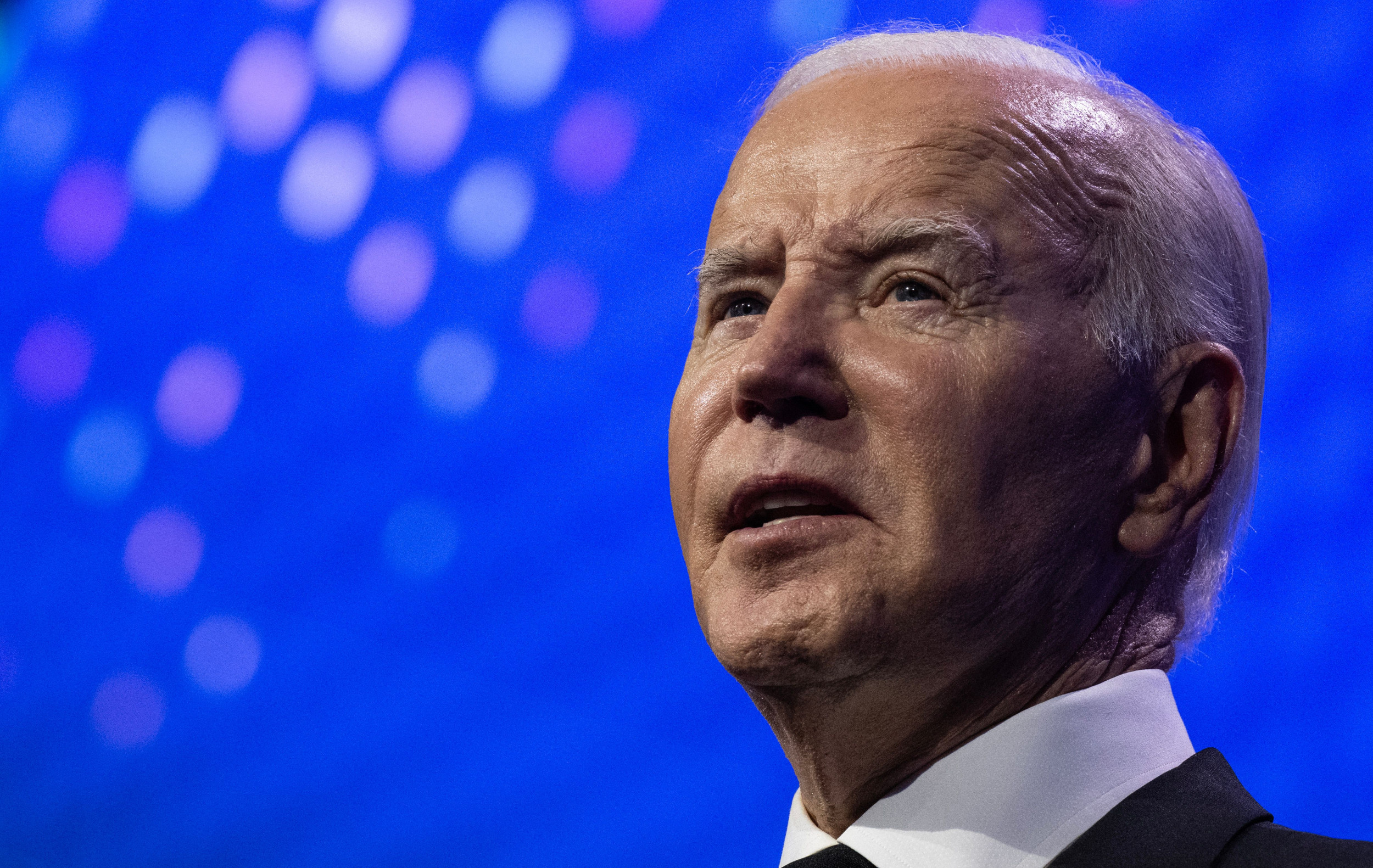
Meanwhile, President Joe Biden has been described as unequivocal in his response to the Hamas attack, calling it “as consequential as the Holocaust” during a recent 60 Minutes appearance. He has been praised on both sides of the partisan divide for his staunch defense of Israel, including garnering praise from conservatives who have been his political adversaries.

But Biden added that it would be a “big mistake” for Israel to occupy Gaza in response.

“Look, there’s a fundamental difference,” the president said. “Israel is going after a group of people who have engaged in barbarism that is as consequential as the Holocaust. And …I think Israel has to respond. They have to go after Hamas. Hamas is a bunch of cowards. They’re hiding behind the civilians. They put…their headquarters where civilians are and buildings and the like. But to the extent they can separate out…the Israelis are going to do everything in their power to avoid the killing of innocent civilians.”

Online users said Wray and the FBI should focus on “actual terrorists” at the U.S.-Mexico border than parents at school board meetings, referencing actions by the Department of Justice (DOJ) and FBI during the height of the COVID-19 pandemic.

In October 2021, U.S. Attorney General Merrick Garland addressed “a disturbing spike in harassment, intimidation, and threats of violence” against schools and employees based on protocols involving mask mandates.

“The wide open border has been flooded with military-age males from all over the world,” one user wrote on X, formerly Twitter. “What could go wrong?”

“Notice how none of these people are calling for solutions, such as closing our borders and mass deportation,” commented another user. “They WANT this invasion.”

Another X user stated: “US involvement in a large-scale war is a false flag away. It keeps happening because it keeps working.”

Newsweek reached out to the FBI via email for comment.
China’s re-education camp graduates trapped in force labor in Xinjiang

0

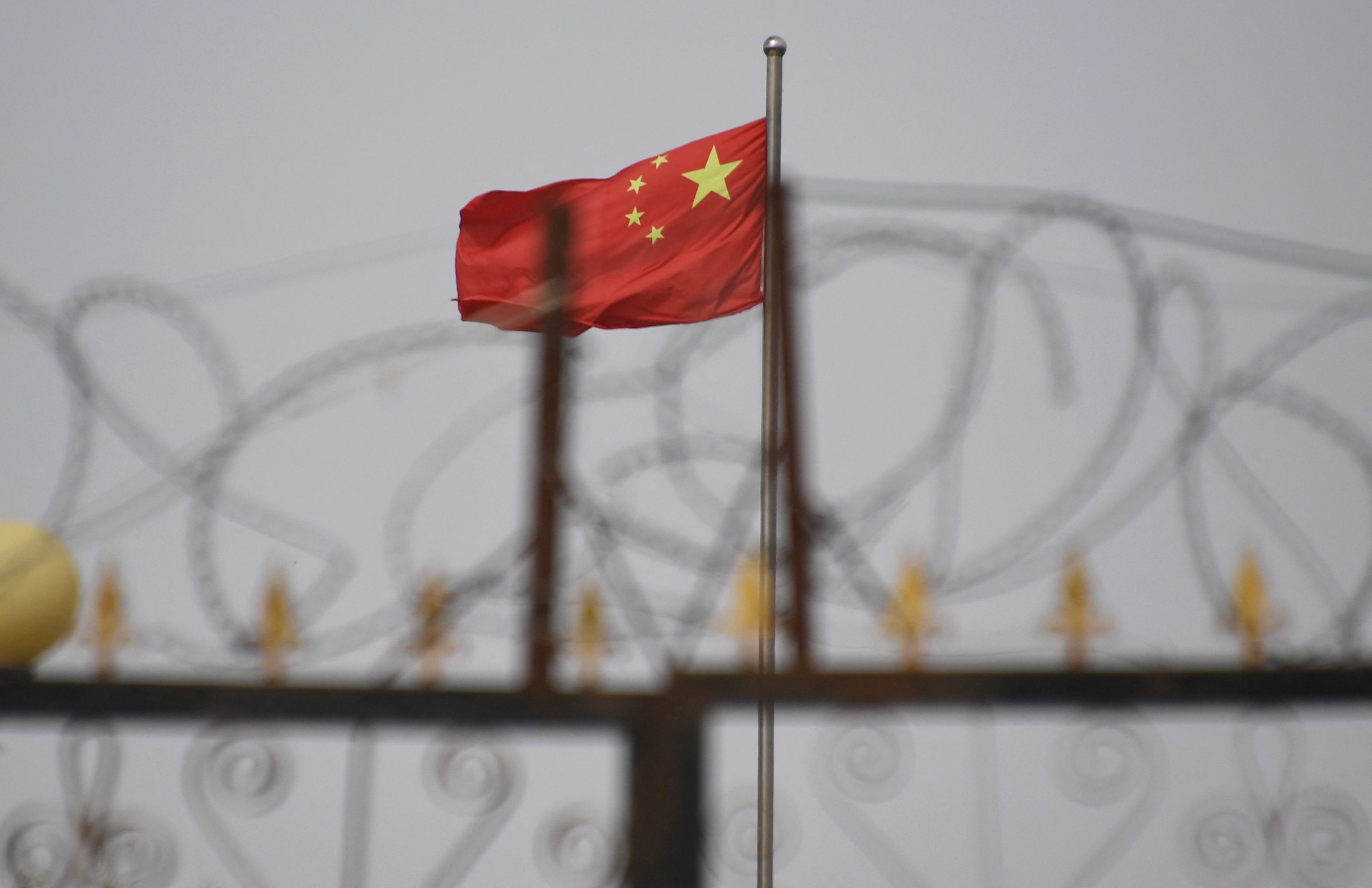
A new report from a leading expert on the Chinese government’s policies in the Xinjiang region reveals a new program that combines “re-education” with forced labor, aimed at erasing the cultural identities of Uyghurs and other Muslim minorities.

The article is the latest from German anthropologist Adrian Zenz, whose past work shed light on the internment of some 1 million people in Xinjiang camps between 2017 and 2019. The camps were part of the “medicine” prescribed by Chinese President Xi Jinping for the “disease” of splittism after a spate of terrorist attacks. Many detainees were reportedly victims of extreme neglect, torture, and rape.

Though China has long used penal labor as a means of controlling dissidents and minority groups, the rise of “vocational skills education and training centers” is a departure from the “reform through labor” championed by Mao Zedong after the country’s communist takeover.

Today, the “reform” and “labor” components are kept largely separate, with detainees first placed in skills classes before being trained for a job and finally moved to a long-term labor placement under the watchful eye of the state. Failure to accept these job “opportunities” is reportedly met with punishment.

The focus has shifted from keeping detainees out of the public eye to integrating them into the broader society. Though the main aim is political, Zenz says Beijing also hopes to reap some economic gains as well. Studies indicate this focus on training yields more highly productive workers, many of whom are put to work for private companies far from the training centers.

This “greater economic sustainability, afforded by higher profitability, is designed to overcome non-Han resistance to ideological and ethnocultural assimilation and integration into the social order led by the [Chinese Communist Party] and dominated by Han Chinese culture,” he says.

Yet, those put through this program face many challenges when allowed to return to society: low wages, overtime work shifts, restricted freedom of movement, and never-ending surveillance and ethnic profiling.

For one Uyghur woman who eventually managed to escape China, a simple shopping trip meant walking past facial recognition-equipped cameras, tripping alarms and resulting in a police interrogation.

These policies, along with the government’s practice of separating families and putting Uyghur children in Mandarin Chinese-only boarding schools, are consistent with the government’s “dividing and conquering of organic Uyghur communities,” Zenz says.

“Through this program and multiple other means, the Chinese government is erasing the Uyghur culture and way of life, all while making a profit,” Washington, D.C.-based advocacy group Campaign for Uyghurs said in a statement on Friday.

In 2021, Congress took action on forced labor by passing the Uyghur Forced Labor Prevention Act, which has cracked down on products tainted by forced labor. Federal officials seized almost $1 billion worth of goods with suspected links to forced labor between June 2022 and April of this year.

The Outlaw Ocean Project last week released a report detailing forced Uyghur labor in the hard-to-trace supply chain for seafood, much of which ends up in the U.S. And a report in May by Zenz shed light on the systemic forced labor in the cotton fields of Xinjiang, which produces one-fifth of the world’s cotton.

China coasted to another term on the U.N. Human Rights Council last week due to a lack of competition for open seats.

China rejects Western countries’ calls to expand political rights and frequently presents itself as a champion of the “right to development”—and a less meddlesome partner—to other developing countries criticized for human rights violations.

Donald Trump compares himself to Al Capone after gag order

0

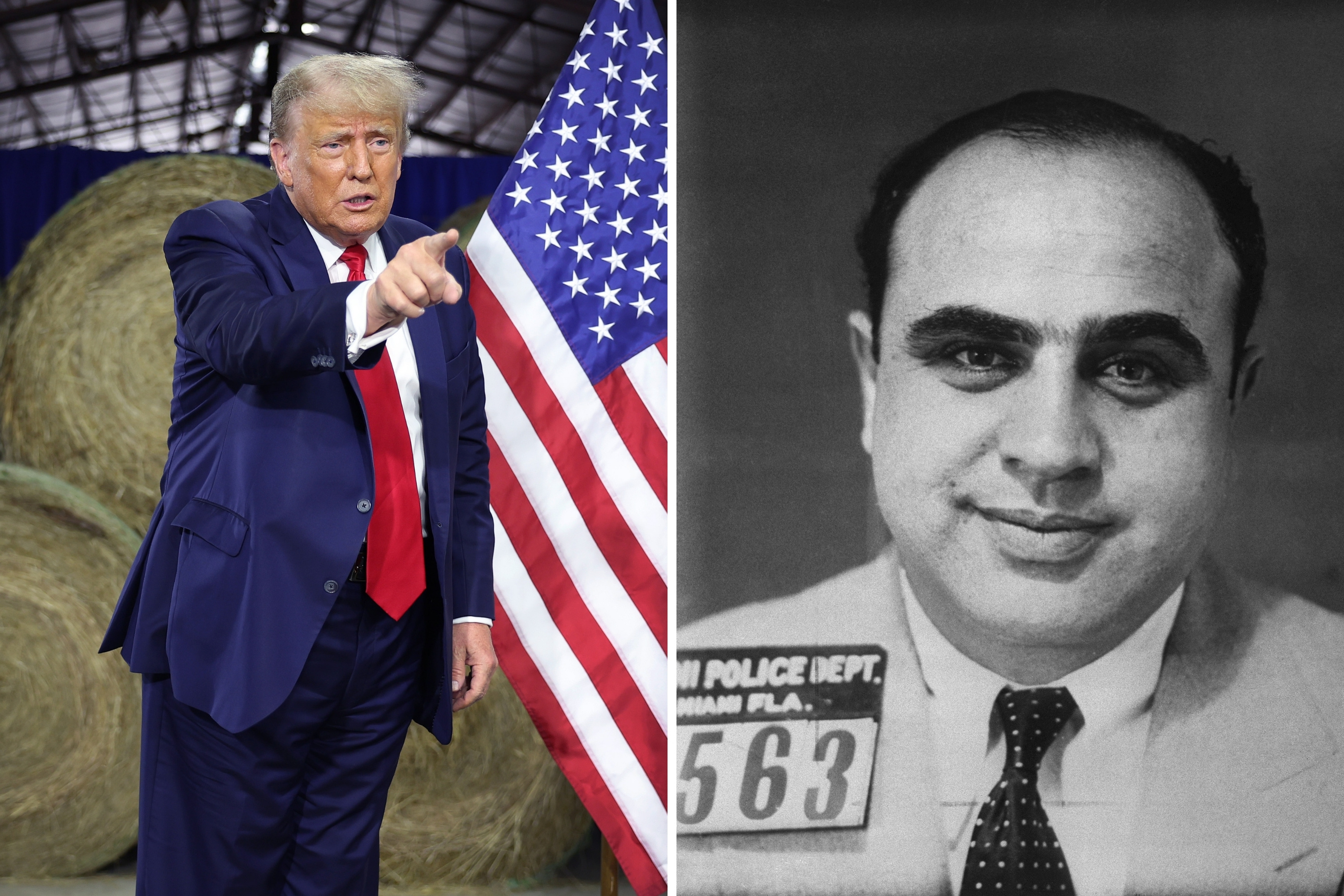
Former President Donald Trump has compared himself to Al Capone after being hit with a gag order, saying that he’s been indicted more times than the notorious Chicago mob boss.

U.S. District Judge Tanya Chutkan, who is overseeing Trump’s federal election subversion trial, issued “narrowly tailored” restrictions on the former president’s speech and social media activity during a court hearing on Monday.

Trump was specifically barred from publicly targeting Special Counsel Jack Smith, court staff, prosecutors and potential witnesses. He was not banned from claiming that the prosecution is “politically motivated” or from criticizing President Joe Biden, which the judge said were “critical First Amendment freedoms.”

During a 2024 presidential election campaign stop in Iowa after the order was handed down, the ex-president argued that the order was “unconstitutional” and claimed that Chutkan was muzzling his ability to “criticize people.”

“Today a judge put on a gag order,” Trump said. “I’ll be the only politician in history that runs with a gag order where I’m not allowed to criticize people. Can you image this? Do you believe this? I’m not allowed to criticize people … It’s so unconstitutional.”

Trump then claimed to be “the only guy that ever got indicted,” before comparing himself to Capone.

“I got indicted more than Alphonse Capone,” said Trump. “Did anybody ever hear of Al Capone? Al Capone, if you looked at him the wrong way, he was seriously tough, right?”

“Scarface, you know they called him Scarface,” he added. “Had a little scar on there, I’m sure it was a minor accident … If you looked at him the wrong way … he blew your brains out. He was only indicted one time, I was indicted four times.”

Elsewhere during the speech, Trump lamented that he was not able to talk “about things that bad people do” as a result of the gag order, while vowing that his lawyers would be “appealing very quickly.”

Newsweek reached out for comment to Trump’s office via email on Monday.

Trump is facing a total of 91 felony charges spread across the four criminal indictments that he has faced this year. The former president has pleaded not guilty on all counts and claims to be the victim of a “witch hunt” and “election interference.”

While Trump claimed otherwise, Capone was indicted at least as many times as he was and was arrested several other times before his criminal career finally ended.

Capone, once known as “Public Enemy Number 1,” was one of the most infamous gangsters in U.S. history as the leader of the prohibition-era mafia crime syndicate known as the Chicago Outfit.

Despite Capone having been suspected in multiple murders and spending nine months in jail following a 1929 incident on a gun charge, his time as a mafia mastermind only ended after federal authorities indicted him three times in 1931 on tax evasion and prohibition-related charges.

Capone was convicted and went on to become a celebrity inmate of the federal prison on California’s Alcatraz Island. He was released from prison in November 1939 while suffering from brain damage and other health issues caused by syphilis and died of a heart attack in early 1947.

Trump has compared himself to Capone more than once, having made similar comments about his indictments during campaign stops over the past few weeks.

Last year, during an interview with Fox News host Sean Hannity, the former president also claimed that he had been through “more investigations than Al Capone, Jesse James and Billy the Kid put together.”

I’m in Gaza. I can’t get milk for my crying baby. I feel helpless

0

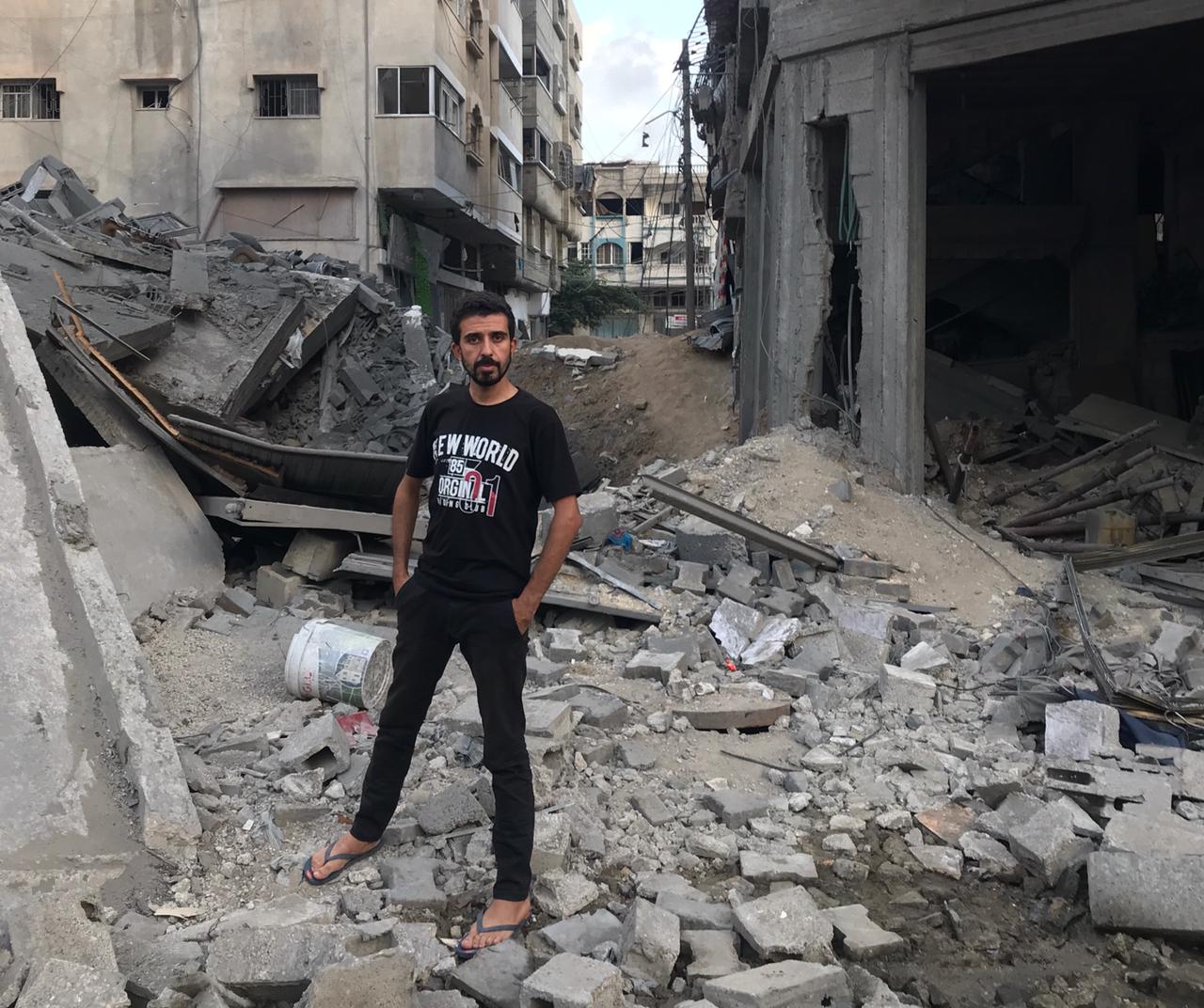
In Gaza, my home, I see nothing on the ground but destruction and rubble. There is death everywhere. Street views have changed. Buildings and houses have been destroyed, and memories erased.

One of the worst moments I experienced was when my two young children were crying, afraid of the sounds of airstrikes and the Israeli bombing. A missile fell next to the house we were in, causing glass to shatter. The explosion was strong and terrifying.

My biggest fear is losing my children and loved ones.

I was born in Gaza City and have lived there since my birth, for 33 years. I work as a photographer.

I’m still there now, near the north of Gaza. I left my own house to go to my relatives’ home. I’m staying with my in-laws, my wife, and my children. There are another 40 people around us who are also trying to seek a safer place.

We hear horrible sounds of airstrikes and explosions all the time, which get worse at night when Israeli bombs and missiles fall on Gaza without warning. People are very frightened by this war; I believe it is a genocide.

Many people are homeless because the Israeli Air Force bombed their homes. They move from one place to another without any guarantee of protection.

A large number of these homeless Gazans are in hospitals and schools without access to the minimum necessities of life, and this is all in addition to the large numbers and crowding of people everywhere.

Life without electricity, water, and the internet is similar to primitive life, with a slight difference. There is no electricity at all, and therefore there is no water and no internet because the supply of both depends on electricity.

There are some generators and batteries that we rely on to charge phones, and we get some water in a very traditional way by the packing of wells. If we get lucky, we find enough clean water to drink a small amount daily and to save for other people.

Also, the lack of electricity leads to us to remain in complete darkness at night, without any lighting. The children are afraid and crying, and the fear increases at night as we hear Israeli shells falling on us. It is terrifying.

We also cannot store food or bread—which is rare to find—because there is no electricity to operate refrigerators. So we must obtain food every day—if we can find it.

I cannot obtain milk for my child, who is just three months old, because of this stifling siege. I feel helpless as he cries.

I feel afraid. I fear for my children; the terror they feel every time they hear bombing. I fear the loss of my family and loved ones. I fear the massacres committed by the Israeli occupation.

I am disappointed because the world is watching Israel bombing innocent people with all kinds of weapons, destroying our homes and lives, cutting electricity, water, food, medicine, targeting all aspects of life in Gaza.

The world keeps talking about their opinions. They let us down. I have a mix of feelings: Anger, fear, and sadness.

There’s no safe place in the Gaza Strip; not the north, not the south.

It is not realistic to expect people to move south for their safety, but people are afraid, especially with children. They try to escape with their life.

My message to the world is to take action and stop this injustice that the Israelis have been using against the Palestinian people for decades.

How long will we remain under these wars? How long will the Israelis continue to destroy our homes and kill my people? More than 700 children have been killed in a week. What are you waiting for?

We are humans just like Ukrainians. The Israelis are not better humans than us. We demand justice and that they leave us to live a normal life.

I don’t have any plans right now. We don’t know how long this war will last and we don’t know what they will do to us.

At any moment our lives could end because of this war.

For me, I decided to stay in my city.

If I die, I prefer to die in my house with my family, with dignity.

Omar El Qattaa is a photographer based in Gaza City.

All views expressed in this essay are the author’s own.

Do you have a unique experience or personal story to share? Email the My Turn team at myturn@newsweek.com.

The U.S. Should Not Target Iran

0

An Israeli ground invasion of the Hamas-ruled Gaza Strip is no longer a question of “if” but “when.” Approximately 360,000 Israeli reservists have been mobilized over the last week, with most of the troops stationed close to the Israel-Gaza border fence. Israel’s evacuation order for the northern section of Gaza, where about 1 million Palestinians live, is still in effect. The Israel Defense Forces (IDF) conducted limited probing attacks inside Gaza over the weekend, and Israeli airstrikes have continued nonstop.

As bad as the war between Israel and Hamas is, it could get even worse if the fighting expanded. Some U.S. politicians and pundits are perfectly fine with the prospect and even recommended that the Biden administration take the fight directly to Iran, Hamas’ main external backer.

Senator Lindsey Graham (R-S.C.), an arch Iran hawk, has used several television appearances to press for war against Tehran. On Oct. 15, the senator stated the U.S. should “knock Iran out of the oil business” if Hezbollah, its proxy in southern Lebanon, entered the conflict. Marc Thiessen, a Washington Post columnist and a former speechwriter in the George W. Bush administration, strongly urged President Joe Biden to set a red line to Iran.

The justifiable outrage about what Hamas has done to innocent civilians is clearly spreading to the terrorist group’s patrons. Emotion, however, is a terrible ingredient for good policy. Pundits are wholly unaccountable and have the luxury of not worrying about the consequences of their recommendations; policymakers, in contrast, have weighty responsibility on their shoulders and need to closely weigh the costs and benefits of every plausible scenario.

First, we should be clear about one thing: just because Tehran is a sponsor of Hamas doesn’t necessarily mean it was operationally involved in the terror group’s rampage in Israel. This isn’t about making any excuses for Iran, who after all is the world’s preeminent state sponsor of terrorism, but rather to point out a simple fact. Based on the information we know right now, there is no intelligence supporting the conclusion that the Iranians were specifically aware of what Hamas was planning. The U.S. intelligence community has acquired information suggesting Iran was surprised by Hamas’ operation. Secretary of State Antony Blinken publicly stated, “We don’t have direct evidence that Iran was involved in the attack, either in planning it or carrying it out.” Israeli intelligence concurred with this judgment.

That assessment may change over time. But at this moment, Iran’s link to the worst terrorist attack Israel has ever experienced is murky at best. One would think, or at least hope, the U.S. wouldn’t take the country to war on incomplete or contradictory intelligence. After all, the U.S. did exactly that in Iraq two decades ago and the result was an unmitigated disaster for U.S. power, influence, and credibility.

In an ideal world, the military option against Iran would be off the table based on this fact alone. Unfortunately, we don’t live in an ideal world. Some, like John Bolton, former President Donald Trump‘s national security adviser, have long advocated for the use of U.S. military force against Tehran, and use every opportunity to buttress their argument for military action.

It’s telling, however, that these same proponents fail to seriously consider the costs attached to such an operation. And the costs are so exceedingly high that whatever benefits may arise out of a military campaign are practically irrelevant. This is true even more so today, when Israel has its hands full planning and likely executing a large-scale ground offensive in Gaza that could last months.

Any attack against Iran would turn the 30,000 U.S. troops stationed throughout the Middle East into prime targets for Iranian reprisal. We know this because American troops have been targeted by the Iranians before, not only through proxies in Iraq and Syria, but directly. After the Trump administration assassinated Qassem Soleimani, a top commander of the Islamic Revolutionary Guard Corps (IRGC), the Iranians sent a fuselage of ballistic missiles toward several U.S. bases in response. Fortunately, no American servicemembers were killed in those exchanges. But the entire episode served as a warning to both countries: even a limited exchange of fire between the two countries could upend the Middle East, bloody both sides, and escalate without warning.

While there is no doubt the Iranians would prefer to avoid a conventional war with the U.S., Tehran isn’t afraid to retaliate if it’s hit. Iran’s capacity to do so has only gotten stronger since Soleimani’s assassination. While Tehran may not have any allies in the region (even Syria’s Bashar al-Assad can’t be considered an ally in the traditional sense of the word), the IRGC has built up and nurtured a system of non-state proxy groups that could be called upon in the event of a U.S. military campaign. The roughly 3,500 U.S. troops in Iraq and Syria would be sitting ducks, having to dodge rocket fire and drone attacks from Iran’s proxy network to a greater extent than they already are. American casualties would compel the White House to send even more U.S. military power into the region for force-protection purposes, which in turn would provide Iran and the litany of militias under its thumb with even more targets. One can’t overstate just how quickly a situation like this could spiral into a full-fledged war between the U.S. and Iran, which both have sought to avoid.

Israel, too, would be in for a very difficult period. The IDF is an extremely capable force, yet it has never been tested on two fronts simultaneously. Although the missile attacks and airstrikes between Israel and Hezbollah over the past several days are a concern, those engagements have been limited thus far. This would no longer be the case if U.S. bomber aircraft dropped their payloads in Iran. It’s inconceivable that Hezbollah would be restrained in such a scenario. This would not only be terrible for Israelis who live in the north but also for those in Tel Aviv; Hezbollah’s missile arsenal can reach Israel’s major population centers. Unlike the rocket arsenals of Hamas and Palestinian Islamic Jihad, Hezbollah’s missile capability includes at least some with precision-guided technology. Casualties in Israel would be immense.

Taking the fight to Iran is the last thing the U.S. should do. It was a terrible idea when it was proposed in the past, and it’s a terrible idea now.

Daniel R. DePetris is a fellow at Defense Priorities and a syndicated foreign affairs columnist at the Chicago Tribune.

The views expressed in this article are the writer’s own.

Democrats pressure Biden to call for Israel to back down

0

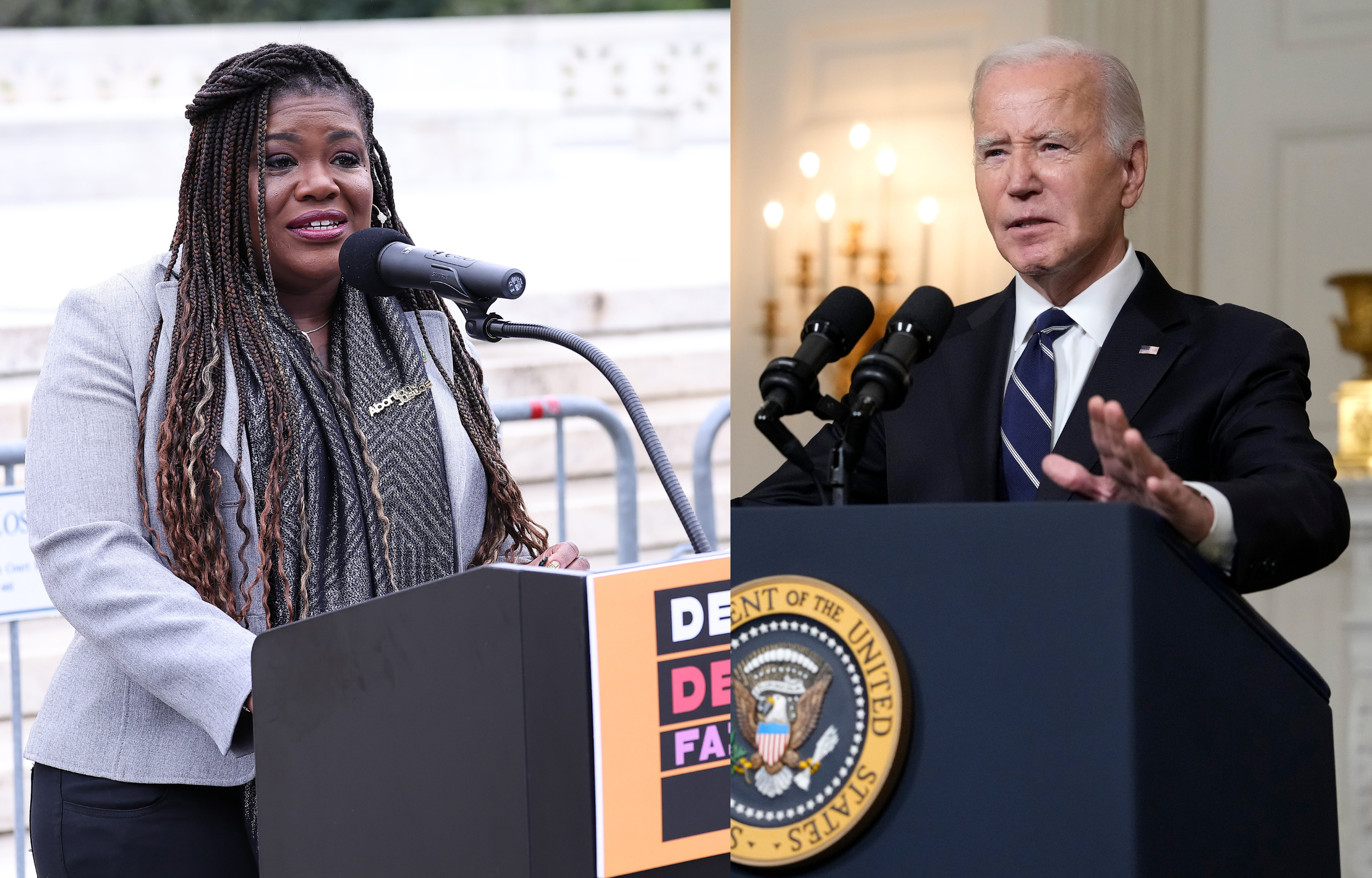
A group of Democratic lawmakers is urging the Biden administration to call for an immediate de-escalation and ceasefire in Israel and Palestine.

The resolution in the U.S. House of Representatives also wants the United States to send humanitarian aid and assistance to Gaza “to save as many lives as possible.”

On October 7, Hamas led the deadliest Palestinian militant attack on Israel in history. Israel subsequently launched its heaviest-ever airstrikes on Gaza. As of Monday, more than 4,000 people have died in the conflict, according to the Associated Press.

The Gaza Health Ministry said 2,778 Palestinians have been killed and 9,700 wounded, the AP reported, while over 1,400 Israelis have been killed, and at least 199 others, including children, have been taken hostage by militants.

“Whereas all human life is precious, and the targeting of civilians, no matter their faith or ethnicity, is a violation of international humanitarian law,” says the resolution, which acknowledges the rising death tolls on both sides of the conflict.

It adds that “the federal government holds immense diplomatic power to save Israeli and Palestinian lives.”

The resolution was announced by the following members of Congress:

Cori BushRashida TlaibAndré CarsonSummer LeeDelia C. RamirezJamaal BowmanBonnie Watson ColemanJesús “Chuy” GarcíaJonathan JacksonAlexandria Ocasio-CortezIlhan OmarAyanna PressleyNydia Velázquez

Newsweek reached out to congressional members’ offices, the White House and the National Security Council via email for comment.

Lawmakers across party lines have mostly galvanized in support of Israel following the October 7 attack. President Joe Biden has been praised, even by his political opponents, for his resounding and unequivocal response to Hamas’ deadly actions and for pledging U.S. assistance to Israelis.

Some Democrats, namely those who compose the progressive left wing of the party, have had somewhat mixed reactions.

Tlaib, one of the more progressive members of Congress who has been outspoken about Israel and its policies, was criticized following the initial attacks for her relative silence.

She called for “lifting the blockade, ending the occupation, and dismantling the apartheid system that creates the suffocating, dehumanizing conditions that can lead to resistance.”

The congresswoman, who represents a major Muslim population in Dearborn, Michigan, later condemned the attacks and said she does not support the targeting and killing of civilians, whether in Israel or Palestine.

“[The] fact that some have suggested otherwise is offensive and rooted in bigoted assumptions about my faith and ethnicity,” she said on October 11.

Her stance has led to some calling for her to be primaried.

A ceasefire was called for almost immediately by congressional members including Bush, a legislator from Missouri, and Ocasio-Cortez, a legislator from New York.

“The United States’ responsibility is to human rights,” Ocasio-Cortez said on October 12. “That means supporting the safety of the Israeli people and preventing the ethnic cleansing of Palestinians.”

New York Congressman Ritchie Torres, a Democrat, swiftly dismissed such calls for a ceasefire. He said that the U.S. must support its longtime ally, Israel.

“U.S. aid to Israel is and should be unconditional, and never more so than in this moment of critical need,” Torres said in a statement. “Congress must act decisively to provide Israel with whatever it needs to defend itself in the face of unprecedented terrorism.”

“Shame on anyone who glorifies as ‘resistance’ the largest single-day mass murder of Jews since the Holocaust,” Torres added. “It is reprehensible and repulsive.”

The White House also rebuked the aforementioned Democrats’ statements.

“We believe [their statements are] wrong,” White House press secretary Karine Jean-Pierre said on Tuesday. “We believe they’re repugnant and we believe they’re disgraceful.”

Gaza before and after satellite photos show devastation of Israeli strikes

0

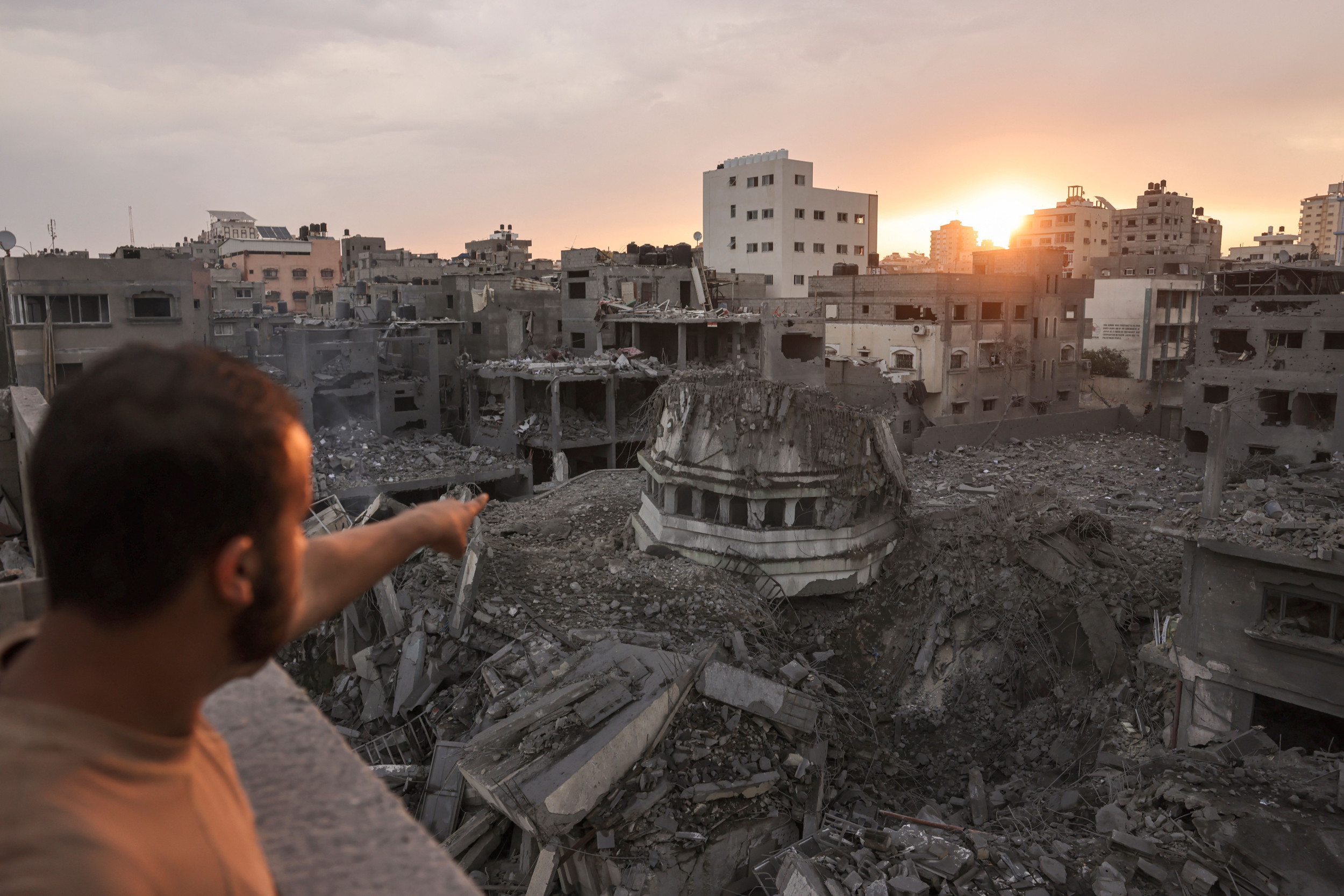
A video showing satellite imagery of the Gaza Strip before and after an intensive campaign of air strikes by the Israeli Air Force has gone viral, showing the extent of the destruction caused to the densely populated Palestinian territory.

The side-by-side comparison had attracted about 101,000 views at the time of publication, after being posted on Sunday, revealing how many buildings have been reduced to rubble or damaged structurally. One aerial image appears to show the Ahmed Yassin mosque in Gaza City, which was hit on October 9.

The original poster, Muhammad Shehada, a self-described Gazan who works for advocacy group Euro-Med Human Rights Monitor, described it as “televised, livestreamed carnage.” Euro-Med has accused Israel of war crimes and “systematic killings,” while attributing none of the civilian casualties to Hamas, which initially launched an assault on Israel and has urged against evacuating areas being targeted.

Newsweek approached the Israel Defense Forces (IDF) via email for comment on Monday.

Around 1,500 Hamas and Islamic Jihad militants staged armed assaults on Israel on October 7, including the killing of civilians and the taking of hostages. Since then, Israel has targeted militant sites in Gaza, which it says are often placed in civilian areas or buildings, and it has forewarned civilians in those areas ahead of air strikes.

The violence has so far taken the lives of more than 4,000 people, according to the latest death toll by the Associated Press. The Gaza Health Ministry said 2,670 Palestinians have been killed and 9,600 wounded, while over 1,400 Israelis were killed, and at least 155 others, including children, were taken hostage by militants, according to Israeli officials.

Aid organizations have warned of a worsening crisis in the region after Israeli Defense Minister Yoav Gallant ordered a “complete siege” of Gaza—which Hamas controls—including the cutting off of supplies and an intensive campaign of air strikes. Israel has indicated it was preparing a much larger offensive on the Palestinian exclave, which will likely increase the death toll significantly on both sides.

With units massing on the border with Gaza, on Saturday the IDF said it was “currently preparing to implement a wide range of operational offensive plans” including coordinated strikes by air, sea and land.

Ahead of a widely anticipated ground offensive, Israel has asked around 1.1 million Palestinians living in the northern parts of Gaza to evacuate south—around half the population of the Palestinian exclave.

After initially giving those residents 24 hours to leave, and following an outcry from humanitarian organizations, it has highlighted routes from the north that it said it would not target with air strikes within given periods.

There were reports early on Monday morning that a cease-fire of a few hours had been agreed by Egypt, the U.S. and Israeli officials to coincide with the reopening of a border crossing between Gaza and the Sinai Peninsula. However the office of the Israeli Prime Minister, Benjamin Netanyahu, later denied this, stating: “There is no cease-fire.”

Military contractor stocks have skyrocketed since Israel war started

0

Shares of some of the U.S. biggest military contractors have soared since the beginning of Israel’s war against Hamas, with companies such as Lockheed Martin reporting a 10 percent increase in their stock values.

The war between Israel and Hamas started after the Palestinian paramilitary group launched an unprecedented attack by land, sea, and air on Israel on October 7, catching Israeli intelligence by surprise.

The attack killed at least 1,300 Israeli civilians and soldiers and saw at least 150 people being kidnapped by Hamas militants. Afterwards, Israel declared war against Hamas and started heavily bombing Gaza. The enclave’s authorities said that death tolls in Gaza City had reached 2,670 by Monday.

The attack and the following war have sent the stocks of American defense companies soaring. Raytheon Technologies were valued at $69.77 on Friday, October 6, one day before the Hamas’ attack, but surged to $73.35 by October 10. The stock prices had slid down to $73.35 as of Monday, October 16, according to data from Google Finance.

Stocks for Boeing were valued at $187.38 on October 6 and had surged to $195.13 by Wednesday, before sliding down to $184.91 on Monday. Those for Lockheed Martin were valued at $400.73 on October 6 and, as of Monday October 16, were worth $443. On October 10, Barron’s investment magazine reported that the company had added $23 billion to its market capitalization after Hamas’ attack.

General Dynamics’ stocks were worth $219.94 on October 6 and $243.04 on October 16. Those for Northrop Grumman were valued at $423.24 on October 6, but $490.15, just 10 days later, on Monday.

Lockheed Martin and Northrop Grumman reported the strongest stock gains in more than three years, Forbes reported. The news outlet added that analysts say the trend wasn’t expected to last.

While these gains in the stocks of defense contractors spike after big events such as the Hamas’ attack, when Wall Street suddenly focuses on the security industry, “history shows […] those increases generally stall and are not sustainable,” Bernstein analysts led by Douglas Harned wrote in a note to clients on October 11.

Russia’s invasion of Ukraine represents a clear example and precedent in this case. In the first week of trading after the war between the Russians and Ukrainians began on February 24, 2022, the iShares defense ETF surged by 5 percent. Shares for Lockheed Martin and Northrop Grumman rose by as much as 20 percent, according to Forbes. However, in the following six months, despite the war still being ongoing amid the counteroffensive by Ukraine, the value of the sector had dropped by nearly 20 percent.

Starbucks threatens to sue union that expressed support for Palestine

0

In an acknowledgment that an effort to boycott Starbucks is having an impact, the giant coffee chain has issued a cease-and-desist letter to a union representing about 9,000 of its baristas and other workers who have publicly sided with Palestinians after Hamas attacked Israel on October 7.

The sternly worded letter addressed to Lynne Fox, the international president of Workers United, threatens to sue the group should it not immediately stop using the Starbucks name and logo, and it demands the union issue a statement saying that its support of Palestinians over Israel does not reflect the position of Starbucks, which is not affiliated with the union.

“Anger against Starbucks persists because your organization’s actions have fueled the inaccurate perception that Starbuck’s supports violence against civilians,” read the letter signed by Rocky Tsai, legal counsel to Starbucks.

On October 7, Hamas led the deadliest Palestinian militant attack on Israel in history. Israel subsequently launched its heaviest ever airstrikes on Gaza. As of Monday, at least 4,000 people had been killed in Israel and Gaza, the Associated Press reported. Almost 200 Israelis, including children, were taken hostage.

The letter, which was obtained by Newsweek, said Republican Senator Rick Scott of Florida “amplified the public outrage against Starbucks resulting from your organization’s statements by calling for a nationwide boycott of Starbucks.”

The attorney said the union’s political position on the conflict between Hamas and Israel has “directly led to enraged and volatile consumers confronting baristas and making over 1,000 complaints to the company.”

The letter was prompted by a social media post from Starbucks Workers United that expressed “Solidarity with Palestine!” that has since been removed. Union chapters in Iowa, Chicago and Boston promoted rallies in support of Palestinians after some 5,000 Hamas rockets rained down on Israel.

While the letter indicated that the union’s actions have had a negative impact on the safety of employees and the reputation of Starbucks, it did not indicate the boycott effort has had an impact on sales.

Starbucks Workers United represents workers at 340 of the more than 34,000 stores worldwide, though its actions have had an outsized impact on the company’s reputation, according the cease-and-desist letter.

The letter said that baristas worldwide have been put in a position in which they “must de-escalate, calm down and in some cases engage security for their own safety” due to irate customers who believe that Starbucks “supports attacks on civilians.”

Starbucks Workers United is a subset of Workers United, which calls itself a progressive labor organization that promotes justice, education, equity, compassion and civility, and is a subset of the powerful Service Employees International Union (SEIU).

Newsweek reached out to Workers United and to the SEIU for comment.

Prior to the cease-and-desist letter, Starbucks denounced the union’s position and called the attacks initiated by Hamas heinous acts of terror.

The letter, though, acknowledged that its previous statements were not enough to counter the perception that a union unaffiliated with Starbucks and representing only a small portion of its workers is supportive of the Hamas attacks.

“By fomenting this anger, your organization has recklessly endangered the safety and well-being of hundreds of thousands of baristas around the world, including its own members and those who fled conflicts or have friends and family living in conflict,” the letter read.

Update, 10/16 at 4:50 p.m. ET: The story was updated to note that the letter did not mention sales.

Hamas says it treats foreign hostages as "guests," will release when safe

0

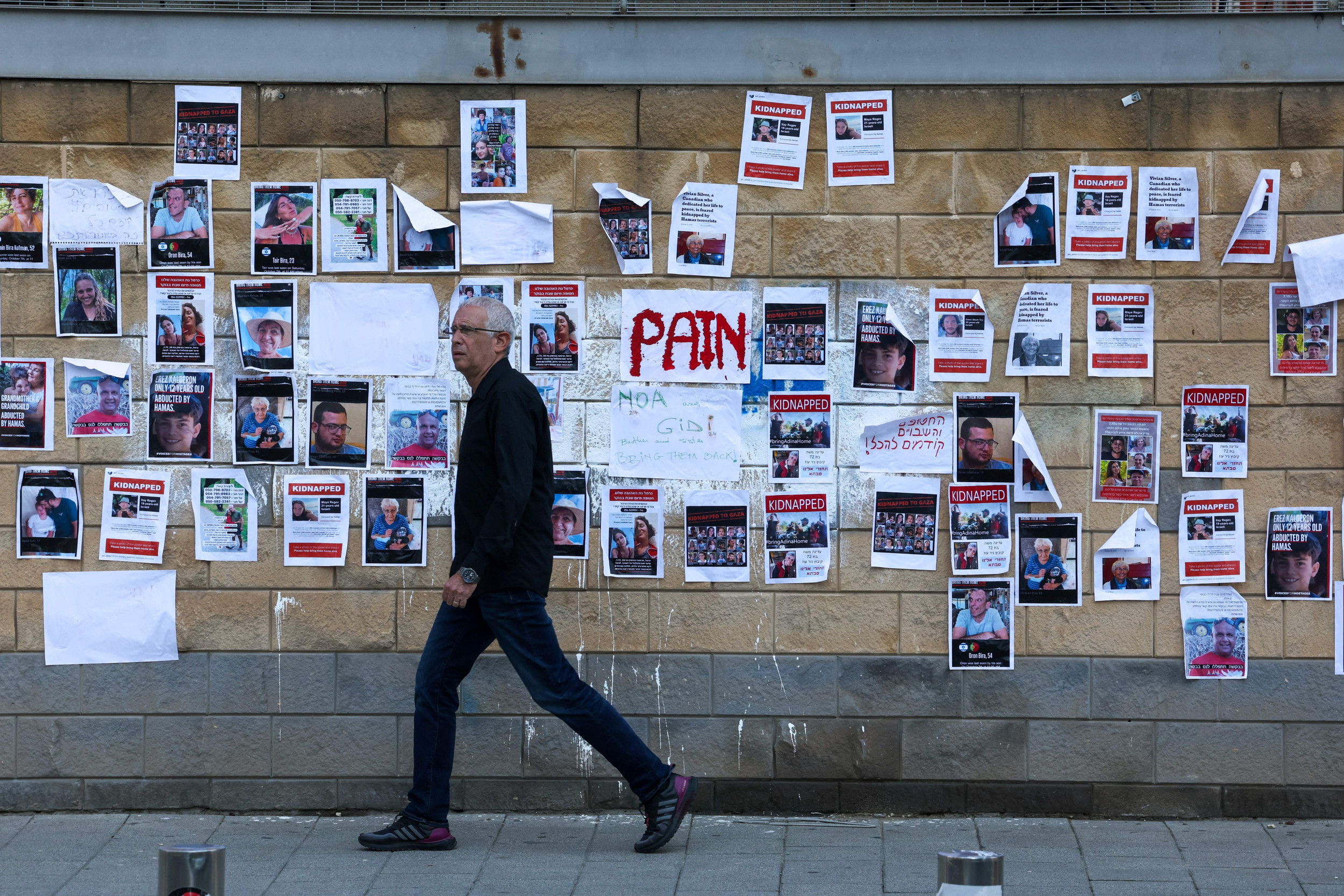
The spokesperson for Hamas’ military wing has announced that the group is prepared to release non-Israeli prisoners among at least 200 people in custody once their safety could be guaranteed amid ongoing Israeli airstrikes against the Gaza Strip.

But the Israel Defense Forces (IDF) has dismissed the credibility of such remarks, along with the claim that abductees have been killed in Israeli airstrikes.

Speaking in a 10-minute video published Monday, Al-Qassam Brigades spokesperson Abu Obaida said that, while he could not provide an exact count of the number of people seized in the shocking Palestinian air, land and sea assault conducted on October 7, he estimated the total figure to be “between 200 and 250, or exceeding that.”

“The Al-Qassam Brigades has about 200 prisoners and the rest are distributed among other components of the resistance or in places in which we cannot count them,” Abu Obaida said.

He stated that 22 prisoners have been killed so far in Israeli airstrikes, but that the group was treating all those taken fairly.

“We deal with prisoners according to the dictates of the teachings of our religion,” Abu Obaida said. “Their care is required by moral and humanitarian duty. They eat what we eat, they drink what we drink, and they live under the same conditions as all the people in Gaza.”

He said that among the captives were those of “different nationalities” that could not be verified in full as a result of the ongoing wartime conditions.

“They are our guests, we seek to protect them and the moment the conditions on the ground allow we will release them,” Abu Obaida said, accusing the IDF of carrying out “a barbaric and brutal aggression against our people instead of directly engaging with the fighters on the battlefield.”

Newsweek was unable to verify the number or condition of individuals detained by Hamas.

Abu Obaida has previously threatened to execute detainees in response to IDF airstrikes on civilian targets in Gaza, and broadcast their deaths via “audio and video.”

Responding to Newsweek‘s question regarding the Al-Qassam Brigades spokesperson’s remarks, IDF spokesperson Lieutenant Colonel Jonathan Conricus referenced these past threats.

“Abu Obaida is a liar and he represents the scum of the earth, a terrorist organization that abducted, killed, maimed, raped, mutilated, and executed Israeli civilians,” Conricus said Monday during an audio conversation hosted on X, formerly known as Twitter. “His credibility is as low as it could get, and any piece of information that is voiced by him should be treated with extreme caution.”

Conricus said he would “completely disregard his claim of airstrikes killing hostages” and asserted that, “if hostages are dead, it is the responsibility of Hamas and Hamas will pay the price of their actions.”

Conricus also confirmed the figure previously released by fellow IDF spokesperson Read Admiral Daniel Hagari, who raised the figure of known abductees in Gaza to 199. Israeli officials have said nationals from other countries, including the United States, are believed to be in the group’s hands as well.

Responding to a video released Monday purporting to show proof of life and fair treatment of one Israeli national being held by Hamas, the IDF said the group “is trying to portray itself as a humane organization, while it is a murderous terrorist organization responsible for the murder and abduction of babies, women, children, and elderly.”

“The IDF is deploying all intelligence and operational measures for the return of the hostages,” the statement said.

White House National Security Council Strategic Communications Director John Kirby has said that 14 U.S. citizens remain unaccounted for since October 7 and the U.S. State Department has said that at least 30 have been killed.

Israeli officials estimate that at least 1,400 people in Israel were killed as a result of the Hamas-led assault that took the country by surprise on October 7. At least twice as many Palestinians have been killed since then as a result of Israeli strikes, according to the Gaza-based Palestinian Health Ministry.

It’s the deadliest flare-up in decades in the long-running Israeli-Palestinian conflict, in which there is a history of hostages being used as bargaining chips. In October 2011, Israel, then too led by Prime Minister Benjamin Netanyahu, released 1,027 prisoners in exchange for Hamas freeing captured IDF soldier Gilad Shalit.

On Monday, Hamas senior political official Khaled Meshal told the Qatar-based Al Araby news outlet testified to the humane treatment of those currently detained by the group in Gaza. He called for the release of 6,000 Palestinians held in Israeli prisons, saying Hamas “has what it needs to empty the prisons of all prisoners.”

This article has been updated to include comments by IDF spokesperson Lieutenant Colonel Jonathan Conricus.