
Thursday, March 12, 2026
Home Blog Page 17

American hostages in Gaza: What we know as Israel offensive looms

0

As many as 20 American citizens are thought to be being held in captivity by Hamas and Islamic Jihad militants in Gaza, the U.S. State Department has said, as Israel appears to be gearing up for an offensive on the Palestinian territory following attacks last weekend.

Speaking to reporters on Saturday, spokesman Matthew Miller said 14 Americans had been confirmed dead in the surprise attacks, and that a further 20 remained unaccounted for; a number cited the same day by National Security Adviser Jake Sullivan.

Miller added it was possible that some of those were deceased or simply missing, “but we do believe it’s likely that there may be hostages who are U.S. citizens who are held in Gaza.”

He said the number “has been moving around over the last few days.” On Thursday, White House national security spokesman John Kirby said that President Joe Biden‘s administration was not aware of the condition of the hostages, but that the number of Americans among them was still thought to be “less than a handful.”

Israeli Prime Minister Benjamin Netanyahu has said his country is “at war” and has cut off supplies of food, fuel, electricity and medicine into Gaza. Israel has called up 360,000 army reservists as it prepares for a likely ground offensive into the territory, which has an estimated population of around 2.3 million.

As many as 150 hostages of various nationalities are thought to have been taken by militants amid the violence that broke out across Israel last Saturday, according to a preliminary assessment. Earlier in the week, a senior Hamas official had claimed there were around 130 held captive.

On Saturday, Rear Admiral Daniel Hagari, a spokesman for the Israel Defense Forces (IDF) said it had so far identified 126 hostages, according to the Associated Press.

“We’re going to do everything in our power to find them,” Biden said of the American hostages in an interview with 60 Minutes. “We’re working like hell on it.”

On Friday, Secretary of State Antony Blinken revealed he had met “with the families of some of those being held hostage by Hamas,” the previous day, adding: “Their anguish is profound.” Biden also said he had spoken to the families of those unaccounted for, telling them from the Oval Office: “We’re not walking away. I promise you.”

However, the hostage situation in Gaza may be complicated by an anticipated ground offensive on the Palestinian territory by the IDF. On Friday, it told residents of the northern part of Gaza, including Gaza City—which combined account for around half of Gaza’s population—to evacuate south.

After initially giving residents a 24-hour window to leave, and following outcry from humanitarian organizations, it has highlighted routes from the north that it said it would not target with air strikes within given periods over the weekend.

The Israeli Air Force has been conducting an intensive campaign of air strikes on Hamas targets in Gaza, but Netanyahu indicated this was only the opening salvo in a much larger offensive.

With units massing on the border with Gaza, on Saturday the IDF said it was “currently preparing to implement a wide range of operational offensive plans” including coordinated strikes by air, sea and land.

Military experts have said that any ground assault not only risks high civilian and personnel casualties, but was also unlikely to save the hostages. “Whether you can release them from the ground or not is another question,” Colonel Richard Kemp, a retired British Army officer, previously told Newsweek. “I wouldn’t be too confident of that.”

Hamas claimed on Saturday that nine hostages, including four non-Israelis, had been killed by Israeli air strikes in the preceding 24 hours, AFP reported, and told the BBC earlier in the week that five had died as a result of the targeting. These figures could not be independently verified.

Speaking on Thursday, Kirby said that it was a “common tactic in the Hamas playbook to break up hostages and move them around in, sometimes, small groups.”

He confirmed that the U.S. had hostage recovery experts in Israel, but said there were no intentions to put American combat troops on the ground. He also declined to go into detail about potential hostage negotiations, explaining: “It’s never a good idea to negotiate for the transfer of hostages or detainees in public, lest you torpedo the actual success you’re trying to achieve.”

However, a ground assault on Gaza could throw any such negotiations into jeopardy. Newsweek approached the State Department for further comment on Sunday.
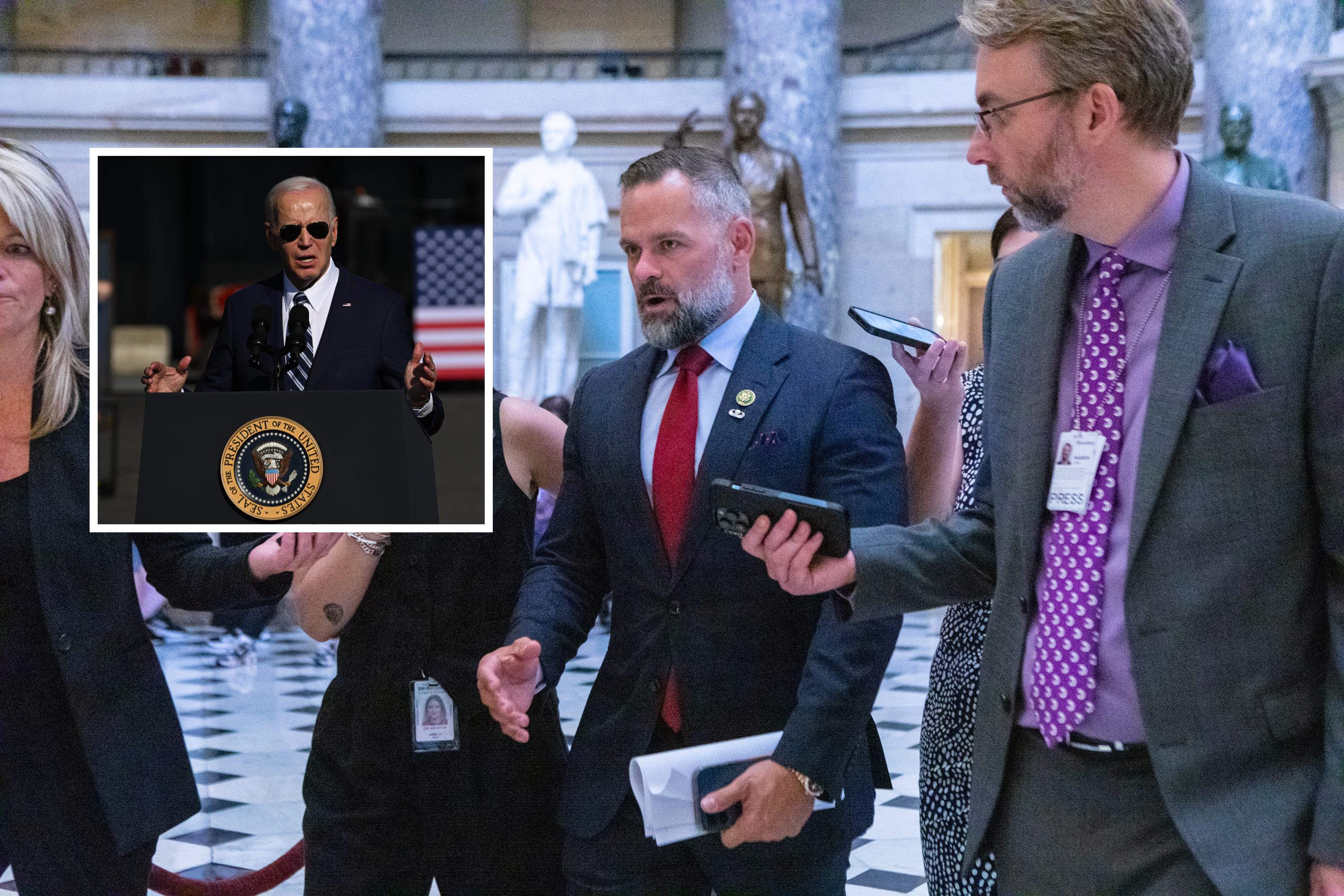

Republican who helped 96 Americans escape Israel says Biden had "no plan"

0

Representative Cory Mills, a Florida Republican, criticized the Biden administration on Sunday after the congressman saved 96 American citizens in Israel, saying that President Joe Biden had “no plan.”

Mills and his team flew to Israel and rescued the stranded Americans this past week, with Michigan Representative Bill Huizenga’s son among those who were saved. Biden vowed to help American citizens who were taken hostage by Hamas after they attacked Israel. The White House on Sunday told Newsweek in an email that the State Department has been operating charter flights out of Israel for Americans who want to leave.

On October 7, Hamas led the deadliest Palestinian militant attack on Israel in history. Israel subsequently launched its heaviest ever airstrikes on Gaza. The Gaza Health Ministry said 2,329 Palestinians have been killed since the fighting erupted, according to The Associated Press. More than 1,300 Israelis have been killed, the agency said. Meanwhile, Israeli Prime Minister Benjamin Netanyahu has said his country is “at war” and has cut off supplies of food, fuel, electricity and medicine into Gaza.

“I knew that they had no plan, no strategy, that they were gonna leave Americans behind, but I had to put the pressure on them, and that’s why it was such a big deal to go over there,” Mills said during an interview on Fox News. “It’s really forced the hand of the White House to start stepping up. As I said multiple times, if Biden was unable and unwilling to do his job, then I’m gonna step up and do it for him.”

Mills, who is an Iraq war veteran and currently serves on the House Committee on Armed Services, said that Americans were trapped for days, unable to find a flight home and running out of resources in Israel.

“A lot of them had lost hope. They had no idea how they were getting out of there,” Mills said. “Some of them had looked at ‘How am I gonna continue to even pay for a hotel? I don’t have the fees.’ Most of them had flights that had been cancelled over and over and over again.”

Biden has yet to address the rescue mission. The latest update from the White House on American citizens in Israel was on October 9, when the president said that “the safety of American citizens—whether at home or abroad—is my top priority as president.”

“For American citizens who are currently in Israel, the State Department is providing consular assistance as well as updated security alerts. For those who desire to leave, commercial flights and ground options are still available. Please also take sensible precautions in the days ahead and follow the guidance of local authorities,” Biden added.

It is still unclear if there are more Americans trapped in Israel or how many were taken hostage by Hamas.

Arab reporter goes viral in video confrontation with Israeli security

0

Amid the ongoing Israel-Hamas conflict, video of a live broadcast confrontation between an Arab reporter and an Israeli security man has gone viral on social media Sunday.

On October 7, Hamas, which the U.S. designates as a terrorist organization, led the deadliest Palestinian militant attack on Israel in history. Israel subsequently launched its heaviest ever airstrikes on Gaza. As of Sunday, more than 1,300 people had been killed in Israel, the Associated Press reported. More than 2,300 people had been killed in Gaza, according to the Gaza Health Ministry, the AP said. Since the attack, many reporters, including local and foreign correspondents, have been on the ground reporting as events continue to unfold between Israel and Hamas.

In a post to X, formerly Twitter, Al Araby TV, a news website and broadcast network that provides multimedia news coverage of Arab and international events, shared a video capturing one of their reporters, Ahmed Darawsha, live on air as he is confronted by what Darawsha and Al Araby says is an “armed Israeli police officer.”

“An armed Israeli policeman threatens Al-Araby correspondent Ahmed Darawsha live on air,” the translated tweet from Al Araby TV reads.

Although it’s not clear from the video, Newsweek could not confirm whether the man was a police officer as his hat appears to identify him as “security” or whether or not the man was armed.

According to the translated video, which has over 575,000 views as of Sunday evening, the man interrupts the reporter’s segment by telling the reporter to “say good things.”

Shortly after the confrontation, Darawsha states, “The Israeli police are monitoring what we are saying and he came to me screaming and threatening me,” while describing the confrontation to viewers and his colleagues.

Meanwhile, the man continues to interrupt the newscast as he seemingly says, “Detestable! We’ll turn Gaza to dust! Dust!”

Newsweek has reached out to Israeli police and Darawsha for further comment.

The confrontation with the reporter comes after an Israeli shell landed in a gathering of international journalists covering clashes on the border in southern Lebanon on Friday, killing a Reuters videographer and leaving six other journalists injured. The shelling occurred during an exchange of fire along the Lebanon-Israel border between Israeli troops and members of Lebanon’s militant Hezbollah group.

“We are deeply saddened to tell you that our videographer, Issam Abdallah, has been killed. We are urgently seeking more information, working with authorities in the region, and supporting Issam’s family and colleagues,” Reuters said in a statement.

In response to the death of Abdallah, according to Reuters, Israel’s envoy to the United Nations (UN), Gilad Erdan, said in a briefing on Friday, “Obviously, we would never want to hit or kill or shoot any journalist that is doing its job. But you know, we’re in a state of war, things might happen,” adding that the country would investigate.

China’s surveillance tech setback in Ukraine could open door for US

0

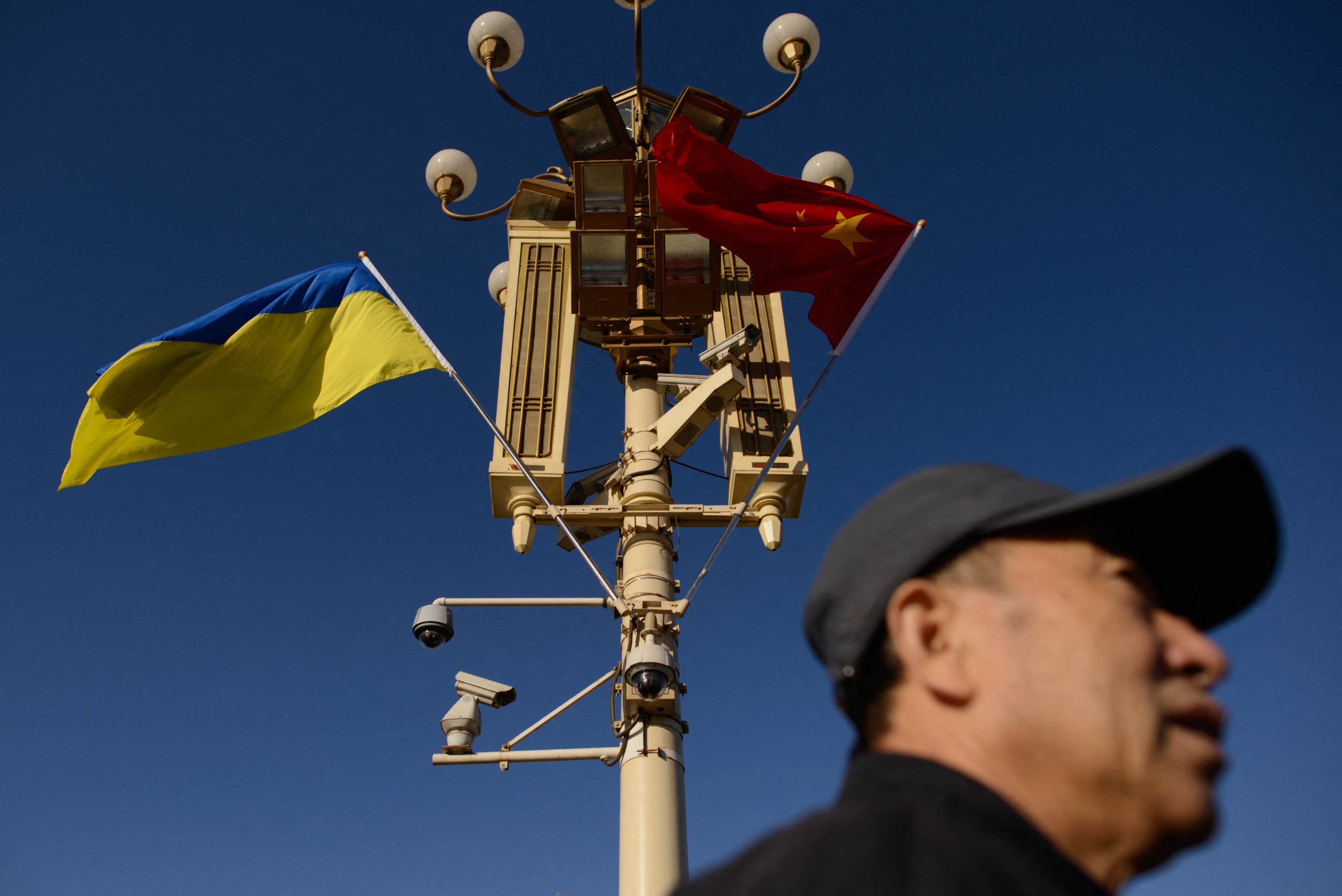
The simmering conflict between the United States, its allies, and China and Russia appears to be bleeding into Ukraine’s existential fight against the Kremlin’s invasion as Ukrainian authorities act against Beijing-backed mega-corporations blacklisted for assisting Moscow’s war.

Newsweek has uncovered new details of a landmark decision blocking a Ukrainian company associated with a Chinese technology giant from doing business with a regional authority due to concerns over Beijing’s close relationship with Moscow and potential undue Chinese influence.

The case may set an important precedent for rolling back decades of Beijing’s growing commercial presence in Ukraine if Kyiv deems the cost and risk worthwhile.

Ukraine’s Anti-Monopoly Committee (AMCU) confirmed to Newsweek it had upheld a decision by the Zolochiv Village Council—which oversees an area in western Lviv Oblast close to the Polish border—to exclude Hikvision partner Engineering-Analytica LLC from a public surveillance technology contract worth around $15,000 earlier this year.

An AMCU spokesperson told Newsweek that Engineering-Analytica submitted a complaint to the body alleging that Zolochiv Village Council “set discriminatory requirements” in its tender process related to its partnership with Hikvision and the inclusion of the Chinese company on the National Agency on Corruption Prevention (NACP)’s sponsors of war list.

“The AMCU’s commission ultimately decided to dismiss the complaint,” the agency spokesperson said. The Zolochiv Village Council did not respond to multiple Newsweek requests for comment sent via email and social media.

A spokesperson for Engineering-Analytica told Newsweek that the NACP’s list is unconstitutional, and Hikvision’s inclusion on it was a result of “distorted facts.”

“We believe that all actions related to blocking the participation of Hikvision products in public procurement are not state policy defined by law, but are solely the initiative of certain officials, whose motives we cannot judge,” they said.

Tech Tug of War

China was Ukraine’s biggest trading partner before the war. But bilateral relations have been undermined by Beijing’s refusal to explicitly condemn Moscow’s invasion and President Xi Jinping‘s continued close cooperation with President Vladimir Putin. China has framed itself as a neutral arbiter, but Ukrainian diplomats and lawmakers have previously told Newsweek that Beijing’s stance is more akin to “pro-Russian neutrality.”

Kyiv is walking a tightrope between China and its Western partners, economic and military aid from which has been instrumental in Ukraine’s survival. The U.S. in particular is seeking to freeze China’s technology mega-corporations—such as Huawei and ZTE—out of its domestic markets and is pushing its European allies to follow suit.

While looking for any way to advance its NATO and European Union membership ambitions, some in Ukraine see the U.S. showdown with China as an opportunity.

“To limit the Chinese influence is first of all in the interests of Ukraine, in the interests of our security,” Oleksandr Merezhko, a member of the Ukrainian parliament and the chair of the body’s foreign affairs committee, told Newsweek. “Additionally, it will bring us closer to the U.S. It will show that Ukraine is a reliable ally of the U.S.”

The AMCU told Newsweek it has not yet ruled on any other complaints from companies excluded from public procurement bids due to their links with Chinese companies. But Zolochiv’s face-off with Engineering-Analytica could be the first of many such cases in the future if Kyiv is committed to stalling, or even reversing, China’s technology footprint in the country.

This question will become more pressing as Ukrainian authorities look to rebuild the country’s devastated infrastructure. Contracts with Chinese firms will likely prove cheaper than with Western competitors but might leave Kyiv open to Beijing’s influence, plus unsettle Ukraine’s vital Western backers.

The U.S., United Kingdom and European Union have all taken steps to ban or limit the use of Hikvision technology, along with the products of other large Chinese technology companies.

There is some evidence of this Western push already. Newsweek obtained a March 2023 procurement notice issued by U.S. company Chemonics International Inc. on behalf of the British Foreign Office as part of the Partnership Fund for a Resilient Ukraine. The invitation sought bidders “for the supply of construction materials for lighting and poles.”

“Any and all items that are made by Huawei Technology Company, ZTE Corporation, Hytera Communications Corporation, Hangzhou Hikvision Digital Technology Company, Dahua Technology Company will not be accepted,” the notice read. “If tenders include items from these entities, please note that they will be deemed not technically responsive and excluded from competition.”

Asked about that and other notices, the British Foreign Office told the i newspaper earlier this year that Chemonics was responsible for procurement negotiations and, as an American company, was “required to comply with any relevant US policy and regulations.”

Newsweek reached out to Chemonics via email for comment.

Some in Ukraine have decided it best to draw from the vast resources on offer from China, given the country’s dire economic and military position. Kyivstar—the country’s largest telecommunications firm—for example, has already committed to rebuilding its mauled network with $600 million in Chinese technology. A sudden swap to Western alternatives, its CEO told Bloomberg in June, would be “impossible.”

Excoriating Chinese influence would mean reversing years of extensive procurement from Hikvision and Dahua, which is also on the NACP’s list. Both are used extensively in Ukraine’s “Safe City” project, which has greatly expanded governmental surveillance networks in settlements nationwide.

Military-minded observers have also warned that taking too hard a line against China and its largest technology companies might choke the supply of much-needed commercial drones for troops on the battlefield.

Ukrainian troops are already having to grapple with shortages due to new export controls imposed by Beijing and fear falling behind their Russian enemies in the ever-evolving UAV arms race.

Ukraine’s China ‘Paradox’

Oleksii Kupriienko—part of the “Don’t Fund Russian Army” organization and the founder of the “Underdog” legal watchdog—told Newsweek that the Zolochiv decision could prove a landmark moment but added it is unlikely to set off an imminent chain reaction of similar cases.

“The case is really brilliant,” said Kupriienko, who has previously denounced Chinese surveillance technology as a “Trojan Horse” inside Ukraine. But Hikvision is at the center of a governmental “paradox,” Kupriienko added.

“The NACP proclaimed the company as a war sponsor, with clear evidence of it being okay with Russian aggression in Ukraine and continuing doing business with Russia, and even more, giving them military support,” he said. “But for some strange reason, Ukrainian governmental bodies are eager to buy this equipment. This is really a very strange situation for a country which is at war.”

Decision makers, Kupriienko said, are limited by budget concerns and the existing reliance of many authorities on Chinese technology networks, particularly as part of the Safe City initiative. “That is why they just continue what they have done for years and years,” he said.

Kupriienko and others have been citing the Zolochiv decision in their bid to shift other governmental authorities away from Chinese technology.

“Unfortunately, I cannot tell you that we were successful,” he said. “But I think we have taken an important step forward.”

Pressure from Europe and the U.S. to ice out Beijing’s companies, though, could prove pivotal, Kupriienko added. “I’m pretty sure this will happen.”

A Hikvision spokesperson told Newsweek it had no direct involvement in the proposed Engineering-Analytica deal.

“Hikvision has three distribution partners in Ukraine and Engineering-Analytic LLC is not one of them,” the spokesperson said. “Engineering-Analytic LLC is a local integrator, not a distributor.”

The spokesperson disputed the NACP assertion that Hikvision is a sponsor of the war. “To help alleviate the devastating impact of this conflict, Hikvision has contributed humanitarian aid to the Red Cross in Poland to support Ukrainian refugees,” they said.

“Since the designation, media outlets and local politicians—including from the Lviv Regional Council—have criticized the unjustified decision to include Hikvision on the list because, among other reasons, the company provides essential equipment to Ukrainians throughout the country.”

“It is important to emphasize that the designation does not legally restrict the sale of Hikvision products. Still, many Ukrainian policymakers are concerned that local public procurement officers could misunderstand the designation and suspend planned purchases of Hikvision products that Ukraine needs.”

Putin reacts to US report on war with Russia and China

0

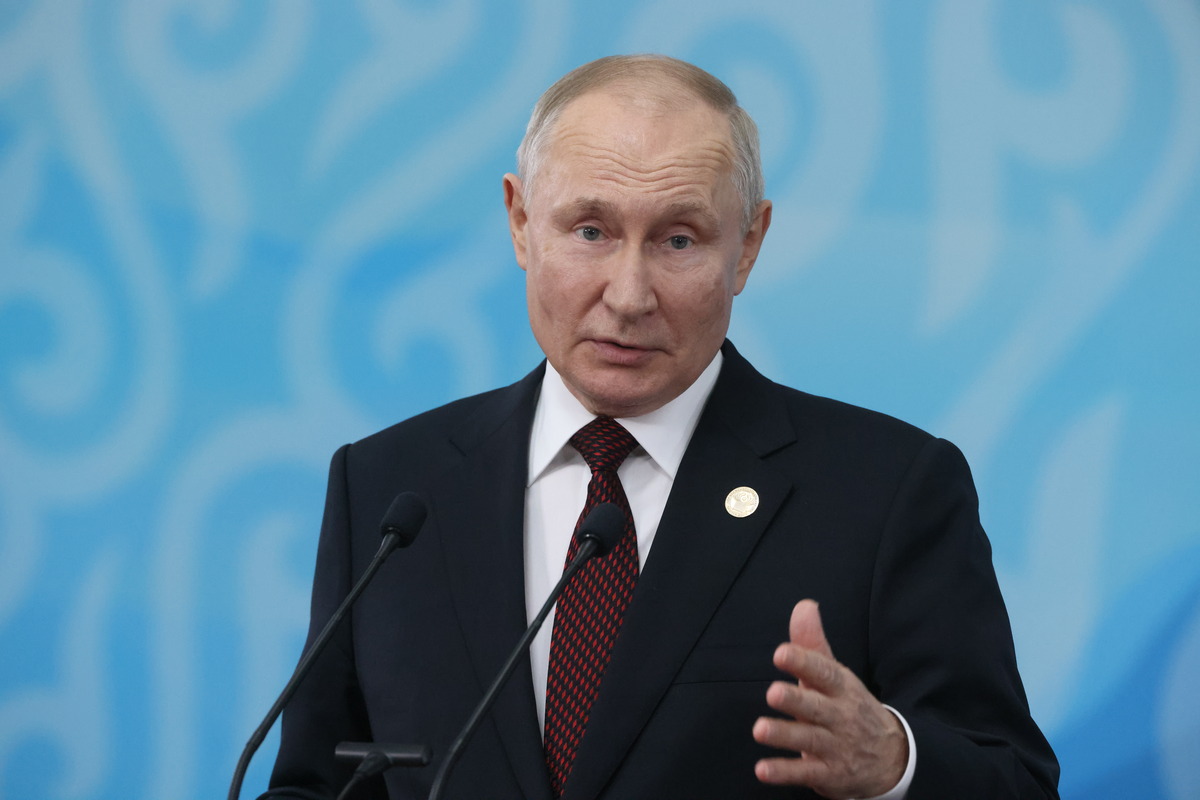
A war between Russia and Western countries like the U.S. would be an entirely different form of war compared to Moscow’s war in Ukraine, Russian President Vladimir Putin has said, after a U.S. report suggested Washington should prepare for simultaneous wars with Russia and China.

“We act on the assumption that we want peace, but if they want to go to war with Russia, then it’s a completely different war, not something like conducting a special military operation,” Putin said during a Russian state media broadcast on Sunday. Moscow uses the term “special military operation” to refer to its war in Ukraine.

His remarks come after a report released on Friday from the U.S. Strategic Posture Commission said the White House should increase spending on both its conventional and nuclear forces to address the twin threats posed by Russia and China.

Washington will soon find itself in a “fundamentally different global setting than it has ever experienced,” and one in which Russia and China will “possess nuclear arsenals on par with our own,” the report said.

Moscow has the largest nuclear arsenal in the world, and China has funneled resources into beefing up its nuclear arsenal, including its new Type 096 ballistic missile submarine.

“In addition, the risk of conflict with these two nuclear peers is increasing,” the report said.

Relations have reached their worst point in years between the U.S. and Russia over the war in Ukraine.

The U.S. and other Western countries supporting Ukraine’s war effort against Russia have been careful to frame their military aid and support packages for Kyiv as assistance, not involvement in the war.

But in mid-September, Russian Foreign Minister Sergei Lavrov said the U.S is “waging a war” against Russia “no matter what they say.” A Pentagon spokesperson told Newsweek when asked about Lavrov’s comments at the time that “the U.S. is not at war with Russia, nor do we seek a war between NATO and Russia.”

Ties between Washington and Beijing have also become more strained over China’s refusal to condemn the invasion of Ukraine, and due to fears about China’s plans for Taiwan.

The U.S. does not have formal ties with Taiwan, which has its own democratically elected government, but says it has a “robust unofficial relationship” with Taipei. Beijing sees Taiwan as a breakaway island to be brought back under central control.

“China is the only country with both the intent to reshape the international order and, increasingly, the economic, diplomatic, military and technological power to do it,” U.S. Secretary of State, Antony Blinken, said in May 2022.

China “is the most serious long-term challenge to the international order,” he added.

Although the possibility of a “major nuclear conflict” remains remote, the “risk of military conflict with either or both Russia and China, while not inevitable, has grown, and with it the risk of nuclear use, possibly against the U.S. homeland,” added the U.S. report, which was released on Thursday.

“The United States must change course urgently and resolutely,” the report’s authors wrote in its concluding section.

Biden says Hamas barbarism "as consequential as the Holocaust"

0

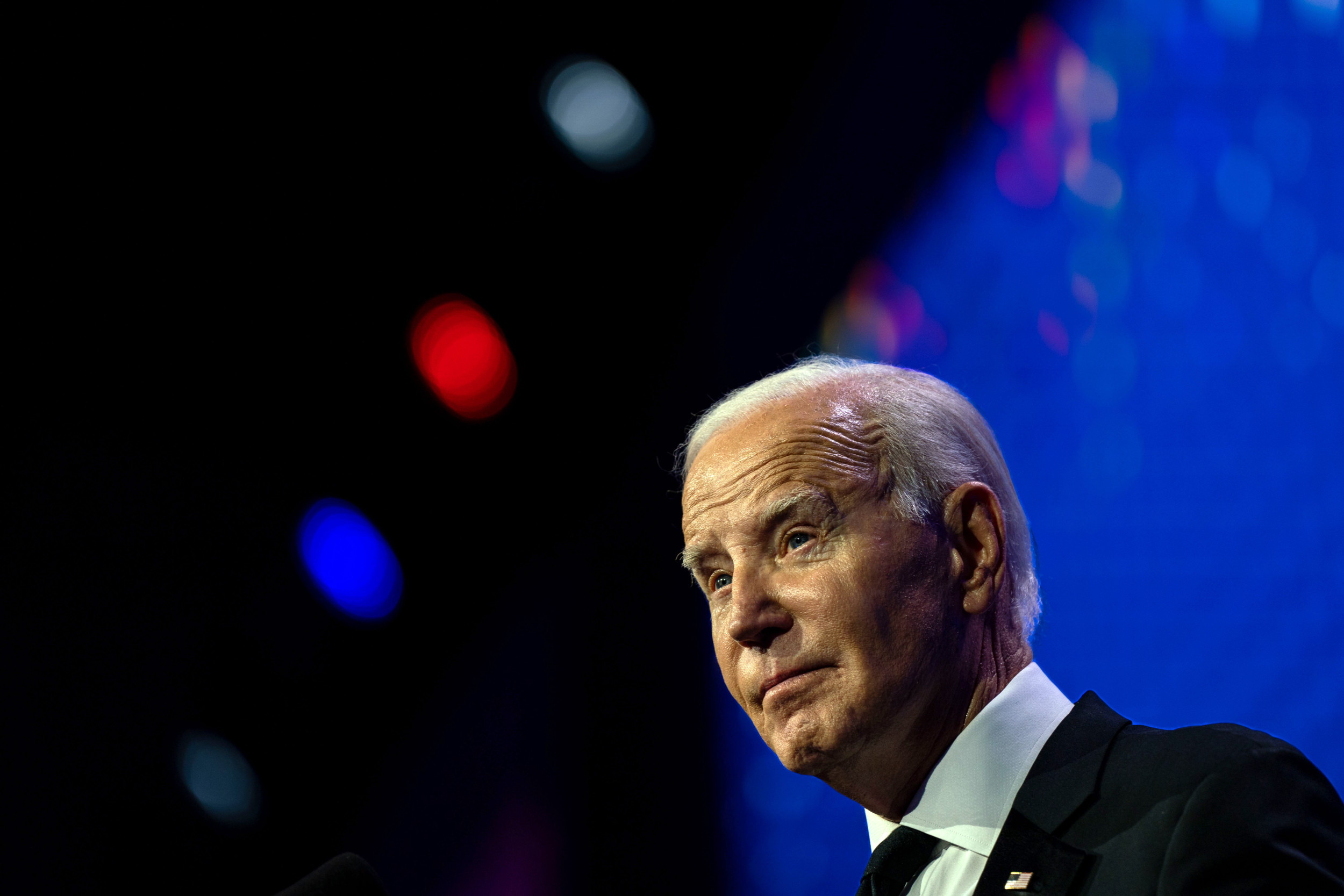
United States President Joe Biden referred to the Hamas attack “as consequential as the Holocaust, but said during a 60 Minutes appearance that it would be a “big mistake” for Israel to occupy Gaza in response.

During the 60 Minutes segment that aired Sunday evening, Scott Pelley asked the Democratic president whether it was “time for a ceasefire” as the death toll rises after the Hamas attack last week.

“Look, there’s a fundamental difference,” Biden said. “Israel is going after a group of people who have engaged in barbarism that is as consequential as the Holocaust. And … I think Israel has to respond. They have to go after Hamas. Hamas is a bunch of cowards. They’re hiding behind the civilians. They put… their headquarters where civilians are and buildings and the like. But to the extent they can separate out…the Israelis are going to do everything in their power to avoid the killing of innocent civilians.”

Newsweek reached out via email on Sunday to the Biden administration for comment.

Hamas, which the U.S. designates as a terrorist organization, on October 7 waged the deadliest Palestinian militant attack on Israel in history, sparking the Middle Eastern nation to subsequently launch its heaviest-ever airstrikes on Gaza. As of Sunday, more than 1,300 people had been killed in Israel, the Associated Press reported. Over 2,300 people had been killed in Gaza, according to the Gaza Health Ministry, the AP reported.

The president’s unconditional backing for Israel, a longtime U.S. ally, has drawn praise from Republicans and Democrats alike, with Israeli officials also expressing their gratitude to the administration. However, Biden’s support has sparked some criticism with some progressive Democrats voicing concerns over the treatment of Palestinian civilians. Israeli Prime Minister Benjamin Netanyahu has said his country is “at war” and has cut off supplies of food, fuel, electricity and medicine into Gaza, home to an estimated population of around 2.3 million.

Biden told Pelley that he wants to see a humanitarian corridor that would allow civilians to flee Gaza, saying his team is “talking” to Israeli leaders about whether a “safe zone” could be established.

“We’re also talking to Egyptians, whether there is an outlet to get these children and… women out,” Biden said.

During the segment, Biden also discussed American hostages where as many as 13 U.S. citizens are missing or believed to be held captive by Hamas in Gaza, according to the U.S. State Department on Sunday night, which confirmed 30 Americans were killed in the surprise attacks.

The president said that “we’re going to do everything in our power” to find missing Americans.

I paid $100k student loans and my son’s tuition using a simple method

0

When our baby boy arrived, my husband and I were absolutely thrilled. He was born exactly five years to the day of the completion of our graduate degrees, which we had pursued at night while working full-time.

Despite working while pursuing our various degrees, we had accumulated more than $100,000 of educational debt.

We were living in a small one-bedroom apartment figuring out how we were going to cover the additional cost of childcare, the eventual need for a larger home, and other new expenses—all while continuing to pay back our student loans.

Something else was weighing heavily on our minds too. As the first generation in our families to pursue higher education—and to do so without any financial preparation due to our families’ lack of resources—we wanted to find a way to do better for our child.

Given our experience with student loan borrowing and repayment, we were absolutely determined to do anything we could to make certain our child would have a less financially stressful academic experience when he grew up.

We wanted him to avoid the consequences we had experienced of being financially unprepared for the cost of higher education. This was our motivation to begin to find a way to save for his future—and we did.

My husband and I were both diligent about making our required monthly student loan payments on time and whenever we found we had a little extra money—from a tax refund or bonus at work for instance—we would apply those funds toward the loans’ principal. We were also careful not to overspend on non-essentials.

I don’t remember the exact payment amounts, but each of us was repaying hundreds of dollars each month.

To save for our son’s future, I decided to take a little at a time out of each of my paychecks and contribute the funds directly to a 529 college savings plan, and my husband contributed as well.

529 plans are special accounts that enable U.S. residents to invest specifically for future higher education expenses, without being taxed on the earnings as the account grows in value.

Many states, including New York, where we live, provide an annual state tax deduction as well for contributions to 529 college savings plans.

We started the savings process when our son was an infant as soon as I returned to my job from my maternity leave. Setting up automatic contributions to a single-purpose education savings account took the guesswork out of saving and kept us from potentially diverting the money for other purposes.

There were three ways I stayed positive throughout our debt repayment and savings journey. The first was gratitude. I recognized the many career doors that our education had helped us to open, and I remained grateful for that versus being negative about the challenges associated with the cost of obtaining higher education.

Something else that helped me to stay positive was identifying my “why” and holding it close to my heart and mind. My “why” was wanting my son to have options about which school to attend, what majors to consider, and ultimately, what career to pursue.

It was wanting him to enter adulthood without being weighed down by student loan debt as his dad and I once were. I visualized the outcome I wanted to achieve and that helped tremendously.

And in the end, through years of diligent saving, we achieved as a family exactly what I had envisioned and worked so hard towards.

I also stayed positive by reminding myself that our short-term sacrifices would be well worth it in the long run. I tried not to look at our need to be extremely careful about our finances as painful deprivation, but rather as a path to financial freedom for our son and peace of mind for us.

After nearly 20 years of repayment, we were so excited and relieved to finally pay off our student loan debt in full.

Quite frankly, the repayment of my student loan debt felt as good as earning my undergraduate and graduate degrees. I thought about framing my “paid in full” from my lender. It felt like that big of an achievement.

In age-appropriate ways, we also talked to our son about the fact that we were taking a certain amount out of our paychecks for his college savings account, so that he would not have to borrow money to pursue his dreams as we had.

Twice annually, during his childhood, we took him to cash in the coins he had diligently saved in his piggy bank. This enabled us to deposit a total of $600 a year on average into his college savings account.

We also encouraged him to put a portion of the holiday and birthday money he received into his college savings account.

Telling him about our financial experience as students and the stress that student loan repayment placed on us, helped put into context why we cared so much about saving for him.

We also taught our son that what we spent as a family had a lot to do with what we could save. For example, we made a decision as a family to drive the same automobile for over two decades. The money we saved by not spending on a newer automobile helped us save more for college.

I feel strongly that the seeds of financial education for children are planted at home. They learn a tremendous amount from what they see—not just from what they are told. We made every effort as parents to walk the talk.

Our son managed to graduate debt-free due in large part to our diligence as a family in saving in advance for the cost. Another important factor was his making a sensible choice about which university to attend. He picked a school that he liked which offered him a partial merit scholarship, which helped lower the total cost.

With some extra time on my hands during the pandemic, I felt moved to write a book to help other families prepare for higher education expenses, make sensible decisions when the time comes to choose an institution to attend, and to avoid or minimize the crushing weight of student loan debt. I’m proud of the number of families I’ve been able to help.

For those trying to pay off debt and/or to save for a future goal, my advice is to start with your “why”.

Consider why you want to get your debt paid off and in what timeframe. Imagine how your future will look and feel once the debt is paid off, how free you will feel without the weight upon you. Follow the same steps for your savings goals.

Hold your vision close to your heart as you take consistent steps toward achieving it. Create a visual to remind you of the importance of the journey you are on.

Incorporate gratitude in the process. Be grateful that you have the funds determination, and knowledge to pay off debt and/or save for the future.

Find ways to cut your expenditures. The less you spend, the more you will have to contribute toward your debt and likewise, toward your future goals.

Patricia Roberts is the author of Route 529: A Parent’s Guide to Saving for College and Career Training with 529 Plans.

All views expressed in this article are the author’s own.

Do you have a unique experience or personal story to share? Email the My Turn team at myturn@newsweek.com.

Meghan Markle still needs a boost six months on from key signing

0

Meghan Markle looked set to turbo charge her career after signing with a high profile Hollywood talent agency but almost six months later, little has been announced officially to demonstrate the success of the partnership.

The Duke and Duchess of Sussex suffered a fall from grace after the release of Prince Harry‘s memoir led to him being ridiculed by comedians in January.

The pair plummeted in U.S. public opinion polling conducted on Newsweek‘s behalf by Redfield & Wilton, however, Meghan appeared to breathe new life into her career when it was announced in April that she had signed with Hollywood powerhouse agency WME.

Much was written about how star agent Ari Emanuel could transform her fortunes across multiple industries, including film and TV production, brand partnerships and more, with Variety landing the exclusive at the time.

Approaching six months on from the announcement of the deal there is little publicly known about to show for it.

Perhaps it is too early for the partnership to have born fruit, though their Netflix deal was announced in September 2020, less than six months after they first moved to America—even though they found, bid for and bought a new house during the same period.

However, Roz Sheldon, managing director of U.K. PR firm Igniyte, told Newsweek that a slower approach may be no bad thing after past missteps sparked criticism.

“In terms of the online world, six months is a short space of time that you can use to start building behind the scenes,” she said.

“That would have been a sensible approach, slowly building behind the scenes and working out who she is and how she wants to come across because she’s had a lot of stick.”

Meghan Markle Signs With WME

It is difficult to say for sure how far back Harry and Meghan’s involvement with WME goes as the prince credited Jennifer Rudolph Walsh, its head of worldwide literary, speakers and conference divisions, in the acknowledgements in his memoir Spare, released in January.

He wrote: “Thanks and hugs to Jennifer Rudolph Walsh for her always positive energy and soulful counsel.”

Books are very much Walsh’s specialty, however, so it may well be that her advice at the time was limited to Harry and Spare.

Interestingly though, one of Harry and Meghan’s earliest deals back in 2020 was with public speaking specialists the Harry Walker Agency, owned by Endeavour, which also owns WME.

Either way, when it was announced in April that they would be representing Meghan, and the couple’s Archewell Productions TV company, there was much excitement.

Two months later it was announced that Harry and Meghan’s Spotify deal had collapsed but again WME appeared to offer a silver lining.

The Wall Street Journal quoted a representative at the agency stating the couple were developing new content for the same audience as Meghan’s Archetypes podcast only for a different platform, though nothing has yet been announced.

Where Meghan Goes Next

Of course, it could well be that a new deal is still being thrashed out or that news of its signing has yet to be made public as the couple quietly work on producing some new content.

However, it is a recurring feature of Harry and Meghan that speculation about them tends to build whenever a vacuum of information is allowed to develop.

This was seen most recently when they took a step out of the limelight for several months and unfounded rumors began circulating that they were secretly getting a divorce. The gossip appears to have been false based on the loved up photos and videos of the couple that came out of Harry’s Invictus Games, in September.

So far, Invictus and a visit this week to New York for a World Mental Health Day festival have done enough to keep the questions at bay.

However, it may not be long before the questions start to mount, leaving Meghan either under pressure to announce something new—if there is something bubbling away behind the scenes—or find something if there isn’t.

Sheldon told Newsweek: “She’s lurched from one thing to another very publicly. Oprah, the Netflix documentary and everything else.

“She’s come under a lot of criticism so I think taking more time is probably sensible for her, building behind the scenes and making that deal work with the right things in place, rather than looking like she wants to be constantly in the limelight.

“We try to build things for people who have been very openly in the spotlight and criticized in the media. It is very difficult and it needs to come from within.

“It is being credible but making sure it comes from somewhere that is quite transparent and it is really you and you feel that is the way you want to go.

“Taking her time is probably the best step now because she needs to reasses and do it a bit more slowly.”

Jack Royston is chief royal correspondent for Newsweek, based in London. You can find him on X, formerly Twitter, at @jack_royston and read his stories on Newsweek‘s The Royals Facebook page.

Do you have a question about King Charles III, William and Kate, Meghan and Harry, or their family that you would like our experienced royal correspondents to answer? Email royals@newsweek.com. We’d love to hear from you.

Russia loses 127 tanks, 239 APVs and 161 artillery systems in a week: Kyiv

0

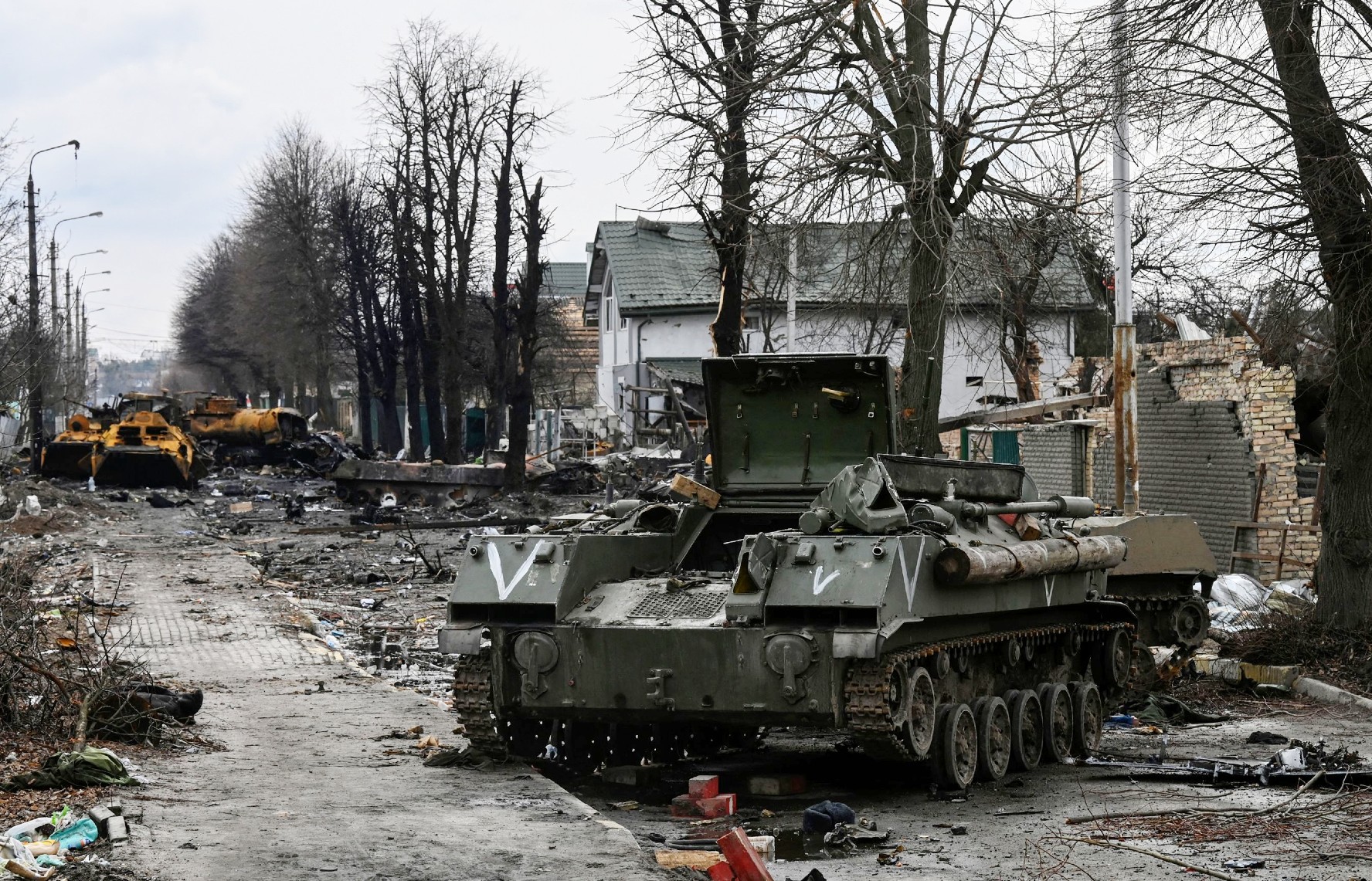
Russian forces have lost 127 tanks, 239 armored personnel vehicles (APVs) and 161 artillery systems in a week, Kyiv has said, as Russia steps up its attacks on Ukrainian defenses in eastern Ukraine.

Moscow’s forces lost eight tanks, 25 APVs and 33 artillery systems in the past day, Ukraine’s General Staff said on Sunday.

Newsweek cannot independently confirm Kyiv’s numbers, and has reached out to the Russian Defense Ministry for comment via email.

The war has proved costly for both sides as they burn through significant amounts of military equipment and sustain heavy casualties, but it is hard to gain an accurate picture of the scale of each side’s losses so far.

The reported losses have mounted as Ukraine’s counteroffensive grinds on, working to roll back Russian control in eastern and southern Ukraine since early June. The Ukrainian military had hoped to make sweeping gains before harsher, muddier fall and winter conditions set in, but with creeping advances along points of the front lines, significant victories have been slow to materialize for Kyiv’s fighters.

On Saturday, Russia’s Defense Ministry said Ukraine’s military had lost a total of 12,598 tanks and armored combat vehicles since Moscow’s troops crossed into Ukraine on February 24, 2022.

Ukraine’s eastern Donetsk and southern Zaporizhzhia regions have been hotspots of fighting, with Ukraine claiming control of a smattering of villages along the front lines there in the past few months. Russian President Vladimir Putin illegally annexed four Ukrainian regions, including Donetsk and Zaporizhzhia, in September 2022, although his forces do not fully control any of them.

On Sunday, Kyiv’s General Staff said there had been 60 combat clashes over the past 24 hours, and that around 100 Ukrainian sites across the north, east and south of the country had come under artillery fire.

Russian forces “unsuccessfully” tried to break through Ukrainian defenses around the Kyiv-controlled eastern town of Avdiivka, the General Staff said in an operational update.

“Our Avdiivka is under mass attacks of Russian artillery and aviation,” Andriy Yermak, the head of Ukrainian President Volodymyr Zelensky‘s office, said earlier this week.

However, geolocated footage from the past few days indicate that Russian forces have advanced south of the town, as well as in positions north of Avdiivka, the U.S. think tank, the Institute for the Study of War, said on Saturday.

Elsewhere along the front lines, Russian forces had “no success” in launching five attacks to regain territory around the Zaporizhzhia town of Robotyne, Ukraine said.

In a statement on Saturday, Russia’s Defense Ministry said Russian forces repelled five attacks from Ukrainian mechanized brigades and its National Guard around Robotyne and the neighboring village of Verbove.

Fighting has also continued around the decimated eastern Ukrainian city of Bakhmut, Kyiv’s military said.

Trainer’s approach to horse with "dangerous" biting tendency stuns internet

0

A social media video of a horse trainer taming an anxious horse with a biting problem has amazed viewers across the internet.

The viral video, which has been liked by more than 441,000 TikTokers since it was first shared to the platform on September 21, captured the training session that the trainer was running for the rescue horse at the animal sanctuary.

“My wife works with the horses that no one else wants to. This one in particular was a dangerous biter, kicker and was shipped to slaughter as a maneater,” the video’s creator wrote across the post, while audiences are shown the trainer jumping in front of the horse in a series of practiced steps.

“She rescued him from there and is training him to accept sudden unexpected movements like jumping in place.”

“As you can see, he never takes his eyes off her and moves around in fear as he is a prey animal and would rather flee than fight. She keeps her body aligned to this but doesn’t change her movements,” the creator added.

As the video goes on, the horse is shown warming up to the trainer and cantering gently in front of her. Despite the anxious and aggressive temperament he’s described as having, no doubt due to his background as a rescue animal, the horse appears fairly calm in the clip and focused on his training.

The video’s creator goes on to explain that the horse makes a major breakthrough by approaching his trainer, which he’d never done before. The trainer immediately provides positive reinforcement for the horse, to show him that he’s made the right judgment in trusting her.

“She stops her movement and is rewarded with a lick and chew, a sign of relaxation and acceptance in horses,” the text across the post continued.

The American Society for the Prevention of Cruelty to Animals (ASPCA) writes on its website that there are an estimated 6,000 to 10,000 horses housed by rescues in the U.S. at any given time.

What Do the Comments Say?

Since it was shared to the social media platform on September 21 by @OhkayTacos_Fan_2, the TikTok post has been liked by over 441,000 users and commented on more than 800 times. Numerous TikTokers have praised the horse trainer in the post’s comments section.

One user wrote: “She is the real life Amy from heartland?”

“A book needs to written about this woman, the horse whisperer,” another user added.

The TikTok post can be seen here.

Newsweek reached out to @OhkayTacos_Fan_2 for comment via TikTok.

Do you have funny and adorable videos or pictures of your pet you want to share? Send them to life@newsweek.com with some details about your best friend and they could appear in our Pet of the Week lineup.