Thursday, March 12, 2026
Home Blog Page 20

Ten sparkling royal tiara moments: From Queen Elizabeth to Kate Middleton

0

They’re some of the most recognizable symbols of royalty with few able to see them in person and even fewer destined to wear them, but the British royal family’s priceless collection of tiaras never fails to show their wearers at their sparkling best no matter what may be going on beneath the diamonds.

Modern tiaras have their root in classical headdresses as symbols of wealth and status, evolving into items made from precious metals and gemstones, though never losing their original conspicuous purpose.

Tiaras exist in the jewelry collections of all the major royal houses in Europe, though it is speculated that the British royal family hold the largest volume both in the possession of the monarch and satellite family members.

For 70 years, Queen Elizabeth II was the most prolific wearer of tiaras, wearing more than 10 on a consistent rotation and with more in her possession that she never publicly wore herself, but loaned to family members.

Today, tiaras are rarely worn, though each year the British royals dip into their vaults to retrieve a glittering headdress for state banquets or the annual diplomatic reception at Buckingham Palace.

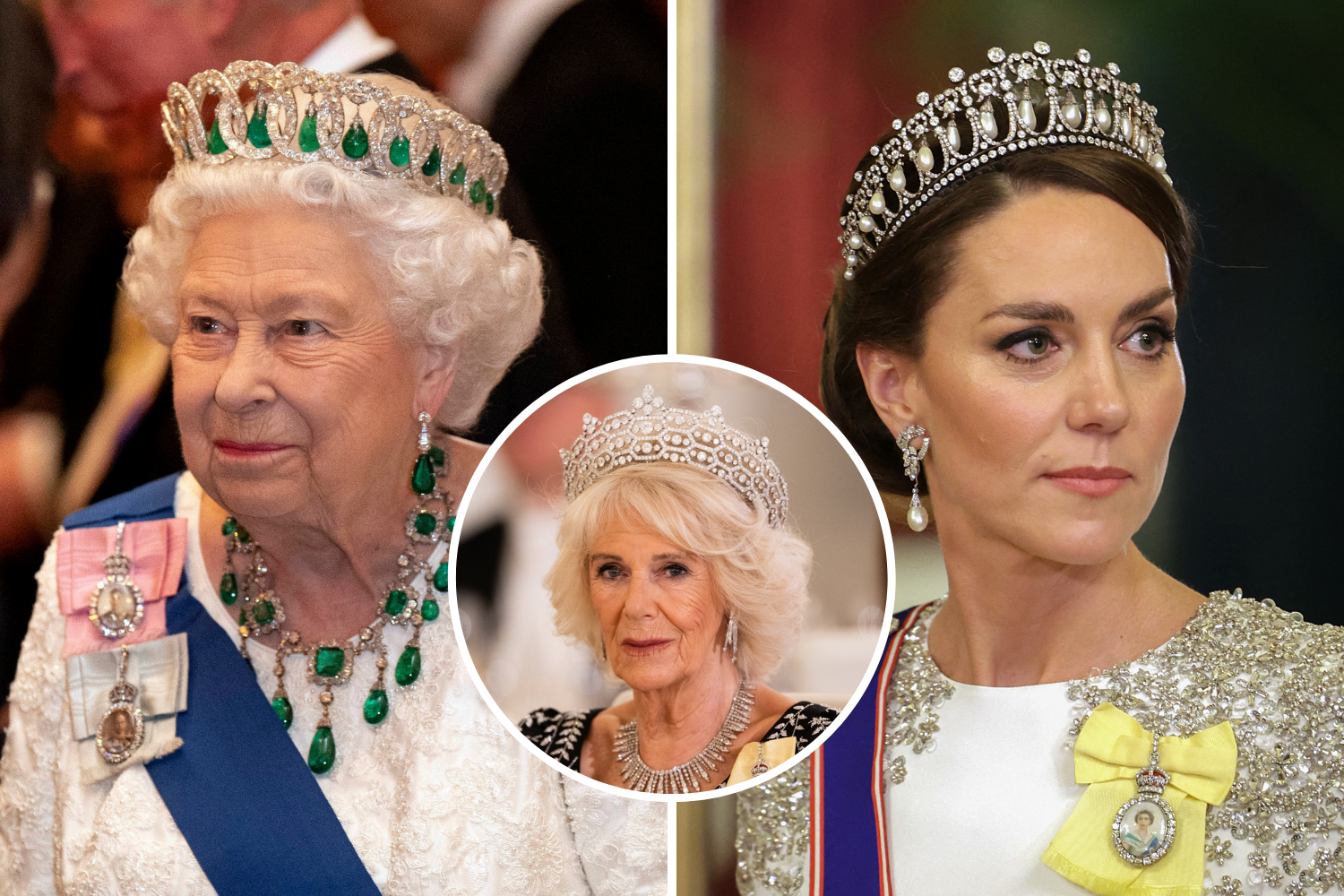
Here, Newsweek takes a look at the British royals’ sparkling tiara moments, from Queen Elizabeth to the Princess of Wales, the Duchess of Sussex and Queen Camilla.

Queen Elizabeth II—Visit to Iceland 1990

One of Queen Elizabeth II’s most impressive tiaras was first owned by her great-grandmother, Queen Alexandra.

The Russian “Kokoshnik” style headdress features 61 graduated bars of brilliant diamonds rising to a peak in the center, creating an impressive addition of height to the wearer.

Queen Elizabeth wore this tiara on a number of important occasions throughout her reign, including state visits, banquets and balls.

In June 1990, the monarch paired the tiara with a suite of diamond jewels for an official visit to Iceland.

Princess Diana—Visit to India 1992

Princess Diana wore two tiaras throughout her royal career, most often the all-diamond jewel she was loaned from her family’s own collection known as the Spencer Tiara.

The tiara has its origins in an 18th century centerpiece and has been added to since to create an impressive scrolling motif with diamond flowers. The tiara was returned to the Spencer family before Diana’s death and has since been worn by the princess’ nieces.

In 1992, the princess took the Spencer Tiara on an official visit to India with then-husband Prince Charles (now King Charles III). For the occasion Diana’s favorite fashion designer, Catherine Walker, incorporated the tiara’s scrolling design into the dress the royal would wear to an official dinner with the jewel.

Princess of Wales—Royal Wedding 2011

The Princess of Wales’ first royal tiara moment happened on her wedding day to Prince William in 2011. For the day, Queen Elizabeth loaned the future-princess a sentimental piece known as the Cartier Halo Tiara.

This tiara was originally made as a gift from King George VI to Queen Elizabeth’s mother and it was given to her as an 18th birthday present. The tiara was then loaned by the queen to her sister, Princess Margaret, and daughter, Princess Anne.

Kate has not worn the tiara since her wedding day.

Queen Elizabeth II—Visit to Germany 2015

The tiara that Queen Elizabeth II wore more than any other was the impressive all-diamond Girls of Great Britain and Ireland Tiara, originally derived from a wedding present given to her grandmother, Queen Mary.

Elizabeth was given the tiara as a wedding present from her grandmother in 1947 and it was worn regularly from that day on.

The tiara was the queen’s personal property and therefore is understood to have been inherited by King Charles. It has not been worn since Elizabeth’s death in September 2022.

The monarch wore the tiara for one of her last overseas visits in 2015, to the German city of Berlin.

Duchess of Sussex—Royal Wedding 2018

Like sister-in-law Kate, the Duchess of Sussex’s first royal tiara moment came on her wedding day to Prince Harry in 2018.

After a widely speculated on period of tension within the royal household known as “tiaragate,” it was finally settled that Meghan would be loaned the Diamond Bandeau Tiara owned by Queen Elizabeth, which had been made for her grandmother, Queen Mary, in the 1930s.

Meghan wore the tiara to hold her cathedral length veil in place as she walked down the aisle at St. George’s Chapel, Windsor and has not yet re-worn the piece in public.

Queen Elizabeth II—Diplomatic Reception 2019

Another of Queen Elizabeth II’s most prestigious tiaras was inherited from her grandmother, Queen Mary, in 1953, known as the Grand Duchess Vladimir Tiara.

This was originally owned by the Russian Grand Duchess Vladimir whose descendants sold a collection of her jewels to Queen Mary following the 1917 revolution.

The jewel, designed by Bolin, features 15 overlapping diamond set ovals and was adapted by Mary to accommodate interchangeable swinging pearls and emeralds.

Elizabeth wore this tiara to the last diplomatic reception she hosted at Buckingham Palace in 2019 before her death.

Princess of Wales—State Banquet 2022

The Princess of Wales has worn three tiaras over the course of her 12-year marriage to Prince William. The one most often seen is known as the Queen Mary Lover’s Knot Tiara.

This was commissioned by Queen Mary in 1913 and has been adapted since. The tiara was inherited by Queen Elizabeth II who wore it in the early years of her reign before giving it as a long-term loan to Princess Diana as a wedding present in 1981.

In 2015, the tiara was seen for the first time since Diana’s death, worn by Kate for a diplomatic reception. The tiara was loaned by Queen Elizabeth, and Kate has worn it regularly ever since.

In 2022 the princess wore the tiara to the state banquet held for South African President Cyril Ramaphosa at Buckingham Palace.

Queen Camilla—State Banquet 2022

Following the death of Queen Elizabeth, her heir King Charles is believed to have inherited the majority of her estate, including the jewels that were in her personal possession.

As such, Queen Camilla now has access to many of the pieces and first wore some of the items in November 2022, two months after the monarch died.

For the South African state banquet, Camilla wore Elizabeth’s glittering diamond and sapphire tiara which had been a rare example of a jewel that the monarch had added to the royal vaults herself.

The tiara was purchased at auction in the 1960s and had formerly belonged to a Belgian princess. The piece had originally been a necklace and was later mounted into a tiara and worn on a number of occasions by Elizabeth.

Princess of Wales—Diplomatic Reception 2022

The third tiara that the Princess of Wales has had the use of since marrying into the British royal family is known as the Lotus Flower Tiara.

This piece was originally made for Queen Elizabeth The Queen Mother in the 1920s and can be worn on top of the head as a tiara, or on the forehead in the style of a bandeau.

The Queen Mother loaned the tiara to her youngest daughter, Princess Margaret, for a number of years before it was inherited by Queen Elizabeth II after her mother’s death in 2002.

Kate first wore the tiara in 2015 and reprised its glittering appearance for the annual diplomatic reception at Buckingham Palace in December 2022.

Queen Camilla—Visit to Germany 2023

When Queen Camilla married the then-Prince Charles in 2005, she was given the use of a number of jewels that had formerly belonged to Queen Elizabeth The Queen Mother.

One of the pieces was known as the Greville Boucheron Tiara which was made for Mrs. Margaret Greville (a friend of the Queen Mother’s) in the 1920s. The piece was altered over the years before it took the form of the honeycomb design we see today.

In 1942, Mrs. Greville died leaving her vast jewelry collection to the Queen Mother who regularly wore the tiara throughout her life.

Since her marriage, the jewel has become Camilla’s most worn tiara and she most recently wore it for banquet during a state visit to Germany with King Charles in March 2023.

James Crawford-Smith is Newsweek‘s royal reporter, based in London. You can find him on X (formerly Twitter) at @jrcrawfordsmith and read his stories on Newsweek‘s The Royals Facebook page.

Do you have a question about King Charles III, William and Kate, Meghan and Harry, or their family that you would like our experienced royal correspondents to answer? Email royals@newsweek.com. We’d love to hear from you.

Today’s ‘Wordle’ #847 answer, clues and tips for Saturday, October 14 game

0

When New York-based software engineer Josh Wardle first created Wordle during coronavirus lockdown, as a game “for me and my partner to enjoy,” he surely had no idea he was about to launch a global sensation.

Despite these modest origins, Wordle became wildly popular after being released to the public in October 2021, with players from across the world completing and, in many cases, sharing their results on social media. Such was the success that Wardle was able to sell Wordle to The New York Times in January 2022, for an undisclosed, low-seven-figure sum, though the game remained free to play.

Erhan Aslan, an expert in applied linguistics who teaches at the University of Reading in the U.K., provided some advice for Wordle players in an interview with Newsweek.

Aslan said: “One thing that I think is important in this game is the starting word chosen. Starting off with words that include commonly used vowels, for example, e and a, consonants such as r and t, and sound sequences might be helpful.

“Choosing a word that starts with q, z, j, or x, for instance, may not be the best choice. As you get more feedback after a few guesses, users need to draw on some knowledge of phonics to narrow down or eliminate some words that they might be thinking,” Aslan added.

The answer to today’s puzzle will be revealed at the end of this article, so scroll down with caution if you want to work it out for yourself.

‘Wordle’ #847, Clues for Saturday, October 14

Newsweek has put together five clues to help you solve today’s Wordle puzzle.

Hint #1: The answer contains two vowels.

Hint #2: There are no repeated letters.

Hint #3: Synonyms for today’s Wordle include “assistant,” “handler” and “operative.”

Hint #4: The third letter is a vowel.

Hint #5: Can be associated with spying.

‘Wordle’ #847, Answer for Saturday, October 14

The answer to today’s Wordle puzzle is “Agent.”

Well, that was a fun one! A relatively common word, with two vowels, Saturday’s brainteaser may not be the toughest we’ve experienced, but it was still a good one. Did you get it? Congratulations if so, but please don’t be put off if not. Another Wordle puzzle will be released on Sunday, and Newsweek will be back with a fresh round of hints and tips.

What Does ‘Agent’ Mean?

The Cambridge dictionary defines “agent” as “a person who acts for or represents another.”

For example: “The agent has put a price of $350,000 on our house.”

Trump claims "same people" who attacked Israel are crossing US border

0

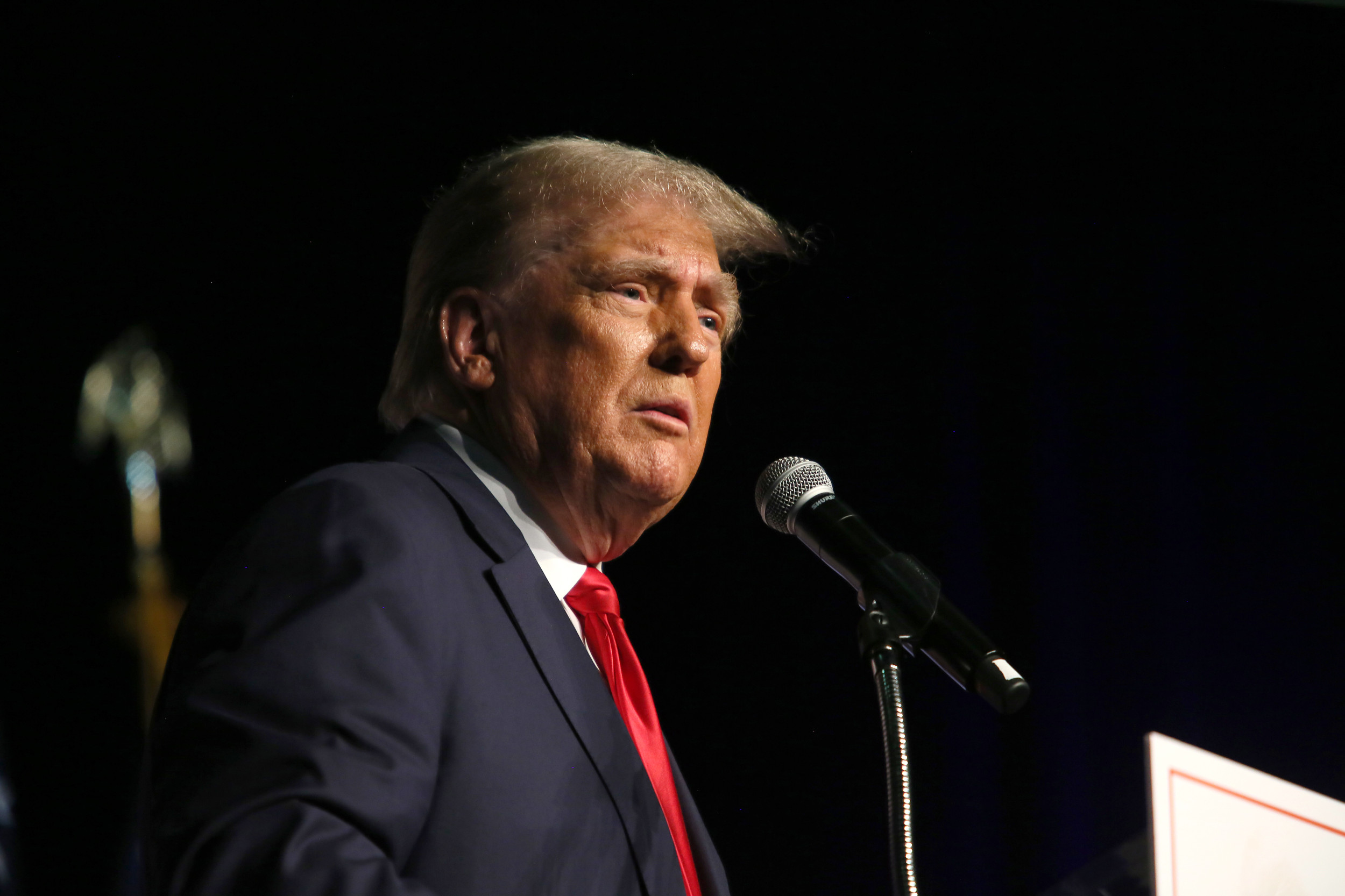
Donald Trump has said, without providing evidence, that the “same people that raided Israel are pouring” into the United States via “our totally open southern border,” and asked whether they could conduct a similar attack.

The former president, and 2024 Republican presidential frontrunner, made the remarks in a video posted on his Truth Social website.

On October 7, Hamas militants launched an unprecedented mass attack into southern Israel from Gaza, killing 1,300 people, predominantly civilians, and kidnapping scores more. The Israelis have since hit back with an air and artillery bombardment, killing 1,900 people, according to authorities in Gaza. Israel has called up 360,000 reservists, and its forces are massing along the Gaza border ahead of an expected ground invasion.

In Trump’s Truth Social video, released on Friday, the former president said: “The same people that raided Israel are pouring into our once beautiful USA through our totally open southern border at record numbers. These are the same people, many of them, that did a number in Israel, a sneak attack.

“Same people we have pouring into our country by the thousands. Are they planning to attack within our country?” Trump added. “Crooked Joe Biden and his boss Barack Hussein Obama did this to us. We cannot let this happen. They may be planning something very very bad…people are pouring in from the Middle East into our country, largely males, strong young males. What’s going on over here? Are we going to be raided like Israel was raided?”

Trump did not provide any evidence to support his suggestion that Hamas, or any other militant groups, are infiltrating the United States via Mexico and could be plotting an attack. Newsweek has contacted Trump using the media enquiry form on his official website, asking if this information exists.

Politifact, a fact-checking website run by the Poynter Institute for Media Studies in St. Petersburg, Florida, rated Trump’s claims as “pants on fire,” indicating it strongly believes them to be false. The website said: “Terrorism experts told us that there is no evidence that Hamas, a terrorist group in Gaza, has militants crossing the Mexico-U.S. border, much less in record numbers.”

Speaking to Politifact, David Bier, an immigration policy expert who works at the libertarian-leaning Cato Institute based in Washington, D.C., said there is no truth to Trump’s claims.

Bier added: “People aren’t crossing the border to conduct terrorist attacks or take over parts of the United States. A very small percentage may come to commit ordinary crimes, like selling drugs, but, overwhelmingly, they are coming for economic opportunity and freedom.”

In a statement released earlier this week, the Department of Homeland Security said it does not have “specific and credible intelligence indicating a threat to the United States at this time stemming from the Hamas terrorist attacks in Israel.”

During the 2023 fiscal year, which ran until the end of September, U.S. Customs and Border Protection detained 151 migrants on the FBI‘s terrorism watchlist who had illegally crossed the southern border, an increase on 98 for 2022.

In a separate video posted to Truth Social on Friday, Trump said: “I kept Israel safe, remember that. I kept Israel safe. Nobody else will, nobody else can and I know all of the players, they can’t do it. But I kept Israel safe, and I will keep Israel safe.”

Trump also expressed solidarity with Israeli Prime Minister Benjamin Netanyahu, commonly known by the nickname ‘Bibi.’ The former president wrote: “#IStandWithIsrael #IStandWithBibi.”

This marks a sharp reversal from comments Trump made on Wednesday when the former president said he would never forget that Netanyahu “let us down” by trying to take credit for the killing of Qasem Soleimani. He was a senior Iranian Revolutionary Guards commander who was assassinated by a U.S. drone in January 2020.

Trump has also said that the attack on Israel wouldn’t have happened had he been declared winner of the 2020 presidential election. Misspelling ‘stolen,’ he wrote: “THE ATTACK ON ISRAEL WOULD NEVER HAVE HAPPENED, ZERO CHANCE, IF THE ELECTION OF 2020 WAS NOT RIGGED AND STOLLEN.”

The former president’s claims of electoral fraud have been repeatedly rejected in court and by independent election experts. Trump has been charged over claims that he broke the law attempting to overturn the election result both across the United States and in the state of Georgia specifically. He has pled not guilty to all counts and denies any wrongdoing.

Matt Gaetz might have handed Democrats a huge win

0

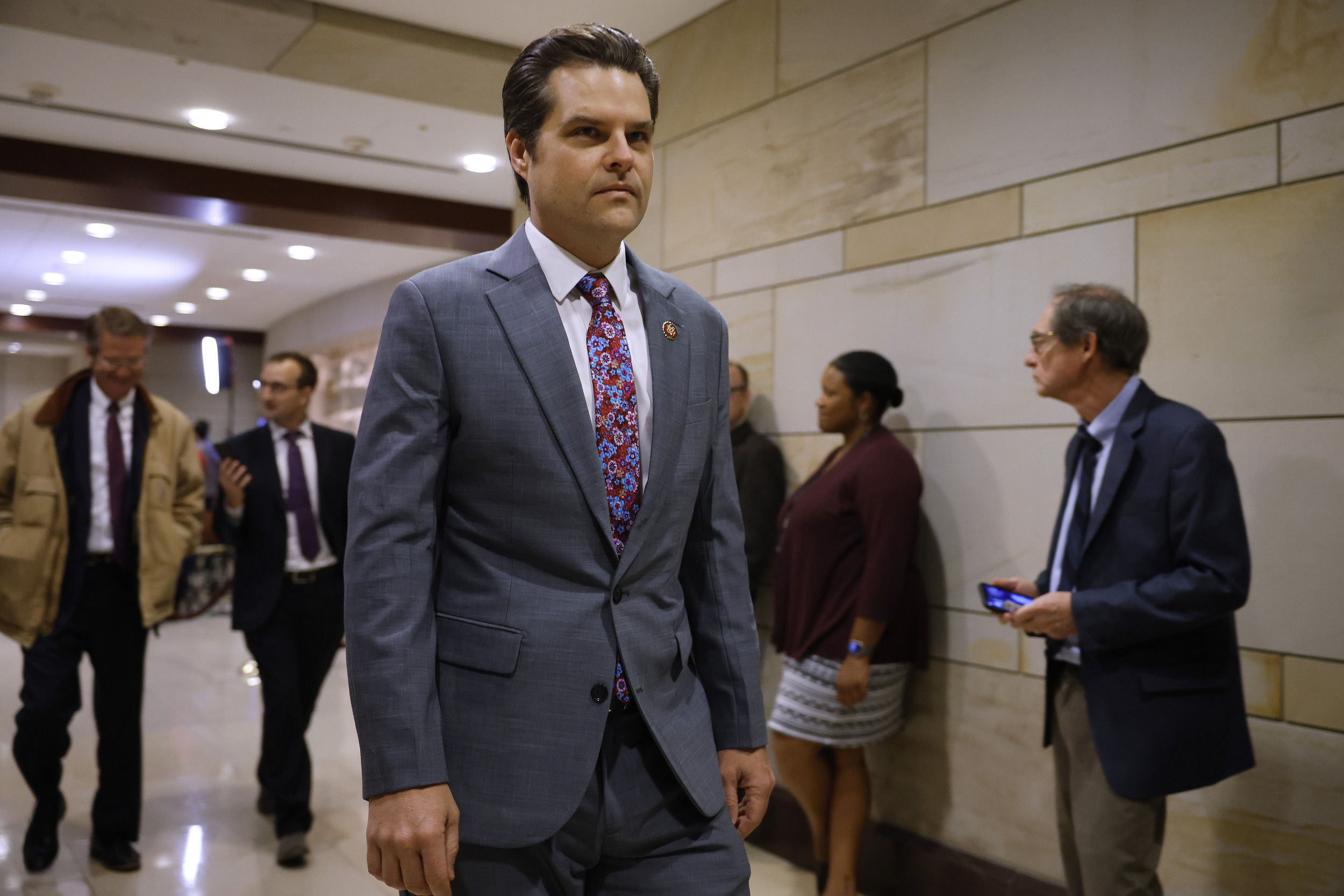
There is growing speculation that Matt Gaetz‘s move to oust Kevin McCarthy from the speaker’s office could backfire amid reports that a bipartisan group of around 10 Democratic and Republican representatives is holding discussions to break the deadlock.

McCarthy became the first speaker in U.S. history to be removed by a “motion to vacate,” filed by Gaetz, on October 3 when eight GOP hardliners voted with the Democratic caucus to bring him down. The move has thrown the House into chaos, leaving it unable to pass legislation with just weeks to go before a partial government shutdown unless more funding is approved by Congress.

On Thursday, House Majority Leader Steve Scalise dropped out of the race to succeed McCarthy, despite receiving the most backing from GOP lawmakers the day before. He said: “Our conference still has to come together and it’s not there.”

Donald Trump ally Jim Jordan, founding chair of the conservative Freedom Caucus, was selected as the new Republican nominee for the speaker’s office on Friday, despite having initially lost out to Scalise. However, it is far from clear that he has the requisite 217 votes to win. Due to the GOP’s wafer-thin House majority, just four of its members can block any Republican candidate for speaker, if they vote alongside a united Democratic caucus.

A group of about 10 representatives from both parties have held very serious discussions about a bipartisan deal to break the deadlock, per Axios news website. This could see Democrats back a moderate Republican as speaker in return for legislative or procedural concessions.

Fox News host Laura Ingraham shared the article on X, formerly Twitter, adding: “Exactly what I warned about on the [Ingraham] Angle the night of the McCarthy ouster. This is Matt Gaetz’s legacy. Congratulations!”

In response, Gaetz posted: “Breathe, Laura. This isn’t going to happen… Democrats won’t be empowered. The Speaker will be more conservative than McCarthy. And you will thank me when it’s over.” Newsweek has approached Rep. Matt Gaetz for comment by email.

Republican Nebraska Rep. Don Bacon, who has a history of bipartisan working, said: “At this point, there are enough Republican and Democrats saying we’ve got to get this fixed.”

A similar sentiment was expressed by Maria Salazar, a Florida Republican representative generally considered to be on the party’s moderate wing. She said: “We’re open to anything that’s reasonable. Bipartisanship is not a sin.”

Mike Rogers, the Republican chair of the armed services committee, has called on the Democratic leadership to put forward its terms for a deal.

Blasting the minority party, along with the GOP rebels, for removing McCarthy, Rogers said: “They put us in this ditch along with eight traitors.

“We’re still the majority party, we’re willing to work with them, but they gotta tell us what they need.”

House Minority Leader Hakeem Jeffries has called for a bipartisan deal: “The House of Representatives has been broken by chaos, dysfunction and extremism. The only way out is to enter into an enlightened bipartisan coalition of the willing in order to get things back on track.”

Politico reporter Olivia Beavers said that one House Republican told her the dispute could see Jeffries elected to the speaker’s office, if a number of frustrated GOP representatives don’t turn up to vote against him. Beavers quoted them as saying: “What happens when Jordan forces us to the floor to try to pressure us and all of a sudden we don’t show up and Hakeem Jeffries is speaker cause he wanted to be a bully?”

There is reportedly also discussion about extending the powers of acting Speaker Patrick McHenry, so the House can pass a new assistance package for Israel, following the devastating Hamas attack of October 7.

Speaking to Bloomberg Television, Foreign Affairs Chairman Michael McCaul, a Republican, commented: “I don’t think we’re gonna have any other option.”

Ron DeSantis raises questions over Trump teleprompter use

0

Ron DeSantis has launched a scathing attack on Donald Trump, accusing the former president of criticizing Israeli Prime Minister Benjamin Netanyahu in the aftermath of the October 7 Hamas assault on Israel. DeSantis added that the “real Donald Trump” is revealed when he is not speaking from a teleprompter.

The Florida governor, whom polling indicates is Trump’s closest rival for the 2024 Republican presidential nomination, made the remarks on Friday during a campaign stop in New Hampshire.

It came after Trump said on Wednesday he would “never forget” that Netanyahu “let us down” by trying to take credit for the 2020 assassination of Qasem Soleimani, who led the Iranian Revolutionary Guard’s Quds Force. The former president also described Lebanese militant group Hezbollah, a key Hamas ally, as very smart and called Israeli Defense Minister Yoav Gallant a “jerk.”

On Friday, Trump partially rowed back from these comments in a post on his Truth Social website, where he wrote: “#IStandWithIsrael #IStandWithBibi.” Netanyahu is commonly known in Israel by the nickname ‘Bibi.’

Addressing journalists, DeSantis said that Trump made the original remarks because Netanyahu congratulated Joe Biden on his 2020 election victory, which the former president still falsely says was rigged against him. Such claims of electoral fraud have been repeatedly rejected in court and by independent election experts. Footage of DeSantis’s remarks was shared on X, formerly Twitter, by the ‘DeSantis War Room’ account.

The governor said: “I think we have the Donald Trump on the teleprompter where he’s reading what’s on there, then you have the Donald Trump when he gets off that teleprompter, and that’s the real Donald Trump when he started speaking about those things.

“He attacked Bibi after the country suffered the worst attack it’s had in its modern history, when they’ve just created a war government, they’re preparing to do a ground invasion in Gaza,” DeSantis added. “And he did that because Bibi congratulated Biden in November. That’s why he did it. He hates Netanyahu because of that. That’s about him. That’s not about the greater good of what Israel’s trying to do or American security.

“I would say get rid of your teleprompter. Don’t use that as a crutch. Go to debates. Show up and debate for two hours, and then we’ll be able to see where he’s really coming from,” DeSantis said. “So, we’ve seen over the course every interview, every time he’s gotten off the teleprompter for, like, the last two months, they’ve had to clean things up for what he’s saying.”

Trump refused to participate in the first two GOP presidential debates, organized by the Republican National Committee, which took place on August 23 and September 27 respectively.

DeSantis said: “This is a different Donald Trump. In 2016, he was freewheeling, he’s out there barnstorming the country, doing all this. Now, it’s just a different guy, and it’s sad to see.”

Newsweek has reached out to Trump for comment using the press contact form on his official website.

Trump was also criticized over his remarks about Netanyahu by Mike Pence, his former vice-president and current rival for the 2024 Republican presidential nomination.

Pence said: “It’s reckless and irresponsible for former President Trump, or any American leader, to send any message, other than full and unconditional support to Israel. And taking this moment to criticize the Prime Minister of Israel is just, it’s reckless and irresponsible.”

Around 1,300 Israelis, predominantly civilians, were killed in the massive Hamas surprise attack on October 7, with dozens more being dragged off into captivity. Israel has vowed to crush Hamas in response, with an air and artillery bombardment killing more than 1,900 people in Gaza, according to local authorities. Some 360,000 Israeli reservists have been called up, with a ground attack into Gaza believed to be imminent.

What time is the solar eclipse today? When to see "Ring of Fire" phenomenon

0

Americans living in a narrow swath of the country will have an opportunity to view a rare astronomical event today.

The sun, moon and Earth will align perfectly in an annular solar eclipse on October 14, in which the moon is not large enough to completely block the sun’s light. The eclipse creates a halo around the moon as it passes in front of the sun, known as the Ring of Fire. It is the last annular eclipse until 2039 when one will be visible in Alaska.

The eclipse will be seen in eight states across the southwest United States. The Ring of Fire’s direct path will be visible in parts of Oregon, California, Nevada, Utah, Arizona, New Mexico, Colorado and Texas. Other parts of the U.S. will be able to view a partial eclipse but won’t have the ability to see the Ring of Fire in person.

The Ring of Fire will be visible at slightly different starting times between the period of 9:19 a.m. and 9:25 a.m. PDT in Oregon, California and Nevada, depending on the viewer’s location. It will be visible between 10:27 a.m. and 10:34 a.m. MDT in Utah, Colorado, Arizona and New Mexico. For viewers in Texas, the show begins at around 11:52 a.m. CDT.

The Ring of Fire is visible for only a few minutes depending on the location of the viewer, and the view is dependent on the weather.

AccuWeather meteorologist Brandon Buckingham told Newsweek that clear blue skies are paramount for a good view of the eclipse.

“The main thing to look for here is blue skies for perfect viewing conditions,” Buckingham said. “Generally for these eclipses during the daytime hours we like to see clear skies so you can have an uninterrupted view as the moon passes in front of the sun’s light.”

The Ring of Fire eclipse is only one of several astronomical events happening this month. A week afterward, an Orionid Meteor Shower will produce about 20 shooting stars per hour overnight October 20 into the early morning hours of October 21. The Orionids is the most prolific meteor shower in Halley’s Comet. People in both the northern and southern hemispheres will have the chance to view the showers, weather permitting.

Another eclipse is expected to take place later this month, which has also elicited interest from skywatchers.

The Hunter’s Moon—a popular name for the October full moon—will fill the sky on October 28 and will also produce a partial lunar eclipse. The eclipse is produced when the moon passes through Earth’s shadow. Viewers in Europe, Africa and Asia will have the best view of the eclipse, which will likely not produce much of a show in the United States, according to AccuWeather.

The next time Americans will be able to experience a partial lunar eclipse on U.S. soil will be September 18, 2024.

Paris bomb threats spark panicked scenes

0

A number of high-profile sites in and around Paris have been evacuated following bomb threats. It comes just one day after a teacher was stabbed to death in the northern French town of Arras, with authorities attributing the attack to a suspected Islamic extremist.

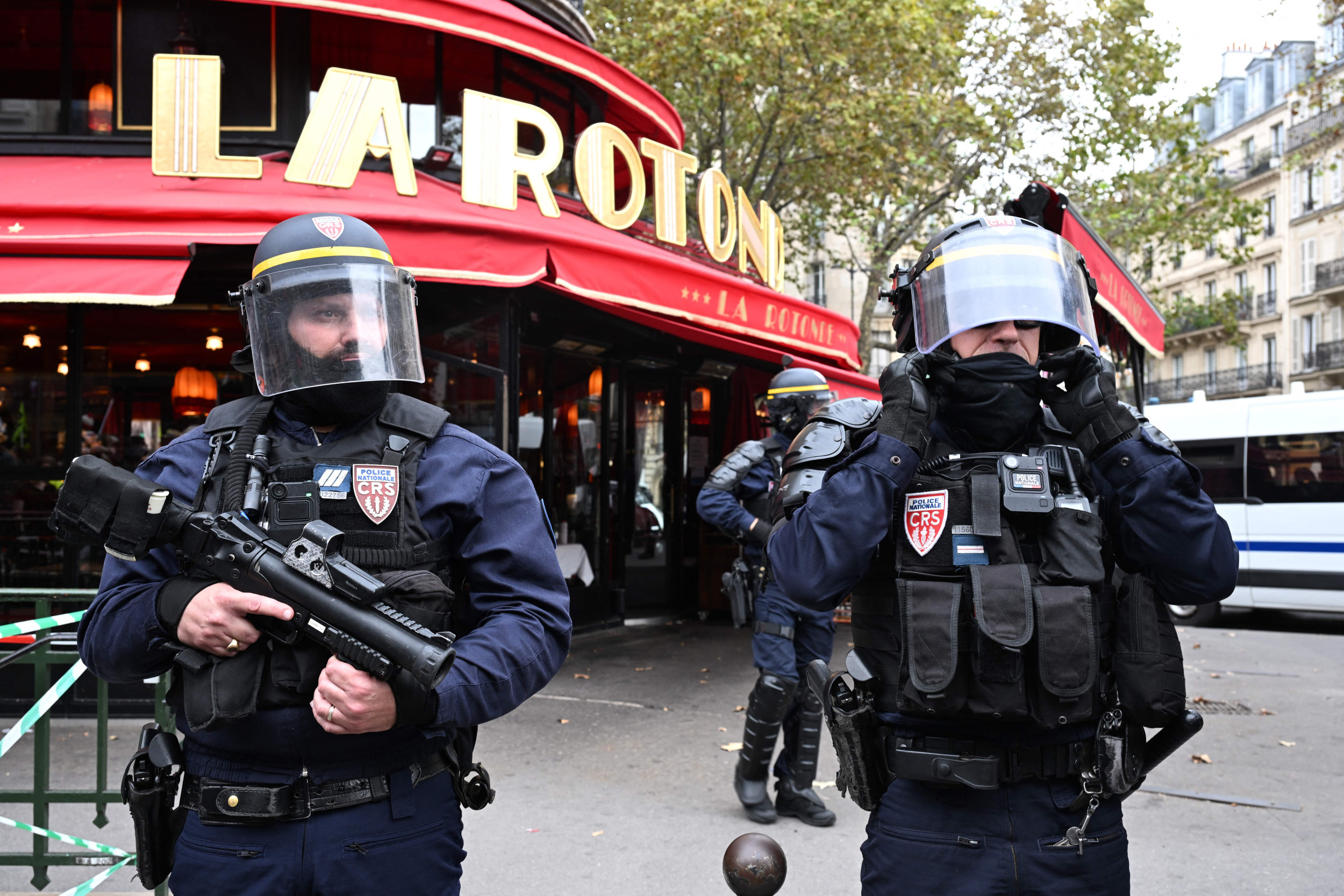
The Louvre art museum, Gare de Lyon train station and the Palace of Versailles were all evacuated Saturday, according to French media reports. Footage posted on social media showed scores of visitors being led away from the Louvre and the Palace of Versailles, two of the most-popular tourist attractions in France.

It comes amid surging tensions in France following the massive Hamas surprise attack, which hit targets across southern Israel on October 7, killing 1,300 people. In response, Israel has targeted Gaza with an intense air campaign, which local authorities say has resulted in 1,900 deaths. The Israelis have mobilized 360,000 reservists for an anticipated ground offensive.

On Thursday, French President Emmanuel Macron said that 13 French nationals had been killed in the attacks, with another 17 missing, presumed taken hostage. French authorities have banned pro-Palestinian demonstrations, which they say “generate public order disturbances,” leading to a number of arrests.

Late on Thursday morning, officials at the Louvre announced that the museum was closing for security reasons, with a spokesperson telling the Agence France-Presse (AFP) news agency that it had received “a written message reporting a risk for the museum and its visitors.”

Footage that was posted on X, formerly Twitter, shows families racing away from the Louvre following the announcement.

The Palace of Versailles was evacuated early on Saturday morning and won’t reopen for the day, after a bomb threat was received, according to AFP. Video posted on X shows hundreds of visitors calmly leaving the former royal residence, which receives nearly 15 million visitors per year.

Also on Saturday afternoon, the Gare de Lyon station, one of the seven main stations in Paris, was evacuated, reportedly following the discovery of a suspicious package.

On Friday, 57-year-old Dominique Bernard was stabbed to death outside a school in Arras, with three other people injured. The suspected attacker, a 20-year-old of Chechen origin, was arrested after what Macron described as an act of Islamist terror. French Interior Minister Gérald Darmanin later said that there was “probably a link between what’s happening in the Middle East and this incident.”

The attack came almost three years to the day since French teacher Samuel Paty was beheaded by a radical Islamist after showing his class a cartoon depicting the Muslim Prophet Muhammad. Following Friday’s stabbing, the French government raised its terrorism threat level and deployed 7,000 troops to assist the police.

Friday’s attack came after Khaled Mashaal, the Hamas leader, called for demonstrations across the world in support of the Palestinian cause in what some commentators dubbed ‘Day of Jihad.’

Iran minister hugs Hamas chief after threatening Israel with "earthquake"

0

Iran’s foreign minister hugged and kissed a key Hamas leader after threatening Israel with a “huge earthquake” as part of a region-wide war if it did not halt attacks on the Gaza Strip.

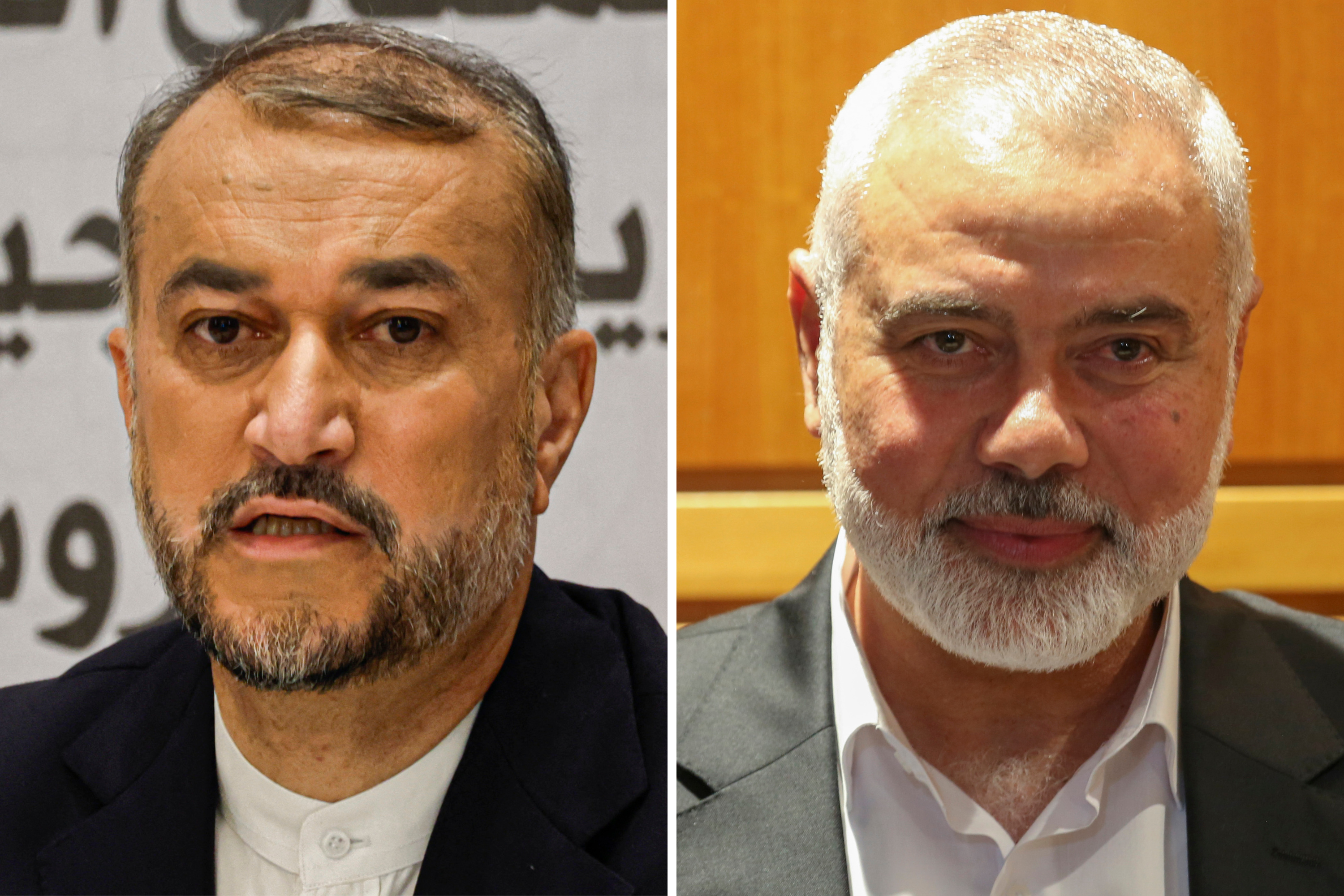
Video captured by the Iranian-state media outlet Islamic Republic News Agency (IRNA) and shared on social media shows Iranian Foreign Minister Hossein Amirabdollahian meeting with Ismail Haniyeh, a leader of the Palestinian militant group Hamas, in Doha, Qatar.

In the video Amirabdollahian and Haniyeh greeted each other warmly, with footage showing the pair hugging, kissing, smiling, and laughing.

Open Source Intelligence Monitor focused on Europe and Conflicts across the World posted a clip of the encounter on X, formerly Twitter.

That meeting took place exactly a week after Hamas attacked Israel and killed 1,300 people, mostly civilians including women children and the elderly in the deadliest-ever strike by Palestinian militants on the Jewish state.

Iran which helps arm and fund Hamas, has denied involvement in the attack, a sensitive matter for U.S President Joe Biden who tried to pursue some of the rapprochement with Tehran started by the Obama administration when he was Vice President.

During the meeting, the Amirabdollahian and Haniyeh reportedly agreed to “continue cooperation to fully achieve the goals of Hamas and the Palestinian people,” according to a press release by Hamas obtained by The Jerusalem Post.

Hamas is fighting to destroy Israel and replace it with an Islamist Palestinian state. Hamas, which the U.S. designates a terrorist organization, casts its actions as resistance to Israel’s occupation of what it says is Palestinian land.

Amirabdollahian referred to Hamas’s murder and kidnapping of civilians and soldiers in southern Israel as “glorious,” The Jerusalem Post reported.

After the October 7 Hamas attack, Israel launched its heaviest-ever airstrikes on Gaza, home to roughly 2.3 million people. As of Saturday, at least 1,300 people had been killed in Israel, the Associated Press reported, citing the Israeli military. More than 1,500 people have been killed and more than 6,600 have been injured in Gaza, according to the Gaza Health Ministry, the AP said.

Israeli Prime Minister Benjamin Netanyahu has said his country is “at war” and has cut off supplies of food, fuel, electricity and medicine in the Gaza Strip. Israel has called up 360,000 army reservists as it prepares for a likely ground offensive into the territory. Israel has told Palestinians to evacuate Gaza, but it remains unclear where civilians can flee for safety.

Newsweek reached out via email on Saturday to the Israel Defense Forces (IDF) for comment.

Iran has expressed support for Hamas, with Supreme Leader Ayatollah Ali Khamenei saying earlier on Saturday that “everybody in the Islamic world is duty bound to help the Palestinian people,” according to Iran’s Tasnim News Agency.

Ahmed Abdulhadi, Hamas’s representative in Lebanon, told Newsweek previously that Hamas coordinated with Iran before launching the attack last weekend. Tehran has denied any role in the operation, though the Iranian Mission to the United Nations told Newsweek on Wednesday that the Islamic Republic provided Palestinian fighters with “skills” to help them launch such an assault. The Palestinian movement has denied that any other entity played a role in planning the surprise land, sea and air attack.

U.S. and Israeli officials, while accusing Iran of having a long history of supporting Hamas militarily, financially and otherwise, have not identified any clear connection between Tehran and the Hamas attacks. Any direct Iranian involvement would create multiple headaches for President Biden, potentially widening the war in the Middle East and putting the spotlight on his diplomacy with Iran. As the Democratic president campaigns for re-election in 2024, Biden is facing mounting scrutiny over several issues involving Iran, including trying to revive a nuclear non-proliferation deal scuppered by his predecessor and rival, former President Donald Trump, and a controversial decision to unfreeze Iranian funds in a sanctions-bound bank account as part of a deal to free American prisoners.

Prior to meeting with Haniyeh on Saturday, Amirabdollahian told reporters in Beirut, Lebanon, on Saturday afternoon that the militant group Hezbollah is considering getting involved in the conflict and called on Israel to stop its attacks on Gaza.

Hezbollah, an Iran-backed group that the U.S. also designates as a terrorist organization, has voiced strong support for Hamas and has repeatedly exchanged fire with Israel since the start of the war.

Amirabdollahian said he met with Hezbollah leader Sayyed Hassan Nasrallah on Friday, where the two discussed the group’s conditions.

“I know about the scenarios that Hezbollah has put in place,” Amirabdollahian said. “Any step the resistance (Hezbollah) will take will cause a huge earthquake in the Zionist entity.”

Teen fatally stabs his sleeping mom in front of newborn sister: Police

0

A 13-year-old fatally stabbed his mother last week as she slept in their Florida apartment while the teen’s 2-week-old sibling was in the same room, according to local police.

The teenage suspect called the police around 11:30 p.m. on October 12 and confessed that he just killed his mom in their home at the Amelia Oaks Apartments in Hialeah, Florida, according to the Hialeah Police Department (HPD). His mother’s body was discovered with multiple stab wounds in front of the baby’s crib,

The teenage suspect, who has not been identified due to his age, was taken into custody at the scene, police said. As of Saturday, the 13-year-old is facing a charge of second-degree murder as a juvenile for his mother’s slaying. However, HPD investigators and state prosecutors will determine whether he will be tried as an adult for first-degree murder, which requires premeditation. The investigation is ongoing, police said.

During questioning, the teen told detectives that he stabbed his mother while she was asleep in her bedroom with his newborn sister feet away in her crib, HPD Lt. Eddie Rodriguez told Newsweek in an email interview on Saturday. After the killing, the suspect allegedly took photos of his mom’s body and sent the images to a friend via social media and admitted to the friend over the phone that he killed her, according to the arrest report.

When officers arrived at the apartment in Hialeah, a city of more than 200,000 in Miami-Dade County, Florida, they found the 39-year-old mother, identified as Irina Garcia, dead in her bedroom, next to her baby’s crib, Rodriguez said.

The newborn, who is the suspect’s half-sister, was unharmed, police said. The mother’s husband, the teen’s stepfather, is a truck driver who was working in Georgia when the slaying occurred, Rodriguez said.

“This is heartbreaking,” he said. “I never would have imagined something like this, a 13-year-old child taking his mother’s life. It’s a very sad story.”

HPD detectives are still trying to determine the teen’s motive for the slaying, Rodriguez said to Newsweek, adding that there is “no indication as to why he killed his mother.”

“We cannot say why this happened,” Rodriguez said. “We can say that he called 911 and advised what he did.”

Rodriguez said the teen was known as a “good kid” and is in the eighth grade at iMater Academy in Hialeah.

Newsweek reached out on Saturday to iMater Academy for comment.

“From what I understand there were no other calls to the apartment and people here said he was a good kid and as far as we know there were no mental health issues,” Rodriguez said.

The 13-year-old reportedly called 911 to admit what he had done because he said he was afraid he was also going to harm his sister and himself, according to the arrest report.

“It makes no sense,” Rodriguez said. “We are still scratching our heads as to what brought him to do such a thing and take his mother’s life.”

Update 10/15/2023, 12:20 a.m. ET: This article was updated with additional information from Rodriguez.

Palestinian militants hijacked my plane. I know the hostages’ pain

0

Reading the morning news on Saturday, I exploded in tears. Hamas had launched a deadly surprise attack into Israel, killing hundreds and taking hostages. Israel quickly declared war against the Gaza-based militant group.

Though it’s been over five decades, these events are all too familiar.

In September 1970, I was taken hostage. Headed home to New York after a summer in Israel, I’d boarded TWA Flight 741 in Tel Aviv. I was 20 years old and traveling alone.

Three hours into the flight, an armed couple dashed down the aisle, forcing their way into the cockpit. The hijackers were from the Popular Front for the Liberation of Palestine (PFLP), a group I’d never heard of. I was confused and worried, but not panicked. I didn’t know enough to be afraid.

The plane was redirected to a barren desert region of Jordan where torches in oil drums lined a makeshift runway of hardened sand.

A crowd of guerrillas, heads swathed in scarves with only their eyes visible, awaited us. When the hijackers descended a wooden ladder, cheers rang out from the jubilant crowd. That’s when a shiver ran down my spine.

A PFLP commando informed us we’d be staying on the plane for a day or two. I wondered how I could manage; the plane reeked of cigarette smoke, dirty diapers, and nervous sweat. Babies bawled and mothers demanded milk and food.

The following day, mothers with babies and toddlers, non-Americans, and many non-Jewish passengers were released. Others, like me, sat on the plane for six days and nights with no flushable toilets, running water, or air conditioning.

Amidst a sea of conservatively dressed orthodox Jewish women, my green minidress brought unwanted attention to my body.

Daytime temperatures inside soared to well over 100 degrees. Shivering at night, sleep came in fragments, with snoring and children’s cries wafting through the air. Two other planes were hijacked and parked nearby.

After our captors discovered an Israeli army shirt in my backpack, they interrogated me at gunpoint. Scared for my life, my voice narrowed to a whisper as I explained the shirt was a gift, and I was an American college student.

Convinced I was an Israeli soldier and a Zionist, I was pegged as an enemy of the Palestinian people.

The PFLP demanded that Israel and several European countries release imprisoned Palestinians. In exchange, they would release the hostages. If their demands were not met, they threatened to blow up the planes with passengers onboard.

But they took us off the planes, and we hostages watched as the militants wired explosives and lit the fuses. Explosion after explosion in rapid succession destroyed sections of the planes. Acrid smoke stung my nostrils, and my mouth tasted bitter and metallic. Amidst the ashes of the planes, the Palestinian militants danced and cheered.

Thirty-two passengers, five of us women, were taken by bus and kept as prisoners of war in a cramped apartment in Amman.

During the first few days, two female PFLP members talked to the women hostages about what they hoped to achieve with the hijackings.

They wanted us to understand their frustrations—how they had lived as refugees in Jordan for over twenty years with few rights and limited opportunities. They had hijacked the planes in a desperate attempt to tell the world about their plight.

“We’re willing to do whatever it takes to get our rightful homeland back,” a female PFLP member told us. “No matter how long we have to fight.”

As an American Jew, that was the first time I’d heard Middle East history discussed in such personal terms and from a non-Israeli perspective.

Within days, a violent civil war erupted between the PFLP and the army of King Hussein of Jordan. Over the next two weeks, thousands of Palestinians and Jordanian soldiers were killed, and the city of Amman lay in ruins.

As explosions and bombs moved closer to our location, we sheltered by lying on the concrete floor, praying for our survival. When our own deaths seemed imminent, we were suddenly freed. If we hostages had been killed in the civil war, the PFLP would have lost all their bargaining chips.

Miraculously, we hostages all came home alive.

When I arrived home in Brooklyn, my parents didn’t ask many questions. Believing I should put my fears behind me, they encouraged me to return to college, forget about the hijacking, and move on with my life.

This may sound naïve today, but in the 1970s even soldiers who returned from combat in the Vietnam War were supposed to quickly adapt. It would be another decade before PTSD became recognized as a diagnostic category.

I was socialized, like many women born in the 1950s, to not talk about my problems, to hide what did not seem “normal.” We were awash with secrets.

When I returned to school, I felt disconnected from many of my close friends. Engaged in anti-Vietnam war activism, they thought my experience with “real revolutionaries” was “far out.”

Certain that no one could understand my ordeal, I buried those weeks of my life, rarely speaking of my experience, caught in a liminal space between captivity and freedom. Recurring nightmares of bombs and explosions plagued me. Loud noises and small spaces made me edgy. Yet even in therapy, I never spoke of it.

It’s only in recent years that I’ve realized that buried trauma doesn’t just go away. I’ve been a hostage to my own painful memories, keeping them sealed in silence. Talking and writing about my experience has been a way of finally addressing and processing the pain.

Since 1970, the desperation of the Palestinians half a century ago that drove them to meticulously coordinate the hijackings of four planes has only intensified. The violence of the recent attacks came as a surprise to Israel’s security forces, just as the hijackings had.

The stated goal of Hamas for taking hostages is to force Israel to release imprisoned Palestinians; this is the same goal as the PFLP espoused fifty years ago.

And just as the hostage-taking by the PFLP in Jordan resulted in a civil war, the recent attack on Israel has resulted in the declaration of war on Hamas, on Gaza. While the outcome remains unclear, the death toll will continue to swell.

My heart is with the hostages: The men, women, and children who were violently seized from the safety of their homes and from the streets of Israel.

I understand what it means to be taken, the agony of the long days in captivity, and the grieving and invisible pain that follows. And I pray for all the families and loved ones of the hostages who are now living with the crippling fear and terror of the unknown.

Mimi Nichter, Ph.D. is a retired professor of anthropology at the University of Arizona. She is currently completely a memoir on the hijacking, Hostage: A Memoir of Terrorism, Trauma, and Resilience.

All views expressed in this article are the author’s own.

Do you have a unique experience or personal story to share? Email the My Turn team at myturn@newsweek.com.