Friday, May 8, 2026
Home Blog Page 33

Has Hamas called for a global day of Jihad? What to know

0

As Israel prepares its ground assault in Gaza following attacks by Hamas, the militant group’s former leader has called for protests around the world and has said it is the time for jihad—a term that has been widely used by the group and other Islamist militants in the context of holy war.

Hamas seeks the destruction of Israel and its replacement with an Islamic state.

The group launched an unprecedented attack on Israel on Saturday and at least 1,300 people were killed there, the Associated Press reported, citing the Israeli military. Israel subsequently launched its heaviest air strikes on Gaza and at least 1,400 people have been killed in the enclave, according to the Palestinian health ministry, AP said.

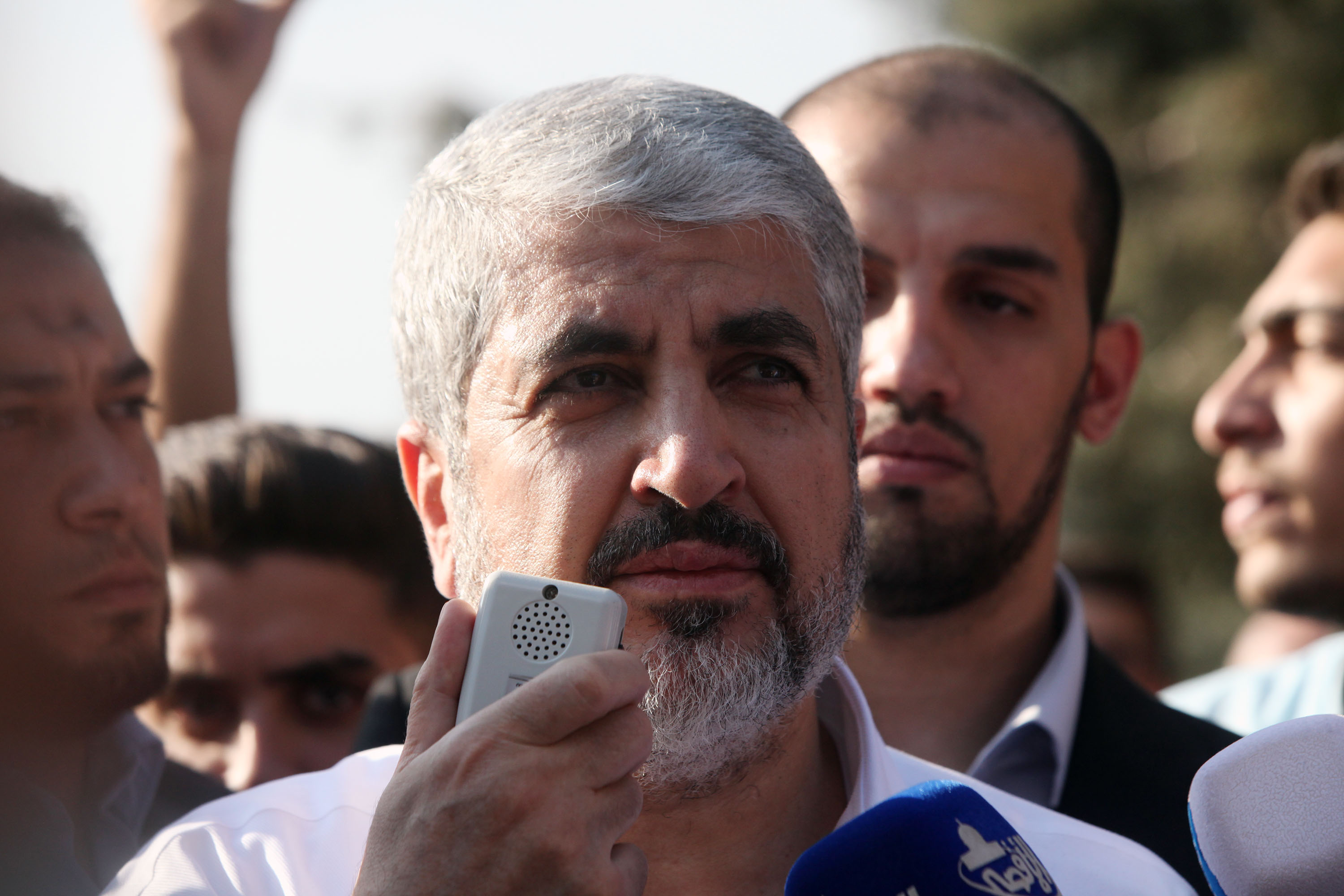
Khaled Mashaal, the former leader of the political wing of Hamas, released a video statement to Reuters this week calling on others to “Deliver a message through, the squares and the streets, a message of anger, that we are with Palestine.”

Mashaal mentioned the concept of “jihad,” and some outlets reported that he had urged a “global jihad.”

Who Is Khaled Mashaal?

Mashaal was the leader of the political wing of Hamas from 1996 to 2017, tasked with building relations with other Sunni Muslim powers such as Turkey, Saudi Arabia, Qatar and Egypt.

The United States classifies both wings of Hamas as a terrorist organization.

Speaking in 2014, during conflict in Gaza, Mashaal said Hamas would not cease resisting Israel until its demands were met, saying: “The weapons of the resistance are sacred and we will not accept that it be up for negotiation.

“There is no politics without resistance and there is no resistance without arms.”

Mashaal added: “Our enemy only comes under pressure when they are under fire. As our rockets hit them, they were forced to hold talks with us.”

While leader of Hamas’ political branch, Mashaal was based in Qatar, where he still lives. According to the Counter Extremism Project, he is now leader of Hamas’ diaspora office.

What Did Mashaal Say This Week?

In his recorded statement, Mashaal called for, among other requests, global protests. A video was published via MailOnline in an article summarizing his comments given in Arabic and translated, and credited to Reuters.

“I call on you, me being included as well, and we are all responsible for this to start with the things we are used to but with a higher ceiling, first of all for anger, to head to the squares and streets of the Arab and Islamic world on Friday, the Friday of Al Aqsa Flood,” Mashaal said.

“Deliver a message through the squares and the streets, a message of anger, that we are with Palestine, that we are with Gaza, with Al Aqsa, with Jerusalem, and that we are a part of this battle, this is first.

“Second, Gaza is calling you for help, with relief and money, with whatever you own, whoever can help, this is the moment of truth.

“What should we answer?

“We are facing truth, and here I say clearly, without hesitation, this is the moment for the nation to join in the fight, to fight with them.

“I call firstly the surrounding countries, Jordan, Syria, Lebanon and Egypt, all of its sons and daughters, officially and popularly, your duty is bigger, because you are closer to Palestine.

“Tribes of Jordan, sons of Jordan, brothers and sisters of Jordan, from all of your sides and backgrounds, this is a moment of truth and the borders are close to you, you all know your responsibility, and this applies to all nations.

“To all scholars who teach jihad for the sake of God and who preach the fighters and martyrs, to all who teach and learn, this is a moment of application [of theories], so that words are not just words.”

Newsweek has reached out to Reuters for a copy of the video statement.

Meanings of jihad

Jihad does not always refer to armed struggle, although it is widely used in that context by militant groups—including Hamas and its fellow Palestinian militant group named Islamic Jihad, some of whose fighters joined the attack on Israel.

Writing in 2017, following the Manchester Arena bombing in the U.K., Samantha May, a lecturer in International Relations at the University of Aberdeen, explained in an article published by Newsweek that in theological terms, jihad literally means “struggle” in the path of God.

“The ‘greater’ jihad is the struggle to be a good Muslim, as enacted everyday by the millions of pious Muslims across the globe in acts such as getting out of bed for prayers at dawn and fasting during the holy month of Ramadan,” May wrote.

“The ‘lesser’ jihad, meanwhile, is armed struggle in the way of Allah.”

May added that while specific movements have reinterpreted the concepts for their own “temporal needs,” there is “no definite beginnings or ends to the vague concept of a jihadi ‘mission’—there are only constantly evolving practices, strategies and understandings.”

Mohammad Hassan Khalil, director of the Muslim Studies Program and adjunct professor in the College of Law at Michigan State University, writing for The Conversation, said that in the “specific context of Islamic law, however, jihad generally signifies an armed struggle against outsiders.”

However, it’s debated at what point warfare is justified, Khalil wrote, adding that a rule of civilian immunity from violence is “widely accepted.”

“But such radicals also invoke loopholes to get around this rule,” Khalil wrote.

“When attempting to justify 9/11, for instance, Osama bin Laden argued, among other things, that American civilians could be targeted since, he asserted, American forces had previously targeted Muslim civilians.

“To justify this loophole, bin Laden invoked the writings of medieval Muslim scholars such as al-Qurtubi. As I show in a recent book, however, al-Qurtubi actually held the exact opposite view: Civilians should never be targeted as a form of retribution,

“This is but one example of why it is critical not to conflate the prevailing interpretations of jihad with Muslim terrorism.”

As written by Islamic scholar Tariq Ramadan in Islam: The Essentials, scholars have created dozens of accepted forms or definitions of jihad “of which war…is only one, and far from the most prominent.”

Where Does This Leave Us?

While the term jihad can be used in other contexts than to refer to a holy war, Hamas has always been clear about its aims and the means it believes are necessary to achieve them.

Hamas’s charter, updated in 2017, says there shall be no recognition of Israel—referred to as the Zionist entity—and that it seeks the complete liberation of Palestine from the river to the sea: meaning all of Israel and not only the West Bank, Gaza Strip and East Jerusalem. It underlines that armed resistance is at the heart of its struggle.

“Resistance and jihad for the liberation of Palestine will remain a legitimate right, a duty and an honour for all the sons and daughters of our people and our Ummah,” it says, referring to the community of Muslims, according to one translation.

Update 10/12/23, 2:43 p.m. ET: Adds additional context about Hamas and its aims
Did Steve Scalise call himself ‘David Duke without baggage’? What we know

0

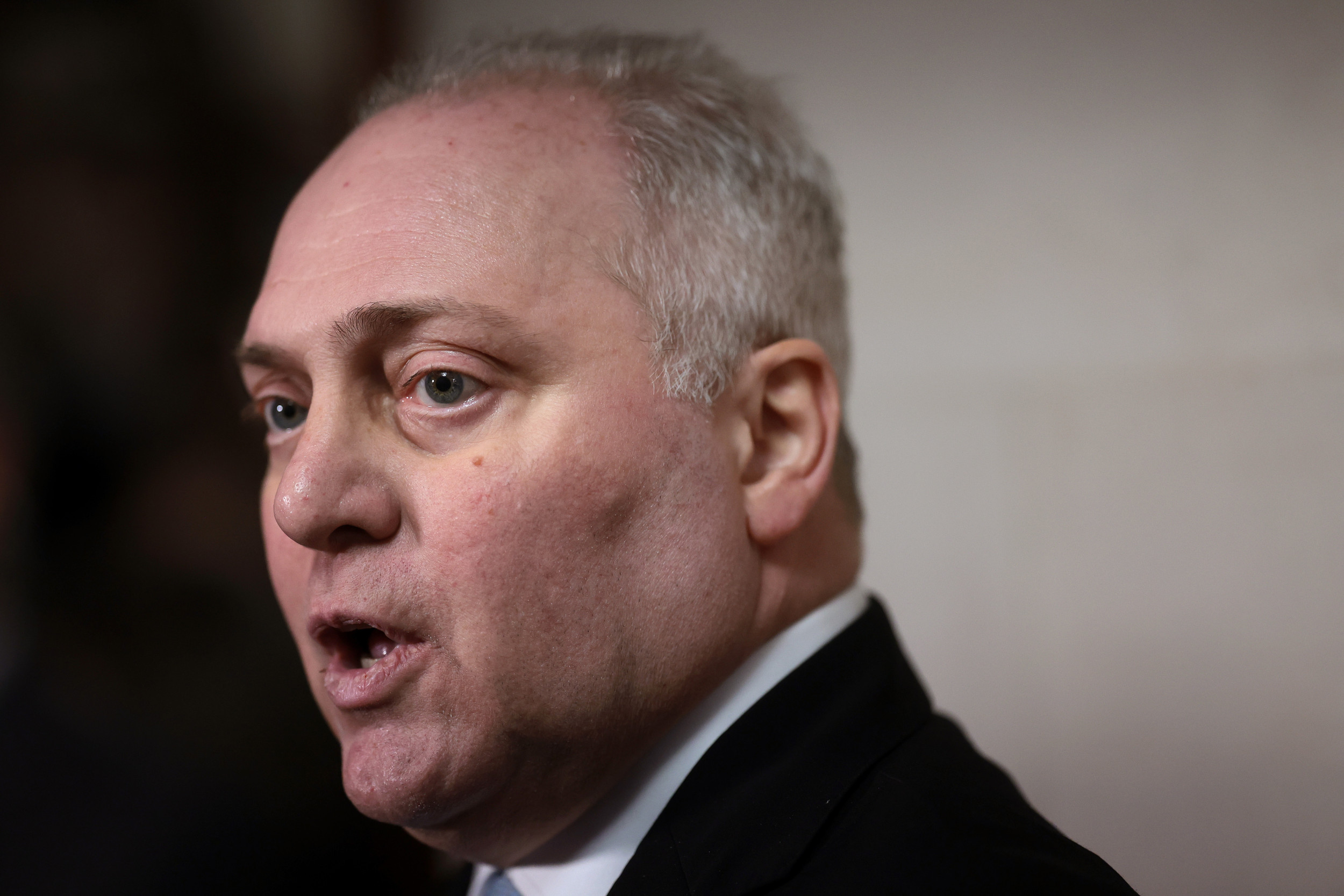
As Washington waits to see whether Louisiana Representative Steve Scalise will become the new House speaker, claims have emerged suggesting he’d compared himself to former KKK Grand Wizard David Duke “without the baggage.”

Scalise beat Ohio Congressman Jim Jordan in a 113-99 secret ballot at the GOP conference on Wednesday to be next in line to replace Kevin McCarthy as House Speaker following McCarthy’s historic ousting.

However, as the race for the speaker’s chair plays out, a claim that Scalise had compared himself to David Duke was shared widely online.

In a post on X by former United States Secretary of Labor Robert Reich, sent on Wednesday, and seen 147,600 times, Reich claimed that “Steven Scalise….reportedly called himself ‘David Duke without the baggage.'”

“And now he wants to be speaker of the House?” Reich added.

“When I say the GOP is an extremist party, this is why.”

As it turns out, the claim deserves some scrutiny.

Did Steve Scalise call himself ‘David Duke without the baggage’?

The quote was mentioned in a 2014 New York Times report on David Duke’s 1991 campaign to become elected Louisiana governor.

Scalise is mentioned on several occasions in the article, published when the representative for Louisiana faced intense criticism for speaking at a conference hosted by the white supremacist European-American Unity and Rights Organization, or EURO, in 2002.

According to a report by The Guardian, the event was backed by David Duke. Scalise admitted he attended the event and apologized for it, even though some said he did not appear.

“One of the many groups that I spoke to… was a group whose views I wholeheartedly condemn,” Scalise said in a statement, reported by The Washington Post.

“It was a mistake I regret, and I emphatically oppose the divisive racial and religious views groups like these hold.”

The New York Times article on Duke later goes on to quote “Stephanie Grace, a Louisiana political reporter and columnist” who recalled meeting Scalise for the first time.

“He was explaining his politics and we were in this getting-to-know-each-other stage,” Grace said.

“He told me he was like David Duke without the baggage.

“I think he meant he supported the same policy ideas as David Duke, but he wasn’t David Duke, that he didn’t have the same feelings about certain people as David Duke did.”

The New York Times said Scalise’s representatives did not respond for comment. Newsweek has contacted Scalise’s office for a response.

On this alone, we can’t say for certain whether Scalise did or didn’t compare himself to David Duke. Furthermore, the quote from Grace suggests Scalise’s admiration, if there were any, were of the policies the former KKK leader ran with in his 1991 race for the Louisiana governor’s mansion.

That is not to say that Scalise did not make the comparison either, but the quote it comes from has been truncated and misses important context which may modify its meaning.

There are around a dozen House Republicans who said they will support Jim Jordan for the House speaker role or who have not yet been convinced to back Scalise, setting up another potentially chaotic path to choose a new House speaker following the 15 rounds of voting McCarthy needed in January to clinch the role.

Signs stress is damaging your hair, from a beauty expert

0

As you spend lots of your time brushing out any unwanted frizz and trying to neaten your unruly hair, you might enviously wonder what other people are using to keep their hair looking so healthy and perfect.

But having healthy looking hair doesn’t have to be the result of numerous expensive products and monotonous wash day routines. In fact, healthy hair can simply be a result of overall wellbeing and lifestyle.

Master stylist and beauty expert, Dawna Jarvis told Newsweek that a person’s hair offers a “window to their overall health and wellbeing.” She said that if someone notices that their hair has become dry and unmanageable, it may be a sign of too much stress.

Jarvis, from California, said: “Just like skin, the state of your hair reflects the body’s internal condition. Nutrient deficiencies, hormonal imbalances, and stress levels can all manifest in the form of issues like hair thinning, excessive hair loss, dryness, and lack of luster.”

One difficult day isn’t going to have any disastrous effects on your hair, but the National Institute of Health (NIH) suggests that long-term stress does increase the risk of hair loss and going gray.

The NIH refers to a 2021 study in which scientists looked at the effect of stress hormones on mice. The results showed that when the mice were subjected to stress over multiple weeks, the increased hormones led to a noticeable decrease in hair growth and a prolonged period of hair loss.

Why Do Stress Levels Impact Hair Growth?

Stress can have many effects on the body, as the American Psychological Association says it can lead to headaches, migraines, breathing problems, nausea, and bloating. But it can also lead to an increase in cortisol production to cope with the higher energy levels required.

“Under significant stress, the body’s cortisol levels spike, which can impact the hair growth cycle, potentially leading to hair shedding, thinning, or alopecia conditions,” Jarvis explained.

“Individuals might notice increased hair loss, a lack of shine, and a change in texture. Their hair may feel more brittle, and they might experience a dry, itchy scalp or dandruff. Stress can also exacerbate existing scalp conditions, leading to increased dandruff or itchiness,” Jarvis said.

Cortisol is considered the body’s main stress hormone, as WebMD explains that it links with the brain to control mood, motivation and fear. While it can be fundamental for regulating blood pressure, controlling the body’s sleep cycle, and keeping inflammation down, it is also the body’s response to intense pressure.

High levels of cortisol for a sustained period of time can lead to further health complications, including anxiety, headaches, bloating, digestive trouble and weight gain, according to WebMD.

So, during times of stress and poor health, hair can become thinner as a result of increased hair loss, it may seem dry, and possibly even flaky on the scalp. Upon noticing those changes, no amount of leave-in conditioner is going to fix the damage caused by stress.

Hair grows across three stages—as the NIH explains, it begins with growth, then degeneration, and finally a rest phase. The cycle begins with hair strands pushing through the surface of the skin before it ceases to grow in the second phase. The final stage is when hair falls out and the process starts again, as hair changes in a cyclical manner.

As a result of these cycles, stress won’t usually have an instant impact on the hair, but will occur over a matter of weeks if it is sustained.

“Generally, hair reflects changes over time. The hair growth cycle involves different phases, and stress or health issues can prolong the shedding or resting phases, leading to noticeable hair problems after weeks or months,” said Jarvis.

Why Is Nutrition So Important?

It is often tempting to try out the latest serums and hair masks, which promise to nourish even the driest of hair, but the best way of improving your hair’s condition is by maintaining a healthy lifestyle.

Jarvis insists that the best course of action is to level down the stress and fuel the body with more of the nutrients it needs.

There is a valuable link between nutrition and hair growth, as highlighted by a 2019 review which was published by the National Library of Medicine. The review highlighted that micronutrients had an important role in hair follicle development, and immune cell function. It also showed that vitamin deficiencies can increase the risk of developing conditions such as alopecia, which is extensive hair loss.

“These symptoms are signs that the hair is not receiving enough nutrients and may be in a resting or shedding phase as a response to internal imbalances or stress,” Jarvis said.

“A balanced diet rich in proteins, vitamins, and minerals, especially biotin, vitamin E, and iron, can help improve hair health. Regular scalp massages, minimizing heat styling, and using gentle, sulfate-free hair care products can also make a significant difference. For persistent issues, I advise my clients to see a dermatologist.”

Is there a health issue that’s worrying you? Let us know via health@newsweek.com. We can ask experts for advice, and your story could be featured on Newsweek.

Housing, gas prices jumped in September

0

Housing and gasoline are getting more costly, data from the U.S. Bureau of Labor Statistics indicate.

Consumer prices rose slightly overall in September, the BLS said Thursday, led by a jump in housing costs and gas prices for the month, but for the year those numbers remained unchanged ahead of a key Federal Reserve meeting in November that will decide whether to raise interest rates.

For September, consumer prices increased by 0.4 percent, an uptick from the 0.3 percent analysts expected. For the year to September, prices jumped 3.7 percent, the same as in August.

“The index for shelter was the largest contributor to the monthly all items increase, accounting for over half of the increase. An increase in the gasoline index was also a major contributor to the all items monthly rise,” the Bureau of Labor Statistics said.

The U.S. central bank has hiked rates beginning in March 2022 to its current two-decade high of 5.25 to 5.5 percent, pushing up the cost of borrowing for consumers and businesses for homes, auto loans and investment. The moves have helped to bring down price rises to under 4 percent but still above the Fed’s target of 2 percent.

Analysts had expected inflation to go up 0.3 percent from the previous month for an annual rate of 3.6 percent. On the core level, a measure that removes volatile energy and food prices, inflation was expected to be at 4.1 percent, in what would have been its lowest level in two years.

On Thursday, the Bureau of Labor Statistics pointed out that “the all items less food and energy index rose 4.1 percent over the last 12 months,” which was at expectations.

The September inflation numbers suggests prices may be cooling despite what could be a temporary spike in gas and housing costs, some economists say.

“The underlying trend in inflation is still down,” Michael Pearce, a lead U.S. Economist at Oxford Economics, said in a note shared with Newsweek. This report will not change the message from Fed officials over recent days that they can afford to be patient,” on rate hikes.

Mahir Rasheed, a senior economist at insurance firm Swiss Re, also expected the Fed to hold on into next year.

“However, there is upside risk that if we continue to see strong inflation prints in October, the Fed may consider December a live meeting with a small chance of further tightening,” he told Newsweek.

The effects of higher rates are feeding into the economy, which may mean that to slow inflation, the central bank could choose to retain elevated borrowing costs for longer rather than introduce new hikes.

“Higher inflation and stronger growth in the near-term raises the odds that the Fed will delay easing policy until later into 2024 instead of triggering higher terminal rates,” Rasheed said.

For Americans, a higher-for-longer interest rates environment means the cost of loans could remain higher, impacting the housing market and a potential pull-back on business investment with implications for hiring.

The cost of gas was elevated in September on the back of a jump in global oil prices ending the month at a national average of $3.83 per gallon, two cents more than the previous month and seven cents more than a year ago, according to the American Automobile Association. Over the last week, there are signs that prices may be falling.

On Wednesday, the producer price index (PPI), which measures wholesale prices, jumped higher than anticipated Wednesday on the back of high energy prices in September.

On Thursday, energy prices increased 1.5 percent for the month, the Bureau of Labor Statistics said, compared to a jump of 5.6 in August. Gas prices increased 2.1 percent in September, though they jumped less than the 10.6 percent increase witnessed a month ago.

Housing costs jumped 0.6 percent compared to August’s increase of 0.3 percent. The government’s measure of rent costs, which rose 7.4 percent for the year, was showing it costlier than some private sector data, said Lawrence Yun, the chief economist at The National Association of Realtors.

“This is the main reason why consumer prices are not fully under control and why the Fed refuses to consider cutting interest rates,” he said in a statement shared with Newsweek. It is nonetheless inevitable for rent growth to slow because of the construction of multiple new apartments. Inflation and interest rates will be lower next year.”

Update 10/12/23, 10:35 a.m. ET: This story has been updated to add quotes, background and context.

America Should Help Israel Defend Itself and Avoid Escalation

0

On Saturday, Hamas launched a highly coordinated raid into Israel that caught the Israel Defense Forces (IDF) completely unprepared, breaking through the barrier walls that had sealed Gaza from the rest of Israel. The operation was wildly successful from a tactical perspective. As the barbarity of Hamas’ operations continues to be made clear, the United States should remain sober and clear-eyed on its most important objective: preventing the war from spilling beyond Israel.

Within hours of the attack, President Joe Biden unequivocally declared that in this “moment of tragedy, I want to say to [Israel] and to the world and to terrorists everywhere, the United States stands with Israel.” The following day, Secretary of Defense Lloyd Austin announced that a carrier strike group would be ordered to the region and that the U.S. would soon be “providing the Israel Defense Forces with additional equipment and resources, including munitions.”

Israel was violently attacked by Hamas and by any standard has the right to defend itself. It is a wealthy, sophisticated, and democratic country and America’s partner in the Middle East. It is reasonable that we would assist the Israelis in defending themselves. But we also need to be clear-eyed on the predicament Israel finds itself in, and how difficult and time-consuming it will likely be for the country to end the war and recover.

First, the painfully obvious: Israel suffered the most colossal intelligence failure in its history. In key ways, it was greater than the surprise Egyptian/Syrian invasion in 1973’s Yom Kippur War. Israel was barely 25 years old as an official state and didn’t have mature intelligence systems in place. On October 7, 2023, however, the Shin Bet and Mossad were widely believed to have been the best intelligence agencies in the Middle East. Though there were warnings issued prior to the attack, they were not sufficiently strong or the leadership in Jerusalem and the army were not sufficiently convinced.

Regardless of which it was, on the morning of the attack, the Israeli intelligence services were caught napping and the IDF was wholly unprepared. Hamas had pulled off a feat rare in warfare: by keeping its planning and initial execution hidden from Israel, they were able to achieve virtually every tactical objective they had set out on day one.

Hamas executed a sophisticated, highly coordinated plan that featured the firing of more than 2,000 rockets into multiple points in Israel, saturating the famous Iron Dome air defense system, ensuring many of the projectiles found their mark. Simultaneously, Hamas launched attacks at sea by speedboats along the Israeli shoreline, sent small commando teams over the wall in small-engine hang gliders, inserted other fighters through tunnels, and dropped bombs on Israeli defensive positions and observation posts via drones (as is currently happening in the Russia-Ukraine War).

Once the initial wave neutralized the IDF’s forward positions along the Gaza border, Hamas used bulldozers to penetrate the wall and sent thousands of fighters streaming into Israel proper, many in pickup trucks, four-wheelers, or other modes of transport. They had very clear tactical objectives for various teams. At least 20 towns and locations were attacked.

Some militants were tasked with causing terror among the public by indiscriminately killing civilians in the streets or their houses. Others attacked police stations and forward army bases. Other teams were apparently ordered to seize large numbers of hostages and return them to hiding locations back within Gaza. As of early morning on Tuesday, upwards of 1,500 Hamas fighters had been killed by the IDF. But the damage had been done.

Over 1,000 Israeli citizens have been killed and thousands more wounded. An unknown number of civilians and soldiers—some of whom are American—have been kidnapped. In response, the Israeli Air Force has been pummeling targets inside the Gaza strip, killing many hundreds of Palestinian civilians along with Hamas fighters. There is enormous pressure on Israeli Prime Minister Benjamin Netanyahu to launch a ground assault into Gaza to rout and destroy Hamas, but it will take time to prepare his army and formulate a plausible plan of attack.

Meanwhile, there have already been skirmishes between Israel and Hezbollah across the border in Lebanon. On Tuesday night, Israeli tanks fired at targets in Syria, and mortar shells were fired at Israel from unknown sources inside Syria. So far, the situation hasn’t escalated further. The United States must do everything in its power—via diplomacy and deterrence—to ensure this fight does not expand beyond Israel and Hamas.

With anger at Iran growing in the United States (and many suggesting Tehran planned and resourced the attack by Hamas), the risk of a wider regional conflict is rising. As bad as this situation is in Israel, it will be significantly worse if the war spreads to include additional parties.

America has just ended one two-decade war in the region and still has a lingering presence in two others (Iraq and Syria). We should continue to help Israel where it makes sense, but our highest priority is protecting our national security and economic prosperity by avoiding the outbreak of any new wars.

Daniel L. Davis is a Senior Fellow for Defense Priorities and a former Lt. Col. in the U.S. Army who deployed into combat zones four times. He is the host of the Daniel Davis Deep Dive show on YouTube.

The views expressed in this article are the writer’s own.

Innocent Americans and Migrants Pay the Price for Mayorkas’ Border Crisis

0

Ever since Title 42’s expiration in May, the unprecedented crisis at the southwest border has only gotten worse. Monthly encounters at the border have jumped since June, and reportedly exceeded 260,000 in September alone.

But this crisis is not just one of national security—it is a humanitarian disaster as well. And now the evidence is incontrovertible.

Earlier this year, the House Committee on Homeland Security launched a comprehensive, multi-phase oversight investigation into Department of Homeland Security (DHS) Secretary Alejandro Mayorkas‘ handling of the crisis, and on Tuesday, the committee released its third interim report pursuant to that investigation.

This report documents the devastating human costs of Mayorkas’ policies, including a burgeoning fentanyl crisis, Border Patrol agents and their families overwhelmed by a historic flood of illegal immigration, and Americans falling victim to horrific crimes committed by those released into the interior.

The crisis has also caused untold suffering for migrants themselves, both along the dangerous journey to the border and after they are released into the United States.

Our investigation uncovered numerous shocking findings, including a record number of migrants found dead on U.S. soil under Mayorkas’ policies—more than 1,700. Customs and Border Protection (CBP) has stopped publicly reporting the number at all. One Texas sheriff estimated in 2022 that for every body his deputies find, there are another five to 10 they never recover.

Many migrants who do survive are scarred forever. Then-San Diego sector chief patrol agent Aaron Heitke told our committee in May 2023, “it’s very common that female migrants are raped during the process” of traveling to the U.S. border. “Most of them believe it’s just part of the payment as they go up.” One Cuban woman who was assaulted during her journey told the Wall Street Journal in 2021, “Even if I make it to the U.S. and live out my American dream, I don’t think I’ll be able to say that crossing the Darién was worth it.”

Finally, the unprecedented number of encounters of unaccompanied alien children (UACs) crossing the Southwest border—more than 400,000 since FY21—has represented its own massive humanitarian crisis. These children are exploited on their way to the border, and Heitke confirmed that single adults seeking quick release into the interior “will find somebody with children, and they will pay to take those children with them when they come to the border and say that they’re their children so that they’re more likely to be released.”

Once these unaccompanied children make it to the United States, they are often taken advantage of by “sponsors,” who easily exploit the process to assume custody of them. This is made even easier by documented Biden administration policies that prioritize rapid release of UACs over ensuring they are released to safe situations and legitimate sponsors. A 2023 Florida grand jury investigation into the administration’s handling of UACs found that around 280,000 had been released to sponsors who were not their parent or legal guardian, someone claiming to be a family member without verification, or someone with whom they had no known relation. Many have been pressed into forced labor or sexual slavery, with the New York Times reporting earlier this year that approximately 85,000 have simply fallen off the Biden administration’s radar.

There is a way out of this self-inflicted crisis, however—a way to end the suffering, abuse, and exploitation of countless thousands.

First, Congress should cut off funding for the policies driving this crisis. In recent days, the House of Representatives passed a robust DHS appropriations bill that fully funds the men and women of DHS law enforcement, but rejects Secretary Mayorkas’ request for hundreds of millions of new dollars to further enhance CBP’s new mass-processing operation. Many of these dollars would ultimately go to non-governmental organizations which use taxpayer funds to purchase transportation and lodging for illegal immigrants seeking to make their way elsewhere in the country—effectively doing the cartels’ work for them by completing the final leg of the human smuggling chain that began in Mexico. It is simply absurd to keep sending DHS more money to not enforce our laws and not secure the border.

Second, the Senate must pass, and President Joe Biden must sign, H.R. 2, the Secure the Border Act, into law. This historic piece of legislation would help solve many of the problems driving the crisis, including closing loopholes that the criminal cartels have exploited to traffic and smuggle unaccompanied children into the United States at record levels.

Finally, Secretary Mayorkas must be held accountable for his failed leadership. Whether the failed policies are his or the president’s, he has dutifully implemented and defended them from his first day in office. He has proved he either supports this failed agenda, or lacks the courage to either challenge it or resign in protest.

Ultimately, the solutions are too readily apparent—and the human costs of inaction too overwhelming—to ignore any longer.

Representative Mark Green, MD, is Chairman of the House Committee on Homeland Security.

The views expressed in this article are the writer’s own.

The Credit Scoring System Needs a Major Overhaul

0

I live and work in New York City, where I’m president of a small business. When I go out to lunch or dinner, whether for business or with friends, people are often surprised to see me pull out a debit card—the same one I’ve had since I was a kid in middle school. I don’t have a credit card.

Fortunately, I make enough to live on. And like more than half of my generation, Gen Z, I have a side hustle (in my case, modeling). I pay my bills and save 20 percent of what I earn, which I know is rare. It’s what my parents taught me. According to surveys, 77 percent of U.S. adults have a credit card, although nearly a quarter of people who do have credit cards don’t use them.

During college, I saw that credit card companies advertise heavily to people my age (even when they’re not allowed on campus). I avoided the temptation, wanting to keep my spending in check. But I’ve also seen that there’s another reason so many people, including young people, turn to credit cards: We’re told that it’s important for building a good credit score.

We’re also told that we should start early, since a longer credit history improves your credit score. That score doesn’t just impact your ability to get a mortgage in the future. It can “affect every aspect of your life,” even the rates you pay for car and homeowners insurance, CNBC reported.

Sure, you can get a credit card and pay it in full every month—although, as Equifax noted, there are even times that paying off debt can lower a credit score. And just having a credit card makes it far too easy to stop tracking your finances and start overspending. It’s similar to the rise of the “buy now, pay later” market that could be worth $3.7 trillion by 2030.

While credit card debt is rampant, topping $1 trillion in the United States, Gen Z faces an especially tough battle. “Young adults are — and will be — paying an increasing amount of their disposable income servicing their debts, more than Americans in other age groups do,” The New York Times reported. There are several reasons, including higher borrowing costs and student loans. Many college loans are predatory, and I’m extremely fortunate that athletic scholarships, work during breaks, and parents who could afford college helped me avoid that trap.

Pressuring people to get credit cards in order to build up their credit scores is a trap of its own. People should be incentivized to avoid tools that tempt you to spend beyond your means. Choosing to live without access to consumer debt should help, not hurt, your credit score.

There are ways for people without credit cards to build up their credit histories—many require taking on debt. Experts recommend getting a car loan, personal loan, or “credit-builder loan.” You can try other things, like getting your rent payments considered, but that does not happen automatically. You have to sign up for a service and hope that the scoring company’s algorithm will include that information.

The people worst hurt by the current credit scoring system are those who simply can’t get by on how much they’re making, including those crushed by student debts and minorities who face systemic prejudice. This is why one idea being floated — to include “alternative data” such as educational history—would be unfair. As the Government Accountability Office noted, it could “cause the lender to discriminate against populations that traditionally have had lower college graduation rates.”

There is a lot of talk about the need to overhaul the credit scoring system. As part of this, I hope a new system will reward people who choose to avoid consumer debt. The scoring companies should take a more holistic view of individuals, their records, and their finances, rather than putting individual criteria stripped of important context in a vacuum.

I also want to see another societal change that could go a long way in taking on this problem: efforts to educate future generations about how financial tools work. “Financial literacy tends to be low across generations, but particularly so among Gen Z,” a study by the TIAA Institute and the Global Financial Literacy Excellence Center found earlier this year.

When the credit scoring system is transformed to reward saving money and financial literacy becomes a staple of the education system, people across the country will be in a smarter, stronger position—and less likely to be overwhelmed by crippling consumer debt.

Cole Clark is president of AmygdaLaunch.

The views expressed in this article are the writer’s own.

The Hamas Attack on Israel Couldn’t Have Happened Without Iran

0

The Hamas attack on Israel showed a sophistication in planning and execution that points clearly to a deep Iranian role. Intelligence experts told the Washington Post that “key support from Iranian allies who provided military training and logistical help as well as tens of millions of dollars for weapons” were behind the Hamas atrocity. And Deputy National Security Advisor Jon Finer has said, “In terms of broad complicity, we are very clear about a role for Iran,” because of its support for Hamas. Whether or not Iran was directly involved in this attack, as many experts believe, it could not have happened without Iran.

Just as Iran turned the Lebanese Shia militant and political organization Hezbollah into one of the world’s largest and most dangerous terrorist groups, so it has been pouring money into Hamas for years—training its gunmen, helping with plans and providing all the weaponry it could smuggle in.

The Hamas attack is a reminder not only of the medieval barbarity of that group, but also of the Iranian role in the Middle East. Just as Iran has continued to interfere in Iraqi politics and support Shia militias there, and prevent stability in Lebanon through Hezbollah, so it is trying to prevent any progress between Israel and Arab states or between Israel and Palestinians.

Peace in the Middle East is not in Iran’s interest and Iran is acting to prevent it.

Israelis learned from this attack that the notion they could reach a modus vivendi with Hamas was false. They thought they could live with Hamas, but they have learned Israelis will die with Hamas in power. And in the coming weeks they will move to crush that organization.

What have we learned?

Quite similarly, the United States has often thought we could live with the Islamic Republic of Iran, keep it from building a nuclear weapon and stabilize the Middle East with its help. President Barack Obama once said our friends in the Middle East must learn “to share the neighborhood” with Iran. But as Iran’s help allows Hamas to murder Israeli civilians in massacres, can we still ignore the two main slogans of the regime: “Death to America and Death to Israel?”

American policy toward Iran has varied: Obama wanted an accommodation, while Trump wanted maximum pressure. Under the current administration, enforcement of sanctions on Iranian oil exports has been relaxed and Iranian reserves have climbed from 4 billion dollars to roughly 10 times as much—plus the recent deal in which it released five American hostages and in exchange the United States unlocked $6 billion in Iranian oil revenue that had been frozen.

Iran has plenty of cash to distribute to terrorist groups. This is a foolish and dangerous U.S. policy and should be reversed. The Hamas massacres should have taught us a lesson about Iran’s friends, proxies and goals. U.S. policy should return to the toughest possible diplomatic and economic pressure on the regime—and support of the Iranian people.

Today, Iran has a fateful decision to make: While Israel is caught up in the fight against Hamas, will Iran instruct Hezbollah to make this a two-front war by attacking Israel from the north? There have been skirmishes on the Israel-Lebanon border recently, but Iran’s intentions are unclear. Hezbollah’s threat on Israel’s northern border is often described as a deterrent to ward against Israel striking Iran’s nuclear facilities and to preserve a second-strike capability for Iran if Israel were to attack. If that’s right, Iran will want Hezbollah intact. But if Iran thinks it can permanently damage and perhaps even destroy Israel through a two-front war, it may be tempted to try.

The United States should make it clear that we will not let that happen. Iran may not believe us, because it has been killing Americans directly and through proxies for more than 40 years: the bombing at the Khobar Towers housing complex in Saudi Arabia in 1996, killing 19 airmen; the Beirut Marine Barracks in 1983, where 241 U.S. military personnel died; and hundreds of GIs killed in Iraq by Iranian-backed terrorist groups. And Iran has done this with impunity, with the United States refraining from punishing the regime at all or imposing economic sanctions that have not deterred Iran from acting again. Now we are learning that 14 Americans were killed by Hamas, and the total may rise.

Will Iran get away with that too, as it did in Iraq?

It’s time for a new policy, one that sides with the Iranian people against the regime and uses whatever assets we can to weaken it. The Iranian people never chose to live under a theocratic dictatorship, and never chose to use their nation’s wealth to support terror. In 2009, 2018 and again in early 2023, their mass protests against the Iranian regime showed their true feelings.

The United States should adopt a policy of seeking peaceful regime change, as the Reagan administration did with the Soviet Union. This means speaking out loudly about human rights abuses in Iran, working to give the Iranian people access to information through broadcasting and internet access and it means enforcing tough economic sanctions to starve the regime of resources.

There will never be peace in the Middle East, and there will not be an end to the killing of Americans there, while Iran is free to pursue its “Death to America” policy.

The Hamas massacres have forced Israel to confront some bitter realities. We are 5,000 miles away, but it is time for us to learn the lessons as well.

Elliott Abrams is a senior fellow for Middle Eastern Studies at the Council on Foreign Relations and served as a deputy national security adviser in the George W. Bush administration.

The views expressed in this article are the writer’s own.

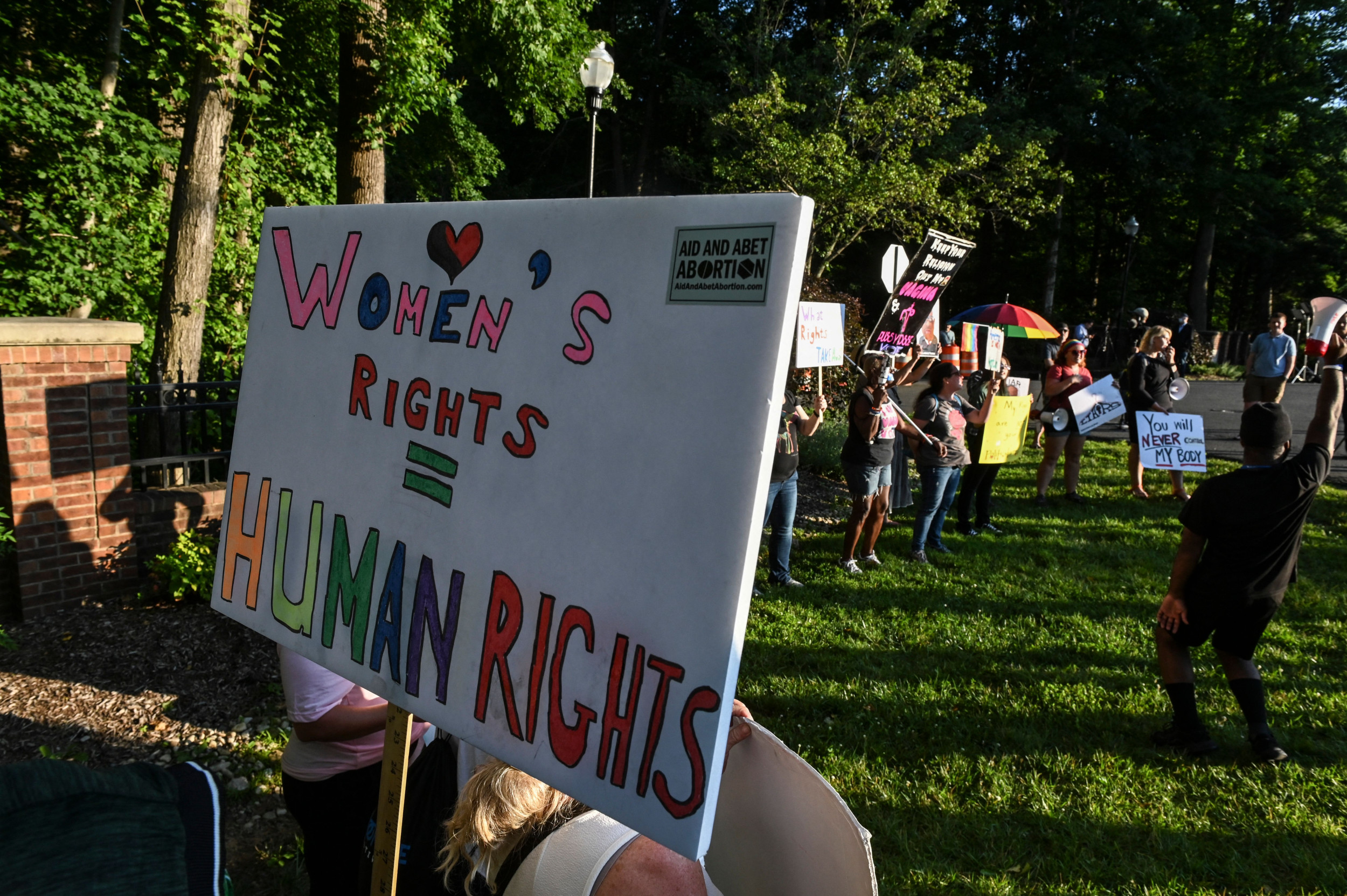
Abortion Is on the Ballot This November in Virginia

0

Thirteen years ago, I became the first member of the Virginia House of Delegates to be pregnant and give birth while in office. The experience gave me a new perspective on how abortion laws impact health care decisions made by pregnant patients and their providers. Then, five years later when I had a high-risk pregnancy resulting in my daughter’s premature birth, I was reassured that the constitutional right to make my own reproductive health decisions would temper the will of politicians to insert themselves in the most personal and often complex decisions I needed to make.

That is no longer the case.

In the 14 months since the Supreme Court ruling in Dobbs v. Jackson Women’s Health rescinded the constitutional right to abortion access for millions of people, every Southern state has passed extreme and restrictive abortion laws, except Virginia. Between New Mexico and Virginia, each state has a swath of laws attacking reproductive freedom, including access to abortion. Virginia managed to buck the trend, with our last neighboring state South Carolina’s abortion ban going into effect recently.

But make no mistake—the future of abortion rights is on the ballot in Virginia.

The last time Republicans had a trifecta in Virginia, the General Assembly passed—and former Governor Bob McDonnell signed—restrictive abortion laws creating medically unnecessary barriers to abortion care such as mandatory ultrasounds and Targeted Regulation of Abortion Providers (TRAP) laws designed to close health centers and shame patients. And Virginia came within one vote of eliminating Medicaid funding for abortions in the case of severe fetal abnormalities.

In 2020, the pro-reproductive freedom majorities in the Virginia House of Delegates and State Senate passed the Reproductive Health Protection Act, removing these and other medically unnecessary barriers to abortion access and becoming the only southern state to expand access to abortion. Today, Virginia is the only southern state without an abortion ban, but we are at a crossroads.

Virginia Republicans have tried to pass anti-abortion legislation every year I was in the Virginia General Assembly. As recently as this January, Republicans tried to repeal the Reproductive Health Protection Act, adopt an abortion ban that Governor Glenn Youngkin said he would “gleefully” sign, restrict Medicaid funding for abortions in the case of severe fetal abnormalities, and even adopt a personhood bill that would define life at conception—but we Senate Democrats stopped them. The facts are clear: They won’t stop until they’ve banned abortion outright.

In fact, anti-abortion extremists and their allies are pouring millions of dollars into the state to try to flip the Senate. And if these extremists win, the top of their agenda will be restricting abortion rights. If Republicans get a trifecta, we will see in Virginia the same kind of bans that have been enacted across the country.

I’ve seen what these bans do, and I know how deeply personal decisions about pregnancy are—even now, we see patients overcoming immense obstacles to safely end their pregnancies. People from across the country, especially the South, drive all night long to get to their appointments in Virginia, just to get necessary health care and drive back home. Some of them need financial assistance, transportation, child care, and even time off work to access essential health care. We know other things like income and zip code can also add undue hardships for patients seeking care, and those burdens fall hardest on Black and brown folks and those who are continually marginalized. It shouldn’t be this difficult for people to access the time-sensitive, urgent medical care they need.

The fact is that judges and politicians should not decide how to end a pregnancy. These extreme legislators want a cold, callous world where patients are at the mercy of their elected officials to make these decisions—decisions that deserve compassion and care for the nearly 1 in 4 women in the U.S. who will have an abortion in her lifetime.

Our goal is to keep extremist politicians out of the exam rooms of millions of patients across the country and keep decisions about health care between patients and providers.

Virginians must vote not just for ourselves in 2023, but for future generations. And we need Congress to vote on and pass federal patient protections by passing the Women’s Health Protection Act of 2023.

As the first generation of my family to lose a constitutional right, I want to make sure my daughter doesn’t have fewer rights when she is of child-bearing years than I did. We cannot be complacent and assume that an abortion ban can’t happen in Virginia. Like many Americans, I know that our rights must be protected. We know the path forward to ensure that protection. Abortion is on the ballot in Virginia, and I am hopeful Virginians will heed the call.

U.S. Representative Jennifer McClellan was elected to represent the 4th Congressional District of Virginia in a special election in February 2023 after serving 18 sessions in the Virginia General Assembly. In 2020, she was the Virginia Senate patron of the Reproductive Health Protection Act, which made Virginia the first state in the South to proactively expand access to abortion. Born in Petersburg, she lives with her family in Richmond.

The views expressed in this article are the writer’s own.

I Was a Palestinian Terrorism Hostage in 1970. There Is Hope

0

The brutal taking of about 150 innocent men, women, and children during the heinous Hamas attack on Saturday brought to the fore lessons that I drew from my own experience as a hostage taken violently and held for three weeks by Palestinian terrorists.

Fifty-three years ago, as a seventeen-year-old American kid, I was hijacked on Sunday, September 6, 1970, with my mother and four siblings aboard a TWA plane on our way back home in the U.S. from a visit in Israel. We were hijacked by the Popular Front for the Liberation of Palestine.

The PFLP hijackers brought our plane to the desert floor in Jordan east of Amman. In terms of violence and brutality, though perhaps not naked savagery, the PFLP then was the Hamas of today. The PFLP hijacked two other planes that week, bringing a total of nearly 400 innocent civilians into the desert. Though they sent some women and children to hotels in Amman, they forced all Jews to remain on our plane.

At 2 a.m. between Thursday and Friday, the terrorists woke me up and took me off the plane with nine other men. We were sure we were taken to be executed. On Saturday, most of the remaining hostages including my mother and siblings were released. The three planes were blown up spectacularly. Only 54 hostages, including me, continued to be held, at first in four and then in three groups.

In conversations amongst ourselves in a refugee camp south of Amman, we tried to parse the situation. At one point, I said that I was sure that our governments would do everything in their power to gain our safe release. The flight engineer, Al Kiburis, turned to me and said, “David, the governments will seek our release only if it is in their best interests to do so.”

I couldn’t accept that, at first. But I quickly realized that he was right. Although freeing its citizens is a top priority, that cannot necessarily be the supreme priority of a government. Indeed, a day or two after this conversation, King Hussein opened a war against the PLO, of which the PFLP was a member. The governments of our home countries, including the U.S., did not object. The lives of us 54 hostages were clearly expendable in the larger scheme of things.

Believe it or not, though I was sitting under withering fire that began raining down upon us because we were near a Palestinian command center, I understood. Of course, I wanted to get out alive and unharmed. But I also understood that there was a much larger issue at stake. A terrorist organization had taken over Hussein’s country, and he needed to take it back.

After two weeks of intense fighting, Hussein crushed the PLO. We were released unconditionally and unharmed. The PLO and PFLP threw up their hands in surrender and were only too happy to let us go.

My heart truly goes out to those who are now in the hands of Hamas. My heart goes out to their families. I know the pain the families are feeling, because my father related to me for decades how devastating it was for him to see his family in the hands of Palestinian terrorists. My mother and siblings described how they felt after they were released while I was still being held.

But today, as then, there is a much larger issue at stake. We have to take our country back. We have to rid the country of the terrorist threats. We must destroy Hamas utterly, as Hussein did to the PLO in his country over the following months. And not just in Gaza, but in Lebanon and the head of the snake in Iran.

A few words that may possibly provide a modicum of comfort to the families of the hostages: First, here I am alive, writing this opinion piece. Second, it became clear to us, throughout the fighting and despite it, that it was important for the PLO and PFLP to keep us alive and unharmed. Some of their fighters in fact risked their own lives to bring us water and food. The terror organizations understood that we would be of no value to them dead. Our value to them was alive and unharmed. I hope that there are some rational leaders in Hamas who appreciate this and will seek to keep the hostages safe and unharmed.

Third: Throughout the ordeal, we hostages kept up each other’s morale. We would talk and sing. We’d flash a “thumbs up” to anyone who seemed to be falling into a funk. We would make jokes, though some with black humor. And, while we did not stop worrying that we would be killed—even accidentally by a stray shell, we also always had a certain belief that we’d get out alive.

Looking at the present situation and what happened to me over 50 years ago, I cannot help but ask what the Palestinians have gained from all their horrendous terrorist acts? Especially when looking at Egypt and Jordan, and more recently at the UAE and Morocco, and, prospectively, at Saudi Arabia. Look how they benefited from making peace with Israel.

I can conclude only that the goal of Palestinian terrorists is merely to massacre Jews—the more, the better—and to annihilate Israel, where I now live.

In U.S. population terms, what Hamas just did to Israel is the equivalent of raping, murdering, or taking hostage all the citizens of a town of 40,000 people—like, say, Teaneck, New Jersey, where I lived for 15 years—in a single day, then destroying it.

With all the pain it causes me and will cause to all of us, including the risk to the lives of the hostages, we must give the unity government of Israel the backing and space to do what it needs to do in order to bring back our country and offer its citizens a durable security that will last for the decades to come.

David Raab is Chairman of BioGenCell, an Israel biotech startup based in Netanya, Israel.

The views expressed in this article are the writer’s own.