

Friday, May 8, 2026
Home Blog Page 35

Eclipse map reveals best time, place to see "ring of fire"

0

The sun is set to be nearly entirely blocked out by the moon on Saturday, when the U.S. will be treated to an annular solar eclipse.

That day, the eclipse will begin to creep across the U.S., starting in Oregon at about 9:13 a.m. PDT before moving across Nevada, Utah and New Mexico, skirting past Colorado and Arizona as it goes. It will end in the U.S. at around 12:03 p.m. CDT as it passes through Texas. It will then continue across central Mexico and South America before passing into the Atlantic.

An interactive Eclipse Explorer map created by NASA‘s Scientific Visualization Studio shows the best time to see the eclipse in each state. It allows the user to see exactly where the shadow will be and what the sun will look like at a given time in a specific place.

The event is an annular eclipse, one of several types of solar eclipses, which occur when the moon passes between the Earth and sun and blocks out the sun’s light, casting a shadow across part of the Earth. This shadow moves as the Earth rotates, leaving a dark path across sections of the planet’s surface.

Total solar eclipses occur when the moon completely covers the sun, while annular eclipses result in a so-called ring of fire that is visible around the moon because it is slightly further away from the Earth and some of the sun is visible around its circumference. This occurs because the moon is at its farthest point from the Earth in its slightly oval-shaped orbit, known as the apogee, and it doesn’t quite block out the entire disc of the sun.

“The moon’s orbit around the Earth is an ellipse, which means that the moon can sometimes be as much as 10 percent closer than average and 10 percent farther than average from Earth,” Vahé Peroomian, a professor of physics and astronomy at the University of Southern California, told Newsweek. “Because of this, the moon can appear to be 10 percent larger or smaller.”

He continued: “On average, the sun and the moon are the same angular size in the sky, about one-half degree across, measuring the sky 90 degrees from the horizon to the point directly above you. But if the moon is at its farthest from Earth during a solar eclipse, then its angular size is smaller than the sun and it doesn’t cover the entire disk of the sun, giving us an annular eclipse.”

Solar eclipses—including partial eclipses, when the moon covers only part of the sun—occur around every 18 months somewhere across the globe. The 21st century will see a total of 224 eclipses: the 2020s alone will have six total eclipses. The next eclipse in the U.S. will be a total eclipse, occurring on April 8, 2024, and will be visible in its totality across Texas, the Midwest and the Northeastern states.

Eventually, as the moon moves further and further away from the Earth over the next few million years, all eclipses will be annular rather than total.

“It’s estimated that in about 600 million years the moon would have moved far enough away from Earth that it will always appear too small to cover the sun, and we will no longer have total eclipses and only annular or partial eclipses,” Peroomian said.

Those wishing to observe the eclipse directly are warned not to look directly at the sun without eye protection, as this can cause major damage to the eyes.

“The best way to safely view a solar eclipse is indirectly, by projecting an image of the sun,” Kerss said. “You should never look directly at the sun.”

“A simple pinhole projector, a tiny hole poked through a piece of card, will cast an image of the sun in its shadow, revealing the phase of the eclipse,” he continued. “Even a colander makes a very effective eclipse projector, its many tiny holes each producing an image of the sun.”

People outside of the eclipse’s path, or those who will have overcast skies during the event, can watch it via a NASA livestream broadcast.

Do you have a tip on a science story that Newsweek should be covering? Do you have a question about solar eclipses? Let us know via science@newsweek.com.

Update 10/12/23, 11:35 a.m. ET: This story was updated with a comment from University of Southern California professor Vahé Peroomian.
Russia lost "battalion’s worth" of vehicles in 48 hours of Avdiivka assault

0

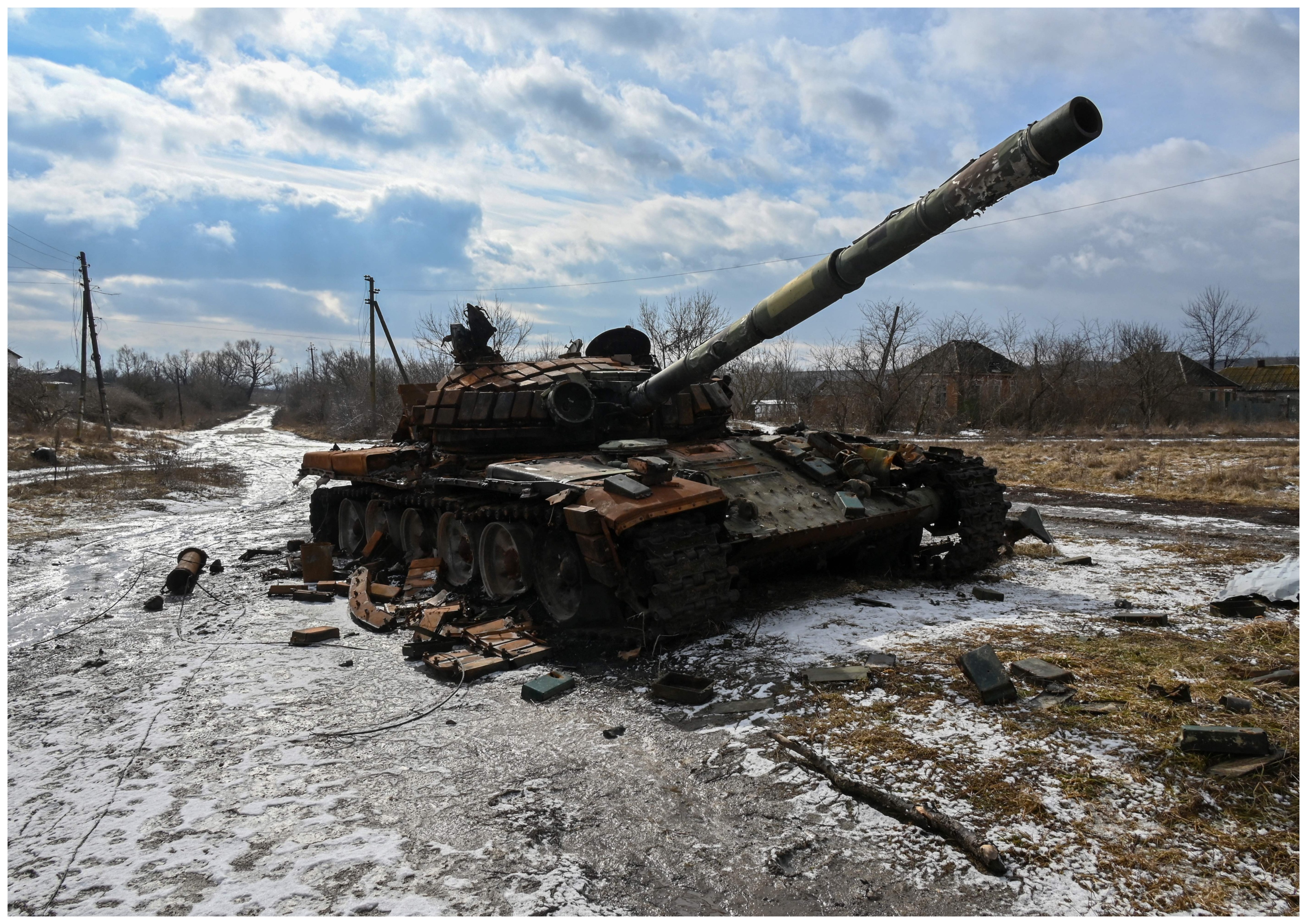
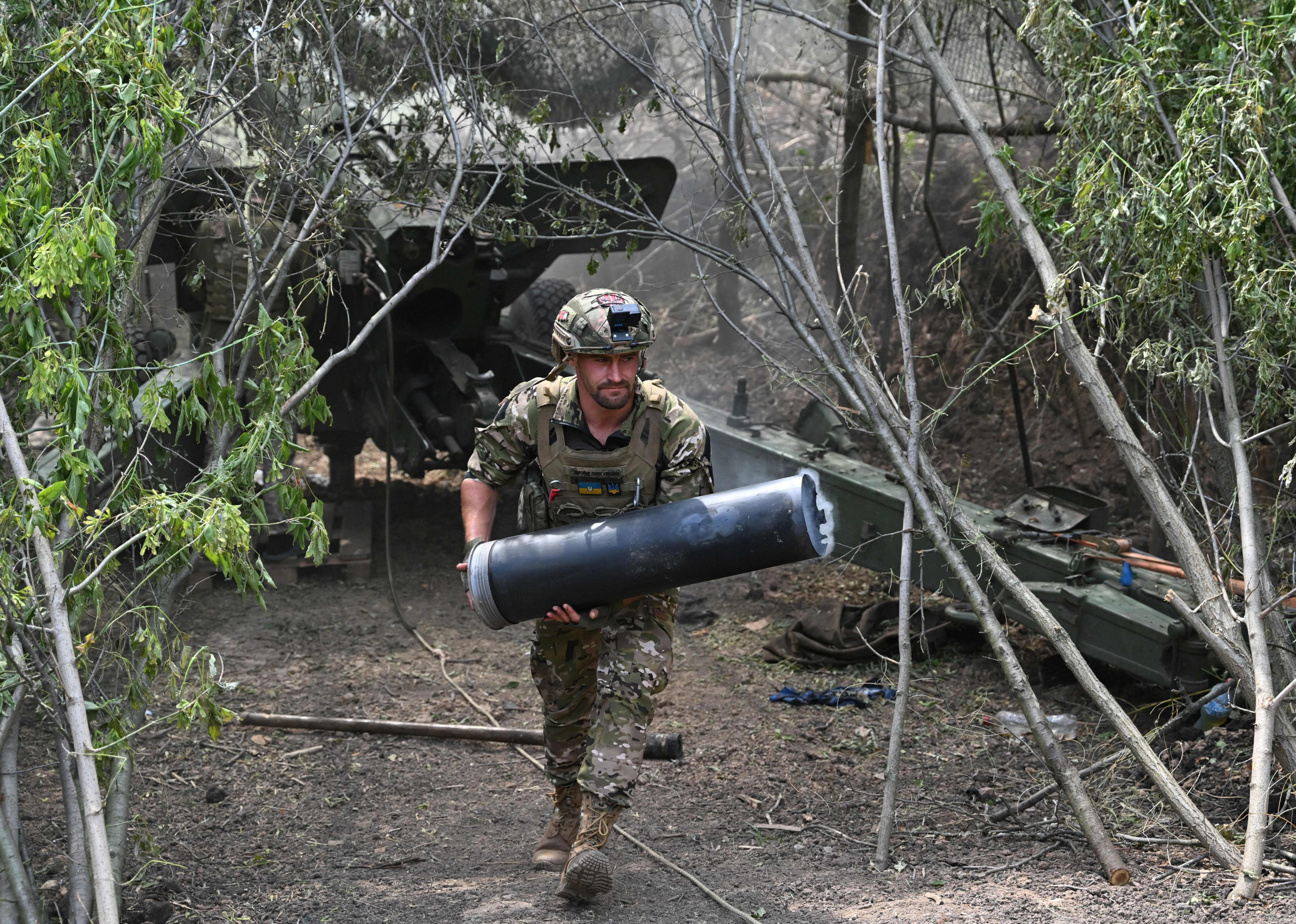
Russian forces have lost about a battalion’s worth of vehicles, including 15 tanks, during a two-day period of its assault on the settlement of Avdiivka.

Open-source intelligence account OSINTtechnical said dozens of Russian military vehicles had been lost as the Kremlin ramped up its offensive toward Ukrainian-held Avdiivka just north of the city Donetsk, which is in the region of the same name, in the east of Ukraine.

In an October 12 post, OSINTtechnical said in an X, formerly Twitter, that Russia lost roughly 13 artillery pieces, 15 tanks, 33 infantry fighting vehicles/armored personnel carriers, six trucks, and 14 cars/vans.

OSINTtechnical said in a separate X post that while it could not guarantee the vehicle losses had happened in the last 48 hours, “many appear to be consistent with the current weather and foliage, and Ukrainian videos geolocated to the area have shown significant losses.”

Avdiivka has been under heavy Russian artillery fire in an attempt to encircle the settlement which before the war was also the location of Ukraine’s largest coke fuel producer.

Newsweek could not immediately verify the recorded Russian military vehicle losses. The Russian defense ministry has been contacted for comment via email.

Michael Clarke, professor at the War Studies department at King’s College London in the U.K., told Newsweek while he could not confirm the equipment losses he believed “they are plausible” and that Russia is throwing considerable resources at Avdiivka to avoid a Ukrainian counter-offensive.

He said: “Russia has put in a big effort at Avdiivka because they probably fear Ukrainian breakout south of Bakhmut that begin to motor and outflank Donestsk, which would be a very big problem for them.

“So, Avdiivka is an attempt at a local counterattack to distract Ukrainian forces. Russian commenders seem under instruction from the Kremlin to attack all across the front while they play for time until the weather turns.

“There isn’t much operational grand strategy behind it, just the grand strategy of handing on and not losing.”

The battle for Avdiivka comes as Ukrainian forces continue their counteroffensive with the aim to push back the Russians from the east of the country where they have managed to capture several strategic cities and positions.

Ukrainian President Volodymyr Zelensky said in an October 12 X post: “Avdiivka. We are holding our ground. It is Ukrainian courage and unity that will determine how this war will end. We must all remember this.”

The U.S. think tank, the Institute for the Study of War, said in an October 11 update that Russian forces localized offensive operations in the Avdiivka area.

It added: “Geolocated footage shows that Russian gains around Avdiivka are concentrated to the southwest of Avdiivka, and Russian forces have not completed an operational encirclement of the settlement and will likely struggle to do so if that is their intent.

“Avdiivka is also a notoriously well-fortified and defended Ukrainian stronghold, which will likely complicate Russian forces’ ability to closely approach or fully capture the settlement.”

The Donetsk and southern Zaprozhzhia regions continue to experience fierce fighting between Ukraine and Russia as both sides aim to advance their frontlines.

Russian President Vladimir Putin annexed Donetsk and Zaporizhzhia, along with two other regions last year, although his forces have not managed to maintain full control of them.

The annexation was condemned as illegitimate by the U.S. as well as the European Union and other allies of Washington. D.C.

Russia suffering colossal tank, armor losses in "kamikaze" Avdiivka assault

0

Russia reportedly suffered major equipment losses in a battle for the Ukrainian-held eastern Donbas town of Avdiivka on Wednesday, and lost 990 soldiers, 42 tanks, and 32 artillery systems overall in one day, according to Kyiv’s military.

Videos circulating on social media showed what one online commenter described as a “Russian kamikaze attempt” to take the largely destroyed town which resulted in a large number of Russian tanks and equipment being destroyed by Ukrainian artillery. Newsweek couldn’t immediately verify the authenticity of the videos.

Russian forces “launched localized offensive operations in the Avdiivka area of Donetsk Oblast” on Tuesday, the Institute for the Study of War (ISW) think tank said.

Avdiivka, which had a pre-war population of at least 30,000, is located about 90 kilometers (56 miles) south of Bakhmut and just north of Russian-occupied Donetsk. Some 2,000 civilians remain in the city that has been on the frontline of the Donbas conflict since 2014, when President Vladimir Putin illegally annexed the southern Crimean peninsula from Ukraine and pro-Russian separatists in the eastern regions of Donetsk and Luhansk started combating Kyiv’s forces.

The area has been the scene of intense fighting since Kyiv launched its counteroffensive in early June.

A video of the destruction was posted by the “Jay in Kyiv” X (formerly Twitter) account, linked to the Serhiy Prytula Charity Foundation, which raises money to buy equipment for the Ukrainian army.

“One from many videos coming out of what’s amounting to a Russian kamikaze attempt to take the largely destroyed town of Avdiivka,” the X user wrote. “Russians just gunning it through minefields, costing the 35 tanks and 91 APC’s just yesterday.”

“For over a year, there has been the danger that [Avdiivka] can be occupied, but now the situation has worsened rapidly,” Vitaliy Barabash, head Avdiivka’s administration, told the Agence France-Presse (AFP) news agency earlier this week.

Newsweek has contacted Russia’s Defense Ministry for comment via email.

Geolocated footage from October 10 and 11 confirms that Russian troops advanced southwest of Avdiivka near Sieverne and northwest of Avdiivka near Stepove and Krasnohorivka, the ISW said.

The Ukrainian General Staff also reported that a grouping of up to three Russian battalions with tank and armored vehicle support intensified offensive operations near Avdiivka.

According to figures published by Ukraine’s General Staff on Facebook on Thursday, 42 Russian tanks were destroyed in the past 24 hours, bringing the total Russian tank losses since the war began last year to 4,905. Independent sources give numbers that are more conservative than Kyiv’s, and Russia doesn’t publish figures on its military losses.

It’s not clear how many of the tanks were destroyed in clashes in Avdiivka.

“Geolocated footage shows that Russian gains around Avdiivka are concentrated to the southwest of Avdiivka, and Russian forces have not completed an operational encirclement of the settlement and will likely struggle to do so if that is their intent,” the think tank said.

It added that Avdiivka is also a notoriously well-fortified and defended Ukrainian stronghold, which will likely complicate Russian forces’ ability to closely approach or fully capture the settlement.

“As ISW previously assessed, Russian forces likely intend attacks in the Avdiivka area to fix Ukrainian forces and prevent them from redeploying to other areas of the front. However, Ukrainian officials have already identified the Avdiivka push as a Russian fixing operation, and they are unlikely to unduly commit Ukrainian manpower to this axis.”

Do you have a tip on a world news story that Newsweek should be covering? Do you have a question about the Russia-Ukraine war? Let us know via worldnews@newsweek.com.

Full list of Republicans refusing to vote for Steve Scalise

0

Steve Scalise is facing an uphill battle for the House speakership, with several Republicans openly declaring they will oppose his nomination.

The Louisiana Representative was named on Wednesday as a possible replacement for Kevin McCarthy, who was ousted on October 3 after Rep. Matt Gaetz of Florida triggered a vote to remove him. Gaetz justified the move following McCarthy’s cooperation with Democrats to avoid a partial government shutdown.

On October 3, eight Republicans—including Gaetz, Andy Biggs of Arizona, Ken Buck of Colorado, Tim Burchett of Tennessee, Eli Crane of Arizona, Bob Good of Virginia, Nancy Mace of South Carolina and Matt Rosendale of Montana—joined all of the Democrats to vote in favor of McCarthy’s removal.

After days of tensions within the GOP, with a number of Republicans calling for Gaetz to be expelled from the party’s conference and condemning the removal of McCarthy, the party nominated Scalise for House speaker on Wednesday. But shortly after doing so, the GOP postponed a full vote on Scalise as a number of Republicans said they wouldn’t vote for the Louisiana lawmaker.

Scalise won a 113 to 99 majority within the Republican Party on Wednesday, but he still needs to get a majority of the full House.

Another meeting of the House was planned for noon on Thursday, but it’s unclear whether the division within the GOP is any closer to being fixed than it was during the discussions on Wednesday evening.

These are the Republicans who have vowed not to vote for Scalise as the new House speaker:

Rep. Chip Roy of TexasRep. Marjorie Taylor Greene of GeorgiaRep. Max Miller of OhioRep. Nancy Mace of South CarolinaRep. George Santos of New YorkRep. Lauren Boebert of ColoradoRep. Michael Cloud of TexasRep. Carlos Gimenez of FloridaRep. Bob Good of VirginiaRep. Lloyd Smucker of Pennsylvania

Roy, who had made a power-sharing agreement with McCarthy when he was finally elected after 15 rounds of votes earlier this year, met with Scalise on Wednesday. He said he asked the Louisiana Representative to agree to changes to the way the House operates demanded by the House Freedom Caucus, but the two apparently didn’t reach an agreement, as Roy clearly stated he won’t vote for Scalise.

Greene said that she voted for Jim Jordan on a private ballot in conference and she will vote for him on the House floor as well. Miller also said he won’t switch his vote, adding that he was “Jim Jordan all the way.”

Mace said she’d back Jordan, citing Scalise’s attendance at a white supremacist event in 2002 as a reason not to support him. Scalise apologized for taking part in the event, hosted by white supremacist and Ku Klux Klan member David Duke, in 2014.

Newly elected Santos said he’d vote for anyone but Scalise after he said the candidate failed to reach out to him. He wrote on X, formerly known as Twitter: “It’s just past 9:40pm and I have yet to hear from the Speaker-Designate. So I’ve made my decision and after 10 months and having had 0 contact or outreach from him, I’ve come to the conclusion that my VOTE doesn’t matter to him.”

“I’m now declaring I’m an ANYONE but Scalise and come hell or high water I won’t change my mind. We need a Speaker that leads by including every single member of the team not just some, That’s not leadership!”

Boebert wrote on X saying she will “be voting for Jim Jordan to be Speaker of the House on the floor when the vote is called.”

Cloud posted on the social media platform saying: “While I respect Steve Scalise, the underhanded efforts to rush this vote to the floor without getting full buy-in from the conference is extremely ill-advised and I will not be supporting the nomination on the floor, absent a further discussion.”

Gimenez told reporters he’d always been a “McCarthy guy” and he will keep voting for McCarthy. Good wrote on X that he was still supporting Jordan, adding: “The country cannot afford the status quo.”

Correction 10/12/23, 10:04 a.m. ET: This article has been updated to remove Rep. Jimmy Gomez of California, who is a Democrat.

Steve Scalise withdraws from speaker bid amid Republican infighting

0

Republican Representative Steve Scalise of Louisiana on Thursday withdrew from consideration for the speakership of the U.S. House of Representatives.

Scalise was nominated on Wednesday in a closed-door ballot among House Republicans, but many GOP House members supported his challenger, Representative Jim Jordan of Ohio. Also favoring Jordan was former President Donald Trump. In a Truth Social message posted before Scalise was nominated, Trump said the Ohio congressman “will be a GREAT Speaker of the House, & has my Complete & Total Endorsement!”

The previous House speaker, Representative Kevin McCarthy of California, was voted out of the position on October 3 after Republican Representative Matt Gaetz of Florida spearheaded an effort to remove him.

Scalise has represented Louisiana in the House since 2008. This summer, he was diagnosed with blood cancer. Representative Marjorie Taylor Greene, a Georgia Republican, on Wednesday said she was supporting Jordan over Scalise because she preferred the latter focus his energy on fighting his cancer diagnosis.

Trump also expressed concern about Scalise’s health in relation to taking over as speaker during a Thursday interview with Fox News Radio.

“Steve is a man that is in serious trouble, from the standpoint of his cancer,” Trump said. “I just don’t know how you can do the job when you have such a serious problem.”

While speaking with reporters about his decision to end his speaker bid, Scalise made reference to the fractured state of the Republican Party in the House.

“There are still some people that have their own agendas,” he said.

“This House of Representatives needs a speaker, and we need to open up the House again,” Scalise added. “But clearly, not everybody is there and they’re still schisms that have to get resolved.”

Scalise declined to say on Thursday if he would back Jordan, instead saying he was going to work hard to have the speaker position filled quickly.

Newsweek reached out to Scalise via email for further comment Thursday night.

During Wednesday’s closed-door meeting of House Republicans, Scalise received 113 votes to become the next speaker, while Jordan received 99. To secure the speaker position, a candidate is required to receive at least 217 votes among the House in its entirety.

House Minority Leader Hakeem Jeffries, a New York Democrat, spoke with PBS NewsHour on Thursday, saying it’s “urgently necessary that the Republicans get their act together and elect the speaker from within their own ranks.”

Jeffries also indicated Democrats might partner with Republicans who “break with the extremists.”

“We are ready, willing and able to do so,” he said. “I know there are traditional Republicans who are good women and men who want to see government function, but they are unable to do it within the ranks of their own conference, which is dominated by the extremist wing. And that’s why we continue to extend the hand of bipartisanship to them.”

Update 10/12/23, 9:12 p.m. ET: This article has been updated to include more background information.

China’s Missing Officials May Spell Disaster for the South China Sea

0

When one high-profile official vanishes, it’s concerning. But when three disappear, it feels like a systematic cleansing.

But what’s the endgame here?

China analysts are on edge grappling with this question as China’s defense minister, Li Shiangfu, remains AWOL, joining the ranks of Qin Gang, China’s foreign minister, and General Li Yuchao, the head of China’s nuclear missile forces.

Shiangfu’s disappearance adds a layer of volatility to China’s military and foreign policy landscape, especially given his close ties to Xi Jinping and his control over one of the world’s most formidable military machines.

It seems the risk of the United States getting pulled into a battle in the South Pacific, where China’s been flexing muscles and beefing up its military presence, is increasing each day. The disappearance of these senior officials throws a spanner into the delicate gears of diplomacy, and it could be a sign that Xi is preparing for a confrontation.

While the official word is the latest disappearance was due to an extramarital affair, many believe the root cause is corruption. Allegations of fraud and corruption often serve as convenient pretexts for authoritarian regimes to dismantle the opposition, as we’ve seen with Russia’s crackdown on civil society and opposition figures, such as Alexey Navalny. And let’s not kid ourselves; corruption is a real headache for China, especially in its military ranks.

We’ve seen what happens in Ukraine when a corrupt and depleted military takes to the battlefield. So, if China’s gearing up for war, cleaning house and rooting out corruption becomes mission critical. But it’s not only the cleanse which is raising concerns.

In recent weeks, China’s been poking diplomatic beehives with its neighbors and thumbing its nose at international summits. On the military front, China’s power surge has many worried they might soon overtake the U.S. as the world’s preeminent power. For example, China’s navy is expected to grow by a jaw-dropping 40 percent by 2040, and they’re buying up weapons five times faster than the U.S.

In 2022, Xi made it clear that China should be battle-ready and capable of “fighting and winning wars” by 2049. But many of China’s neighbors are thinking that Beijing could meet its goals far sooner.

The South China Sea is where this anxiety is most palpable. China’s long been playing the bully, harassing ships and setting up military bases on disputed islands, all in the name of their fantastical “nine-dash line” claim over this vital shipping route.

Additionally, according to a former NATO analyst, literally lurking beneath the surface is a clandestine struggle between China and American tech giants competing for supremacy over internet cables within the South China Sea.

Knowing that China cannot yet challenge the United States on its home turf, this geopolitical hot zone could be where the CCP decides to launch its military campaign. Already, China has been fracturing ASEAN’s unity, a critical step in igniting a full-on conflict.

The Association of Southeast Asian Nations can’t agree on how to mediate its own internal critical disputes. A critical example is the situation in Myanmar where the governing junta is brutally oppressing its people. Thailand, encouraged by China, has embraced the ruling junta, while other nations look to build relations with the democratic opposition in exile.

And then there are ASEAN powerhouses Malaysia and the Philippines, which have been embroiled in a contentious international arbitration case rooted in a decades-old territorial dispute. Although the case was eventually dismissed, the long-defunct Sultanate of Sulu was originally granted a staggering $15 billion from Malaysia’s oil and gas reserves.

It is precisely this susceptibility to division that underscores the paramount importance for ASEAN nations to strengthen economic and diplomatic bonds that counter China’s unpredictability and foster regional collective security. After all, constructive diplomatic relations rely on strong understandings between stakeholders, and a degree of being able to “read between the lines.”

To counter these threats from within and without, President Biden has been building stronger ties with nations such as Japan, South Korea, and Vietnam. That is a good start, but it’s not enough. A new security framework urgently needs to be implemented.

An Asian NATO might not be in the cards just yet, but ramping up military cooperation through joint exercises, intelligence sharing, and weapons deals could offer ASEAN a more reliable partner and tip the balance away from China.

Ultimately, China’s increasingly aggressive and unpredictable diplomatic and military moves should ring alarm bells for all of us. We need only consider the devastating Ukraine conflict to remember the stark lesson of complacency in the face of aggression.

Saman Rizwan is UK-based analyst on South Asian affairs. She has a masters in International Relations from S. Rajaratnam School of International Studies, NTU, Singapore. As a journalist and commentator she writes frequently international politics, technology, human rights and gender-based violence.

The views expressed in this article are the writer’s own.

COVID map shows states with highest positive cases

0

States in New England, central, northern and Pacific regions are among those that have the highest prevalence of COVID-19 infections in the most recently recorded week, maps produced by the Centers for Disease Control and Prevention (CDC) show.

Southern and East Coast states, from New Mexico to Pennsylvania, had the lowest prevalence of antigen tests returning positive results in the week to September 30, ranging between 5-9.9 percent, while the rest of the country had marginally higher positivity rates of 10-14.9 percent, figures released on Tuesday show.

The CDC reported that nationwide, the prevalence was around 10.9 percent of tests undertaken—a fall from previous consecutive weeks. The data shows an overall small decline in positivity of 1.2 percent from the week prior across the U.S., suggesting the number of infections has largely stabilized—though the agency has warned cases could pick up over the winter.

The results come after a steady rise in cases and hospitalizations over the summer months led some private institutions, hospital operators and colleges in the U.S. to reintroduce requirements for staff or visitors to wear masks while at their sites to limit the spread of the new variants—EG.5 and BA.2.86.

As of September 15, the CDC said that the latter variant “does not appear to be rapidly increasing or driving increases in infections or hospitalizations” in the U.S., and that existing antibodies were giving individuals immunity against the new strain. Many of the institutions have since relaxed their mask mandates, though some hospitals in New Jersey reintroduced them in response to infection rates.

A CDC spokesperson previously told Newsweek that its genomic surveillance indicated that the majority of infections were being caused “by strains closely related to the Omicron strains” that have been circulating since early 2022.

The smallest proportions of test positivity came in East Coast states, including the Virginias, Maryland, Delaware and Pennsylvania, as well as the District of Columbia—where prevalence was 6.9 percent. The week prior, test positivity in the states had been around 8 percent.

By contrast, New York and New Jersey, just across the Delaware River, had the highest state totals of 13.9 percent for the latest recorded week. Previously, both states had rates of 15.6 percent.

Newsweek approached the departments of health for New York and New Jersey via email for comment on Thursday.

The CDC cautioned that the data did not include tests taken at home, and said the results may be subject to change due to delays in testing centers reporting back.

It also noted that “the data represent laboratory tests performed, not individual people,” as one person may be administered multiple tests in a week, but said that the percentage of positive tests “is one of the metrics used to monitor COVID-19 transmission over time and by area.”

Following a patchwork of hospitalization rates in previous weeks, hospital admissions with the virus appear to have largely stabilized as well, with all states seeing either declines or numerically small rises of a few hundred patients.

Nationally, in the week to September 30, there were 18,139 total hospitalizations with COVID, a decline of six percent on the week prior, continuing a four-week consecutive downward trend from a peak earlier in the month.

“While rates now seem to be plateauing, we are entering October, which is the typical start of the respiratory virus season,” a CDC spokesperson previously said. “Even if hospitalization rates level off for a few weeks, they could increase in the coming weeks, and prevention is the best approach.”

Update 10/03/23, 4:00 a.m. ET: This article was updated to include further details.

High energy costs spike prices at the pump in September

0

The producer price index (PPI), which measures wholesale prices, spiked higher than anticipated Wednesday on the back of high energy prices, Bureau of Labor Statistics (BLS) data showed.

The PPI jumped 0.5 percent in September, slightly higher than the 0.3 percent economists polled by Reuters expected. For the year, prices jumped 2.2 percent, “the largest increase since moving up 2.3 percent for the 12 months ended in April,” the BLS said.

“Nearly three-quarters of the broad-based September advance is attributable to a 3.3-percent rise in prices for final demand energy,” the bureau added.

Core prices, which strip out the volatile food and energy sectors, were up 0.2 percent, the fourth time in a row they have increased. For the year in September, core prices rose 2.8 percent.

These wholesale inflation measures come ahead of the closely watched consumer price index, which tracks what consumers pay for goods and services. That index will be released Thursday as Federal Reserve policymakers get ready to meet next month to decide on what to do about interest rates.

Since March 2022, the Fed has raised rates to slow down historic increases in inflation that at one point hit four-decade highs. The central bank’s hike in the federal funds rate to the current 5.25 to 5.5 percent range has significantly pushed up borrowing costs for both consumers and businesses.

The rise in energy prices affected wholesale inflation, accelerating the PPI by 4.8 percent in the third quarter on an annual basis, compared with a 1.3 percent decrease in the previous quarter, Matthew Martin, U.S. economist for Oxford Economics, pointed out.

“While we would expect the Fed to look past volatility in the energy market, less encouraging is the pickup in core services momentum,” Martin wrote in reaction to the PPI news. “Officials are committed to reigning in inflation, but we expect prices to slow enough over the coming quarters to keep additional rate hikes off the table.”

Gas prices were higher in September because of the high cost of oil, according to the AAA. In California, for example, average prices hit nearly $6 a few weeks ago.

Looking ahead, Martin suggested that things may slow down this month. “Oil prices have moderated this week, which is encouraging news for October’s report,” he wrote.

The BLS said prices for goods, which saw a jump of 0.9 percent, also felt the pressure from higher fuel costs. “Over 40 percent of the September increase in prices for final demand goods can be traced to a 5.4-percent rise in the index for gasoline,” BLS said.

Prices for jet fuel, processed young chickens, meats, electric power and diesel fuel also accelerated. In contrast, fresh and dry vegetables saw a drop of 13.9 percent. Prices for wood pulp and utility natural gas also fell, the BLS said.

Israel, Ukraine won’t distract US from China: Australia’s ex-PM

0

The U.S. and its allies can and will remain focused on long-term challenges in Asia despite pressing security concerns in Europe and the Middle East, Scott Morrison, the former prime minister of Australia, has told Newsweek.

“The Middle East and Asia are different theaters. Australia, along with the U.S., will be able to address the present challenge in the Middle East,” Morrison said on the sidelines of the Yushan Forum in Taipei on Wednesday.

The Middle East was an “eternal issue” with its own history, he added.

President Joe Biden is expanding American military support to Israel following the weekend’s attacks by Hamas, the Palestinian militant group that controls the Gaza Strip. Meanwhile, Congress remains at an impasse over a fifth round of aid for Ukraine, which has received $113 billion in U.S. security assistance since Russia’s full-scale invasion in February 2022.

Washington has identified strategic competition with China as a generational challenge. Biden, who reinvigorated the United States’ central role in Asia’s hub-and-spokes alliance system to deter any hint of Chinese adventurism, chiefly on Taiwan, is being tested by the crisis in Ukraine—and the escalating Israeli-Palestinian conflict promises to do the same.

In a show of support, U.S. Secretary of State Antony Blinken was dispatched to Israel and Jordan for a visit beginning on October 11. A carrier strike group led by the USS Gerald R. Ford arrived in the Eastern Mediterranean on Tuesday “to deter any actor seeking to escalate the situation or widen this war,” said the Pentagon‘s Central Command.

These developments have raised questions about America’s capacity to fight multiple fires at the same time. But Morrison said U.S. and allied support for Ukraine and now Israel would not compromise their commitments in Asia.

Australia, certainly under my prime ministership, made sure that focus was never taken away from challenges in the Indo-Pacific. We were one of the first and most supportive of the Ukraine effort when we were invited, but that didn’t mean we took off our attention for a second on what was happening in the Indo-Pacific,” Morrison said.

“Not only can Australia and the U.S. manage the situation in Ukraine and the Indo-Pacific, but both must manage it,” he said.

Morrison, who was PM from 2018 to 2022, argued that resolve in one region would carry over into another “by sending a message to other authoritarian regimes and autocracies.”

Despite concerns about a potential overcommitment in another part of the world, policymakers in Washington are likely acutely aware of where America’s long-term interests lie.

“The U.S. strategy has been designed to deal with simultaneous small conflicts in multiple locations. Moreover, its commitment in Ukraine has been largely limited to arms transfers,” said Yoichiro Sato, a professor at Japan’s Ritsumeikan Asia Pacific University.

Sato—who previously taught American officers and diplomats at the Asia-Pacific Center for Security Studies, a Defense Department institute in Honolulu—said a potential future response in the Taiwan Strait would require different U.S. weapons and platforms from those transferred to Ukraine and Israel.

“A crisis over Taiwan would involve a different set of issues, most notably the gap in intermediate-range missile forces, in which China has an overwhelming advantage being free from any past arms control agreement,” Sato told Newsweek.

He believes the U.S. is unlikely to become heavily involved in the Middle East.

“The limited threats Hamas poses to Israel can be largely dealt with by Israeli forces. U.S. roles are primarily deterrence against other regional states, like Syria, which may attempt to exploit the situation,” Sato added.

Contacted for comment by Newsweek, the U.S. Indo-Pacific Command said: “As part of our integrated deterrence approach to maintain a free and open Indo-Pacific, we continually assess risk throughout the region. Our assessment of the theater has not changed, and we remain vigilant in concert with our allies and partners.”

Update 10/12/23, 4:45 a.m. ET: This article was updated to add a comment from the U.S. Indo-Pacific Command.

"Critical" tank-killer Switchblades will boost Ukraine’s drone stocks

0

Ukraine is set to receive further deliveries of the Switchblade 600 suicide drone, according to its manufacturer, in a move that could boost Kyiv’s ability to take out Russian assets far behind the heavily fortified front lines.

Ukraine’s military currently has more of the smaller Switchblade 300 drones than the larger Switchblade 600 models, but “that will soon change,” said Charlie Dean, the vice president of global business development and marketing at defense contractor AeroVironment.

The Switchblade 600 is “tremendously important to the defense of Ukraine,” Dean told Newsweek.

The U.S. has provided several types of drones to Ukraine in military aid packages, including the Switchblade and Phoenix Ghost loitering munitions. The Switchblades— also used by U.S. forces in Iraq and Afghanistan—have appeared in combat footage coming out of Ukraine, but the Pentagon has not disclosed just how many were sent.

When approached for comment by Newsweek, the Pentagon said it could offer no additional details on the “specific quantities or types of weapons, systems and equipment provided to our Ukrainian partners” beyond publicly available announcements.

The U.S. Defense Department “will continue to support Ukraine with the means to defend itself in the near term and deter against further aggression,” spokesperson Jeff Jurgensen said in a statement.

The U.S. has furnished Ukraine with “a very large number” of Switchblade 300s, Dean said, adding that “they’ve been quickly used on the battlefield for their intended purposes.”

“The 600s are also being used in Ukraine, and those quantities are adding up quickly in the country,” he said. “The 300s continue to outnumber the 600s presently, but that will soon change.”

The Switchblades have been under development for more than a decade. The original 300 model is still being tweaked and updated today, and the latest version of the 300 has a range of more than 12.5 miles and can fly for more than 20 minutes, according to the AeroVironment specifications.”

The 300—designed to give a unit close and immediate close air support—has undergone “quite a number of evolutions over the years,” Dean said.

The larger Switchblade 600 then emerged, crafted to take out enemy tanks and armored vehicles littered across a battlefield. The latest models can fly for more than 40 minutes, with a loitering speed of 70 miles per hour.

Because Russia’s forces are kitted out in heavy armor, “the use of a weapon like the Switchblade 600 is critical to getting at these enemy weapon systems,” Dean said.

The 600 can give Ukrainian operators a range of around 55 miles, meaning “they can destroy very important Russian assets well behind the Russian front lines, which no other weapons can do to that degree,” Dean said.

But, unlike artillery, the Switchblades can approach an area before the operator is able to search for targets after the drones are launched.

“All the way to the end of the Switchblades’ flight, the operator can be making decision,” said Dean. “The operator can choose to fly away from the immediate target that perhaps they were after initially, because they found the target of higher value.

“It’s very unique compared to artillery.”

Videos shared online as far back as May 2022 show Ukrainian troops using Switchblade suicide drones to target Russian forces.

Ukraine has long publicized its ambitions to stock up its “drone army,” and has debuted domestically-made drones like the “Beaver” uncrewed vehicles that made it all the way to Moscow.

“Ukraine is on its way to become a world leader in drones production,” Ukrainian Vice Prime Minister Mykhailo Fedorov told Newsweek back in August. “The experience we are getting right now is unique, in terms of its usage, constant improvement of technologies, the research and development process, and scaling the production,” he said.

Companies like AeroVironment are also learning from daily battlefield experiences in Ukraine, Dean said. There is a constant communication link between the company and the Ukrainian Switchblade operators, meaning the drone designs can be improved or adjusted within weeks.

Quantity is key for such widely used and versatile technology. Estimates from the London-based Royal United Services Institute think tank earlier this year suggested Ukraine was losing around 10,000 drones every month.

But loitering munitions like the Switchblades have not only been within easy reach of Ukraine’s military, but have become a staple of Russian assaults on Ukrainian infrastructure and cities.

Russia has extensively deployed Iranian-designed Shahed-131 and the larger Shahed-136 “kamikaze” drones across Ukraine, and Kyiv’s military frequently reports nightly onslaughts of the loitering munitions along with missile strikes.

On Wednesday, Ukraine’s General Staff said Moscow’s forces had attacked Ukraine’s southern regions with Shahed drones overnight and that Ukrainian air defenses had downed the majority of the explosive drones. The Ukrainian military did not give further details.

The previous day, Kyiv’s air force said it had downed 27 Shahed drones launched from eastern Crimea, targeting the southern regions of Odesa, Mykolaiv and Kherson. The General Staff said in a statement that the Kremlin had deployed a total of 36 Shahed drones.

The Tehran-designed drones are a “core element of Russia’s campaign of long-range strikes into Ukraine,” the British defense ministry said earlier this week.

On the other side of the front lines, “the loitering munitions play a very important role in what the Ukrainians are doing,” Dean said.

“The Ukrainians don’t have the artillery firepower of the Russians, they don’t have the the expendable human capital of the Russians,” he said. “The unmanned systems, include the loitering munitions, play a huge role in really offsetting the balance of firepower.”

The Ukraine war has spurred drone innovation at “lightning pace,” with new designs springing up almost daily. The appetite for drones seems almost insatiable, and AeroVironment has upped its output to keep up with demand.

“We can produce many, many, many thousands of our products every day,” Dean said, and it would be “easy” to ramp up this production further.