Monday, December 8, 2025
Home Blog Page 7

Jeffrey Epstein victim’s mother demands answers after her death

0

The mother of one of Jeffrey Epstein’s victims says the police investigation into the death of her daughter “shouldn’t be closed” and that “she deserves justice.”

Carolyn Andriano’s death in a Florida hotel room in May was officially recorded as an accidental overdose and there were signs she had taken fentanyl, The Daily Beast reported. There was no obituary or funeral service after she died and police opened an investigation into her death.

Mike Jachles, a spokesman for police in West Palm Beach, Florida, told The Daily Beast that the investigation was concluding and that Andriano died of an accidental overdose.

However, her mother, Dorothy Groenert, says her daughter “was ecstatic” at the time she died because she had a new house and “was all set up for a whole new lifestyle” having texted her about being free of drugs and alcohol.

“Nobody’s giving me any answers, and you know what? I’m over it,” she continued. “Because this is my daughter, and she deserves justice. She got to a point where she was turning her whole life around.”

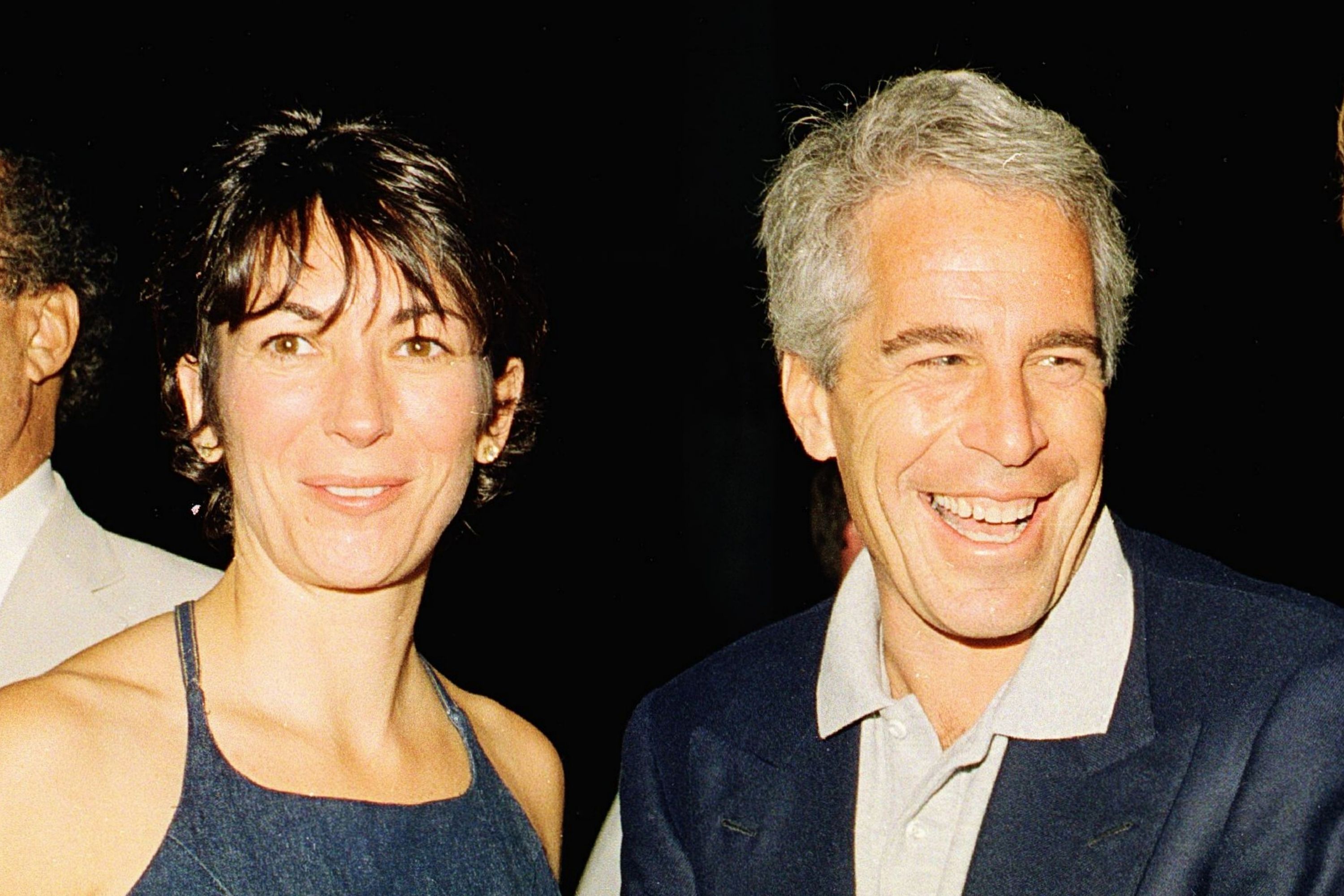
Andriano testified against Ghislaine Maxwell during her New York sex trafficking trial and juror Scotty David later said in an interview “she told the truth every step of the way.”

Beyond that trial, there was at one stage speculation she might be called in Virginia Giuffre‘s lawsuit against Prince Andrew.

Giuffre reacted to Andriano’s death on Twitter: “My heart weighs heavy with the news of losing a loved survivor of #Epstein #GhislaineMaxwell. We were just kids when we met at a party. I’m so sorry sister. You made the world a better place with you in it!”

‘My Daughter Was the Most Loving, Kindhearted Person’

“It shouldn’t be closed. I begged them, I sent them numerous messages,” Groenert told The Daily Beast of the investigation into Andriano’s death: “I’ve asked for them to make meetings, contact me, and to no avail.”

“My daughter was wonderful,” she added. “My daughter was the most loving, kindhearted person. She trusted everybody. And anybody could say anything negative about anybody but my daughter: she was taught to always find a positive.”

Andriano’s husband John Pitts is reportedly in a dispute with Groenert after Andriano’s will had not been updated since marrying him and having children, meaning her estate was left to her mother.

His sister Serena told The Daily Beast Andriano’s mother’s concerns were “ridiculous.”

“Right now our family is grieving the loss of Carolyn and prioritizing the care of her children,” she said in a text. “At this time we kindly appreciate space and privacy.”

Andriano’s Court Testimony

Andriano told the court Maxwell routinely scheduled her “massages” with Epstein and had come into a massage room naked and then groped her.

“She came in and felt my boobs, my hips and my buttocks, and said that…I had a great body for Mr. Epstein and his friends,” Andriano said. “She said that I had a great body type.”

“Money would not ever fix what that woman has done to me,” she added.

David, one of the jurors in the Maxwell trial, told ITV documentary Ghislaine, Prince Andrew and the Paedophile: “Carolyn, her testimony was the most gripping and I felt the most compassion for her because she had literally had one of the hardest life stories.

“Regardless of her being arrested or her habitually doing drugs and addicted to pain pills…What matters is, did you tell the truth? Did this happen to you and, she told the truth every step of the way.”

Andriano was only identified as Carolyn during the trial but waved her anonymity afterwards during an interview in which she described discussing Prince Andrew with Giuffre shortly after he allegedly had sex with Giuffre. He denies the allegation.

She told The Daily Mail: “I asked her if she’d been to the Palace. And she said, ‘I got to sleep with him.’ I said, ‘What? You’re f****** with me,’ and she said ‘no, I got to sleep with him.’

“She didn’t seem upset about it. She thought it was pretty cool. I don’t think she [Virginia] deserves any compensation. I don’t think she was coerced into doing anything.”

Lawyers at the time told Newsweek her account would benefit Giuffre despite her reservations about compensation.

Georges Lederman, a defense attorney at international law firm Withers, said: “Ms. Andriano’s testimony as to coercion or otherwise is likely of little value in the courtroom, as she would not be declared an expert witness in sexual assault cases.

“Thus, the little benefit that might inure to Prince Andrew would likely be outweighed by the seeming corroboration of the sexual encounters, thereby undermining his credibility.”

Jack Royston is chief royal correspondent for Newsweek, based in London. You can find him on X, formerly Twitter, at @jack_royston and read his stories on Newsweek‘s The Royals Facebook page.

Do you have a question about King Charles III, William and Kate, Meghan and Harry, or their family that you would like our experienced royal correspondents to answer? Email royals@newsweek.com. We’d love to hear from you.
King Charles plays doting father to Prince Harry in unearthed viral clip

0

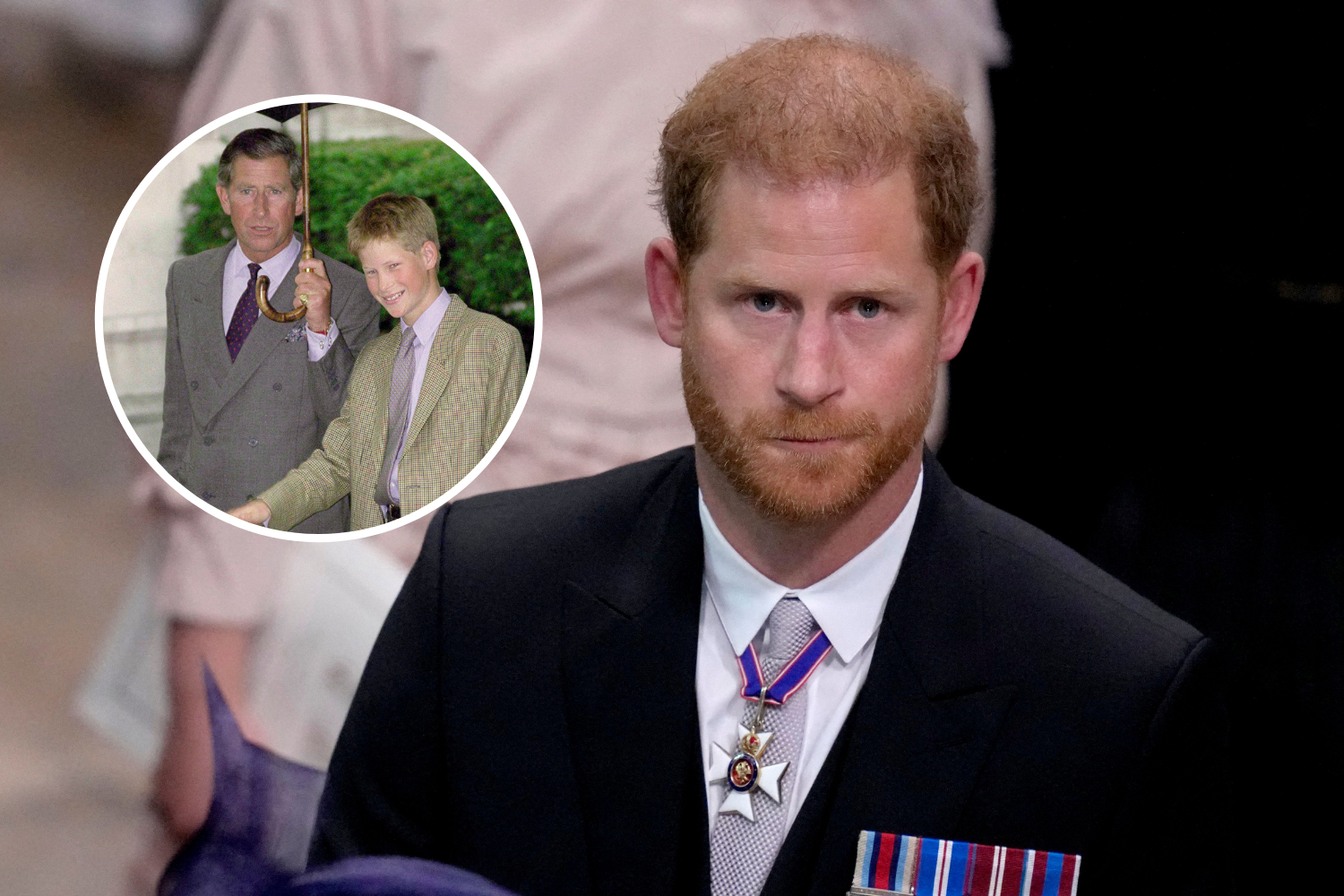
King Charles III and Prince Harry‘s father-and-son relationship has become the focus of a new viral video, after footage of the pair filmed for a 1994 documentary resurfaced on social media site TikTok.

Charles’ parenting skills and attitudes as a father were pulled into public focus earlier this year with the publication of Harry’s Spare memoir. In the record-breaking book, the king’s younger son made a number of revelations and allegations about his childhood and adolescence, including an account of Charles’ remoteness.

In one key account, Harry revealed that his father found physical intimacy difficult with his children, detailing that he didn’t hug his son when he broke the news that Princess Diana had died after a car crash in 1997.

Charles didn’t respond to the claims made in Spare, in line with the blanket “no comment” stance adopted by the wider royal family.

In 1994, Charles made a similar move to Harry, by collaborating with an official biography that made claims about his own childhood, including that his parents, Queen Elizabeth II and Prince Philip, were cold and remote.

To go with the book, Charles filmed a documentary with its author, Jonathan Dimbleby, titled: Charles: The Private Man, the Public Role. The documentary featured scenes filmed with the then-prince’s two sons and also his attitudes toward co-parenting with Princess Diana, who he had separated from two years earlier.

Uploaded to TikTok by user ab0ut_r0yals on October 15, footage of a young Harry being injured during a soccer game at the royals’ Balmoral estate in Scotland while Charles comforts him in the aftermath has been viewed over 120,000 times in 24 hours.

Captioned “miss this moment,” Charles is photographed with his arm around Harry, stroking his nose after the prince appeared to have injured his face during the game.

The clip has received in excess of 9,000 likes and numerous comments, many of which reflected on the royals’ relationship today.

In Spare, one of the most overt complaints that Harry listed against his father was his age. Charles was 35 years old when Harry was born, something the prince wrote proved to be a “barrier” between the two of them.

“I’d always assumed that I’d be a young husband, a young father, because I’d resolved not to become my father,” he wrote.

“He’d been an older dad, and I’d always felt that this created problems, placed barriers between us. In his middle years he’d become more sedentary, more habitual. He liked his routines. He wasn’t the kind of father who played endless rounds of tag, or tossed a ball until long after dark.”

In the 1994 interview with Dimbleby, the broadcaster asked Charles if he enjoyed spending time with Harry and Prince William, to which he responded: “Of course I do. And they like being with me. But what is marvelous is to see them develop and start to get good at certain things and develop interests and all that. It gives me enormous pleasure and satisfaction and pride.”

When the interview aired on June 29, 1994, in Britain, it was watched by a reported audience of 13 million people. It’s perhaps best known today for Charles’ overshadowing admission on camera to being unfaithful to Princess Diana during their marriage.

Asked if he had tried to remain faithful to his wife, Charles admitted that he had “until it [the marriage] became irretrievably broken down.” He was also asked about his friendship with Camilla Parker Bowles (now Queen Camilla), who at the time he was reported to be having an affair with.

Charles described Camilla as “a great friend of mine” and went on to add that she would “continue to be a friend for a very long time.”

The evening the interview aired, Diana attended a charity dinner in London wearing a black cocktail dress that was later dubbed the “revenge dress” as pictures of the daring design were run alongside write-ups of Charles’ revelations.

The interview is said, in part, to have influenced Diana to take part in the 1995 interview with BBC’s Panorama program.

James Crawford-Smith is Newsweek‘s royal reporter, based in London. You can find him on X (formerly Twitter) at @jrcrawfordsmith and read his stories on Newsweek‘s The Royals Facebook page.

Do you have a question about King Charles III, William and Kate, Meghan and Harry, or their family that you would like our experienced royal correspondents to answer? Email royals@newsweek.com. We’d love to hear from you

John Oliver reveals Matt Gaetz joke was cut by lawyers

0

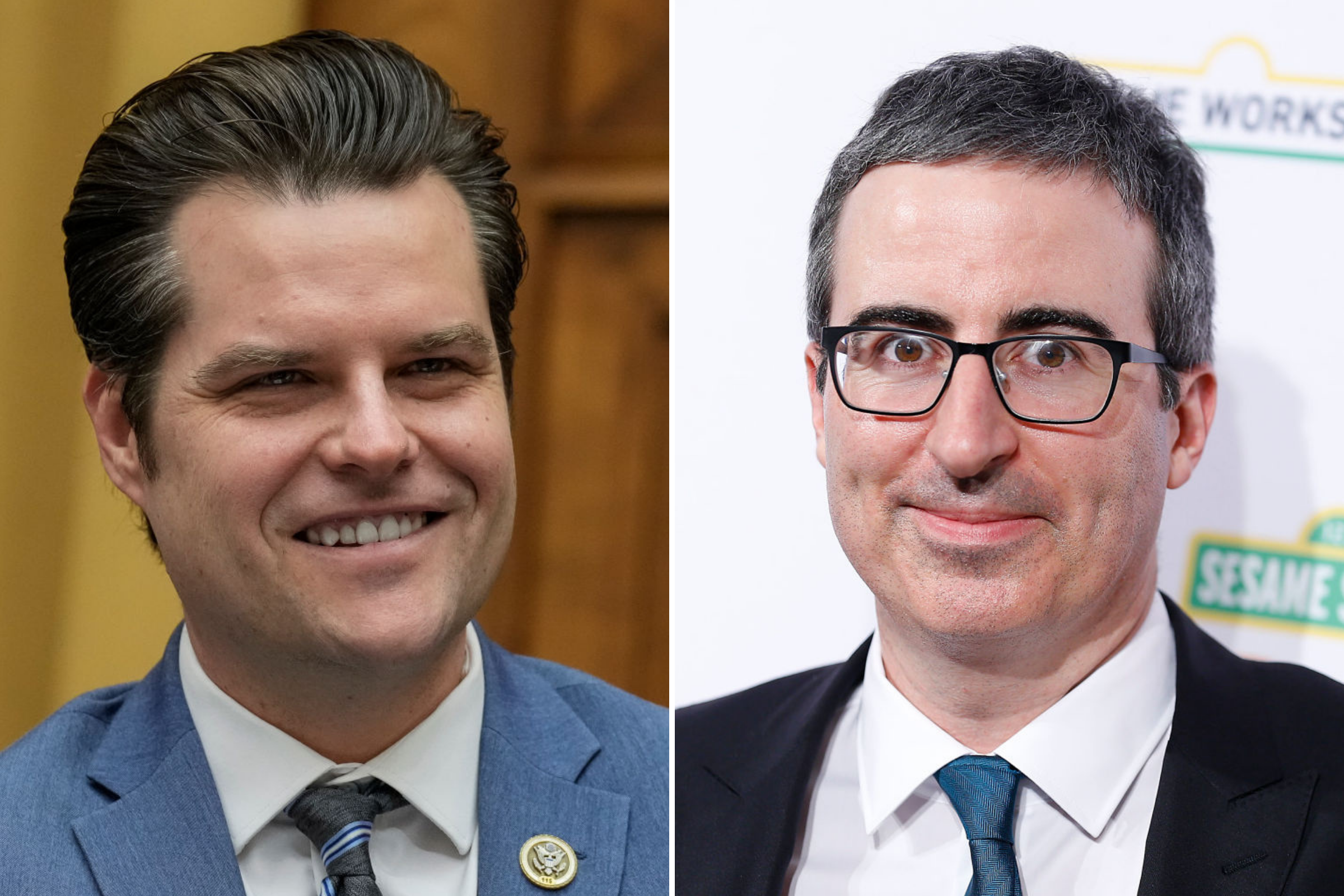
A Last Week Tonight joke about Florida congressman Matt Gaetz was cut by lawyers, according to host John Oliver.

On the October 15 episode, Oliver mocked Congress‘s ongoing internal struggles. The comic compared Republican infighting to Netflix‘s political thriller House of Cards, and Gaetz to the show’s leading man, Kevin Spacey.

“I guess it’s true in that it was kind of fun to watch at first, but now I’m just exhausted by it,” Oliver said.

“There’s actually another way in which this drama is like House of Cards, and it involves something one of its key protagonists, Matt Gaetz, has in common with Kevin Spacey.

“Sadly, my lawyers told me that I can’t say what it is, but I can think it, and so can all of you,” Oliver added.

In February, Gaetz released a statement announcing that a sex-trafficking investigation against him had been dropped by the Department of Justice (DOJ).

In the statement, Gaetz’s lawyers, Marc Mukasey and Isabelle Kirshner, said: “We have just spoken with the DOJ and have been informed that they have concluded their investigation into Congressman Gaetz and allegations related to sex trafficking and obstruction of justice and they have determined not to bring any charges against him.”

For more than three years, prosecutors probed the Republican politician’s behavior, after claims that the 41-year-old was involved in a scheme to traffic a 17-year-old girl. However, Gaetz denied the accusations and was not charged in the matter.

The politician said that he had been targeted by blackmailers. “Over the past several weeks, my family and I have been victims of an organized criminal extortion involving a former DOJ official seeking $25 million while threatening to smear my name,” Gaetz tweeted.

“We have been cooperating with federal authorities in this matter and my father has even been wearing a wire at the FBI‘s direction to catch these criminals,” Gaetz added.

In 2017, Spacey was axed from House of Cards due to sexual-misconduct allegations on set. Between 2017 and 2023, the 64-year-old would battle multiple sexual-assault claims—which he has vehemently denied. In June, Spacey was cleared on nine charges of sexual assault in the U.K. Complaints against the actor were first filed in June 2022, with Spacey accused of sexual offences by four men between 2001 and 2013. The Oscar winner denied the claims.

The U.K. case followed earlier legal battles in the U.S. Actor Anthony Rapp filed a lawsuit against Spacey in 2020, accusing him of making an “unwanted sexual advance” towards him in the 1980s. At the time, Rapp was 14 years old, while Spacey was 26, according to public records. Spacey refuted the allegation, with the court ruling in his favor in October 2022.

The American Beauty star was also accused of groping a waiter in a restaurant in Nantucket, Massachusetts, in 2016, but the case ended when the server refused to testify. A civil case in Los Angeles was also dropped in 2019, after the accuser passed away.

Newsweek has reached out to Matt Gaetz and Kevin Spacey for comment via email.

Upcoming "Reagan" movie ages, de-ages the former president, stops shy of AI

0

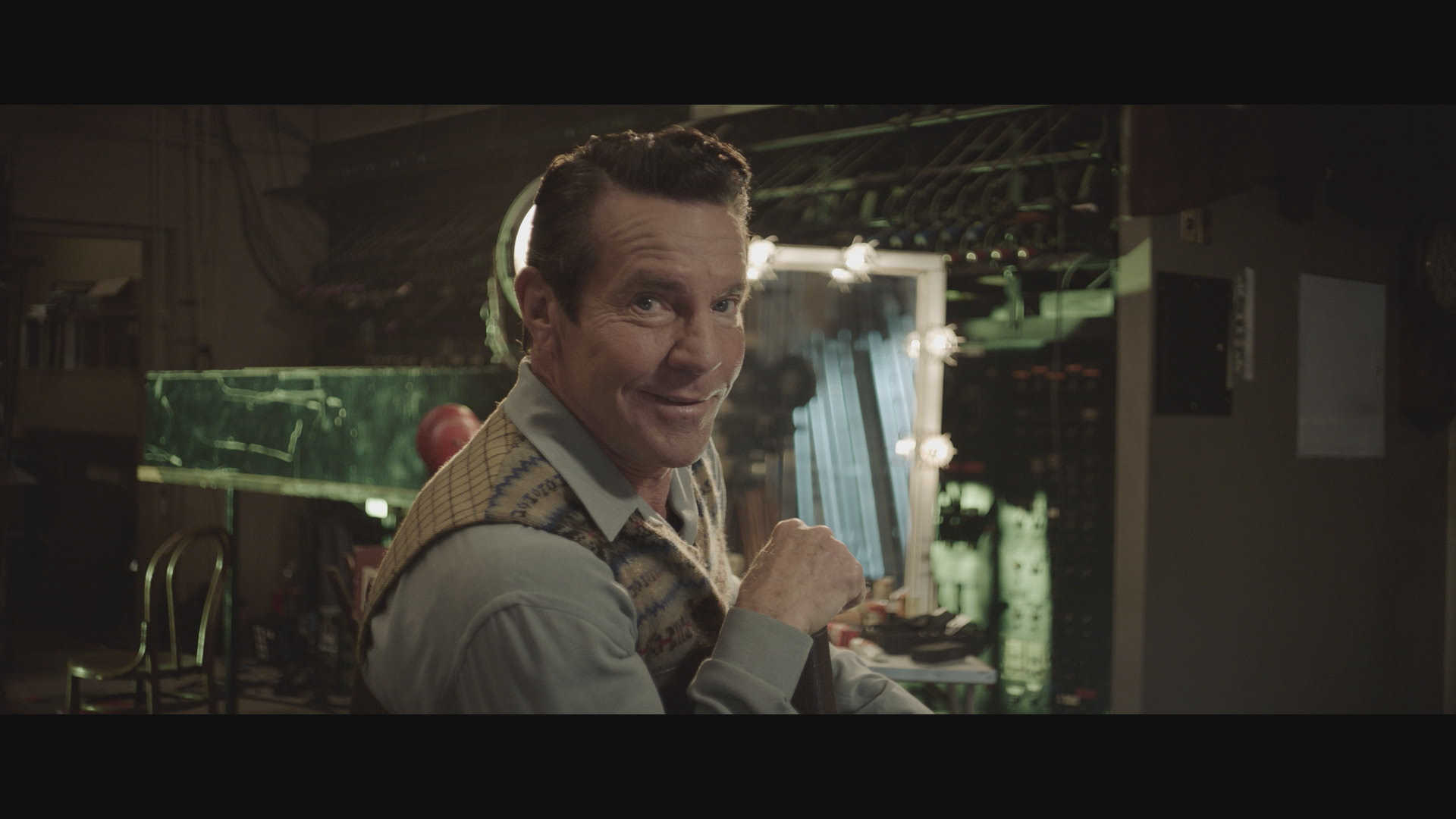
Dennis Quaid is 69 years old. But in an upcoming movie, he’ll be playing Ronald Reagan in his 30s, and in his 80s, and various ages in between.

The movie, dubbed Reagan and headed for theaters next year, is using digital technology and good, old-fashioned makeup to make the transition, but visual effects supervisor Scott Coulter stopped short of artificial intelligence, the bugaboo of Hollywood that has frightened actors and writers to the point of striking.

At one point, the filmmakers told Newsweek, they considered an entirely AI-generated entity to play the lead character, before they fell in love with the idea of casting Quaid, whom director Sean McNamara called “one of the greatest actors of our time.”

Plus, marketing and publicity was a consideration, he said.

“There’s no substitute for an actor like Dennis going on various shows to talk about a movie like ours,” McNamara said. “It’s that human connection.”

Such sentiments are likely music to the ears of actors, who continue a strike that began July 14 in part over the ability of technologies associated with AI to digitally recreate historical characters and forego the need for actors to play them.

Coulter told Newsweek that he didn’t forego AI to alter the ages of his actors because anyone on the project objected to its use, but because the technology “just wasn’t up to our standards.”

Coulter also changed the age of the other star of the film, Jon Voight, multiple times, given the Oscar-winning actor is 84 but plays a Russian agent who is in his 40s when he begins to collect intel on the future U.S. president due to Reagan’s anti-Communist sentiments that were evident when he was head of the Screen Actors Guild in 1947.

The VFX supervisor said he used “hand tracking of digital skin patches on a frame-by-frame basis” for more than 300 shots involving Quaid and Voight, and he aged and de-aged more than just their faces.

He used makeup as much as possible, then included prosthetics, hairline augmentations, neck pulls and other techniques that have been available for decades, then digital technology was used for the finishing touches.

The most challenging work was making Quaid look like Reagan as a young actor in the 1930s.

“We had to take 40 years off of Dennis, and that requires painstaking, almost surgical retouching of his face, frame by frame,” Coulter said.

He also said that Quaid and Voight are in such great shape physically and hide their ages so well that only work on their necks was required for a number of shots.

Reagan tells his story beginning in his boyhood, so a child actor is used, and David Henrie, best known as the brother in the hit Disney Channel show Wizards of Waverly Place, plays Reagan in his early 20s, when he played college football, was a lifeguard and a radio announcer.

Reagan, a narrative film as opposed to a documentary, is based on two biographical books by Paul Kengor about the deceased former governor of California and 40th president of the U.S. Voight’s character, though, is fictional, used as a device to show Reagan’s impact on world events, including the eventual downfall of the Soviet Union and how nervous he made communists during the Cold War.

The $30 million movie comes at a time when the latest digital technology—especially, perhaps, AI—is making many in Hollywood nervous about their jobs, thus it might come as a relief to many that the technique was shunned for a movie that could have benefited from its use.

Actors who are members of SAG-AFTRA have been striking in part over the ability of AI to recreate characters in film and television. Writers ended their strike last month, 148 days after it began, and their new agreement stipulates that AI cannot be used by studios to write or rewrite scripts, even though writers are allowed to use it while crafting their own work.

This month, Zelda Williams complained that AI has been for years used to mimic the voice of her father, the late comedian/actor Robin Williams, and she likened the outcomes to a “horrendous Frankenstinian monster.”

Actor Tom Hanks has also complained of AI being used to create a version of himself for the promotion of a dental plan that he’s not affiliated with.

“Anybody can now recreate themselves at any age they are, by way of AI or deep-fake technology,” the actor said on The Adam Buxton Podcast.

The technology, of course, has more legitimate uses. Disney, for example, reportedly inked a deal to use it to create the likeness of legendary comic-book creator Stan Lee in upcoming Marvel projects, and to create younger versions of Luke Skywalker and Princess Leia in its Star Wars spinoffs that run on its streaming service.

While for Reagan it was considered and rejected, McNamara acknowledges he’s a fan of the promise of AI and the latest digital technologies.

“I suggest to all actors that they get their face, head and body scanned while they are young so they can play themselves at any age,” he said.

“Dennis is in his 60s, but he has the body of a 35-year-old and he moves like a younger man. In fact, he had to work on acting older for the scenes when Reagan had Alzheimer’s.”

Voight said that young actors need not fear the new technologies finding their way into moviemaking.

“No one can replace the unique soul of the individual artist,” he said. “That is the real magic that brings a character to life. From my viewing of the recent acting work, I see that God has not stopped making great artists.”

How "The Crown" actor’s description of King Charles compares to Harry’s

0

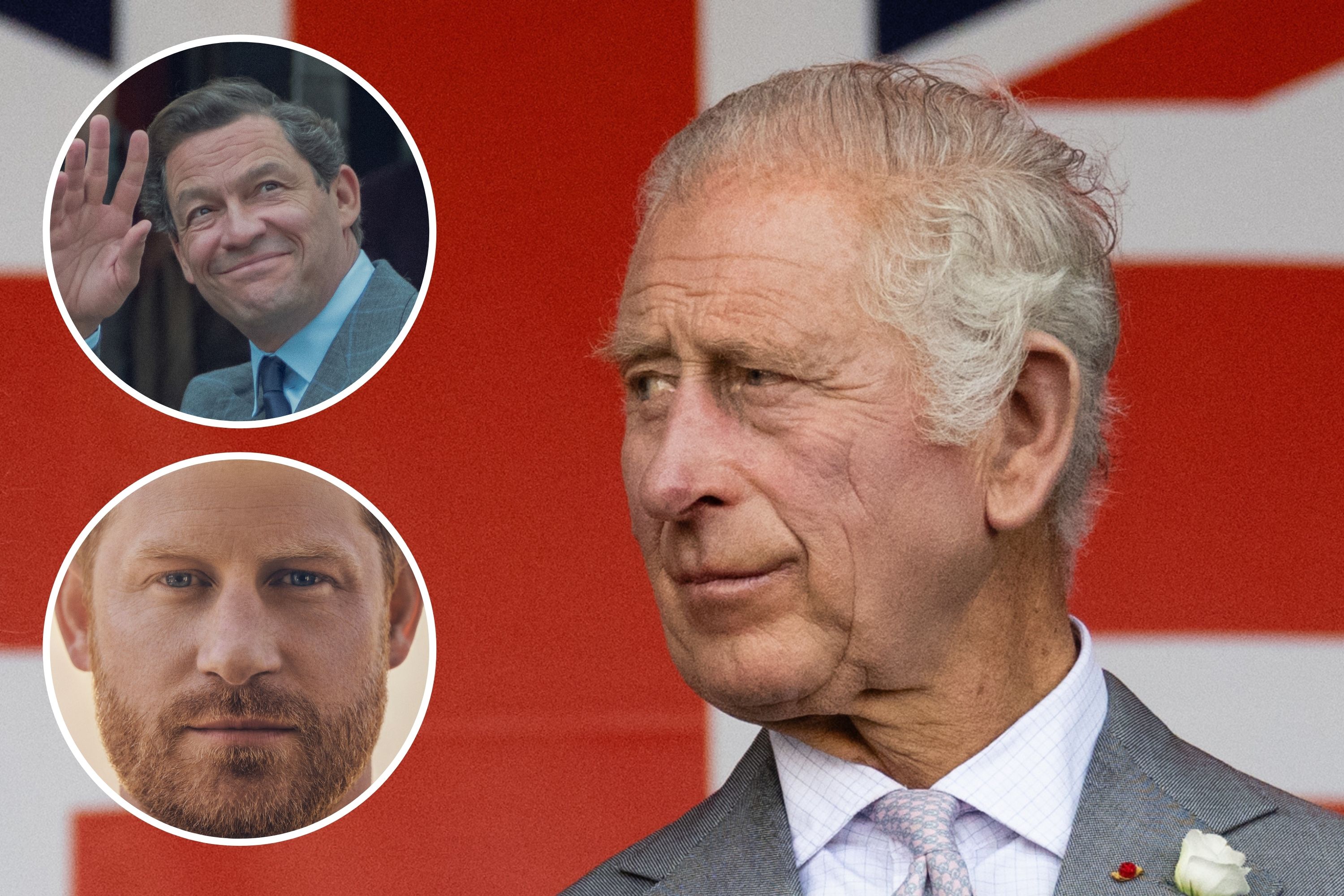
The Crown star Dominic West gave a hint about how he will portray King Charles in the show’s final season as he said the royal has a “real sadness to him.”

The sixth and final installment of the drama is due to hit Netflix in two parts, with the first dropping on November 16.

Those four episodes will look at Princess Diana‘s death and the events leading up to it while Part II, in December, will focus on the aftermath of the tragedy.

West’s view of Charles has some similarities with the portrait Harry paints of his father though the pair appear to disagree on the king’s emotional literacy.

During an April interview released by Netflix on October 16, Dominic West said: “I think he’s got real sadness to him and real compassion, and what’s great about The Crown is that you see these public figures in private.

“I suspect in private he’s quite emotional; well, that’s the way I played him anyway…I think, hopefully, what comes out is compassionate but relatively well-balanced.

“I talked to a lot of people who have met him because he’s met a lot of people, he’s met probably more than anyone except the Queen and Prince Philip. Almost everyone has extremely warm, kind things to say about him.”

How Prince Harry Describes Charles in Spare

The picture painted of Charles in Harry’s memoir is at times warm and sympathetic, like when the king attends Harry’s school play and laughs in all the wrong places.

However, a recurring theme in Spare is the king’s struggle to find emotional connection in person, including when Charles tells him that his mother, Princess Diana died.

“None of what I said to him then remains in my memory,” Harry said. “It’s possible that I didn’t say anything. What I do remember with startling clarity is that I didn’tcry. Not one tear.

“Pa didn’t hug me. He wasn’t great at showing emotions under normal circumstances, how could he be expected to show them in such a crisis?

“But his hand did fall once more on my knee and he said: ‘It’s going to be OK.’That was quite a lot for him. Fatherly, hopeful, kind. And so very untrue.

“He stood and left. I don’t recall how I knew that he’d already been in the other room, that he’d already told Willy, but I knew.”

That is not the only example and the book twice suggests Charles preferred to express himself in letters than in person.

“He had trouble communicating,” Harry wrote, “trouble listening, trouble being intimate face-to-face. On occasion, after a long multi-course dinner, I’d walk upstairs and find a letter on my pillow. The letter would say how proud he was of me for something I’d done or accomplished.

“I’d smile, place it under my pillow, but also wonder why he hadn’t said this moments ago, while seated directly across from me.”

Even after leaving home to fight in Afghanistan, Harry still described finding his father difficult to connect with during telephone calls from the warzone: “‘How are you, darling boy?’ ‘Not bad. You know.’ But he asked me to write rather than call. He loved my letters. He said he’d much prefer a letter.”

Filming for Season 6 of The Crown began in 2022 before Harry’s book came out in January 2023, and it may be that the script had already been finalized by the time Spare hit shelves.

Either way, Harry’s characterization of his father may also simply never have lent itself to TV drama where viewers expect to see the emotional landscape of characters writ large on the screen in front of them.

So perhaps West and The Crown‘s scriptwriters would have felt the need to indulge in some artistic license regardless—the show is, of course, a fictional depiction that is only based on fact.

Jack Royston is chief royal correspondent for Newsweek, based in London. You can find him on X, formerly Twitter, at @jack_royston and read his stories on Newsweek‘s The Royals Facebook page.

Do you have a question about King Charles III, William and Kate, Meghan and Harry, or their family that you would like our experienced royal correspondents to answer? Email royals@newsweek.com. We’d love to hear from you.
Russian diplomat found dead in hotel room

0

Police in Turkey are probing the death of a senior Moscow envoy found dead during a diplomatic trip.

Colleagues of Nikolai Kobrinets, 61, head of the Russian foreign ministry’s department for pan-European cooperation, raised the alarm when he did not appear for a scheduled meeting on Friday morning.

He was found dead in his hotel room in Istanbul’s Taksim district, with the Turkish news outlet Hurriyet reporting that the initial investigations pointed towards the diplomat dying of a heart attack.

His body was taken to the morgue of the Institute of Forensic Medicine in Bahçelievler Yenibosna where an autopsy is to be performed, while the police are checking his hotel room for fingerprints and CCTV footage, the publication added.

The Russian Foreign Ministry’s press service confirmed Kobrinets’ death, but gave no details regarding the cause.

Describing him as a “talented diplomat” who had “devoted his entire working life to protecting the foreign policy interests of the motherland,” the foreign ministry said he had been awarded the Medal of the Order of Merit for the Fatherland as well as a certificate of honor from President Vladimir Putin.

“The bright memory of Nikolai… will forever remain in our hearts,” the statement added. Newsweek has contacted by email the Russian foreign ministry for comment.

It is the not the first death of a Russian envoy in Turkey. In December 2016, Russia’s ambassador to Ankara, Andrei Karlov, died after he being fatally injured by police officer Mevlut Altintas at a photo exhibition in the capital.

President Recep Tayyip Erdogan tried to attribute the assassination to the trans-national Turkish opposition Gülen movement but there was no evidence for this. In 2021, five people were sentenced to life imprisonment over the murder.

The death of Kobrinets is the latest death of a Russian official since the start of Moscow’s full-scale invasion of Ukraine. Many of the deaths have occurred in mysterious circumstances, including apparent suicides and falling from windows.

Among the most high-profile deaths was Yevgeny Prigozhin, the former head of the Wagner Group of mercenaries, who perished in a plane crash two months after he had staged a mutiny against Russia’s military establishment.

Other Russian deaths include that of the former head of the Moscow Aviation Institute Anatoly Gerashchenko whom investigators said had fallen down stairs in September 2022.

In March 2023, Andrey Botikov, one of the scientists who developed the Sputnik V vaccine at the Gamaleya National Research Center, was found strangled in his apartment.

Update 10/16/23, 8:40 a.m. ET: This article has been updated with further information.

Putin reveals how many Russian troops have been killed in counteroffensive

0

Russian President Vladimir Putin inadvertently revealed on Monday how many Russian troops may have been killed since Ukraine began its long-anticipated counteroffensive in June.

Putin made the remarks during an interview with Chinese media, claiming that Ukraine’s losses during its counteroffensive are eight times higher than those of Russia.

Ukraine’s counteroffensive is now in its fifth month, with particularly heavy clashes taking place along the front lines in the Donetsk and Zaporizhzhia regions. However, political strategist Radu Hossu has said Russian troops are getting “pulverized” in the ongoing battle for Avdiivka, which is located about 90 kilometers (56 miles) south of Bakhmut.

“Since June 4, [Ukraine’s counteroffensive] has been continuing. So far there are no results, there are only huge losses [for Ukraine],” Putin told the China Media Group in an interview published by Russia’s state news agency Tass.

“The losses are simply huge—approximately one to eight as a ratio,” Putin said.

On October 5, Putin said that Ukraine had lost 90,000 troops during its counteroffensive, which suggests that Russian losses exceed 11,000 military personnel.

Newsweek has been unable to independently verify the figures, and has contacted Russia’s Defense Ministry via email for comment.

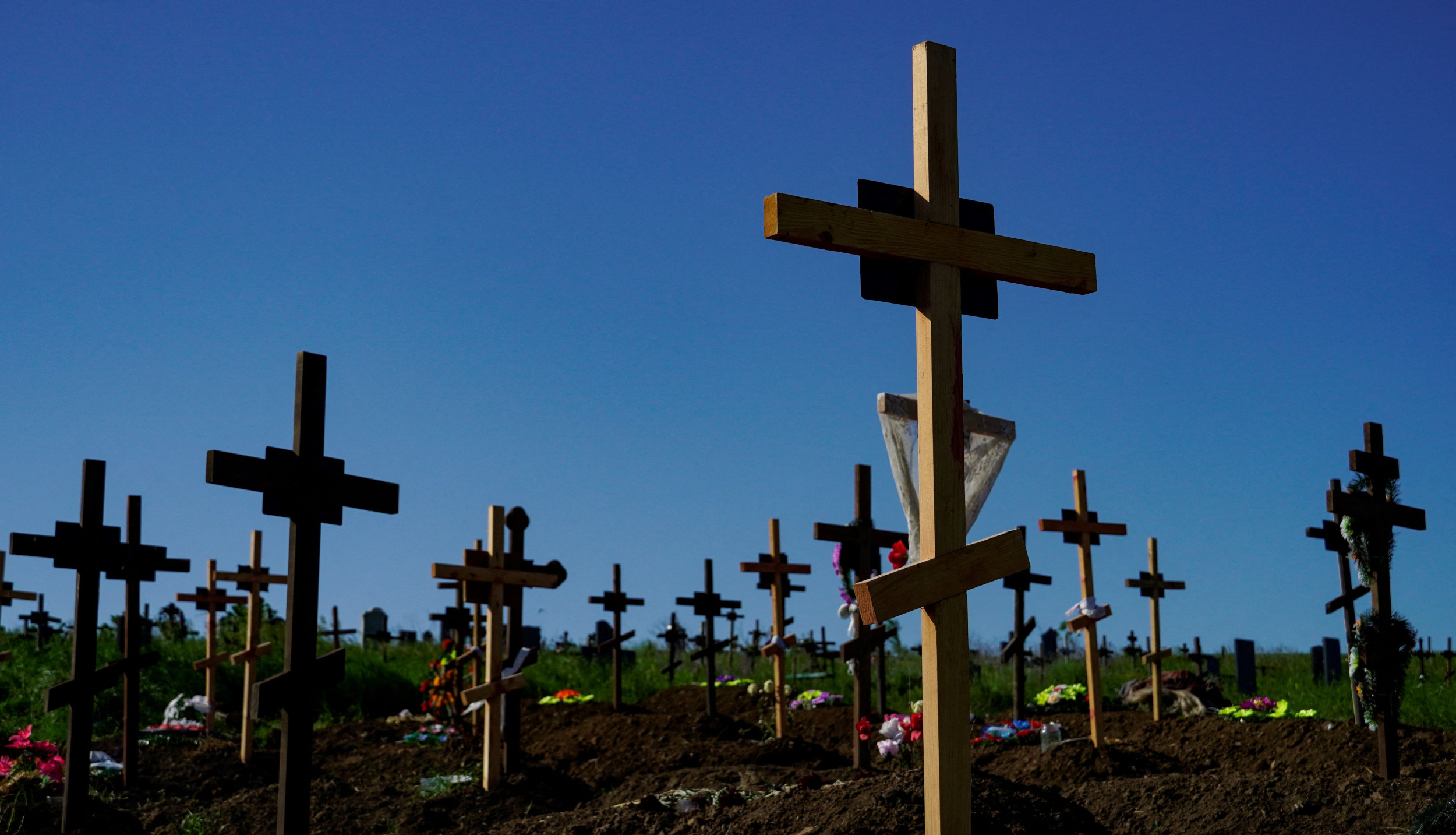
The death toll on both sides continues to rise amid Ukraine’s grinding counteroffensive to recapture Russian-occupied territories. According to figures released by the General Staff of the Armed Forces of Ukraine on Monday, Moscow lost 860 soldiers over the past 24 hours, bringing the total to 288,630.

Estimates of casualty figures vary, with Kyiv’s figures usually exceeding those of its Western allies.

Russia itself rarely releases figures on troop losses. In September 2022, Russian Defense Minister Sergei Shoigu said 5,937 Russian troops had been killed in the war in Ukraine since late February 2022.

A joint-investigation by BBC‘s Russian Service and independent Russian news outlet Mediazona on October 13 has so far identified the names of 34,412 Russian military personnel who have died in the war in Ukraine. It states that the actual number of losses is higher than the figures stated in the investigation.

Independent Russian news outlet Mozhem Obyasnit analyzed Russia’s federal budget draft for 2024 to 2026, and found last week that Russia is allocating funding to the families of 102,700 military personnel killed in Ukraine. The figures have not been independently verified by Newsweek.

Ukraine also avoids publishing casualty figures for its forces. However, Western intelligence estimates suggest they are also substantial. In April, a leaked U.S. Defense Intelligence Agency assessment estimated that Kyiv had suffered 124,500 to 131,000 casualties, including 15,500 to 17,500 dead and 109,000 to 113,500 wounded.

Do you have a tip on a world news story that Newsweek should be covering? Do you have a question about the Russia-Ukraine war? Let us know via worldnews@newsweek.com.

Deadly snake lurks out of public toilet: "Thing of nightmares"

0

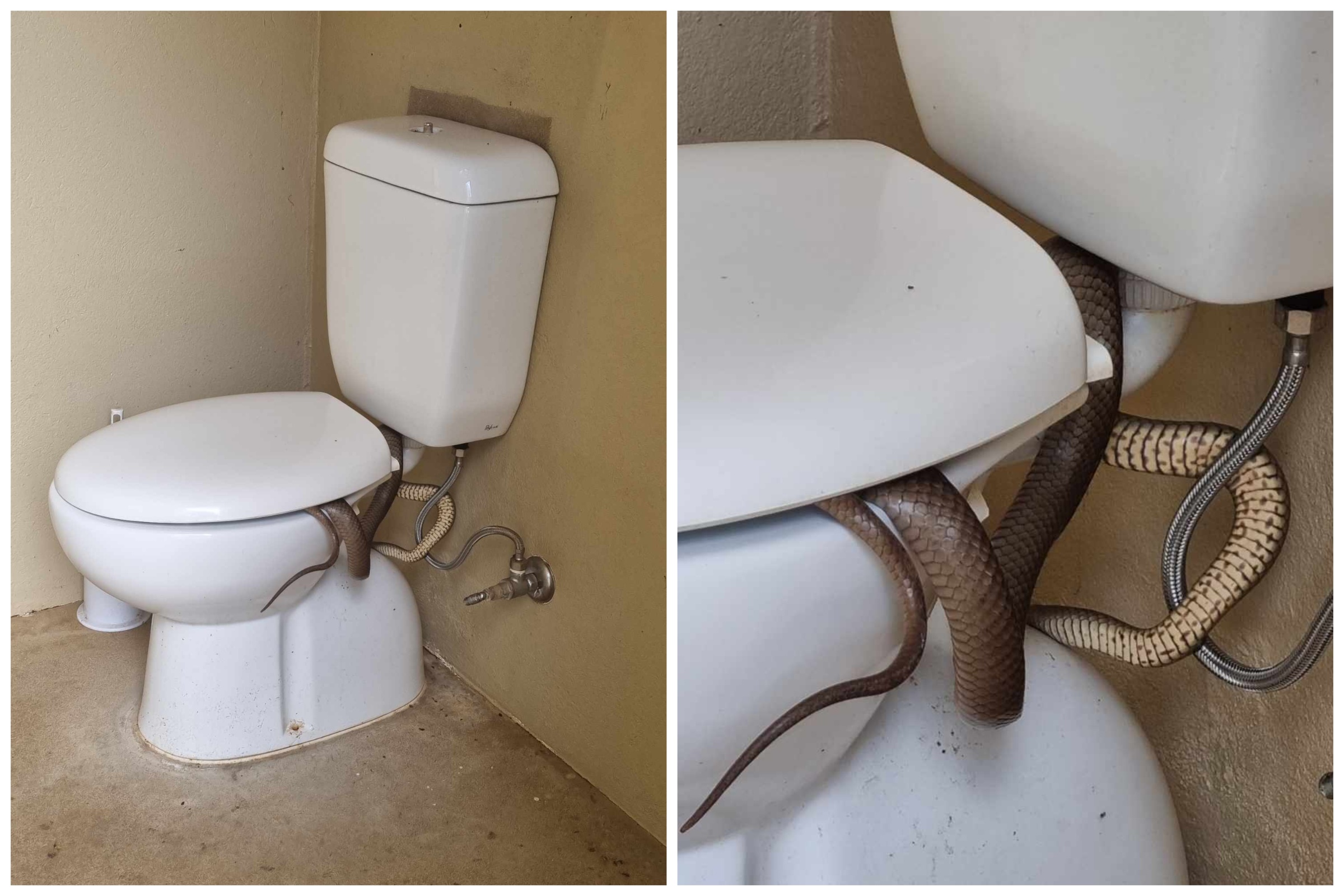
Halloween came early this year for a family in Cootamundra, Australia, after it discovered a deadly snake in a cemetery lavatory.

Michael and Dolly Miller, along with their 5-year-old daughter, had been visiting the New South Wales town for the funeral of Michael’s grandmother when the incident occurred.

“We attended Cootamunda cemetery on Wednesday the 11th of October for the burial,” Dolly told Newsweek. “On this day, my 5-year-old daughter really needed to use the toilet and her aunty had said, ‘Watch out for the snake, there is usually one hanging around here.'”

Dolly said she didn’t take the warning too seriously and continued to the lavatory with her daughter. There was no snake.

The next day, before driving home to Sydney, the family stopped by the cemetery to say goodbye to their loved ones. “My husband, Michael, needed to use the toilet before our long drive home so he parked near the toilet and ran in,” Dolly said. “Within two seconds, he bolted back out the door as white as a ghost, running to the car yelling, ‘There’s a snake.'”

Michael said that, as he went to lift the lid he spotted the reptile coiling its way around the seat. “He was in shock,” Dolly said. “I made him go back and get a photo. He was hesitant but snapped to from the door and ran back to the car…. We are not snake people.”

The reptile was an eastern brown snake, a highly venomous species responsible for more snakebite fatalities than any other snake in Australia. Eastern brown snakes have the second-most toxic venom in the world, according to the University of Melbourne’s Australian Venom Research Unit. It contains a potent neurotoxin that shuts down a victim’s heart, diaphragm and lungs, causing the person to suffocate.

The species is found throughout eastern and southern Australia—hence its name. Its natural habitat also overlaps with some of the country’s most populated areas, so it is not uncommon to find them in people’s homes and, in this case, public toilets.

It is not unusual for snakes to find their way into toilets. They see them as a valuable water source and a potential source of amphibious snacks.

Dolly and Michael sent photos of the snake to Michael’s mother, Allison Smith, who was also headed toward the cemetery. To warn others, Smith shared the photo to the Facebook group Cootamundra Matters, in a post that has received hundreds of likes and comments.

“A thing of nightmares, snake in the toilet,” commented one user.

“Yikes, suddenly the urge to go went away. LOL,” commented another.

If you find a snake on your property and are unsure if it is venomous, the safest thing to do is to call your local snake catcher, as most bites occur when snakes feel harassed or handled.

Russia’s aviation crisis keeps getting worse

0

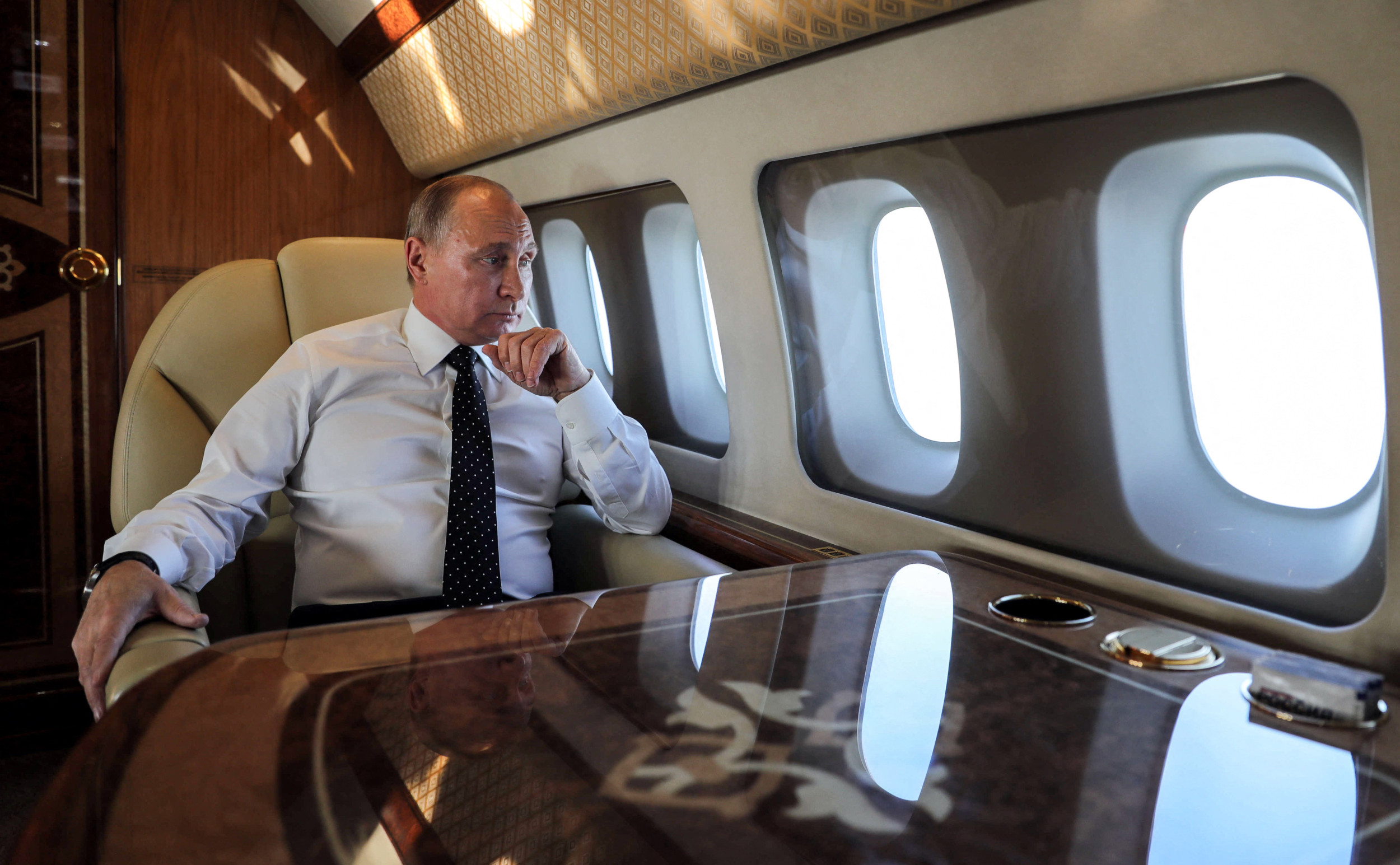
Russia’s sanctions-hit aviation industry has been plagued by multiple jet incidents in recent weeks, adding to President Vladimir Putin‘s woes during his full-scale invasion of neighboring Ukraine.

Analysis by Agentstvo, a Russian investigative site launched in 2021, found that in the last two weeks, one of the country’s Rossiya Airlines’ Sukhoi Superjet 100 regional aircraft was involved in four emergency incidents.

Russia’s aviation industry has been hard hit by Western sanctions imposed over Putin’s full-scale invasion of Ukraine. Russian-operated planes have been sanctioned by the U.S. government, and plane makers have stopped delivering spare parts and new aircraft to the country.

More than a year and a half into the war, Russia’s aviation industry continues to try to work around Western sanctions and look for ways to substitute Western-made spare parts and equipment for its aircraft to keep the industry afloat.

Newsweek has contacted state-controlled Aeroflot, the parent company of Rossiya Airlines, and the Russian Foreign Ministry for comment by via email.

A Russian-made Sukhoi Superjet 100-95B was involved in two incidents on October 13. The first occurred during a flight from St. Petersburg to Murmansk Oblast, and the second happened a few hours later. Both times, crew members reported problems with the aircraft’s wing mechanization, Agentstvo reported, citing the Aviaincident Telegram channel and data from the Flightradar24 service.

A few days earlier, on October 9, the Shot Telegram channel reported that the same aircraft made an emergency landing in Samara after its wing flaps jammed. Agentstvo said that according to Flightradar24 data, the plane circled before landing, and returned, presumably without passengers.

There were no reports of injuries in the incidents.

Meanwhile, on October 1, the same aircraft had wing mechanization issues when landing in St. Petersburg from Apatity in the Murmank Oblast, the Aviaincident channel reported

And in August, hundreds of Russian passengers bound for the city of Yekaterinburg were stranded in Antalya, Turkey, for a second day after a Russian airline suddenly lost two of its three Boeing 777 aircraft due to technical problems.

While it is not known if these problems are directly linked to Western sanctions, Rossiya Airlines previously said it was concerned that only 40 percent of its Superjet 100 fleet would be active in the spring and summer of 2023 due to lack of spare parts.

Meanwhile, on Monday, Russian news site Lenta.ru reported that 17 flights were canceled or delayed at three Moscow airports. It did not say what caused the cancellations, however, or whether this was an unusually high number.

Russia’s Transport Ministry has drawn up a program to develop the country’s aviation sector by 2030. It anticipates the country will gradually reduce the number of foreign aircraft in operation, and that airlines will find ways to substitute Western-made spare parts, according to state-run news agency Interfax.

Anastasia Dagaeva, an independent expert on Russian aviation, wrote in a report for the Carnegie Endowment for International Peace in March that the 2022 Western-imposed sanctions have turned out to be far more difficult to digest than previous sanctions.

“In the space of just a few days, Russian airlines, which had been closely integrated into the global market, lost international destinations, leasing contracts and technical support for their foreign planes, partnerships with other carriers, foreign software, insurance, and other services,” wrote Dagaeva.

“The primary goal for Russian civil aviation right now is to stay afloat until 2030,” she said, adding that Russian aviation won’t disappear any time soon, but it will become more self-contained.

“The exclusion from technical support and full-scale industry communication will certainly be felt,” Dagaeva added.

The New York Times reported in May that, despite sanctions imposed by the U.S. and other governments on Russian airlines including Aeroflot and Rossiya, thousands of shipments of aircraft parts had been successfully sent into Russia last year, according to Russian customs data.

Do you have a tip on a world news story that Newsweek should be covering? Do you have a question about the Russia-Ukraine war? Let us know via worldnews@newsweek.com.