Thursday, March 12, 2026
Home Blog Page 72

Woman shares "best mom hack ever" to stop kids from getting car dirty

0

Being a mom isn’t easy—often juggling household chores, caring for children and a job—but one woman from Connecticut is always thinking of ways to make motherhood just that little bit simpler.

Mom-of-four Shannon Doherty, 39, has recently delighted the internet by sharing a simple hack that will stop dirty feet touching car carpets. During the clip, she can be seen holding a plastic blue shower caddy and a football. She then places the caddy in the footwell of her vehicle for her daughter to put her dirty soccer boots in.

Doherty, from the town of Darien, told Newsweek: “I actually bought the extra large shower caddy by mistake. I had it in the car to return after a soccer game and then I thought—let’s use it for the cleats! It was so smart and easy!”

Prior to this, Doherty, who uses the TikTok handle @athomewithshannon, used to clean the inside of her car “almost every day” as her children play “tons of sports.”

The video is captioned: “Who knew a SHOWER CADDY could be the BEST MOM HACK EVER!? Trust me—this is a game changer for all those muddy cleats and sneakers!” It seems to be a hit online. To watch the clip, click here.

So far, the video, shared on September 27, has amassed 4.3 million views and more than 163,000 likes.

The clip has been inundated with positive messages from other parents who wished they had done something similar.

One user said: “That is genius,” and another said: “Omg, that is the best idea ever.”

Other parents have shared their tips too, and one said: “I had my son take his cleats off and then I put them in a little plastic container like that in the trunk of my car.”

Parents turning to the social media app for tips isn’t a new phenomenon. The hashtag “mom hack” has racked up over 7 billion views and “parenting tips” has 8.8 billion.

It’s likely parents with teens aren’t the only ones in their household who use the app, which offers a huge variety of content. The videos can range from short and snappy to longer clips, making it very easy for users to lose track of time.

In March, TikTok announced new features aimed at helping parents manage their kids’ screen time. According to the official TikTok website, caregivers are able to customize the daily screen time limit for their teen and mute notifications to ensure their child isn’t distracted. The third feature is a screen time dashboard that gives a breakdown of total time spent on the app and how many times the app was opened.

Update 10/05/23, 3:30 a.m. ET: This article has been updated with original content.

If you have a personal dilemma, let us know via life@newsweek.com. We can ask experts for advice on relationships, family, friends, money and work and your story could be featured on Newsweek’s “What Should I Do? section.

Dog takes "first ever steps of freedom" after 9 years in laboratory cage

This beagle has found freedom in a forever home after spending his entire life in a laboratory, where he was subjected to years of testing.

Sidney, 9, is believed to have been born in a testing lab where he spent every day of his life, until he was rescued by the Beagle Freedom Project (BFP) in September.

Shannon Keith, the president and founder of BFP, told Newsweek that Sidney was used for toxicity testing, so he spent “his entire life confined in captivity.”

The Humane Society estimates that over 50 million animals are used for experiments in the U.S. every year, including dogs, cats, hamsters, pigs, rabbits, and sheep. Dogs are usually required for testing on their heart, lungs, or kidneys, so the laboratories can observe how a substance might impact human organ function.

Keith said: “Sidney was taken from his mother at a very early age, and he had none of the things puppies should have: no toys, nothing to teethe on, nothing to snuggle with, no normal socialization with mother or littermates. At about 10 weeks of age, the testing started.

“Sidney was used for toxicity testing, which means that doses of drugs were induced to see what level of toxins would make him sick and react in certain ways. Sidney’s interactions with people were mostly limited to testing, feeding, and cleaning. He had no enrichment in his life, meaning no stimulation and nothing to do. This is the life of a laboratory test animal.”

During his nine years in the laboratory, Sidney had no quality of life as he spent most of his time in a small crate. As a result, he’s been left with serious trauma from his past, and understandably, he struggles to trust people.

After removing him from the facility, the BFP placed Sidney with a foster home who offered him the love and care he deserved. They captured the moment when he took “his first ever steps of freedom” into his new home.

“Other than dental and some minor other physical issues, Sidney struggled the most with the trauma,” Keith continued. “Nine years in a laboratory causes severe PTSD. He had to learn to trust people, to overcome fears of certain noises, and to learn to just be and that everything was going to be ok.

“We call it the beagle breakthrough when they finally look into your eyes rather than through them. For some, it may only take a few days, for others, months, or years. For Sidney, it took a while, but he finally had his breakthrough, and when he looked into his foster mother’s eyes, she knew he was home, and he knew he was safe.”

Sidney’s fosterer immediately fell in love with the beagle and decided to keep him as a permanent adoption. Sidney even has a beagle brother in his new home, who is teaching him how to be a regular dog.

Keith noted that this can often happen because “the bond becomes so close when helping a dog overcome trauma,” and the dog becomes the newest member of the family.

The video of Sidney stepping out of his crate and walking into his new home was shared to TikTok (@beaglefreedom) on September 15, and it instantly went viral. The clip has been viewed more than 143,000 times and received over 13,000 likes from supportive social media users.

When discussing the reaction to the video, Keith told Newsweek that it was mostly “sadness and empathy for Sidney,” with many people expressing their anger towards the practice of animal testing.

“We hope that by sharing Sidney’s first steps of freedom, as well as those of many other survivors, we will spread awareness about the survivors of animal testing and all that they have gone through, so that better science will prevail without the use of animals,” Keith said.

With over 600 comments on the TikTok post, many people praised Sidney’s strength and will power, and thanked the BFP for saving him.

One person commented: “Can you imagine how much courage it takes to take those steps, after everything he’s been through?”

Another person wrote: “How can people be so cruel? They should never be used for testing. I am so happy for Sidney.”

While another responded: “Thank you for giving this precious baby his well-deserved freedom!”

Do you have any amazing pet rescue stories you want to share? Send them to life@newsweek.com with some details about your best friend and they could appear in our Pet of the Week lineup.

Your genes may stop you being vegetarian, scientists say

0

While some people seem to effortlessly adopt a vegetarian diet, others find it nearly impossible to quit meat.

According to new research from Northwestern University, your ability to stick to a strict vegetarian diet might actually come down to your genes.

As of January 2022, roughly one in 10 American adults identified themselves as being either vegan or vegetarian, according to surveys carried out by Kansas State University. Motivations for adopting a plant-based diet vary between individuals and can include personal health, animal wellbeing, environmental concerns and religious reasons., Previous studies have shown that roughly half of all self-described vegetarians actually eat meat, at least occasionally.

“This suggests that many people who would like to be vegetarian are unable to stick to a strict vegetarian diet,” study author and Professor Emeritus of pathology at Northwestern University’s Feinberg School of Medicine, Nabeel Yaseen, told Newsweek. “Given that several prior studies have shown that food choices are strongly influenced by genetics, we wanted to see if adhering to a strict vegetarian diet is influenced by genetics.”

Using data from UK Biobank, a large-scale biomedical database of in-depth genetic and health information from half a million U.K. participants, the team identified 5,324 strict vegetarians and 329,455 people who ate meat. “We then compared the genetic data of strict vegetarians to non-vegetarians by a genome-wide association study (GWAS) to identify genes that might be associated with vegetarianism,” Yaseen said. The study was published on Wednesday in the journal PLOS One.

A genome-wide association study is a scientific research method that involves rapidly scanning the DNA of a group of individuals to find distinctive markers of a particular disease (or in this case lifestyle). Using this method, the team identified three genetic variants that were more common in people with a strict vegetarian diet.

“Our study is the first fully peer-reviewed and indexed study to address the genetics of vegetarianism,” Yaseen said. “We identified three genes that are significantly associated with vegetarianism as well as 31 other genes that are possibly associated with vegetarianism. As it turns out, several of the genes we identified have important functions in lipid [fat] metabolism and brain function.”

Sylvain Charlebois, a professor in environmental studies and scientific director of the Agri-Food Analytics Lab at Dalhousie University, in Canada, explained how these genes could impact our capacity to adhere to a strict vegetarian diet. “While the exact mechanism isn’t fully understood, it’s speculated that individuals with genetics favoring vegetarianism may be able to synthesize specific lipid components found in meat,” Charlebois, who was not involved in the study, told Newsweek. “This suggests that their bodies might not have the same ‘craving’ for meat-related components as others, making them more inclined toward a vegetarian diet.”

However, before blaming your genes for your insatiable cravings for chicken nuggets, there are several caveats to consider here.

“We need to be careful with how we interpret the results of this study,” Charlebois said. “Food is culture, it is about traditions, and most importantly, it is inherently personal. While genetics may play a role, it’s important not to oversimplify the complexity of human dietary habits based solely on genetic markers.”

It is also important to remember that genome-wide association studies (GWAS) like this simply look for patterns and correlations within a group of individuals. These correlations do not necessarily imply that a specific gene causes the observed behavior. “By definition, [GWAS] involve association analysis,” Maria Traka, deputy head of Food and Nutrition National Bioscience Research Infrastructure at the Quadram Institute in the U.K., told Newsweek. “In addition, dietary habits are complex and are highly correlated both with each other and with non-dietary traits. So single dietary habits may represent broader diet and lifestyle choices.”

Nicola Pirastu, senior manager at the Biostatistics Unit for the Italian research institute, Human Technopole, agreed, saying that this data alone was not enough to make solid conclusions about the genetic basis for plant-based diets. “The evidence I am afraid is not strong enough to make such claims and these results are unlikely to replicate in larger studies,” he told Newsweek. “More specific and larger studies are likely to find sturdier results.

“A genetic variant may contribute to vegetarianism, for example increasing the liking to vegetables and thus making this choice simpler, but the differences we have detected can hardly explain the actual choice. This does not mean that we should not try to understand the biological bases of food choices and liking as they could potentially help us in improving people’s food choices, but this needs a broader approach, not focused on a single food or behavior but that tries to incorporate the complexity involved.”

Yaseen, too, said that more research was needed to understand these biological underpinnings. “Our data suggests that the ability of some people, but not others, to adhere to a strict vegetarian diet may be related to genetic differences in lipid metabolism and brain function. However, more research is needed in order to further examine this hypothesis. A better understanding of the genetics and physiology of vegetarianism may allow us to provide better personalized dietary recommendations and perhaps enable the production of better meat substitutes.”

Sadly, It’s Not ‘Just Another Summer.’ We Must End the Fossil Fuel Industry

0

My fellow human beings, we’re in the process of losing basically everything, as the latest data demonstrates. September was more like your average July, The Washington Post wrote on Tuesday. All that we’ve been experiencing recently—the worsening fires, smoke, heat, floods, and collapsing ecosystems—is just the beginning. This is what experiencing the early stages of Earth’s unraveling feels like. The immediate cause is the fossil fuel industry, and the overarching cause is extractive-colonial capitalism.

I write this for everyone, but it’s helpful to think in terms of three general groups. The first group: those of you who are already screaming, inside your heads, that saving what’s left of our habitable Earth must become our top collective priority. Thank you for your urgency! Once enough people share your urgency, meaningful change will come quickly. For now, I hope to give you some ideas about what you can do to accelerate that shift into climate emergency mode.

I also write this for those of you who “believe science” but think that the people and centers of power—such as the White House, individual world and corporate leaders, the United Nations—will handle it. You likely feel that there is some higher priority issue to address, and this isn’t unreasonable given the huge gap between what climate scientists know and what gets transmitted to the public. You may think that some technology like nuclear fusion or carbon capture or electric vehicles or putting some iron in the ocean will “solve” climate change. Or you may not think of climate much at all. I hope to convince you that greater urgency is called for. President Biden appears to be a member of this group. It would be helpful to life on Earth if he would declare a climate emergency and take urgent executive action.

For those of you who still think it’s a hoax or are otherwise skeptical – the third group – I urge you to consider any changes in seasons and weather that have occurred over time where you live. Do the ponds still freeze as they did when you were a child? Have you had to adjust any gardening routines? Have you noticed that heat waves or rainstorms are now generally more intense? Talk to farmers in your area. Ask them if they’ve noticed any changes.

Why do I claim that we’re “in the process of losing basically everything?” Isn’t that an exaggeration?

I don’t think it’s likely that humanity will go extinct, which is why I’ve used the modifier “basically.” But I do think we are on a sociopolitical pathway—fossil fuel expansion—that will eventually end civilization as we know it, cause billions of human deaths, and further worsen widespread ecological collapse and mass extinction—damage that will take millions of years for Earth to recover from. We must get off this path, but instead, we continue to procrastinate.

The more fossil fuel we burn, the hotter the planet will get. This is basic, rock solid, incontrovertible, unassailable physics. It’s a dead certainty. And the people currently in charge are still doing everything they can to expand fossil fuels. Just this year, for example, Biden approved the Willow Project in Alaska and forced a construction restart on Joe Manchin‘s pet Mountain Valley Pipeline in Appalachia. These two “carbon bomb” projects, and many, many others occurring all around the world, ensure a hotter, less habitable, and far more dangerous planet.

There is now no conceivable way we can stay under 1.5°C of mean global heating. We probably still had that chance a few years ago, but it has been squandered out of political cowardice, media distraction, apathy, a steady diet of false hope and false solutions, and above all a continued stream of disinformation and legalized bribes from the fossil fuel industry. We’re currently at about 1.3°C and rising at two tenths a degree per decade. As a scientist studying extreme heat, I dread the first time we get a heat wave that kills more than a million people over the course of a few days, something I now feel is inevitable. But—if we continue to burn fossil fuels—it won’t stop there. We will NOT reach a “new normal” (this phrase has done so much to undermine climate urgency) where heat waves kill “only” a million people. If we continue to burn more fossil fuels, it will get hotter, until at some point heat waves kill 2 million people, and then 3 million, and then 10 million. And that’s just extreme heat. Wildfires, floods, migration, food system collapse—it’s all driven by increasing global heat, so it will all get worse as well. All at the same time.

I don’t know how to be any clearer: This is why we must get off this path as soon as we can. And because the fossil fuel industry is the cause of the global heating that’s driving all this, the only real way to make a change is to ramp down and then end the fossil fuel industry. We will not solve things by direct air capture, nuclear fusion, or any other whiz-bang technology. We must accept that these are distractions. We must directly confront this system of deeply inequitable and deadly fossil-fueled capitalism, which has become a planet-sized runaway diesel engine.

I hope some of you in that second group will accept these realities and feel greater urgency. But what about those of you who were already feeling white-hot levels of urgency? What can you actually do? First, support climate activists, and become one yourself. This requires two things: meeting and getting to know the climate activists in your region, and taking risks. Second, powerfully and publicly express the emotions you’re feeling, whatever they may be. Keep in mind that the objective is to shift the social norms that are currently holding people back from accepting we are all in urgent danger. This will feel risky. We are social animals, and when we challenge social norms we experience a feeling of “risk.”

Finally, accept that we are in a war. It’s a real war, not a figurative one, although it’s not like any other war in human history. People are dying, all over the world, because of decisions made by fossil fuel executives in tall buildings. And I can confidently state that many more people will die from climate impacts in the coming years.

Fossil fuel executives knew their decisions would lead to loss of habitability and death, but they made them anyway, and then colluded to block mitigating action and increase their profits. These “scorched earth” tactics are now leading to the collapse of ocean currents, the death of coral reefs and tropical forests, including the Amazon. If allowed to continue, they will lead to uninhabitable tropics, mass migration, and more frequent and severe catastrophes all over the world. Meanwhile, governments are bringing harsher charges against climate activists. In some places, they are even being murdered. Against this backdrop, climate civil disobedience is perhaps the least we can do.

Once enough of us start to fight, we will win. The only question is how long it will take to get to that point, and how much we will irreversibly lose before we do.

Dr. Peter Kalmus is a climate scientist at NASA studying future extreme heat impacts on human health and ecosystems, speaking on his own behalf. He is also a climate activist and the author of Being the Change: Live Well and Spark a Climate Revolution.

The views expressed in this article are the writer’s own.

A Path Forward: Combating the Illicit Cannabis Market Through Federal Refor

0

The United States is in the midst of a transformative shift in its approach to cannabis. With 38 states having legalized medical cannabis and 23 of them allowing for adult recreational use, the era of cannabis prohibition is steadily fading into history. However, this evolution has not come without challenges.

The illicit cannabis market continues to thrive, posing risks to public safety and undermining the objectives of legal cannabis programs. As we stand on the cusp of federal cannabis reform, it is imperative to devise a comprehensive strategy to tackle this persistent issue.

The illicit cannabis market, as it stands today, operates through two distinct sectors: the illicit market and the gray market. The illicit market encompasses all aspects of the cannabis supply chain that exist outside the bounds of legality and regulation. On the other hand, the gray market involves unregulated cannabis activities occurring within the context of decriminalization or legal cannabis markets. While both sectors pose concerns, it is the large-scale operations of organized criminal enterprises within the illicit market that demand immediate attention.

To effectively combat the illicit cannabis market, we (as in federal lawmakers) must address its root causes. These causes are primarily twofold: economic factors and public policy, or rather, the lack thereof. Federal inaction on cannabis reform has created a disjointed and inconsistent landscape of cannabis laws across the nation, leaving gaps for illicit operators to exploit.

Recent signals from the Biden administration show the White House is willing to come to the table on federal cannabis reform. Now, it’s time for Congress to put forth commonsense and bipartisan proposals that would allow states to determine legality how they see fit. Such reform could usher in a new framework for regulatory standards and even present a unique opportunity to tackle the illicit market head-on.

In this context, the Coalition for Cannabis Policy, Education, and Regulation worked with experts to present a set of data-informed policy recommendations aimed at dismantling the illicit cannabis market under a reformed federal framework.

1. Interoperable Traceability of Products: Establishing a centralized track-and-trace system or a national inventory control mechanism is essential to monitor legal cannabis product movements within and across state borders. This standardized system can help law enforcement identify supply chain inversions and diversions, preventing illegal cannabis from infiltrating states with prohibitive laws.

2. Utilize Alternative Data Sources: In addition to the national track-and-trace system, authorities should harness alternative data sources to uncover illicit activities occurring outside legal markets. These sources could include ecological indicators of illegal cultivation sites, instances of human trafficking related to cannabis, and insights from national consumer surveys identifying illicit consumer demand.

3. Implement Cannabis Tax Stamps: Introduce a cannabis tax stamp system to distinguish legal products from illicit ones. These stamps can serve as proof of tax payment and aid in reducing tax evasion, as well as supply chain diversion and inversion.

4. Federal Guidelines for Uniform Regulations: The federal government should establish minimum standards for cannabis regulations pertaining to public health and safety, including testing, packaging, labeling, manufacturing, and advertising. These standards should be applicable to all states with cannabis programs.

5. Create a Federal Cannabis Task Force: Form a national task force comprising policymakers, regulators, equity and justice advocates, law enforcement agencies, public health experts, and industry representatives. This task force should focus on policy development and allocate resources for crucial cannabis-related research.

6. Ongoing Federal Guidance: Federal agencies, such as the Department of Justice and the National Office of Drug Control Policy, should provide regular and up-to-date guidance to local and state law enforcement agencies on enforcing priorities related to the illicit cannabis market and related illegal activities.

7. Allocate Federal Funding: To implement these recommendations effectively, additional federal funding would be required. A portion of federal cannabis tax revenue should be earmarked for comprehensive enforcement efforts against the illicit market.

In conclusion, as we move toward a new era of federal cannabis reform, the persistent illicit cannabis market must be addressed through a multifaceted strategy. By adopting these policy recommendations, we can create a unified approach that combines regulation, enforcement, and funding to systematically dismantle the illicit cannabis trade. It is time to turn the page on the prohibition era and usher in a new era of responsible and legal cannabis use in the United States.

The Newsweek Expert Forum is an invitation-only network of influential leaders, experts, executives, and entrepreneurs who share their insights with our audience.What’s this?Content labeled as the Expert Forum is produced and managed by Newsweek Expert Forum, a fee based, invitation only membership community. The opinions expressed in this content do not necessarily reflect the opinion of Newsweek or the Newsweek Expert Forum.

New ‘Little Mermaid’ overtakes Disney classics in big box office surprise

0

The new version of The Little Mermaid, which was released over Memorial Day weekend, has proved to be a huge success, surpassing a number of Disney classics in box office earnings.

Starring Halle Bailey as Ariel, the live-action remake of the 1989 animated classic has grossed a colossal $569 million worldwide since its release. More than $298 million of that total has come from audiences in the U.S. and Canada.

The impressive tally sees the fantasy musical wedged in sixth place of top-earning movies in the domestic market, one spot ahead of Avatar: The Way of Water with $283 million from North American earnings and a single placing behind box office juggernaut, Oppenheimer, which has racked up $322 million.

By comparison, the original animated version of The Little Mermaid, which features the voice of Jodi Benson as Ariel, grossed over $211 million internationally, with $111 million of that total coming from audiences in the U.S. and Canada.

Of course, with the Oscar-winning animated version having been released some 34 years ago, inflation adjustments and budgets have to be taken into account. The 1989 movie was made with a budget of $40 million, while the 2023 version had a $250 million price tag. With more money comes bigger budgets for promotion.

When compared with other Disney classics, the newer version of The Little Mermaid, which earned more than $95 million on its opening weekend, stands head and shoulders above a decidedly lucrative pack.

The animated version of Aladdin, which was released in 1992 and features late comedians Robin Williams and Gilbert Gottfried among its voice actors, has grossed $504 million at the global box office in the three decades since it was released.

Enduring animated favorite Beauty and the Beast, which debuted in 1991, has grossed just under $425 million globally on a budget of $25 million.

Pocahontas, which is one of the few classic Disney animations not to have been given a live-action remake, has earned $346 million in the years since it was released in 1995. Featuring the voices of such stars as Mel Gibson and Christian Bale, the movie was made on a budget of $55 million.

Like the newer incarnation of The Little Mermaid, remakes of the classics have outperformed the original versions.

A 2019 live-action remake of Aladdin, starring Mena Massoud in the titular role and Will Smith as Genie, has edged past the $1 billion mark since its release. The live-action 2017 remake of Beauty and the Beast, which stars Emma Watson, has pulled in $1.2 billion globally on a budget of $160 million.

Before and after the release of The Little Mermaid, a wave of critics across social media spoke out against the movie, with many taking aim at Bailey’s casting as Ariel because she is Black.

The hashtag #NotMyAriel trended in 2019 after Bailey’s casting was announced. The social media furor was not dissimilar to the conversation surrounding the diverse casting of House of the Dragon and Rings of Power.

There was also a wave of positive social media posts up to and following the release of The Little Mermaid. Daryl Hannah, who played mermaid Madison in the 1984 classic romantic comedy Splash with Tom Hanks, was among those who spoke out in support of Bailey’s casting.

When Bailey was cast in the role back in 2019, the movie’s director, Rob Marshall, said that after an extensive search, it was “abundantly clear” that the singer and screen star was the perfect choice.

Discussing the role in an interview with Variety, published in August 2022, Bailey said: “I want the little girl in me and the little girls just like me who are watching to know that they’re special, and that they should be a princess in every single way.

“There’s no reason that they shouldn’t be. That reassurance was something that I needed.”

Small businesses spark surprising hiring trend

0

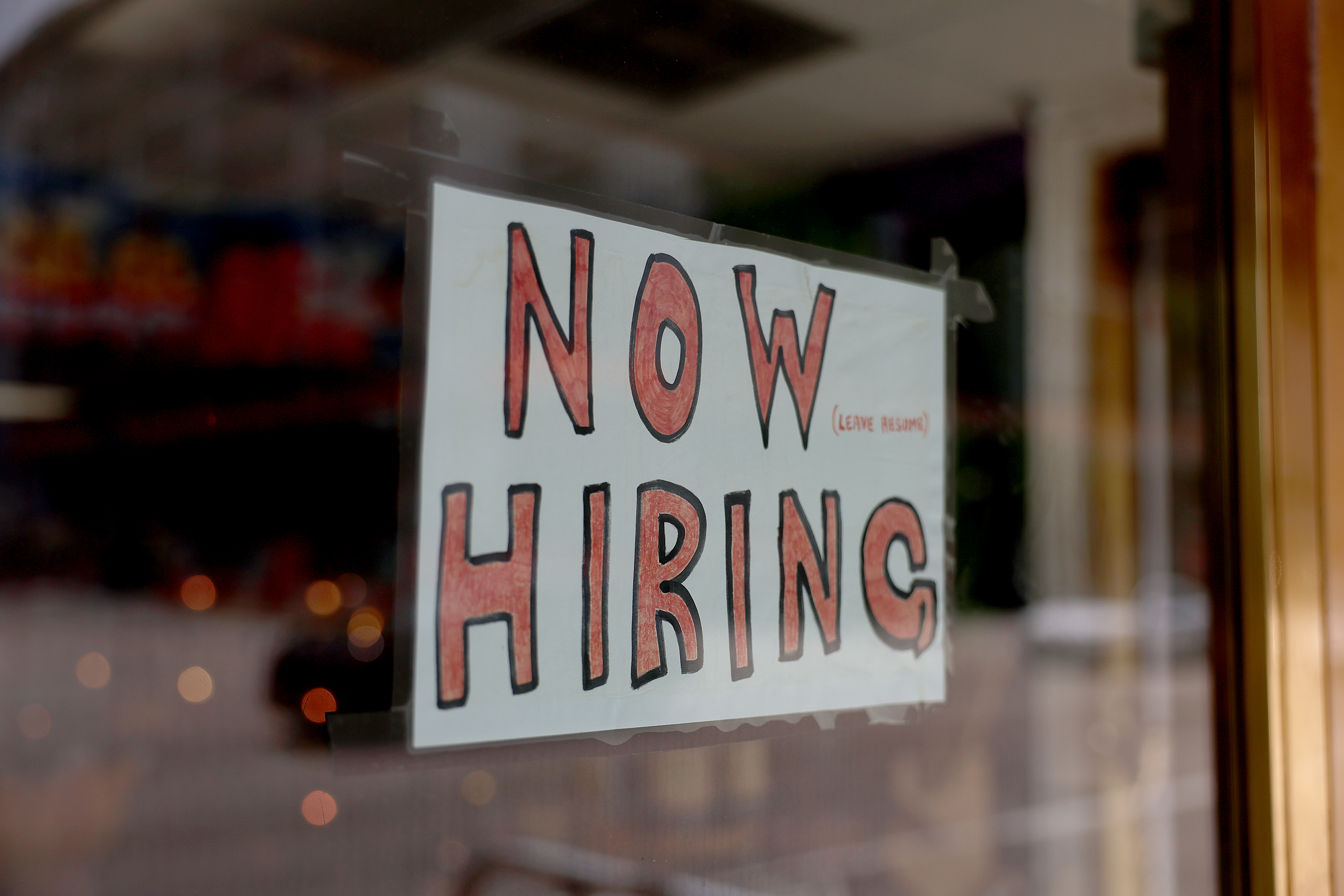
Small businesses boosted private-sector hiring in September, adding the most jobs of all employers in the month amid the slowest pace of hiring in more than two years, the ADP employment report showed Wednesday.

Private companies filled nearly 90,000 jobs last month. Businesses with up to 49 employees topped the list, hiring 95,000 people. Midsized outfits with 50 to 499 employees added 72,000 workers. Companies with more than 500 employees dragged down total hiring as they shed 83,000 jobs in September.

The leisure and hospitality industry added the most jobs, followed by financial activities and construction. Professional and business services shed the most jobs in September, ADP pointed out.

It was the slowest pace of hiring since January 2021, when private employers shed jobs, ADP said. Also, although wages increased by nearly 6 percent, their growth rate declined for the 12th time in a row.

“We are seeing a steepening decline in jobs this month,” Nela Richardson, chief economist at ADP, said in a statement. “Additionally, we are seeing a steady decline in wages in the past 12 months.”

The decline in hiring and cooling of wage growth comes at a time when the Federal Reserve has hiked rates to two-decade highs at a range of 5.25 percent to 5.5 percent in an effort to slow historic rise in prices. Fed Chairman Jerome Powell said last month that policymakers were hoping for a soft landing for the economy. The expectation is that even as policymakers raise interest rates to lower inflation to the 2 percent target, there won’t be too much damage to jobs and the economy.

As small businesses added jobs, company owners expected revenue to grow over the next 12 months, according to a survey by Bank of America released on Wednesday.

The survey shows small businesses are still worried about the economy. The number of small businesses expecting the economy to improve fell to 34 percent, down 10 percent from last year, with inflation and the political environment of concern. But some negative trends from last year have improved, particularly supply chain issues and hiring.

But the survey also revealed that minority business owners were optimistic about their prospects.

Over the next year, for example, more than half of Black business owners plan to hire more workers, a jump from 44 percent last year.

“While facing multiple obstacles and challenges over the past year, today’s entrepreneurs continue to persevere and move forward with their growth and expansion plans,” Sharon Miller, president of small business, head of specialty banking and lending at Bank of America, said in a statement.

“Despite a changing business landscape, women and minority small business owners continue to forge their own pathways to success while remaining pillars in their local economies.”

Plane left with wrinkled fuselage after hard landing sparks investigation

0

An investigation has been launched after one of DHL Express’ Boeing 767-300 freighter planes was damaged when it landed in Beirut, Lebanon.

A spokesperson for DHL Express told Newsweek: “At approximately 18:09 local time on 18 September 2023, a B767-300 BDSF [BEDEK Special Freighter] of DHL Aviation MEA (DHX) operating from Bahrain to Beirut was involved in an incident at Beirut Airport and sustained damage upon landing.”

According to the spokesperson, the crew were “physically unharmed” and no other aircraft were involved in the incident.

“DHL Aviation is fully cooperating with the national investigation authorities who are leading this investigation. We are unable to share further information until the investigation has been concluded,” the spokesperson said.

Photos of the DHL damaged plane were shared in a September 27 post on X, formerly Twitter, by the Lebanese Plane Spotters (@LBPlaneSpotters).

The images from the Lebanese Plane Spotters were also shared in a post on Reddit by user Unknown8128, with a title saying “DHL 767 wrinkled fuselage after hard landing.” The post has had 4,200 upvotes since it was first shared six days ago.

The latest incident comes as a total of 40 accidents were reported among air carriers (ones that fly large, transport-category aircraft carrying passengers, cargo or both for hire) in 2019, according to data from the U.S. National Transport Safety Board (NTSB).

The report found that 42 accidents were recorded among commuter and on-demand carriers in 2019. Commuter and on-demand carriers refer to “certain aircraft with fewer than 10 passenger seats operating scheduled commuter services as well as aircraft operating on-demand passenger or cargo services,” the NTSB noted.

According to Israel Aerospace Industries (IAI), an Israeli aerospace manufacturer that has been converting Boeing passenger aircraft into freighter planes for several years, the BDSF is an advanced converted freighter plane that “delivers high operational value with advanced avionics, excellent performance, reduced fuel-burn and reduced maintenance costs.”

In November 2021, DHL Express placed an order for nine additional 767-300 Boeing Converted Freighters (BCF), which marked its largest BCF order to date, in response to “the continued growing demand for express cargo driven by e-commerce,” Boeing noted in a statement.

According to the post by the Lebanese Plane Spotters, DHL’s freighter plane sustained damage after a “hard landing.”

The post said: “The status of the plane remains unknown up until Boeing comes back with an answer whether the airplane could be repaired or written-off.”

Newsweek has contacted Boeing and IAI for comment.

Do you have a travel-related video or story to share? Let us know via life@newsweek.com and your story could be featured on Newsweek.

Was Matt Gaetz’s power move a smart one?

0

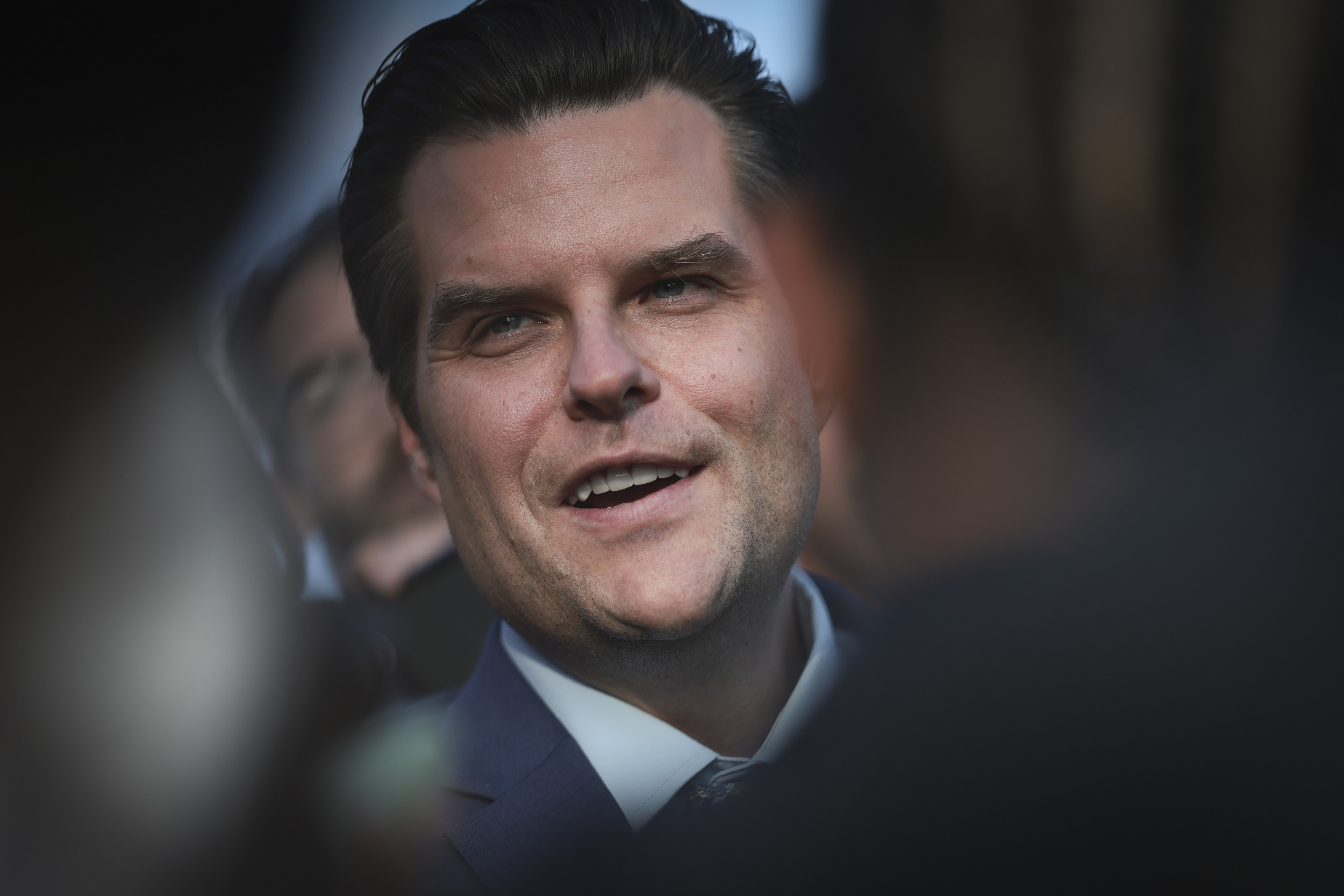
Representative Matt Gaetz pulled off one of the biggest power moves in modern U.S. politics when he successfully led the effort to oust Kevin McCarthy as Speaker of the House this week, and experts weighed in with Newsweek about whether (or not) they think it was a good idea.

After months of threatening to remove McCarthy, Gaetz finally played his trump card against his longtime rival, introducing a motion to vacate on Monday. When the House voted on Tuesday, Gaetz secured the votes of seven other Republicans and all of the House Democrats to officially push McCarthy out of his leadership position.

“You all know Matt Gaetz. You all know it was personal,” McCarthy told reporters after the vote. “It was all about getting attention from you.”

The historic vote had been largely seen as the culmination of the brewing animosity Gaetz showed for McCarthy and some had questioned what would happen to Gaetz should he finally force a vote only to fail at ousting McCarthy. But now that the Florida congressman has succeeded, it begs the question as to whether the power move is enough to catapult him from conservative firebrand to leading voice of the House GOP, or if it will make him a pariah in his own caucus.

Republican strategist Alex Patton told Newsweek that the motion to vacate was a smart move for Gaetz should he want to pursue another political office that may come with more influence and power.

“Gaetz just became the early frontrunner for Florida’s Governor’s race in two years,” Patton said. “We are likely to have a multi-candidate GOP field and with his alignment with former President Trump, Gaetz can win with a plurality.

“His actions raised his national profile, his small-dollar donations, and makes him the frontrunner for 2026 election in Florida Governor’s race,” he said. “It’s clear he doesn’t value being a Member of Congress and working towards legislating; he clearly has other plans.”

But political scientist Gregory Koger pointed out that Gaetz is still a member of Congress until his term is up in 2025. So, his actions to throw the House into disarray and to thrust Republican infighting into the national spotlight could be detrimental to the next couple of years in his political future.

“Gaetz may have taken down the Speaker of the U.S. House, but in doing so jeopardized his own future,” Koger told Newsweek. “He is now facing efforts from within and without Congress to expel him from the House Republican Conference.”

Fed up with Gaetz’s antics and disruptive behavior, House Republicans have reportedly begun considering expelling Gaetz for leading the effort to eject McCarthy. Specifically, he’s earned the ire of Republicans in the Florida delegation, who have accused him of being driven by attention and campaign donations.

“Gaetz has very few friends in the conference,” Representative Carlos Gimenez told Politico. “Gaetz maybe has a couple of friends in the delegation. But I’m not one of them.”

Former House Speaker Newt Gingrich also penned a scathing op-ed on Tuesday calling for the House GOP to expel the congressman for his “childish behavior” and “anti-Republican” conduct.

“House Republicans have far more important things to do than entertain one member’s ego,” Gingrich wrote. “Gaetz has gone beyond regular drama. He is destroying the House GOP’s ability to govern and draw a sharp contrast with the policy disasters of the Biden administration.”

Republican anger could begin with small retributions for Gaetz and his staff, Koger said, but it could also snowball into a massive GOP campaign to get Gaetz primaried and replaced by another Florida Republican who falls in line with the party’s agenda.

“Narrowly speaking, it might just mean that Gaetz and his staff are no longer welcome at Republican meetings and will not receive any assistance from Republican party leaders,” Koger said. “It might also mean that the House majority formally strips him of his committee assignments, ends all assistance from the National Republican Congressional Committee (the campaign organization for House Republicans), and that they actively seek to recruit a ‘real’ Republican for the 2024 party nomination in Florida’s 1st Congressional District.”

He added that House Republicans will continue to mull over what lays ahead for Gaetz, but that because there’s no policy basis behind Gaetz’s actions, his GOP colleagues will blame him for public disapproval over the ousting of McCarthy and the subsequent confusion as the House seeks to elect a new speaker.

“Going back to the 19th century, the primary duty of House members has been to vote for the Speaker candidate nominated by their party,” Koger said. “Gaetz has not only violated that expectation but has publicly challenged a sitting Speaker of his own party, causing extreme embarrassment and chaos.

“Even with a narrow 221-212 margin of control in the U.S. House, Republicans may soon decide that they are better off without Gaetz as a member,” he said.

Republicans trapped in a hell of their own making

0

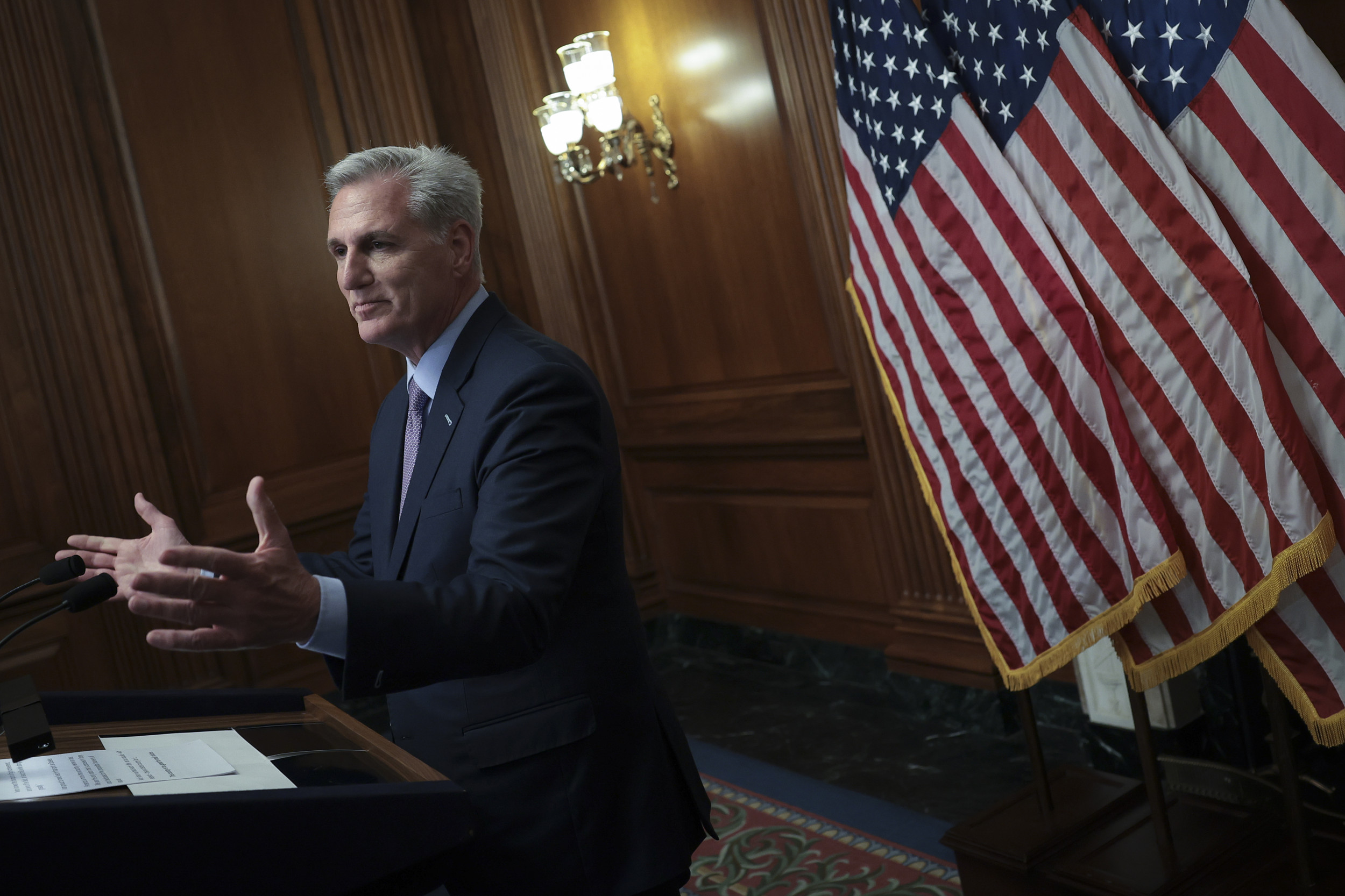
Kevin McCarthy has been ousted as House Speaker in a historic vote, with the GOP now in uncharted territory with regards to selecting the California congressman’s replacement.

The House of Representatives voted 216-210 on Tuesday night supporting a motion to vacate brought forward by Florida Rep. Matt Gaetz to remove McCarthy from the role, with eight Republicans joining 208 Democrat lawmakers in backing the motion.

The vote, the first time in U.S. history that the House has removed its own speaker, now means the GOP-controlled lower chamber must try to elect a House Speaker during a congressional term while at the same time trying to heal party infighting and agree upon a candidate who would receive enough votes.

However, currently there is no clear GOP member of Congress who could come forward for the party to get behind, with some Republican lawmakers already suggesting that they will be supporting former President Donald Trump. Whether Trump, who is running for president in 2024, will be able to get the 218 House nods needed to actually be elected or just a handful of stunt votes, remains to be seen.

“McCarthy’s bruising, 15-round battle for the speakership may look like a cakewalk compared to what’s in store for the House in the coming days and weeks. With no obvious replacement, Capitol Hill is bracing itself for all out-chaos,” Thomas Gift, founding director of the Centre on U.S. Politics at University College London, told Newsweek.

Democrats, and far-right Republican rebels, may be reveling in what they’ve just achieved by ousting McCarthy. But it’s not at all clear how, or when, this story ends. In the meantime, buckle up. This ride is going to be a doozy.”

As noted by The Washington Examiner reporter and political commentator Byron York, Gaetz’s plan to oust McCarthy without having a set-in-stone replacement lined up means the Florida congressman “pulled off what is probably the greatest dog-that-caught-the-car moment in American political history.”

“Now comes the time when the dog has to concede he has no idea what to do next,” York posted on X, formerly Twitter.

McCarthy’s election to House Speaker in January was chaotic and a sign of GOP rebellion that would follow him for the entirety of his short-lived role. McCarthy needed 15 rounds of voting before he was finally elected as a number of hardline and MAGA Republicans, including Gaetz, refused to vote for him. The California Republican only got enough votes after six Republicans withheld their ballot, therefore lowering the threshold to 216.

McCarthy has already ruled out putting himself forward as a candidate for House Speaker again. While a number of House Republicans have been cited as potential candidates—such as Ohio’s Jim Jordan and Florida’s Bryon Donalds—there is no overwhelming consensus to suggest that one Republican has enough support.

Due to the GOP’s razor-thin 221-212 majority in the House, any candidate would need the backing of almost every GOP lawmaker in order to gain the 218 full House votes needed, presuming they do not receive any backing from the Democrats.

One far-fetched possibility is that House Minority Leader Hakeem Jeffries could replace McCarthy as the lower chamber’s speaker.

While the Democrats are virtually certain to unanimously back the New York congressman for the role, Jeffries would still need the highly unlikely backing of several House Republicans to achieve the majority support needed.

Bill Kristol, a conservative political commentator and former chief of staff to former Republican vice president Dan Quayle, still suggested that there is still a slight chance that Jeffries could become the next House Speaker if “a few sane House Republicans” who don’t want to be in a party led by Trump “join forces with the Dems and make Jeffries speaker—while retaining the option of voting against Dem legislation or rules with which they disagree.”

Three GOP lawmakers—Georgia Rep. Marjorie Taylor Greene, Texas’ Troy Nehls and Florida’s Greg Steube—have indicated that they would vote for Trump as the next House Speaker.

On Tuesday night, Fox NewsSean Hannity said sources have told him that the GOP has “started an effort” to get Trump elected as next House Speaker.

“And I have been told that President Trump might be open to helping the Republican Party, at least in the short term, if necessary,” Hannity said.

There is nothing in the Constitution that says the House must choose a member of Congress for the speaker role, meaning it is theoretically possible for Trump to get elected.

However, the House has historically chosen one of their own for the role, meaning having Trump as House Speaker would be another historically unprecedented move. Trump has also previously stated in March 2022 that becoming House Speaker is “not something I would be interested in.”

Another possible scenario is that North Carolina Rep. Patrick McHenry, named by McCarthy as the lawmaker who would become the temporary leader of the lower chamber should the position become vacant, could remain in the role for the foreseeable future.

As noted by Josh Huder, a senior fellow at the Government Affairs Institute at Georgetown University, the constitution states that the speaker pro tem “could stay in the chair” once he has taken the position.

“There’s no forcing mechanism for a new election, nor are there any overt restrictions on the power the pro tem would wield,” Huder posted on X. “The support of the conference would dictate the durability of this.”

There is also a possibility that McHenry could put his name down as a potential full-time replacement and seek the support of the party for the House Speaker position.

In another sign of the chaos surrounding the GOP, Gaetz, who has ruled himself out of the running for the House Speaker role, may even face expulsion from the House pending the findings of an ethics committee report into allegations of sex trafficking, bribery and drug use against the congressman.

It was previously reported that House Republicans will launch a motion to remove Gaetz from office if the report, which has been investigating Gaetz since 2021, reveals findings of guilt as members of the party became irate by his attempts to remove McCarthy as House Speaker.

“No one can stand him at this point. A smart guy without morals,” one Republican House member told Fox News.