Wednesday, March 11, 2026
Home Blog Page 77

What lawmakers are saying as Matt Gaetz seeks to oust Kevin McCarthy

0

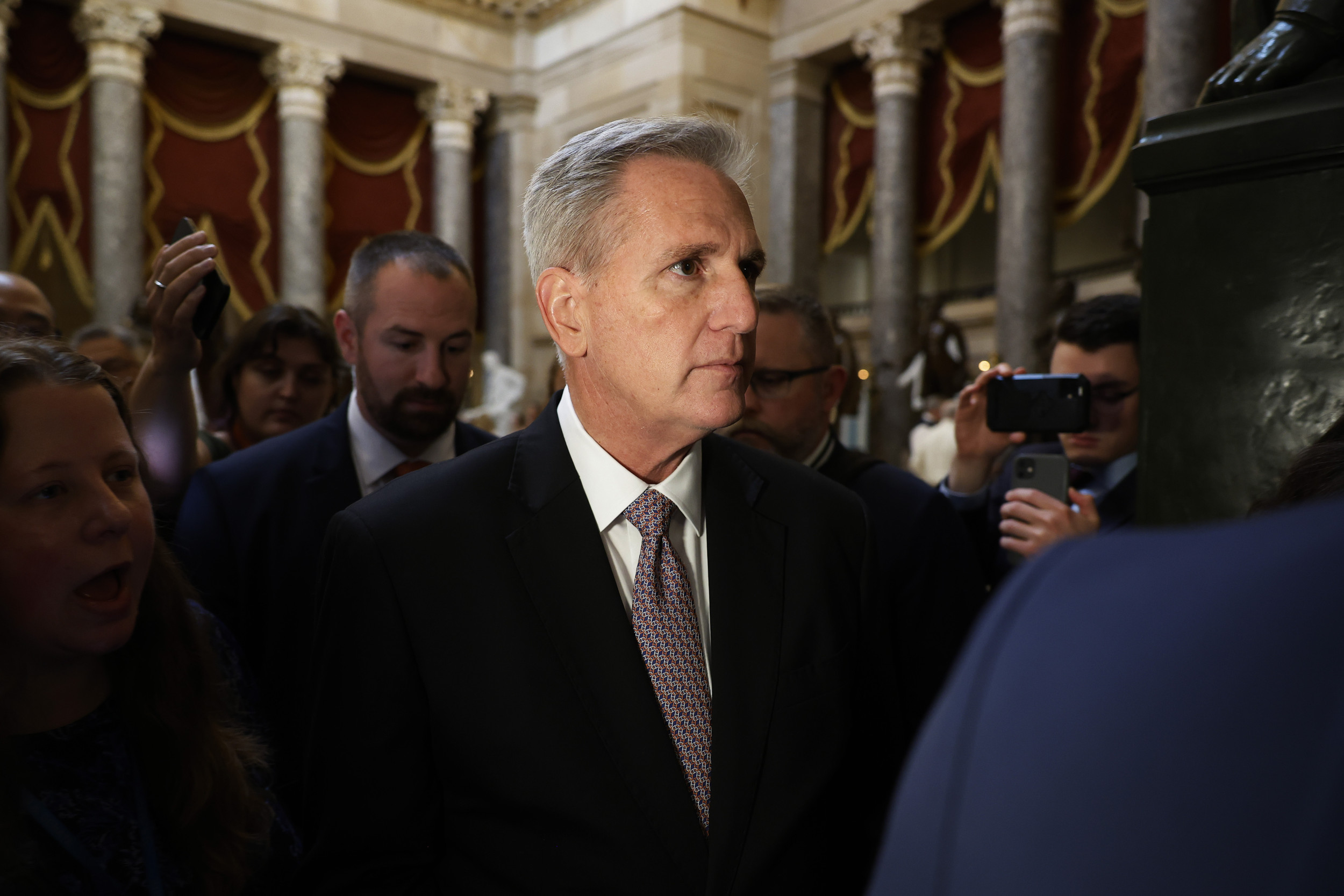
Uncertainty clouds the future of House Speaker Kevin McCarthy after Florida Representative Matt Gaetz moved to oust the Republican leader, but representatives on both sides of the aisle have further questions before voting on the speakership.

Gaetz, a far-right conservative who for weeks has threatened the push against McCarthy, on Monday filed a motion to vacate the speakership. The move comes just two days after the speaker managed to strum up a last-second bipartisan spending bill to avert a government shutdown. Republicans like Gaetz, however, have questioned the speaker’s leadership over his efforts to cooperate with Democrats.

McCarthy responded to the motion on social media Monday night, posting to his account on X, formerly Twitter, “Bring it on.”

Split Voices Among the GOP

Several lawmakers spoke up on Gaetz’s motion later on Monday, including Tennessee Republican Tim Burchett, who told CNN‘s Kaitlan Collins that as it stands now, he supports removing McCarthy from his position.

“Really, I see it as two things,” Burchett said. “One, do I vote against my friend Kevin McCarthy, or do I go with my conscience? That’s kind of where I’m at.”

“I’m currently praying about it, but if it was right now, I would vote to oust him,” he added.

Colorado Representative Ken Buck, a fellow hardliner in the GOP, said that he would need more information before casting a vote on the speakership, but added that at the moment, he does not think that McCarthy can be “trusted” to lead Republicans.

“I want to hear what Kevin has to say,” Buck told MSNBC‘s Jen Psaki. “Kevin promised a number to conservatives when he was running for speaker, $1.47 trillion. Then, when he negotiated with President [Joe] Biden the debt ceiling deal, he promised President Biden a $1.6 trillion deal.”

“He cannot be trusted,” Buck added. “And I want to understand why he acts the way he does before I make a final decision.”

A flood of Republicans, however, came to McCarthy’s aid, including Representative James Comer, who told Newsmax on Monday that he plans to vote against ousting the speaker. Congressman Mike Lawler also used his interview on CNN to attack Gaetz’s decision, calling the Florida lawmaker a “petulant child.”

“I think he’s a petulant child, and I think he proved that this evening by filing his motion to vacate against the rules of the Republican majority conference,” Lawler told CNN’s Anderson Cooper.

“I think it just speaks volumes to who Matt is, his character, and the fact that he doesn’t care about the American people, he doesn’t care about governing,” Lawler continued. “He cares about getting attention and notoriety.”

Several other GOP House members, including Congressmen Nick Langworthy of New York, Adrian Smith of Nebraska and Laurel Lee of Florida, took to social media to show their support for the speaker.

“I am a HELL NO on the motion to vacate,” Iowa Representative Ashley Hinson wrote on her X account. “Matt Gaetz’s grandstanding sideshow is a disgrace—and why so many Iowans are so frustrated with politics in Washington. We need to be working for the American people, not playing political games for Gaetz’s personal benefit.”

How Democrats Could Play a Role

McCarthy agreed to allow for a single House member to file the motion to remove him at any time as part of the negotiations to secure his speakership back in January. At the time, Gaetz was one of the leading voices of Republicans voting against McCarthy.

If the motion makes it to a vote, only a simple majority is needed to oust McCarthy, meaning just five Republicans would have to join all their Democratic colleagues to agree to remove the speaker. However, there is a chance that some Democrats could choose to strike down Gaetz’s measure.

Representative Dan Goldman, a Democrat from New York, told MSNBC that he has seen “no reason” to save McCarthy at the moment, adding later that he assumes the speaker will need to win over at least a few Democrats to hold onto his position.

“The real open question right now is what does he do?” Goldman said. “Because if you play this out, it gets a little more complicated. If he relies on Democrats because he makes a deal with Democrats in some way, well that may resolve his speakership right now.”

“But he is going to have to legislate for another year,” Goldman continued. “Every single time a rule comes up, he’s going to need Democrats to pass a rule. So he will then have to enter into some form of coalition government.”

Newsweek reached out to McCarthy’s office via email Monday night for comment.

NATO quietly fortifying eastern border with F-16s, air defenses

0

NATO members in Eastern Europe have been responding to the threat of Russian aggression through the deployment of troops and boosting equipment, including fighter jets and air defenses.

The encroachment of NATO on Russian borders was given by Vladimir Putin as a justification for launching his full-scale invasion of Ukraine. But any aim by Russia to counter the alliance has resulted in an increase in the resolve of the bloc, which has provided significant military and financial support to Kyiv.

The alliance has also increased to 31 members after Finland joined last year, with the membership bid of Sweden, still pending. Over recent weeks, NATO members have announced measures to counter the threat of Russia amid concerns that the war in Ukraine could spill over into alliance territory.

In November 2022, a missile hit southern Poland killing two people although it was determined that Ukrainian air defenses were to blame. Isolated incidents of drone parts landing in Romania have also raised concerns about the war affecting NATO countries.

Last week, Bucharest announced it would move air defenses closer to villages across the River Danube from Ukraine, where Russian drones have been attacking grain facilities. It would also add more military observation posts and patrols to the area and expand a no-fly zone, Reuters reported.

The measures follow the deployment of four additional U.S. F-16 fighter jets and 100 American troops to Romania’s Borcea military air base around 90 miles south of the Ukrainian city of Izmail.

The Baltic states of Estonia and Latvia, which share a border with Russia and joined the alliance in 2004, agreed on September 11 to a 1 billion euro ($1.1 billion) deal for an Iris-T SLM medium-range air defense system from German manufacturer Diehl.

Estonia’s defense minister Hanno Pevkur said in a statement that “Russia’s barbaric war in Ukraine” showed how it was crucial to protect his military’s armed forces and critical infrastructure from attacks.

It was Tallinn’s biggest military investment in its history and German defense minister Boris Pistorius said the system will “without any doubt strengthen European air defense.” Latvia and Estonia have also signed a letter of intent towards participating in Germany’s European Sky Shield Initiative, which was launched in 2022 in response to Putin’s full-scale invasion.

It comes as Latvian intelligence warned that the risk of aggressive Russian special services operations in the country will increase, which will pose a significant threat to the collective security of NATO and EU member states, as well as to Latvia. This was outlined in Riga’s National Security Concept, which was approved by the government, according to Latvian news outlet Delfi.

The other Baltic state and NATO member, Lithuania, announced on September 29 that it planned to install a physical barrier near its border with Russia and Russian ally Belarus. Lithuania started monitoring its border following the start of the war in Ukraine and after hybrid attacks from Belarus, SchengenVisaInfo, reported.

Border protection measures have been boosted following an increased number of illegal migrants trying to enter the country via Belarus, it added.

In July, Kremlin spokesman Dmitry Peskov accused Poland of “hostility” towards Russia and Belarus, after Warsaw redeployed troops to reinforce its eastern border with Belarus, whose leader Alexander Lukashenko is Putin’s closest ally.

Poland’s move was prompted by the presence of Wagner Group mercenaries in Belarus who had started training at a military range close to the Polish border.

Since then, the Wagner leader, Yevgeny Prigozhin, has been killed in a plane crash and the mercenaries’ future is uncertain.

Meanwhile, there has been a souring of Polish support for Ukraine after Warsaw said it would not suspend an EU ban on Ukrainian agricultural products that Brussels had imposed earlier this year.

Polish Prime Minister Mateusz Morawiecki Warsaw would “no longer transfer weapons to Ukraine although this was later clarified to mean only new equipment.

Newsweek has emailed NATO for comment.

Russia’s kill order on defected helicopter pilot has "no expiration date"

0

Russian intelligence officers have orders to eliminate a helicopter pilot whose defection to Ukraine sparked anger among his comrades and accusations of being a “traitor,” according to reports.

In August, Ukrainian officials touted how Maxim Kuzminov had landed a Russian Mi-8 helicopter he had captained at a military air base in the eastern Ukrainian city of Kharkiv.

In a documentary shown on Ukrainian television called Downed Russian Pilots, he described how he had contacted Kyiv’s intelligence officials in advance and they had helped him undertake the daring mission, promising to get his family safely out of Russia.

Kuzminov had been stationed in Russia’s eastern Primorye region as part of the 319th separate helicopter regiment. He said in the interview that he had flown into Ukraine at low altitude in radio silence mode without the knowledge of his two co-pilots and called for other Russian military figures to reject the war.

Kuzminov appealed to other Russian military personnel to defect, saying that, “what is going on now is simply the genocide of the Ukrainian people.” Newsweek has contacted the Russian Defense Ministry by email for comment.

The head of Ukraine’s Defense Intelligence, Kyrylo Budanov, said the other crew members tried to escape when the helicopter landed but were “eliminated” after the chopper had landed.

But the program Vesti Nedeli on the Russia-1 channel gave a different account, as reported by independent Russian language news outlet Agentstvo.

Citing an unnamed expert, the program said that the positions of the single gunshot wounds each of the crew members had when their bodies were returned had pointed to their being killed by Kuzminov before the helicopter landed.

This explained how Kuzminov was able to fly into Ukrainian territory without his comrades intervening, per the program.

In the report, Russian military correspondent Sergei Zenin called Kuzminov a “traitor to the Motherland,” who, like the Ukrainians who took him in, had “forgotten the history of his country, his people,” and “violated the memory of his ancestors.”

Meanwhile, Zenin said that all the pilots in Russia’s Northern Military District “dream of getting even for the death of their comrades” and his report cited a Russian intelligence source saying there would be no statute of limitations for Kuzminov to face justice.

In an interview with a group of four Russian troops, one soldier said that Kuzminov would be found and face punishment “to the fullest extent of the law of our state for treason.” His former regiment commander, Denis Chernavin, also told the program that Kuzminov was a traitor.

Russia-1 reported the Russian military intelligence agency the GRU had the order to eliminate Kuzminov and its implementation “is a matter of time” with an intelligence source saying “this crime has no expiration date,” according to Agentsvo.

Accusations of treason by Russian officials are considered very dangerous. Former GRU officer Sergei Skripal, who was poisoned with Novichok in the U.K., had been labelled a “traitor” by Vladimir Putin. This was also the term Putin used to describe the founder of the Wagner private military company, Yevgeny Prigozhin, who died in a mysterious plane crash two months after staging a rebellion against Russia’s military establishment.

Putin quietly "mobilizing the whole country": U.K.’s ex-defense secretary

0

Ben Wallace, a former British defense secretary, said the Russian army is “cracking” under Kyiv’s offensive amid “the beginnings” of the battle for Crimea, but he suggested Ukraine must ramp up mobilization to match Vladimir Putin‘s draft.

Over the course of the war, Wallace has been at the forefront of British pledges of military support, which have included Challenger tanks and Storm Shadow missiles.

In July, he announced that he intended to stand down at an approaching reshuffle of the Conservative cabinet. The former soldier was a central figure in the government for several years and he formally resigned as defense secretary in August.

In an op-ed for The Daily Telegraph, Wallace said that the push launched by Kyiv around June 4 to recapture Russian-occupied territory is “succeeding, slowly but surely,” as he wrote how Kyiv’s forces “are breaking through the Russian lines.”

“Ukraine has momentum and is pressing forward,” he said of the gains in the counteroffensive, although its slow progress have raised concerns among Western allies, which have provided equipment and training.

His piece championed how Ukrainian forces held off Russia in the early stages of the war, were “learning on the job” and had managed to adapt their tactics. Ukraine has made the most of Western-supplied equipment and achieved success that was “far beyond expectations,” he wrote.

“We have a chance to help finish this. The Russian army is cracking,” he said. “We are witnessing the beginnings of the battle for Crimea,” he added, with recapturing the peninsula annexed by Russia in 2014 remaining a major war aim for Kyiv.

Wallace called for the West to help Ukraine “maintain its momentum” by providing more munitions like ATACMS (Army Tactical Missile Systems) and Storm Shadows. Last month, the U.S. agreed to supply ATACMS as part of a military package for Kyiv.

But he also said Ukrainian President Volodymr Zelensky should address the issue that the average age of his soldiers at the front was over 40. “I understand President Zelensky’s desire to preserve the young for the future, but the fact is that Russia is mobilizing the whole country by stealth,” he wrote.

In September 2022, Putin announced a partial mobilization, which he has not rescinded. Russian lawmakers have clamped down on those dodging the draft. High wages and propaganda are also being used to entice Russians to join the fight in Ukraine.

“Putin knows a pause will hand him time to build a new army,” said Wallace. “So just as Britain did in 1939 and 1941, perhaps it is time to reassess the scale of Ukraine’s mobilization.”

Newsweek has contacted Ukraine’s defense ministry for comment.

Russian pilot "turned himself in" to US mission in Middle East

0

A Russian pilot on vacation with his family in the United Arab Emirates, went to the U.S. Embassy because he did not want to take part in Moscow’s full-scale invasion of Ukraine, it has been reported.

The Telegram channel Spy Dossier, which claims to have links to Russia’s intelligence services, said that a pilot with a squadron of Russia’s national guard, Rosgvardia, had made the appeal to the American Embassy in the United Arab Emirates. This was also reported in Ukrainian media outlets.

“The case of a new escape of a Russian pilot has been revealed today,” said the post, which named the serviceman as Senior Lieutenant Gavrichenko, with the call sign “Gavr.” No first name was given in the report.

The post said that the pilot had been with his family in Dubai at the end of September, and after “enjoying the desert…decided to radically change his life. Instead of the airport, he chose as his final destination, the American embassy.”

The American Embassy in the UAE is in its capital Abu Dhabi. The U.S. also has a consulate in Dubai.

The Russian serviceman turned up at the mission and “stated that he refused to fight and expressed his readiness to cooperate,” the post said. The post did not specify if he went from Dubai to Abu Dhabi.

Russia’s main intelligence agency, the FSB, is investigating the circumstances of the case, questioning the pilots’ colleagues, it added. It is unclear whether the pilot went to Dubai with the aim of defecting or made the decision while there. There are also no details on whether asylum has been sought.

Spy Dossier said the move had been inspired by the tale of his friend Lieutenant Anton Vasiliev, who was said to be a combat and training pilot who had left Russia during the war and now lives in Los Angeles where “he spends his free time by the pool, organizes training camps for the Ukrainian army and, probably, shares official information with Pentagon representatives.”

“The FSB believes that it was Anton Vasiliev who convinced Gavrichenko of the need to escape,” said the post to over 6,000 followers.

Newsweek has contacted the American mission in the UAE and the U.S. State Department for comment.

Ukrainian internal affairs adviser Anton Gerashchenko posted on X (formerly Twitter) that “another Russian pilot escaped Russia and turned himself in to the US embassy” and that he “wished to cooperate with U.S. special services.”

“There is data that Russian security services were very disturbed by this and are now pondering closing the borders for Russian pilots and officers in general, as well as their families,” added Gerashchenko.

In August, Maskym Kuzminov, a Russian Mi-8 helicopter pilot, landed in Ukraine after contacting the country’s military intelligence about defecting and called on other Russian personnel to do the same.

State channel Russia 1 reported that the country’s intelligence agencies have orders to eliminate Kuzminov who faces accusations of being a “traitor.”

Five celebrity voices reimagined by AI as Tom Hanks sounds alarm

0

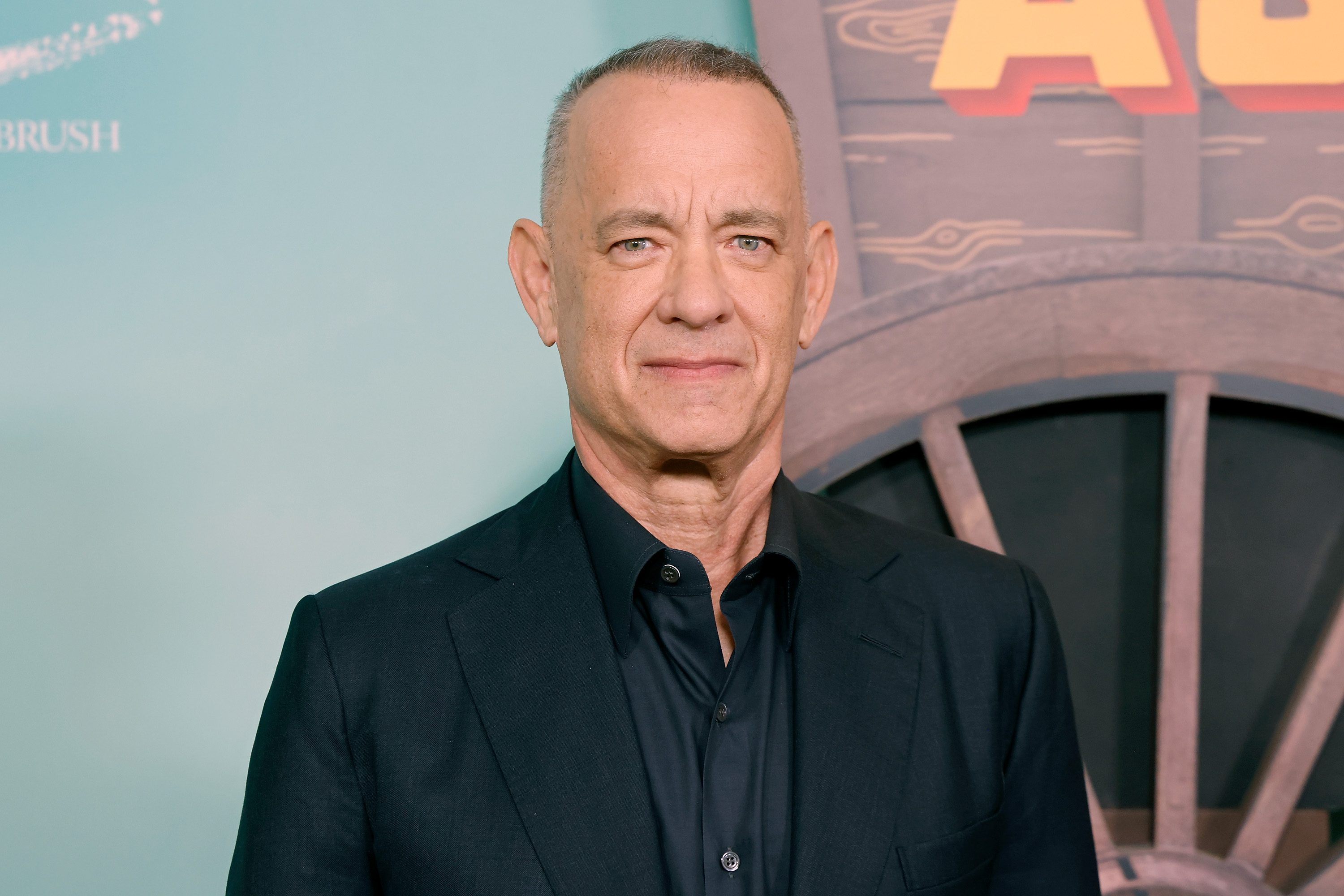
Actor Tom Hanks is warning his fans against believing a video that he said appears to show him endorsing a dental plan. The video was created using artificial intelligence (AI), Hanks alleged in a weekend post on Instagram.

“BEWARE!! There’s a video out there promoting some dental plan with an AI version of me. I have nothing to do with it,” Hanks’ post said.

Newsweek reached out to Creative Artists Agency, Hanks’ management company, by email on Monday for comment and for additional information about the video.

Hanks’ post is reviving discussions about the impacts AI will have, and is having already, on content creation. AI emerged as a significant point of concern for Hollywood writers and actors who have been on strike for the last few months, with many worried that their jobs will eventually be replaced by new and developing AI technology. The writers’ strike is now over, but the actors’ strike isn’t. The actors union, SAG-AFTRA, resumed negotiations with major studios on Monday.

Hanks is one of many celebrities who found their voices and likeness recreated by AI. Some have endorsed the use of the technology; others have said they were surprised it had been used to create a new version of themselves. Below are five examples of celebrities whose voices have been reimagined by AI.

Bruce Willis

Actor Bruce Willis’ voice and likeness were used in a commercial released last year. Citing a statement on Willis’ website, The Telegraph reported that Willis sold the necessary permissions to use his image for these kinds of projects. In the case of this phone ad, Willis appeared to be filming a scene but never was on set, the British paper reported. Willis’ representatives later denied that he had sold these rights, according to Wired and Fortune.

Robin Williams

Zelda Williams, the daughter of the late actor-comedian Robin Williams, criticized recent efforts to replicate her father’s voice through AI. Zelda Williams began a statement posted on Instagram Stories that she is “not an impartial voice” in SAG-AFTRA’s negotiations over AI. Her statement, which has already disappeared from Instagram Stories, has been covered by several entertainment outlets.

“I’ve witnessed for YEARS how many people want to train these models to create/recreate actors who cannot consent, like Dad,” her statement said. “I’ve already heard AI used to get his ‘voice’ to say whatever people want and while I find it personally disturbing, the ramifications go far beyond my own feelings.”

Anthony Bourdain

The 2021 documentary Roadrunner about chef and television personality Anthony Bourdain presented another example of AI used to recreate the voice of a person after their death. At the time, filmmaker Morgan Neville told The New Yorker the decision to use an AI-generated voice was tied to an email he came across that had been written by Bourdain years earlier. Neville said he wanted to hear the email in Bourdain’s voice and used AI to make it happen for the film.

Taylor Swift

Popstar Taylor Swift is one of many famous individuals whose voice has been recreated using AI for the purposes of fan interaction. In June, The Wall Street Journal reported that multiple AI websites created versions of Swift’s voice to give people a chance to chat with an AI version of her. Forever Voices, one company that made an AI Swift, promoted the creation with a post on Instagram that said, “AI Taylor Swift is waiting.” Swift’s team denied giving the company permission to use her voice, name or likeness, the paper reported.

Val Kilmer

In some instances, public figures have embraced AI to recreate their own voices. Such is the case for actor Val Kilmer, who began working with the software company Sonantic after his battle with throat cancer left him unable to speak. Kilmer provided old audio clips that featured him speaking so that an AI version of his voice could be created, according to IndieWire.

I was called "little Black girl" and treated like a gimmick

0

I thrust open the door to the news director’s office startling him. He was typing, back to the door, and he jumped at the abrupt sound as I poked my head inside.

“You’re probably going to get a call about me today,” I warned, before pulling the door closed.

I marched back to the sports office, sweat stains at my station-issued polo shirt’s collar and armpits. I carefully sat down the Beta camera and tripod, almost 60 pounds of equipment, onto the floor and sank back into my desk chair.

It was the second week of Texas high school football two-a-days and I’d been in the August heat at noon to cover the story. An all-district female soccer player at one of the area high schools was trying out for the varsity football team as a kicker.

I’d been tipped off by a viewer about her tryout that had her small, evangelical town buzzing. The superintendent and high school principal were excited for the coverage when I called to set up interviews. The football coach was not.

“I’ve got guys that have been on varsity for four years that you haven’t covered,” he huffed with his hands on his hips as I set up my camera at practice. “I get it. I know it’s a story-“

“If you know it’s a story, then what’s the problem?” I questioned.

“I don’t want this to be a gimmick.”

The thought that women and girls in sports were gimmicks or diversity hires wasn’t new. No one prior had said it to me, though I was a novelty in our neck of the Piney Woods in August 2008.

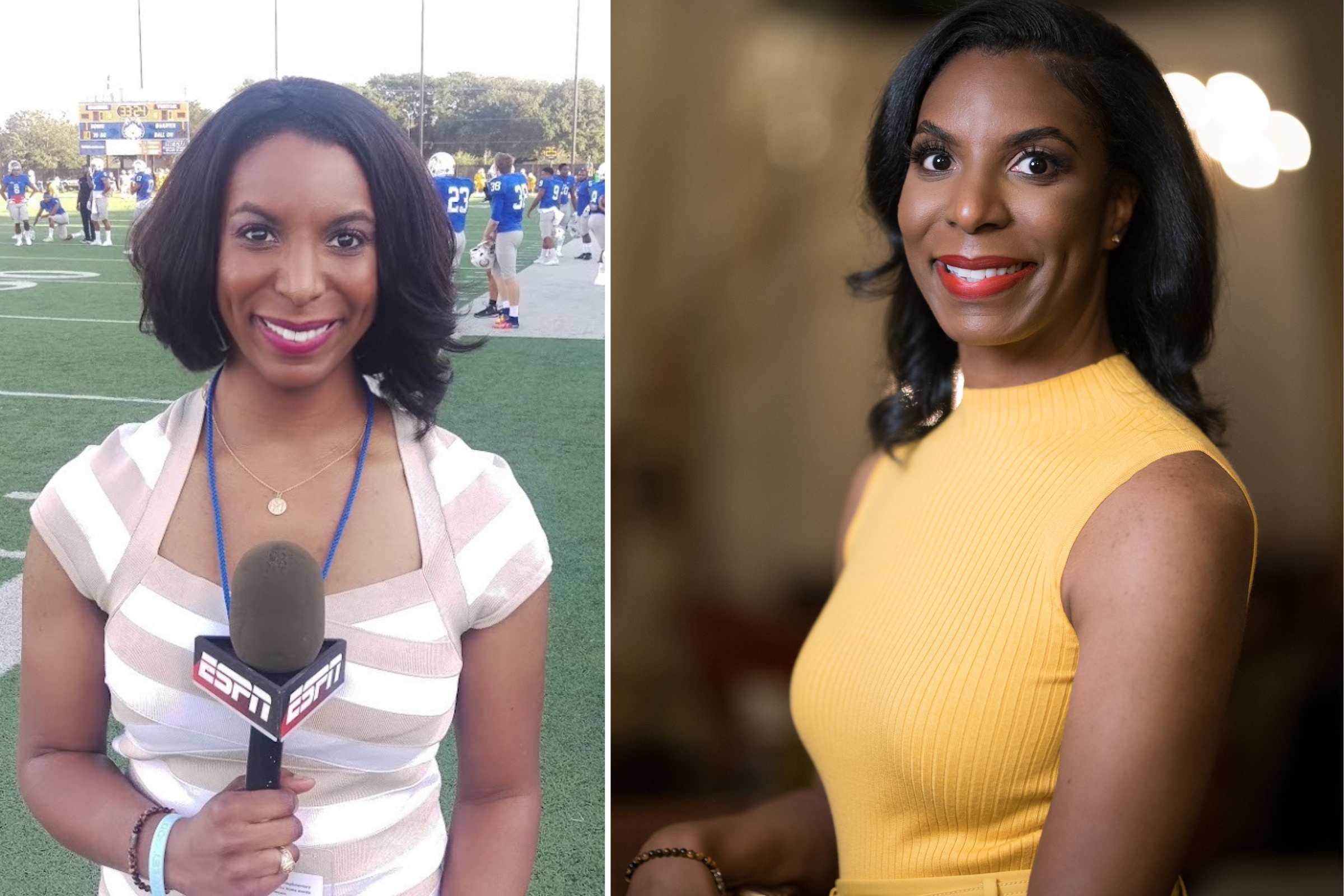
I’d been the first female weekend sports anchor and sports reporter in the Tyler, Texas ABC affiliate’s history when I moved from being a general assignments reporter to sports in 2005.

I made history as the first female sports director in East Texas television history—50 years of TV broadcast in the market—in 2007.

The coach tried to keep his voice low as I watched his face redden. I felt, no matter how angry he was, I had no choice but to remain composed, unless I wanted to be labeled with the angry Black woman stereotype. Even if my own anger was warranted.

I’d been excited when the day began: A female sports reporter covering a potential female football player.

It was the first time I’d truly met resistance with a coach while I was doing my job. Most coaches and players, like the viewers in East Texas, had been welcoming, even when I didn’t look a thing like the faces that had come before me for five decades.

In a 2022 survey, the Pew Research Center found that the whitest and most male-dominated beat in journalism is sports, with 82 percent being white men.

Seventeen years ago, I was placed in a role to change the minds of East Texans on what a sportscaster looked and sounded like. Our news director encouraged me to flash my smile as much as possible to win them over.

“Show that charm and those dimples,” he said.

I couldn’t imagine a news director saying the same thing to a male.

It was fact and not fiction that I had no margin for error as my male colleagues. If I gave a wrong score or said the wrong name of a player, even if that was what was provided to me, I was scrutinized and received ten times the comments my male co-anchor did through viewer emails and on forums.

He shared a message board post with me. “She seems like a nice lady,” a man wrote, “but I don’t like how she reads scores.” He shrugged. “I didn’t realize you read scores any differently than anyone else,” he stated.

“Welcome to the world of local TV news anchors,” the news director included in a message from a viewer he forwarded to me.

“She’s a thin girl but that blouse she was wearing last night, one of the buttons was hanging on for dear life. Tell her she doesn’t need to wear it again.”

I’d been wearing a black button-down, long-sleeved dress shirt with a collar.

I believed to be credible to viewers, I had to convey my sports knowledge when talking over highlights, but also carry myself in a way that fit with a societal definition of intellect for a Black woman at the time: Relaxed, straightened hair, clothes that were never body contouring or clingy, and speaking without a trace of Texas twang.

This extended beyond work hours to trips to the mall, movie theater, and grocery store. There were times I wanted to be defiant and rebel against having to be “on” whenever in the public gaze, but I knew I represented far more than myself. I had something to prove.

As the first female sports director in our viewing area, I had to fight against the rural East Texas stereotypes that women are expected to be Christian and meek as I made waves and stepped into fieldhouses (which are by their very nature “boys’s clubs.”)

Encounters like the one with the coach were few, but when I did have to stand my ground, many, like him, seemed surprised.

A local sports radio guy, the big wig in town, called and berated me after I aired a story about a popular head football coach leaving for a school in the Beaumont area.

He’d been the first to report the story, but I had a good relationship with the coach and picked up the phone and called him. When the coach confirmed with me that he was going to submit his resignation, I shared his direct words with our viewers.

“Who reported it first?” He screamed into the phone. I acknowledged he had but that the coach had been willing to talk to me. I hung up the phone puzzled.

Was it that I followed up on his report or that the coach had been willing to speak to me and declined all other interviews that angered him?

The reality of Friday night lights in Texas and the rabid fan dedication also brought with it a strange level of ownership by viewers. Some thought it was appropriate to email me about my red lipstick or question who I was dating (often the wrong assumption that I was dating an athlete as a woman in sports).

At the grocery store one day I heard: “There’s the little Black girl that does sports on Channel 7.”

I was at the checkout counter, and though I was accustomed to being recognized by viewers, the wording caused me to look back at them. It was an elderly white couple and they were smiling. I was a 27-year-old woman then.

I did what Black women often have to do, which is chalk such comments that reduced my accomplished career to being the “little Black girl” to ignorance.

Sports broadcast news is not glamorous. Sweating on turf fields where the temperature peaked at 115, being pelted by hail during rain storms, or my hands going numb in sub-freezing temperatures, then coming back to the station and putting on my face for the cameras was quite the demand seven days a week during football season.

The news director pulled me aside once to tell me my hair looked “unkempt” in a ponytail.

It was 102 that day when I covered football.

I felt welcomed by most communities while an innate fear manifested in others. I’d drive two hours east through windy county roads in the black of night to stadiums where Dixie played as part of the school fight songs. Some of these same towns have been labeled sundown towns. I strutted onto the sidelines to conduct interviews with my head held high.

There were benefits that I hadn’t expected. I made friends with the coaches’ wives. The ladies in numerous press boxes fed us catered meals of chips and beef-filled queso or chili on cold winter nights, giving me extra.

Revolting as I found it, I sampled possum chili to the delight of a small-town cook who began bragging to everyone within earshot that I liked his cooking.

I weaved through fans sitting on the grass for interviews during big games where the stands were at capacity. It brought me joy to hear my name called, see their smiles and enthusiastic waves as people told me: “You do a good job.”

In the wake of my hiring, within a year, two other stations in town hired female sports reporters.

If my competence on the job did anything, I hope it showed that women know Xs and Os and when we take up space in such a male-dominated field, it’s not a gimmick. It’s because we belong.

Women belong in sports media, team front offices, and on the fields and courts. Women belong in sports.

Maya Golden is an Associated Press-winning and Emmy-nominated freelance journalist in Tyler, Texas where her foundation, 1 in 3 Foundation, serves East Texas. Her memoir, The Return Trip, is set to be released on November 14 from Rising Action Publishing Co.

For Salon, she’s written about fandoms and healing, for Insider, she’s written about sex addiction, and for Black Girl Nerds, she’s written about PTSD and Guardians of the Galaxy.

All views expressed in this article are the author’s own.

Do you have a unique experience or personal story to share? Email the My Turn team at myturn@newsweek.com.

Dad was wailing "I’m sorry I killed your mother"

0

I don’t remember exactly what happened next. The wave of sadness, the confusion—the unexpected tragedy… it rushed over me.

My fog had just started. I don’t know if I sat down, fell down, laid down, or what I did—I just know I was suddenly on the ground right by Momma’s pampas grass.

She loved that plant so much. She had wanted one for so long and finally got it just a few years before, and it was beautiful. So full and healthy.

Momma had a green thumb, that was for sure. That pampas grass and me being on the ground at that moment was the last thing I remember after I heard the worst news I had ever heard in my life.

I wish I could have seen her when she first heard an angel’s voice. It is supposed to be a sound like we have never heard before, but for Momma so much more. No more buzzing or unpleasant ringing in her ears—just pure, pitch-perfect sound coming from trumpets, angels singing, and the swish of butterfly wings in the air.

Staring at the pampas grass in a daze, it could have been a few minutes later or more than a few—I really don’t know. One of the responders came up and asked if we could go to be with Daddy in the ambulance.

Daddy was lying on the stretcher. I bent over to hug him as he wailed: “I killed your mother. I killed her. I am so sorry. Oh, God, what have I done? I’m sorry I killed your mother. God damn, God damn, God damn!”

The words came fast, hard, and heavy. They were loaded with pain, shock, and gut-wrenching agony. The darkest, deepest, most lamenting words, moans, and screams.

Daddy hugged me hard. I remember my husband telling Daddy to stop saying he killed her—it was an accident. It was an accident.

The emergency responders said the accident happened at approximately 6:00 p.m. Sometime right around 5:30 p.m., Daddy had decided to go check his tractor’s battery. I had heard Daddy say for years: “If you leave a tractor too long without cranking it, it won’t start.”

Daddy continued to cuss and yell out: “I’m sorry, I didn’t mean it. Oh, God, what have I done?”

I knew what he was saying—he felt 100 percent responsible, but it wasn’t his fault. This was an accident. A tragic accident, the worst kind, the kind when you lose someone you love so deeply.

Oh, how I wish that damn tractor would never have started.

***

As Gale, the therapist, spoke softly, Daddy didn’t. I was familiar with both of their voices.

“Do you want to talk about what happened?” Gale Prompted.

“Yes, yes, I do,” Daddy replied. “I was worried that if I didn’t start those tractors the batteries would die. Once . . .”

Daddy went into the Farmer’s Almanac version of explaining tractors, batteries, and exactly how they all work or don’t. I leaned in closer, hugging the door to make a suction cup of my ear against the tunnel I made with the outer edge of my hand.

“Well, it had been a while, and I thought I would check out our old International Harvester 1468. I call it our ‘Big Red’ tractor. Sue didn’t have to go. I told her I could do it. She came with me and helped me a little to get up in the tractor seat. She held the battery while I cranked it, and it did—it cranked! Whew! We were both so happy it started. I couldn’t believe it started.

“There was a man interested in buying it just a few days before, and when we were over there, it wouldn’t crank. So we charged the battery and sure enough, it worked,” Daddy continued explaining.

I sat motionless on the floor, still cupping my ear so I didn’t miss a word. I couldn’t believe I was finally going to get answers to the questions my mind kept asking.

“Sue climbed back down. She turned around. Why did she turn around?”

Daddy began to sob. He moaned in the same hums and sounds I heard the night this happened.

“She turned around and handed me the battery box and all the cables that came out of the box and wires. She was handing them up to me. When I reached over to get them, I guess my left foot slipped off the clutch.”

Silence. Daddy stopped making any noise. Did they hear me outside the door? I was doing my best not to make a sound. I was putting a mouse to shame.

“She turned around. I reached down, and my foot slipped. I thought the tractor was in neutral, but it wasn’t, it wasn’t! It must’ve slipped into gear from the jostling of being on. It was in High-1. That’s the fastest gear, and you can’t stop it, boy. It happened so fast. It was so fast.”

Gale continued to listen, with occasional deep breaths. Daddy continued to tell it all. “It all happened so fast. I knew. I just knew I had killed her. I got down, but I knew. I went over to her.”

Daddy was sobbing and telling Gale exactly what happened. I knew he needed to tell someone.

“I’m so glad my girls didn’t see what I saw. I saw her there, dead. There was no doubt she was dead. I laid my head down on her chest. I just laid there with her, and Barney, our dog, came over sniffing and laid there with us.”

***

He left my sister and me a note. I never saw it during the chaos. The sheriff brought it to me a few hours later. I was upset that I didn’t see the note first.

I wanted to be the one who saw everything this time. I needed to control something in the situation. Often our feelings of anger or jealousy are just our attempts at keeping control when everything around us is the opposite. When we do this, we are protecting ourselves from the unknown, the unthinkable, the unimaginable.

I grabbed it from the sheriff’s hands and turned away from everyone. As their eyes followed me, I began to read it. Daddy’s handwriting was similar to that of a serial killer’s.

I had self-published two short stories for Daddy over the past several years, and I told him that was one of the most difficult tasks I had ever faced. I would often text Momma and send her a picture of a word, waiting for Daddy to let us know what it was.

The funny thing is, Daddy didn’t know half the time. “My handwriting is getting so bad that I can’t even read it.” His chicken-scratch, quickly jotted down notes, and scattered stories across his desk were familiar topics for us to all laugh about.

Daddy had preached many suicide deaths over the years. He knew it would be important for law enforcement to know he was responsible for this, and no one was to blame. He was a very smart man who never stopped thinking of others.

Even in a time when he was about to do the most unselfish and incomprehensible of all things, he thought of leaving us a note.

I still refer to Daddy’s death as “the accident” because it happened only because of the accident on Monday, July 29, 2019, in which Momma died. I tell myself that Daddy committed “Sue-icide” because he needed to be with his Sue, Momma. And they are together again, after three long years, and the love remains.

I treasure his final note. I keep it in a place where all my special things are, and in that place deep inside the smallest corner of my heart. There are still a few words that I cannot decipher, but I will never stop trying. I will never stop trying to read every single last word he wrote.

It means the world to me. They were Daddy’s last words, his last thoughts, and his last written letter. I often tell people that God can give you more than you can handle, but that doesn’t mean it’s not still part of his plan. It is.

This is an adapted excerpt of Theo Boyd’s My Grief Is Not Like Yours: Learning to Live After Unimaginable Loss, A Daughter’s Journey, published by Forefront Books.

All views expressed in this article are the author’s own.

Do you have a unique experience or personal story to share? Email the My Turn team at myturn@newsweek.com.

More parents are paying their college kid’s credit card bills

0

As inflation clamps down on all Americans, more college students are relying on their parents to cover their everyday expenses.

A 2023 College Student Financial Survey revealed that 54 percent of college students receive help from their parents for credit card bills—a jump from 43 percent last year.

Inflation has likely played a role in the uptick as more than 9 in 10 college students say it has made them more concerned about their financial future.

The current inflation rate is at 3.67 percent after reaching a high of 9.1 percent in June last year, the highest jump in 40 years. The price hikes affected everything from food, gas, and services with even the price of eggs surging nearly 50 percent in late 2022.

A normal inflation rate hangs around 2 percent, so while there has been overall improvement, Americans are still feeling the pressure on their monthly spending on necessities like groceries and housing.

Ronald Ehrenberg, a professor at Cornell University and an expert in the economics of education, said the increase in parents’ covering student expenses might be based on certain improvements in financial aid programs.

“With improvements in financial aid programs, many student loan burdens are lower and parents understand that there is less need to save funds to help students pay off loans,” Ehrenberg told Newsweek.

The lingering effects of a generation impacted by the pandemic may also be playing a role, as students look to spend more money on social activities that they weren’t able to before.

“Students were scarred by the COVID years and the steps taken to prevent its spread,” Ehrenberg said. “Although COVID may be growing again with better vaccines, (they) feel safer and want to be out doing more things and spending more.”

Rising Costs for College Students

Inflation often has an extreme effect on college students since they tend to bring in little to no income as they work part-time, if at all, while taking a full course load of classes.

That means jumps in gas, food, and tuition prices take a harder hit to college students’ weekly budgets as they try to get by without gaining new or additional debt.

College students shared their concerns in an editorial written for Monmouth University’s student newspaper, The Outlook, last year.

“We don’t have all the money in the world, especially if you’re someone who is paying to put yourself through college,” said one editor. “I think the ‘broke college student’ stereotype was created because we as students know that we are most likely going to be in major debt when we graduate, so we try to save as much as we can.”

Many expressed concerns that without the end of inflation in sight, the price surges will continue to leave a large mark on their generation’s finances.

“It’s a little scary since it seems as though there is no silver lining at the end of all this,” said one editor for the paper. “A lot of things are uncertain, and for many of us, this is potentially the first recession we are experiencing as adults. So, we aren’t living in ignorance—we can’t live in ignorance since we have expenses we are responsible for.”

It makes sense that more students are leaning on their parents for help today as college tuition itself reflects current inflationary trends.

“Inflation is real,” Beth Akers, a senior fellow at the American Enterprise Institute, told Inside Higher Ed. “And it may be a talking point for institutions as they defend price increases in the coming years, but they’re absolutely facing higher costs that all of us are facing throughout the economy today.”

Boston University hiked tuition prices by 4.5 percent. Similarly, University of Virginia students will pay 4.7 percent more, and the Syracuse University student body is facing an uptick of 4.5 percent, reflecting larger trends across the country.

Meal plans have also climbed in cost in recent years.

“Dining plans will have to go up,” David Jewell, senior vice president for business affairs and finance at Cleveland State University, told the nonprofit education newsroom The Hechinger Report. “We can be creative about things like trying to minimize food waste and about the menu choices to be more economical when prices are up on certain items. But we’re going to have to pass on at least a portion of that extra cost to students and their families.”

Even student loan interest rates surged in recent years. In the 2022-2023 school year, undergraduate loan interest rates climbed from 3.73 percent to 4.99 percent, per the Department of Treasury.

The additional college costs coincide with declining enrollment at colleges.

From fall 2019 to fall 2021, when colleges were experiencing remote classes and a shift in learning that many have dubbed ‘Zoom University,’ enrollment was at a considerable low, declining by 6.6 percent, according to the National Student Clearinghouse Research Center.

To adjust to those changes, colleges had to cut costs, firing hundreds of thousands of employees, and students had to pay for it while also facing higher costs on their other everyday expenses like food and housing.

Credit Cards and College

Credit cards typically offer college students a way to start building their credit early so that they will be able to buy a house or car later on. However, many students lean on them when their bank accounts get too low to cover living expenses, meaning there’s a risk of going into debt if students aren’t careful about budgeting.

In these cases, parents might step in to make sure their college-aged children are able to get by without falling victim to credit card debt, as the 2023 study shows.

Another study from US News and World indicated that 42 percent of college students have credit card debt. And for 28 percent of that sample of 1,203 undergraduate students, the debt exceeds $2,000.

Almost 50 percent said they use their cards for school expenses, like books and tuition, while another, nearly half, used it for living expenses.

McDonald’s faces destruction of its business model under new labor rule

0

McDonald’s said a revision to employment law being considered by the National Labor Relations Board (NLRB) would destroy the franchise model it has operated on for decades.

The independent federal agency is considering broadening the definition of what counts as a “joint employer,” making it easier to hold umbrella corporations responsible in labor disputes and negotiations with trade unions.

The proposed revision was announced last September, and in July the NLRB said it was expecting to issue the final version by August. Financial news outlet Barron’s reported on Monday that the agency would not comment on the timing of the release, though industry insiders expected it to be soon.

While workers for McDonald’s have spoken out in favor of the move, the chain restaurant and trade bodies have panned the proposals.

“We are confident there will be bipartisan opposition to this rule,” Michael Layman, senior vice president of the International Franchise Association, told Barron’s, describing the new risk of liability it posed to franchisors as “a fundamental changing of the rules in the middle of the game.”

At present, 95 percent of McDonald’s restaurants in the U.S. are owned and operated by a local store owner, who buys into the franchise in exchange for a share of their store’s profits. While workers have to abide by corporate policies—such as on food preparation—day-to-day running of the restaurants is largely left to local management.

The proposed changes to labor laws would mean that franchisors would no longer be liable in disputes if it has “direct and immediate control” of working conditions, but would if there was “evidence of reserved and indirect control” over employees’ essential terms and conditions of employment.

“The proposed changes are designed to explicitly ground the joint-employer standard in established common-law agency principles,” the NLRB said when announcing the new policy last year.

While the proposal would make it easier for labor unions to hold umbrella companies accountable for labor law violations such as union-busting, instead of individual franchisees, McDonald’s said it would undermine a system that “has improved the lives of McDonald’s franchisees, the employees who work in their restaurants, and the local communities they serve.”

In a December letter to NLRB, Angela Steele, the company’s general counsel, wrote that “while McDonald’s provides access to the world’s premier restaurant operating system, local small business owners manage their restaurants and bear responsibility for their own employees.

“While declaring a franchisor and its franchisees to be joint employers might reduce some obstacles to unionization across large franchise systems, it would have the devastating consequence of destroying the franchise business model that powers the U.S. economy.”

However, a week after the letter was sent, Richard Eiker, a McDonald’s maintenance worker of 30 years and local labor group leader, wrote in favor of the proposed change.

“McDonald’s controls nearly every aspect of my job, from the required computer software that tracks our productivity to who we call when the ice cream machine breaks,” he told the NLRB. “Though McDonald’s corporate office controls so much of my everyday work, I am unable to hold them accountable for unjust working conditions like low wages and unfair labor practices because I work for a franchisee that exercises control over other aspects of my job, like my schedule.

“While working for McDonald’s, I’ve cycled through approximately six different franchise owners. Regardless of these ownership changes, my co-workers and I are expected to follow the same rules and maintain the same standards set by McDonald’s corporate, all while losing seniority and access to healthcare benefits with a new employer on our checks.

“If McDonald’s can control nearly every aspect of my job, they can and should be held responsible for the maintenance of my benefits and working conditions.”

An NLRB spokesperson declined to comment, but pointed Newsweek to a motion filed on Friday, which read: “The Board received about 13,000 comments in response to its proposed rule regarding the standard for determining whether two employers are a joint employer under the National Labor Relations Act.

“The Board remains in the process of reviewing those voluminous comments and drafting a final rule. The Board presently anticipates that the final rule will issue by the end of October 2023.”

Newsweek reached out to McDonald’s via email for comment on Monday.

Update 10/06/23, 3:00 a.m. ET: This article was updated to include a response from an NLRB spokesperson.