
Wednesday, March 11, 2026
Home Blog Page 82

The Benefits of a Physician Advisory Board in a Healthcare Organization

0

Advisory boards serve as irreplaceable resources, enabling companies and organizations to meet and exceed business goals effectively. These professional groups of industry-specific experts provide critical thinking and invaluable advice that can improve company operations, boost business development efforts, and increase consumer and investor confidence. According to a 2014 BDC report, more than 85% of entrepreneurs with an advisory board noted that it positively impacted their business.

In a large healthcare organization, an advisory board comprised of medical professionals can be influential in various areas, including patient experience, safety standards, and collaboration to improve patient outcomes.

In 2021, my company, Inception Fertility, recognized an opportunity to form an internal board, the Physician Advisory Board (PAB). This committee of reproductive endocrinologists and infertility specialists (REIs) within its global clinical network, The Prelude Network, provides guidance and leadership across Inception Fertility’s ecosystem of brands. The PAB also works collaboratively with Inception’s executive team, which ensures that the committee’s ideas are further developed and implemented in the business.

Benefits

For large healthcare organizations with varying products and service line offerings across their brand, an internal physician advisory board where members understand all facets of the industry and company can have many benefits. This is an important distinction from various clinical or medical advisory groups in the same healthcare organizations.

• Physician Collaboration

Physician advisory boards allow physicians to discuss emerging trends in their fields, share innovative protocols that have proven successful within their practices, and converse on new studies and research findings that can improve patient care, technologies, and outcomes. This collaboration brings together different perspectives, which can spark solutions — from patient care to clinical operations — that can be implemented across your entire network of clinics. By leveraging the diverse experiences and perspectives of physicians within the advisory boards, the entire organization will benefit from the exchange of ideas and pooling of expertise.

• Safety Standards

Safety in medicine may be the single most crucial factor for any healthcare organization. Informative discussions that analyze your organization’s safety protocols and procedures are imperative to the success of your business. With the collective expertise of medical professionals on an advisory board, guidelines, best practices, and safety protocols can be regularly improved and refined. Advisory boards can also promote a culture of safety through educational resources, workshops, and training materials. Doing so within your network is another opportunity to share best practices that can lead to stronger safety measures and, in turn, more consumer confidence in your brand.

• Recruitment and Mentorship

Patient demands in fertility medicine are increasing, as new reports show that one in six people face infertility globally. Physician recruitment and mentorship are critical to ensuring the growth of the industry and accessibility of fertility care. An internal physician advisory board allows medical professionals to discuss their industry and how to recruit and support new physicians to ensure access to care, including appropriate geographical and patient-doctor ratios.

Creating Your Own PAB

Creating your own PAB should be done with purpose, transparency and an understanding of the objectives of this professional group. Here are a few tips to help you get started:

1. Clarify objectives and scope: Establish clarity on the objectives of your advisory board and the expectations you have of those members. Physician schedules are limited, and their priority is always on patient care. Having a clearly defined mission, goals, and action items utilizes everyone’s time respectfully and provides transparency on the expectations of those involved.

2. Member selection and approval: Craft a shortlist of highly qualified physicians whose expertise aligns with your goals. Because your physician advisory board should work closely with executive team members, and possibly your board of directors, have them review and approve that list.

3. Operational excellence: Once formal invitations have been sent and members have been onboarded, establish a regular meeting cadence, develop a workstream with sub-committees, and establish a structured feedback mechanism. This ensures not only that the board’s recommendations are actionable but also align with your company’s overall strategic initiatives. Schedule periodic reviews to assess the board’s effectiveness. This can provide insight into operational excellence and determine if recalibration within the advisory board is needed.

In a healthcare organization, our strongest voices are those who understand the science, patient needs, and the constantly evolving landscape of their fields. Physicians are those voices, and by engaging them collaboratively, you can move your industry forward and ensure that your organization is leading the charge.

The Newsweek Expert Forum is an invitation-only network of influential leaders, experts, executives, and entrepreneurs who share their insights with our audience.What’s this?Content labeled as the Expert Forum is produced and managed by Newsweek Expert Forum, a fee based, invitation only membership community. The opinions expressed in this content do not necessarily reflect the opinion of Newsweek or the Newsweek Expert Forum.

It’s Time to Move On From the Monroe Doctrine

0

This December will mark 200 years of the Monroe Doctrine, one of our nation’s oldest and foundational foreign policies. As we approach two centuries of the doctrine, it’s time the United States leaves behind this antiquated policy in favor of something more modern and effective.

In 1823, President James Monroe declared that the American continents would not be considered as subjects for future colonization by any European powers. Thus began a legacy of American dominance over Latin America. Over the next 100 years, this foreign policy philosophy justified interventions, annexations, and other colonial actions across the Western Hemisphere, including in my homeland of Puerto Rico.

As the U.S. sought to limit the rise of communism and socialism during the Cold War era, our government invoked the Monroe Doctrine to support coups, fund military repression and death squads, and prop up brutal dictatorships.

In August, several of my colleagues and I had the opportunity to travel to Brazil, Chile, and Colombia. These countries bear substantial scars from our foreign policy decisions over the past century. From the American-backed coup to overthrow socialist President Salvadore Allende to our government’s long-standing support for the military dictatorship in Brazil, leaders in all of these countries continue to deal with the costs of the Monroe Doctrine in their countries.

Another tragic example of this dynamic has been the U.S. approach to Colombia, where Cold War-era strategies and remnants of the failed “War on Drugs” linger today.

In August, I traveled to Columbia where I met with President Gustavo Petro, Vice President Francia Márquez Mina, and others involved in efforts to achieve “total peace” and negotiate an end to the decades-old conflict with the National Liberation Army (ELN) while fully implementing the still very recent peace agreement negotiated with the Revolutionary Armed Forces of Colombia (FARC). During our meetings, we discussed the legacy of U.S. foreign policy in Colombia and the disastrous unintended consequences that have often followed it.

In 2000, the U.S. launched “Plan Colombia” in coordination with the Colombian government. Under the policy, America provided Colombia with massive amounts of resources and training to combat the leftist insurgencies of the FARC and the ELN.

Make no mistake: These guerrilla groups committed numerous horrific atrocities, from kidnappings and murders to bombings and drug trafficking. The U.S.-supported Colombian military, however, and especially the right-wing paramilitaries deployed to fight the FARC and ELN, often exceeded the guerrillas in bloodshed and unspeakable human rights abuses.

The UN estimates that the vast majority of killings in Colombia—roughly 80 percent—have been committed by right-wing paramilitary groups.

In recent decades, U.S. support has coincided with intensified bloodshed and increased civilian deaths. Researchers found that the military’s extrajudicial killing of civilians increased after the U.S. boosted assistance. The Colombian military is estimated to have killed at least 5,000 civilians during Plan Colombia. Too often, American support and training has made these atrocities possible.

Coupled with support for the brutal counter-insurgency as part of Plan Colombia has been American initiatives tied to the “War on Drugs,” which have also led to rights abuses as well as destructive and ineffective policies like aerial fumigation. The U.S. has made this practice a centerpiece of its war on coca in the region.

For years, planes have strafed the Colombian countryside, spraying the chemical herbicide glyphosate in attempts to wipe out coca plants. In the process, food crops and other plants are destroyed as well, and sometimes locals fall ill with severe skin problems and other health issues due to the toxic chemicals being deployed.

This one-sided approach ignores the economic incentives that push small farmers to grow cocoa; they often lack other opportunities to provide for themselves and their families. It can exacerbate farmers’ problems by destroying the other crops they may decide to grow as coca alternatives, or by making the land unusable.

The new peace in Colombia presents us with an opportunity for a new policy approach to Colombia, one that would put human rights first while assisting the Colombian government in creating a better future for all its citizens.

During my trip to South America, I met with many policymakers and activists eager to turn the page on years of failed U.S. policies in Latin America and build a collaborative relationship that treats countries as equals and helps address the shared challenges we face.

In Colombia, the Petro government is attempting to move on from the forced eradication efforts implemented decades ago. Instead, they are focusing on strategies that protect, not target, those on the lowest economic rung, in this case coca farmers, for punishment.

We should be working with the Petro government to support a new approach that will help strengthen and expand peace, create productive and positive economic opportunities for the mostly Afro-Colombian and indigenous communities that have been devastated by decades of armed conflict, while also curbing cocaine production.

From drug trafficking to mass migration to climate change, the many shared challenges between the United States and Latin America cannot be addressed by the antiquated Monroe Doctrine. These are some of the most pressing issues of our time, and they call for a process that stresses respect and cooperation.

As leading Republican presidential candidates call for the invasion of Mexico and a revitalized Monroe Doctrine for the 21st century, it’s incumbent on Democratic policymakers to show that a more forward-looking Latin American foreign policy can be effective. In shifting its drug war strategy, the Colombian government has already created a radically new approach to failed policies. It’s time for the United States to join them in this effort.

Rep. Nydia M. Velazquez is a Democratic congresswoman representing New York.

The views expressed in this article are the writer’s own.

American Influence Is Needed in Latin America Now Like Never Before

0

In 2023, a visitor to the Panama Canal might think they were in China. Ports at both ends of the Canal are managed by companies from the People’s Republic of China (PRC), while Huawei dominates the country’s telecoms system.

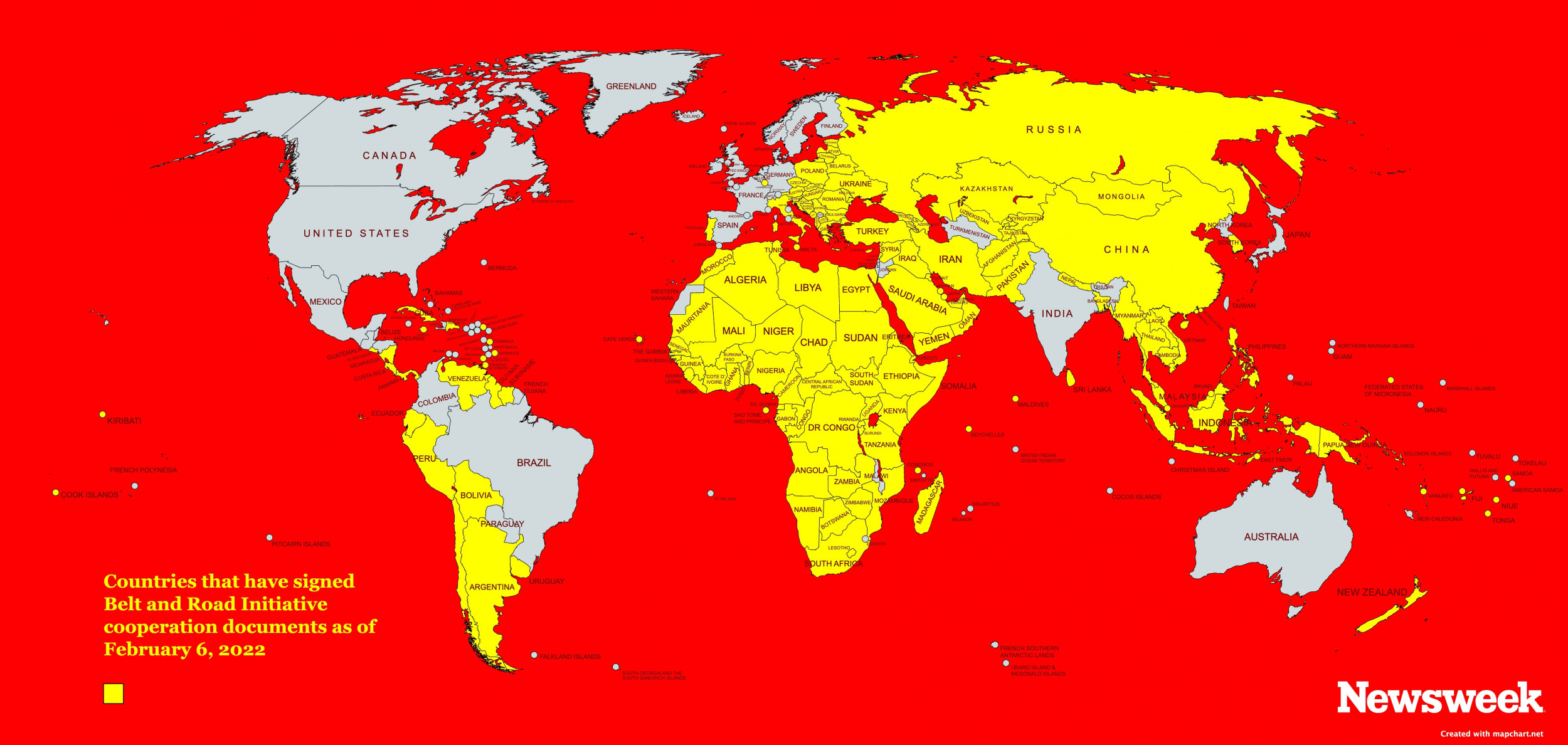
Panama joined Beijing’s Belt and Road Initiative in 2018, just one year after severing diplomatic relations with Taiwan, becoming the first nation in the Western Hemisphere to embrace Beijing’s massive infrastructure development strategy. Margarita Island, off the Atlantic mouth of the canal, is leased to the Landbridge Group for the development of a free trade port outside of local control. Landbridge has close ties to the Chinese Communist Party (CCP), and its chairman has served on the Chinese People’s Political Consultative Conference, a key United Front organization.

Panama illustrates the relentless advance of CCP influence across the Western Hemisphere. Between 2000 and 2010, the PRC’s share of Latin American exports quintupled, then tripled again between 2010 and 2021, from $180 billion to $450 billion. PRC-linked companies have secured control of more than 40 ports across the region. Twenty additional Latin American nations have followed Panama into the PRC’s Belt and Road Initiative.

With the single-minded focus of a military campaign, the CCP directly coordinates ostensibly “private” companies and PRC officials in pursuit of the party’s agenda. Unlike normal multinational companies which seek profits, financial returns are only a secondary concern for the CCP. The real prize is control—not only control of strategic points such as the Panama Canal and ports but of natural resources, telecommunications, and ultimately governments. Between 2005 and 2021, China extended more than $130 billion in loans to Latin American countries for infrastructure projects, often with provisions that contracts go to PRC-associated firms.

These infrastructure projects are purpose-built to deepen economic ties with China. At Chancay, less than an hour north of Lima, Peru, a $3 billion deepwater port is under construction, which will push exports to Chinese markets. New roads are being built to tie critical mineral mines directly to the port, with shipping lanes along the West coast of South America being rerouted through this huge PRC-owned facility. Projects like Chancay go hand-in-hand with Chinese firms’ takeover of local construction, shipping, and telecommunications.

Latin America is central to the CCP’s global campaign to monopolize strategic natural resources. Lithium, for example, is critical for the manufacture of batteries, and China is the world’s largest battery producer. CATL, a CCP-aligned company, recently secured extensive rights to develop Bolivia’s currently untapped lithium resources. China, Chile, and Argentina already combine for 95 percent of global lithium production outside of Australia; in the event of a conflict that interdicted trade, the CCP could enjoy a global monopoly over this critical resource.

The CCP is ruthless in pursuit of dominance in Latin America. Huawei secured a foothold in the Brazilian telecom market by offering free 5G kits to agribusinesses selling to the Chinese market. Bribery is not only tolerated but encouraged. According to the State Department, in 2019, the CCP bribed El Salvadoran officials to secure a contract for a deepwater port. Last fall, it was revealed they had also used bribes to secure road construction contacts in Bolivia. This March, the former President of Ecuador, Lenin Moreno, was charged with accepting bribes from a Chinese firm seeking to build a hydroelectric plant.

The CCP’s economic investment is already being leveraged for political control. This year, Honduras joined El Salvador, Nicaragua, Panama, and the Dominican Republic in terminating its diplomatic recognition of Taiwan. Brazil’s President Lula De Silva has both refrained from criticizing Putin on Ukraine and called for a new currency to replace the dollar, a long-term ambition of Beijing. Venezuela has purchased arms from the CCP and hosted PLAN warships, while the CCP has taken steps to secure a military base in Cuba, a development that has oddly faced none of the blowback from Washington the Soviets faced 60 years ago.

Greater CCP control always spells disaster for human rights. Huawei, ZTE, and other Chinese “smart city” systems are part of an authoritarianism starter kit, designed to protect leaders from their own populations. In 2016, Venezuela introduced “homeland” ID cards required to access government services, enabled by ZTE. In 2021, when protests erupted in Cuba, the regime had no trouble shutting down the Chinese-controlled internet.

Beijing relishes the replacement of functional democracies with authoritarian narco-regimes as it secures Beijing’s political and economic control, with the added benefit of worsening the crisis on our southern border.

The CCP seeks not prosperity but power. Authoritarian client states are the point.

Thirty years of neglecting our own neighborhood has created these problems. But the news isn’t all grim. Global manufacturers are racing to move supply chains out of China and it is no coincidence that Mexico just edged ahead of China as our largest trading partner. We have a once-in-a-century opportunity to steer investment towards deserving Latin American markets, building trust, institutions, and goodwill.

We have a duty both to our national security and the people of Latin America to show up in the region and bring solutions, not just lectures. If we continue our neglect, just as the creation of Panama heralded the dawn of the American century, China’s “Panama Model” could define the CCP’s century.

Rep. Mike Gallagher is a Republican Congressman representing Wisconsin. He is Chairman of the Select Committee on the Chinese Communist Party.

The views expressed in this article are the writer’s own.

Hyundai designer plans for the future by looking at the past

0

Automotive designers look in all directions for inspiration, from Japanese maple trees to the most modern furniture. They also pull from the vehicles of their childhood as they create models with eye-catching looks, modern technology and proportion that meet customer and company wants and needs.

At the 2023 Detroit Concours d’Elegance, Hyundai designer Hak Soo Ha sat down with Newsweek as part of a sponsored panel discussion to talk about vehicle design in the EV era, the future of car events, what inspired him as a child and what challenges designers now face.

As the designer of Hyundai’s modern Pony-inspired concept, he leaned heavily into his past.

In Korea the first major vehicle was born in the 1970s. So when I was growing up, a lot of cars were basically just cars. My father’s first car was a Pony, the first Korean designed and engineered and manufactured vehicle, and I have a lot of memories of it. My friends who grew up in the States have similar memories about the VW Beetles and you know, traveling in the backseat, in the parcel tray, and I have similar memories,” Ha told Newsweek.

“When I joined Ford, I got to know the car culture of Detroit. But when I went back to Hyundai my first kind of a non-production project was a Heritage Series and I took the Pony from my memories and did an analog and digital mixture. I guess we all grew up in different environments and whatever cars happen to be in our childhood memory, they become kind of staple in our design career.”

The original Hyundai Pony premiered at the Turin Motor Show in 1974, and 49 years later it was rebuilt as part of the company’s heritage project, “Hyundai Reunion”. It was unveiled at the 2023 Villa d’Este concours at Lake Como, Italy, next to the futuristic N Vision 74, which takes styling cues from the original Pony.

“Hyundai has been around long enough to actually have a design heritage. The original production Pony from the 1970s and the Pony Coupe concept were hugely significant in Korea, a country that at the time was still very much a developing nation. Hyundai models over the next few decades rose in prominence,” Ed Kim, President and Chief Analyst at AutoPacific told Newsweek.

“By around 2010, Hyundai was really pushing the envelope with design with models like the sixth generation Hyundai Sonata and rear wheel drive Genesis Coupe. Hyundai design has only gotten more mature, distinctive, and brave in the years since,” Kim said.

Ha has worked at Honda, Ford and Hyundai and at each has been involved in concept creation and ideation. Automakers come up with keywords, usually things like “dynamic,” or “high-tech” or “cutting edge.” However, he explained that with cost and weight reductions and more stringent regulations everyone arrives at the same conclusion and cars start to look alike.

“I think it’s important that you kind of revisit your heritage so that your new product has a distinctive design that identity that people can recognize. In order for us to look into the future we are looking back into the past, and sometimes it gives a lot of answers. With Hyundai now we have 50 years of history. And I thought now it’s a time that we recognize and celebrate our heritage and past and history, so that we can set our own future,” said Ha.

Ha talked about how designers look at cars differently than the average person. They look at them through a long-term lens and try to figure out what makes them timeless or forgotten. And what he has landed on is passion, with a side of accountability.

“But it’s also important to talk about how we go about disposing batteries or recycling at the end of the lifecycle of the car. Same with the LCD and OLED screens. There’s a lot of sustainability responsibilities that we have to carry on as well,” Ha said.

“Having said that, I think we still have to bring passion and a kind of love for the freedom that people have to move around, go places and build their own memories. But things are getting more complex. Before, the next car just had to look better than the last car. But now with these environmental responsibilities, more commitment for safety, energy efficiency and manufacturing, there are definitely more challenges for designers to absorb all that and come up with a unique solution that will stand the test of time many years down the road. And still come across his future classics.”

For automakers, state of Michigan, going green is about more than EVs

0

The electric vehicle (EV) revolution only works if consumers buy them, and studies show a big factor in choosing an EV is if a customer has driven one before. That sets an agenda for government agencies that is shared with the marketing departments of automakers. The goal? Let people try these cars out.

At the 2023 Detroit Concours d’Elegance Newsweek talked to Wendy Orthman, Executive Director of Marketing at Genesis and Justine Johnson, Chief Mobility Officer for the State of Michigan about what it takes to put electric vehicles in front of ready customers as part of a sponsored panel discussion.

Newsweek: How are you working to convey to potential buyers that electric vehicles are the right choice?

Orthman: “I think there’s so much conversation when it comes to electrification and what it means but at the end of the day, I think the challenge all of us are facing is how do we help people see how EVs fit into their lives on a very practical level and very day-to-day level. We are building a narrative on helping people in a tangible way to understand how they could come to see an EV in their garage, how to help them upgrade their home and what it will do for their life.

“We can help you with your charger at home, we can put solar panels on so that you won’t even see impact your electric bill. There are all kinds of ways the entire ecosystem can really benefit you. We’re trying to not just sell the vehicle or the technology but how it fits into your lifestyle.”

Newsweek: Tell me a little bit about what the state of Michigan is doing to help consumers and residents understand electric vehicles.

Johnson: “It’s really an interesting time as we talk about this transition from internal combustion engines to electric vehicles. An important part of this conversation is exposure, people actually seeing EVs and how they work. I drive an EV and oftentimes people just ask me how does this work? What about charging? How do the incentives work?

“Another important part of what we’re doing is we have essentially a goal to reduce carbon and reduce greenhouse gas emissions as much as possible. We have the goal to decarbonize the state of Michigan by 2050. A lot of that is going to be from the transportation sector. So that’s going to be a huge part. We also have to hold ourselves accountable.

“We’ve also made a lot of great investments in charging infrastructure. We have a goal of installing 100,000 EV chargers by 2030 so that we can have space for at least 2 million EV drivers. We’re super excited about this and the State of Michigan has the funds to really build out the charging infrastructure, which is just as important as the education and exposure.”

Newsweek: What partnerships is the State of Michigan exploring to help bring the EV charging infrastructure to reality?

Johnson: “One of the most exciting is called Electreon and they put wireless charging in roadways like Michigan Avenue. That’s exciting when we talk about not actually needing to physically plug in, but just use our roadways. They just laid the asphalt on the coils about a month ago.

“Another important part is the Michigan Mobility Funding Platform that helps early-stage companies who are in the space of mobility, charging infrastructure to be a part of the conversation.

“This is the one time that we’ve ever seen this level of alignment when we talk about sustainability and charging infrastructure. Michigan is a recipient of the National Electric Vehicle Investment (NEVI) funding program right now to build out the infrastructure to support electrification. I think that this particular administration, from the federal level all the way to the state, is in alignment that we need to invest in the infrastructure and the jobs that are going to be supporting that.”

Newsweek: Genesis has both EVs and internal combustion engine vehicles, how do you convey to customers that both are worthy of consideration?

Orthman: “It’s important right now for luxury customers to be thinking about choice and fit into their lifestyle, and to be able to be there when they’re ready to make that transition, but also to be able to serve their needs for today. And so that’s been the strategy to be able to offer, for example, both electric and gas GV70s.

“What that’s doing for us is taking the conversation away from, ‘is it an electric vehicle first and a Genesis second?’ Then customers will decide what they’re ready for in terms of powertrain. And certainly we’re seeing that adoption and interest increase. For those that are prone to want to be the first one to have the technology, wanting to really be on the cutting edge, we will see more and more interest in EVs and our portfolio will shift accordingly.”

Newsweek: How do you market electric vehicles here in the state of Michigan?

Johnson: “We talked about exposure to electric vehicles, I think it’s important that people can touch them and ask questions. Events like these are important. I do think there is a broader conversation where we talk about range anxiety and people may be afraid of what happens if there’s not enough charge. It’s about meeting people where they’re at. People are at the grocery stores, people are going to hospitals, we started to think about how we can create a space where people looking at a vehicle ask the questions. We as EV owners share part of the responsibility too.”

Orthman: “I love the community around EVs, the owners and people coming up to your car is fascinating. When you walk out of a store you add an extra five minutes for someone to ask you a question. It’s about education, about partnership accessing the network, and also demystify some of those just fears of the unknown. Genesis is making sure that we’re spending as much time talking about 18 minutes for fast charging, three years of free recharging and your battery warranty is 10 years or 100,000 miles, no different than if you bought an ICE vehicle.”

Newsweek: Finally, talk about these brand ambassadors that you used to launch this green ecosystem for Genesis.

Orthman: “Our biggest challenge is brand awareness and finding new people to discover a luxury brand. You can’t always get that just through industry and automotive outlets. So if I can work with influencers or people who have done other interesting things, we can make that connection and introduce ourselves through their communities in fashion or developments.

“For the Electrified GV70 campaign we worked with a couple of different influencers. One created textiles out of algae. She’s just a really interesting person. She had worked with some famous designers and created fibers and dresses and textiles and we used that as an opportunity to introduce our new GV70 there.

“But since then, we’ve also been working with other influencers we have a Korean vegan influencer whose name is Joanne Molinaro. Also Bobby Berk, the interior designer from the Fab Five is one of our originals and he too is driving an electric GV70 as well and just sold one to his neighbor. So using influencers in other spaces like interior design, fashion and food help us.”

Student Loan Payments Have Begun Again and There Are Some Big Changes

0

We have all spent the last couple of years riding waves of hope and disappointment as the saga of student debt cancellation unfolded. Last summer, President Biden announced up to $20,000 in debt cancellation — a major step forward in recognizing the seriousness of the student debt crisis and how it drags down our economy. But then this summer, the Supreme Court struck down this plan and blocked the debt relief. Hope, disappointment.

While the fight for debt cancellation is far from over — the Biden administration is pursuing cancellation through new means at the Department of Education — the focus on this important push has obscured some of the quieter but still very impactful changes happening to student loan repayments.

As the student loan pause that borrowers have enjoyed for the last three years is coming to an end, repayments will begin in a student loan system that will look pretty different than in 2020.

First, a brand new repayment plan has been introduced. Saving on Valuable Education (SAVE) will lower monthly payments, allow more borrowers to have $0 payments, and limit the interest accrual for loans. For many people SAVE will be the best option, it can really be a game changer to make your loans more affordable.

Like other income-driven repayment plans, it calculates your monthly payment amount based on your income and family size, but will offer lower monthly payments than previous plans. You can also expect loan payments for undergraduate loans to go down next summer as the standard payment for most people will be lowered to 5% of discretionary income. And lastly, in a big change, your loan balance will not grow from interest if you are making your monthly payments.

As part of the SAVE repayment plan, there will be a temporary “on-ramp” for up to one year — which should help protect borrowers who fall behind or miss a payment. The on-ramp period protects borrowers from having a delinquency reported to credit reporting agencies. This prevents the worst consequences of missed, late, or partial payments.

Lastly, the Biden Administration has established Fresh Start, aimed at helping borrowers who were behind or in default on debt payments before the pause began in 2020. Fresh Start is a one-time temporary program that automatically gives borrowers benefits, including returning loans to “current” status on borrowers’ credit reports, removing negative default marks on credit reports, and access to federal student aid and other government loans, like mortgages.

These changes will be a lifeline for borrowers who will be facing confusion, uncertainty, and financial hardships after years of being free of the burden of student debt.

If you are an employer or involved in any other large organization, you can help spread the word about these options. Direct people to StudentAid.gov to make sure they are getting accurate information and avoiding the scammers who will be taking advantage of this period of uncertainty. Tell folks about the Student Borrower Protection Center or the Consumer Financial Protection Bureau if they are having difficulties with their loan servicer or have been targeted by a scam.

If you work in a government agency or non-profit organization where employees would be eligible for Public Service Loan Forgiveness (PSLF), make sure your employees and coworkers know about the program, and be sure your organization has a system in place to quickly certify documents needed for borrowers using PSLF.

While the SAVE plan and other changes are welcome improvements for borrowers, they do not replace cancellation. Millions of borrowers are now facing repayment when they thought they would finally be free of the burden of student debt. That’s why we will keep up the fight for debt cancellation and the broader reforms needed to address the student debt crisis at large.

In the meantime, borrowers will have better options than when repayment was paused in 2020. Let’s hope this is just the first step in improving a student loan system that has been failing borrowers for far too long.

The Newsweek Expert Forum is an invitation-only network of influential leaders, experts, executives, and entrepreneurs who share their insights with our audience.What’s this?Content labeled as the Expert Forum is produced and managed by Newsweek Expert Forum, a fee based, invitation only membership community. The opinions expressed in this content do not necessarily reflect the opinion of Newsweek or the Newsweek Expert Forum.

First Dog Commander Biden Is Trying to Tell Us Something. Are We Listening?

0

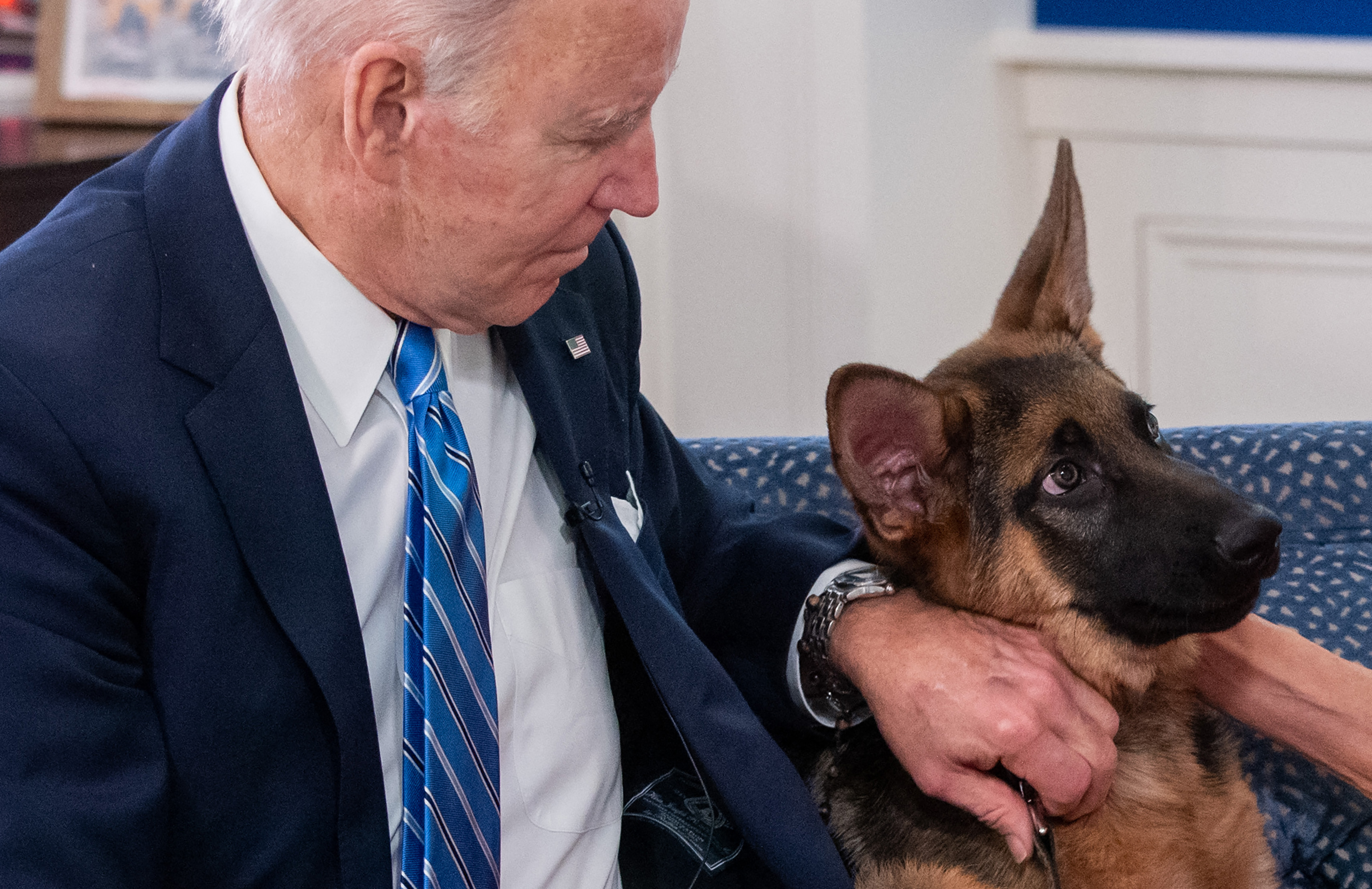
Commander—the Bidens’ beloved canine companion—has reportedly bitten a Secret Service agent. The incident is being reported as if it were a juicy White House scandal. But should anyone really be surprised?

Commander and other “first dogs” may live in the White House, but we shouldn’t expect them to act like career politicians or international peacekeepers. They are dogs—just like those who live in our own homes and neighborhoods. They have their own personalities, needs and feelings, unique sensitivities and quirks and preferences. And like all living, feeling individuals, they deserve to be treated with respect and consideration.

But unlike the dogs who share our homes—whose daily routines and interactions are typically predictable to the point of monotony—Commander lives in the bustling, overstimulating, and rarely predictable environment of the White House. He is surely subjected to interactions with people he doesn’t know—strangers—every day, maybe dozens of them, which could be stressful and overwhelming for any dog.

Think about it as if you were Commander: A Secret Service agent—or anyone else you don’t know—may be perceived as a threatening stranger who’s getting far too close to you and your human “pack members.” Although it’s not clear what led up to the recent biting incident, many humans aren’t aware of when they are improperly invading a dog’s space—and then when the dog responds to their space being violated, they’re often maligned unjustly. Commander seems to be clearly communicating, “I’m stressed, and I need my space.”

To help Commander, those around him should respect his needs and bone up on basic dog diplomacy—and it wouldn’t be a bad idea for everyone who works at or visits the White House to carry dog treats with them to help him see them as new friends rather than suspicious strangers. And following that good example, all of us would be wise to brush up on our own canine etiquette.

Winning a dog over is a piece of cake compared to taking on the economy or negotiating international alliances. All it takes is a little patience, a lot of kindness and a handful of treats! Here’s how to do it: When meeting an unfamiliar dog, always be quiet and go slowly. Let the dog approach you when (and if) they choose. Don’t stare into their eyes—that’s an adversarial gesture that could be perceived as a threat or a challenge. Instead, keep your side or your back to the dog and maintain a nonthreatening posture. If—and only if—the dog approaches you and seeks to be petted, that’s your invitation to offer a hand to sniff, and if that’s accepted, gently stroke them on the chest, side or back. Never force yourself on a dog who doesn’t want to be touched. That’s just basic decency.

And it should go without saying that punishing dogs for perceived “misbehavior” by yelling at them or inflicting physical violence on them is never acceptable. It’s as cruel and hypocritical as kicking a child to teach them that it’s wrong to kick a classmate on the playground.

Instead, use the four “P’s”—praise, practice, prevention, and patience—to guide dogs toward desired behaviors. This approach is humane and far more effective.

We should all listen to Commander. Dogs deserve to be treated with patience and respect, and that means giving them their space. It’s time to improve our diplomacy with the canine nation—for dogs’ sake.

Daphna Nachminovitch is the senior vice president of the Cruelty Investigations Department at People for the Ethical Treatment of Animals (PETA); 501 Front St., Norfolk, VA 23510; www.PETA.org.

The views expressed in this article are the writer’s own.

The Legal Reason Biden’s Dog Commander Keeps Biting People With Impunity

0

Once again, President Biden’s two-year-old German Shepherd Commander has reportedly bitten someone, this time a Secret Service Uniformed Division police officer who was working at the White House. This week’s biting incident marks Commander’s 11th just this year.

U.S. law holds dog owners liable for biting, and a few states, including California, sometimes force euthanasia on canine repeat offenders. Could Commander’s owner, the President of the United States, be sued? Could Commander—should Commander—be euthanized?

I’m not ashamed to admit that I’ve actually handled a couple dog bite cases, though dog bite law is usually associated with ambulance chasing (dog bite cases can be pretty profitable). So here’s my take on Commander:

If Joe and Jill Biden were regular citizens and their dog bit someone and the victim sued, their homeowners’ policy would normally assign an adjuster, hire a lawyer for them, defend the case, and in all likelihood, settle it before trial.

But Joe and Jill Biden are not regular citizens. They are the President and the First Lady. The former is the head of the executive branch of the federal government. And when someone sues a federal employee for something that happens on the job, the employee is usually completely immune from personal liability under a federal law called the “Westfall Act.” Now, in order to claim this immunity, the employee must first prove that he is a government official covered by the Westfall Act and then prove that the lawsuit is based on conduct within the scope of his employment.

As for the first prong, the federal courts recently concluded that a president is a federal employee under the Westfall Act—specifically, when Donald Trump sought to invoke the Act against E. Jean Carroll‘s lawsuit against him for defamation. The second prong of the test is tougher. If owning a dog is within the “outer perimeter of the president’s official responsibility,” then he is absolutely immune from lawsuits.

For other federal employees, owning a dog likely has nothing to do with their job duties. But a president might be different. According to the White House, historically, presidential dogs have “humaniz[ed] the president’s political image.” Sometimes a dog is a piece of international diplomacy. Soviet Premier Nikita Khrushchev gave First Lady Jacqueline Kennedy a dog named Pushinka. At times, the presidential dog has even performed official functions. President Warren Harding’s dog Laddie “greeted official delegations and hosted the 1923 White House Easter Egg Roll when the Hardings were away.”

So the question of whether Biden can be sued for Commander’s biting depends on what Commander’s “job” is—on whether owning Commander is within the President’s official responsibility.

If dog ownership is within the outer boundaries of official presidential business, then the Westfall Act would substitute the United States for the employee—President Biden—as the sole defendant, and the case would be governed by the Federal Tort Claims Act (FTCA). The FTCA waives the government’s sovereign immunity, and allows lawsuits against the United States. But it also places a lot of obstacles in the way of those who would sue.

Believe it or not, there is precedent here: People have sued the United States for being bitten by government dogs before. There was an incident in 2020 at a Secret Service security checkpoint at President Trump’s Trump Tower. While sniffing a truck to detect explosives, a military dog named Rosso bit a tourist riding a rental bike past the checkpoint. The tourist sued. She lost, because the FTCA barred her case.

What a difference the FTCA makes. Dog bite cases are usually easy to win, especially in jurisdictions that hold the owner automatically liable, like the District of Columbia, for example. But dog bite cases against the United States are hard to win because of the FTCA.

In one D.C. case, a parent sued the TSA for negligently training a dog that allegedly bit her child. The court held that training a dog was a “discretionary function,” and therefore the TSA was immune under the FTCA.

In D.C., when a civilian dog bites a person, the owner is liable even if the dog had never bitten anyone before. But Commander, who is reportedly on his 11th bite, apparently is free to keep hunting D.C. residents. President Biden and the United States are likely immune from civil liability.

Still, there may be justice to be had for Commander’s victims, albeit a very “eye for an eye” version. In D.C., the Mayor is responsible for investigating and ultimately determining whether a dog is dangerous. D.C. law expressly authorizes the Mayor to “humanely destroy a dog if… the dog [will] be a threat to public safety if it is returned to the owner.”

When it comes to Commander, Mayor Muriel Bowser could be his judge, jury, and executioner. Will Commander’s alleged 11 bites warrant opening an investigation? Will Bowser deem Commander guilty of threatening public safety and sentence him to “Capitol” punishment? And if so, will that lead to a standoff between D.C. Police and Commander’s Secret Service detail?

It’s a constitutional crisis waiting to happen.

Danny Cevallos is an NBC News and MSNBC Legal Analyst and a criminal defense attorney.

The views expressed in this article are the writer’s own.

DeSantis learns from his debate mistake

0

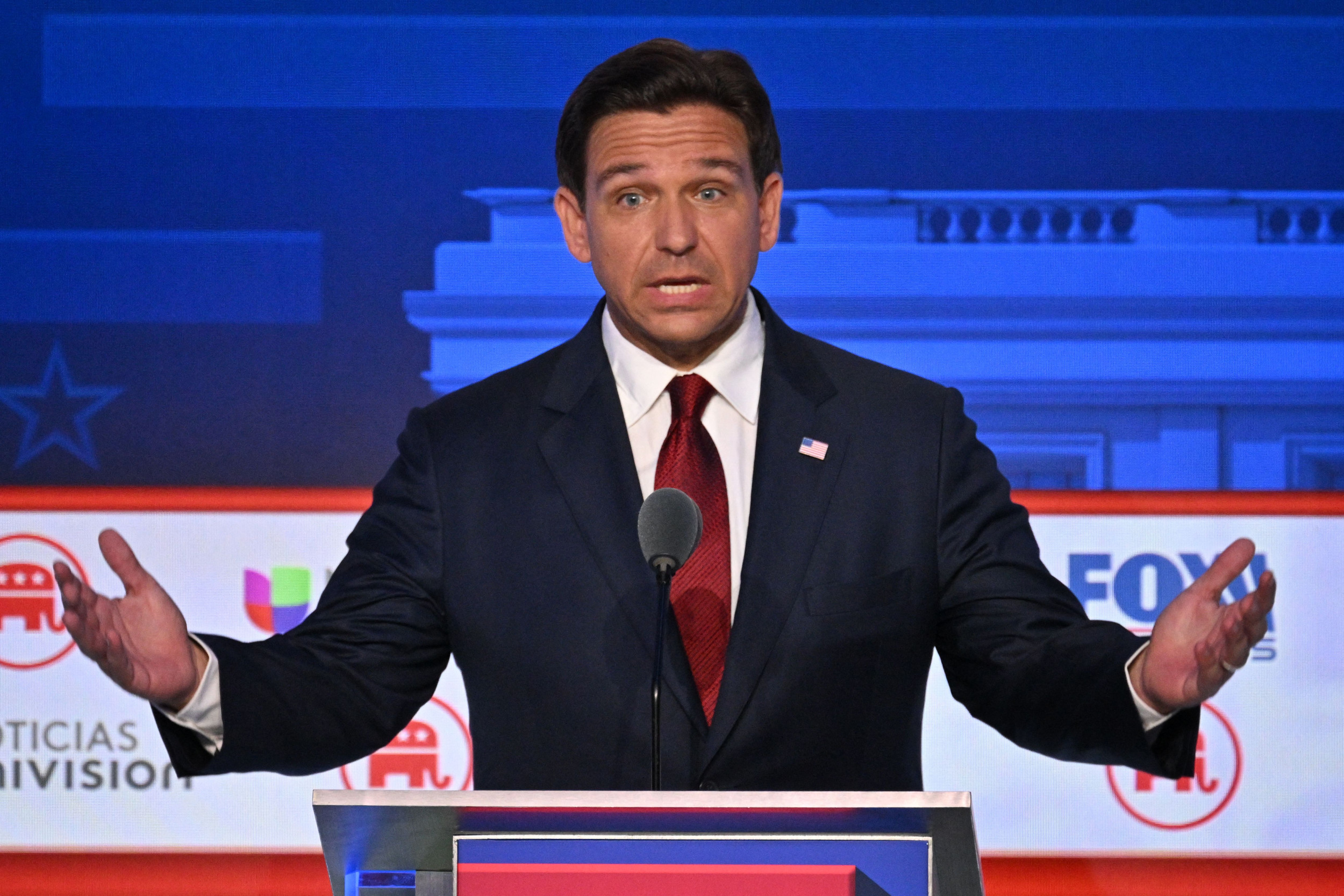
Florida Governor Ron DeSantis appeared to learn from a key mistake he made in the first Republican presidential debate.

DeSantis joined six other GOP contenders at the Ronald Reagan Presidential Library & Museum in Simi Valley, California, on Wednesday night for the second primary debate, in which he sought to portray himself as the candidate best suited to bring a conservative agenda to the White House next year, while also fending off attacks from his competitors.

The debate was a make-or-break moment for the governor, who has faced questions about his ability to compete on a national platform as his poll numbers have staggered in recent weeks, despite the belief he would be the Republican with the strongest chance of beating former President Donald Trump for the nomination.

The governor showed a stronger sense of leadership Wednesday night than during the first debate, in which his performance received a lukewarm response from political observers. Perhaps no moment reflected the change in his approach than the very last minutes of the debate.

Fox News moderator Dana Perino asked the candidates to write down the name of the candidate they believe should drop out of the race, as the final question of the debate.

“It’s now obvious that if you all stay in the race, former President Donald Trump wins the nomination. None of you have indicated that you’re dropping out, so which one of you, on stage tonight, should be voted off the island? Please use your marker to write your choice on the notepad in front of you,” Perino said.

DeSantis, however, led the candidates in refusing to do so.

“I’ll decline to do that, with all due respect. I mean, we’re here. We’re happy to debate. I think that that’s disrespectful to my fellow competitors. Let’s talk about the future of the country,” he said.

Former South Carolina Governor Nikki Haley also asked Perino, “Are you serious?” Ex-New Jersey Governor Chris Christie eventually gave an answer, saying that Trump should exit the race.

DeSantis’ refusal to answer the question marks a shift from one month earlier during the first presidential debate, when he faced criticism after looking to see how other candidates answered when asked if they would still support Trump as the presidential nominee even if he gets “convicted in a court of law.”

Haley, entrepreneur Vivek Ramaswamy, South Carolina Senator Tim Scott and North Dakota Governor Doug Burgum raised their hands, while DeSantis appeared to look around at the other candidates before doing so, sparking ridicule from the Trump campaign, which mocked him as “pathetic” in a post to X, formerly Twitter.

Former Vice President Mike Pence, whose relationship with Trump soured following the January 6 attack on the U.S. Capitol, raised his hand after DeSantis. Ultimately, Christie and former Arkansas Governor Asa Hutchinson, who did not qualify for the second debate, were the only two candidates who did not pledge support for the former president if he were to be convicted of a crime.

Newsweek reached out to the DeSantis campaign for comment via email late Wednesday night.

Vivek Ramaswamy’s business ties to China explained

0

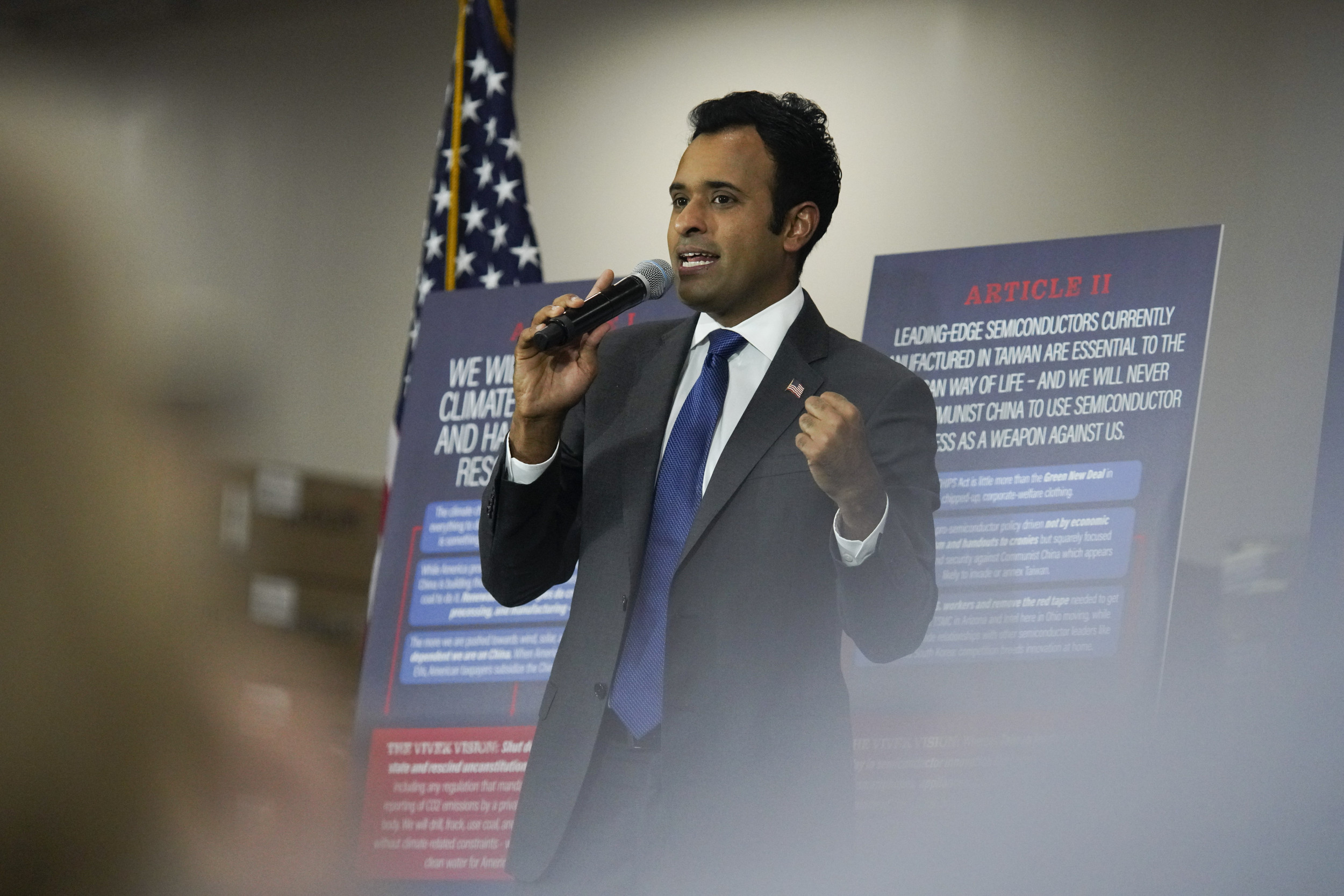
Republican presidential candidate Vivek Ramaswamy was repeatedly attacked by his rivals over business ties to China during the second GOP presidential primary debate.

Ramaswamy, an entrepreneur before launching his political career, took part in the debate alongside six other candidates at the Ronald Reagan Presidential Library & Museum in Simi Valley, California, on Wednesday night. Opponents including Senator Tim Scott of South Carolina, former Vice President Mike Pence, ex-U.S. United Nations Ambassador Nikki Haley and Florida Governor Ron DeSantis all pounced on Ramaswamy over his past connection to China.

Scott took aim at Ramaswamy by claiming that he was “just in business with the Chinese Communist Party.” Ramaswamy called the accusation “nonsense.” DeSantis then said that “everybody” knew Ramaswamy “did business in China,” while Haley accused him of ending his relationship with the company “right before” running for president. Pence made a similar jab.

An at-times seemingly angry Ramaswamy defended himself amid the pile-on by arguing that he only did business in China “when every other CEO expanded into the Chinese market.”

“You know what I did with my first company? We opened a subsidiary in China,” Ramaswamy said. “But you know what I did that was different than every other company? We got the hell out of there. And when I started my next company … I made a commitment that we would never do business in China.”

Newsweek reached out for comment to the Ramaswamy campaign via email on Wednesday night.

While Ramaswamy no longer has any business ties to China, he did have a clear connection at one time. Roivant Sciences, a biotech company that Ramaswamy formed in 2014, joined forces in 2018 with CITIC PE, an arm of a larger company owned by the government of China, to form the Chinese pharmaceutical firm Sinovant Sciences.

A 2018 press release for a Sinovant event describes the company as “a Shanghai-based biopharmaceutical company dedicated to bringing innovative medicines to China and advancing Chinese biopharmaceutical innovation abroad.”

In 2019, Roivant and Sinovant formed another company, Cytovant Sciences, which had a mission “to become Asia’s premier cell therapy company by discovering, developing, and commercializing new medicines that are uniquely suited to Asian patients.”

Ramaswamy has since gone on to speak out against American companies doing business with China, denouncing the Chinese government during his presidential campaign and telling Fox News in June that he “would ban most U.S. businesses from doing business in China unless and until the CCP reforms its behaviors.”

Tricia McLaughlin, communications director for the Ramaswamy campaign, told Fox News Digital this week that the candidate’s views on doing business with China changed due to his experiences in forming Sinovant, something that he would no longer allow as president because “our country is at a precipice” and “cannot depend on an enemy for our modern way of life.”

Neither Sinovant nor Cytovant are currently active companies, while Ramaswamy stepped down as CEO of Roivant in 2021, the same year that he authored the book Woke, Inc.: Inside Corporate America’s Social Justice Scam. By the time he launched his presidential bid in February, Ramaswamy’s business career had netted him hundreds of millions of dollars.