
Thursday, March 12, 2026
Home Blog Page 19

Biden gains ground among Republicans on Israel response as Trump stumbles

0

President Joe Biden appears to have gained some ground among Republicans when it comes to his response to the Israel-Hamas war as former President Donald Trump has faced criticism from top GOP lawmakers and Israeli officials for his initial reaction.

Hamas, which the U.S. designates as a terrorist organization, on October 7 led the deadliest Palestinian militant attack on Israel in history. Israel subsequently launched its heaviest ever airstrikes on Gaza. As of Sunday, more than 1,300 people had been killed in Israel, the Associated Press reported. Over 2,300 people had been killed in Gaza, according to the Gaza Health Ministry, the AP reported.

Israeli Prime Minister Benjamin Netanyahu has said his country is “at war” and has cut off supplies of food, fuel, electricity and medicine into Gaza. Israel has called up 360,000 army reservists as it prepares for a likely ground offensive into the territory, which has an estimated population of around 2.3 million. Although that offensive was expected to start today, it has been delayed for now.

Israel is an issue that has increasingly divided Republicans and Democrats in recent years. Progressive Democrats have grown much more critical of the Israeli government, while some have voiced strong support for Palestinians. Biden himself had previously clashed with Netanyahu over his government’s controversial shift further right.

At the outset of the latest conflict, all eyes were on the president to see how he would respond as the key U.S. ally faced a historic crisis. Biden asserted his administration’s firm support for Israel in the face of Hamas aggression.

He has expressed strong unconditional backing for Israel, despite a faction of progressive Democrats raising alarms about the treatment of Palestinians. As a result, Biden has drawn praise from Republicans and Democrats alike, while Israeli officials have voiced their gratitude to the administration.

Conversely, Trump’s early response to the war has faced substantial backlash, as he raised an old beef with Netanyahu and called Israel’s defense minister, Yoav Gallant, a “jerk.” He also described Iran-backed Lebanese militant group Hezbollah, which the U.S. also designates as a terrorist organization and has repeatedly exchanged fire with Israel since the start of the conflict, as “very smart.”

“That was a huge mistake,” Senator Lindsey Graham, a South Carolina Republican, told NBC News’ Meet the Press on Sunday, referring to Trump’s remarks on Israel. Although Graham also highlighted Trump administration policies and actions that he views as positive for Israel, the GOP senator lauded Biden’s response to the conflict.

“I want to applaud President Biden for his strong statement in support of Israel,” the senator said.

Trump’s former United Nations ambassador, Nikki Haley, who is challenging him for the GOP’s 2024 nomination, also strongly criticized his remarks. “That makes America look weak,” Haley, who previously served as the governor of South Carolina, told CNN‘s State of the Union on Sunday.

“This is not the time to bash a leader,” she said, referring to Trump’s remarks about Netanyahu.

A number of other Republicans called out Trump over the remarks last week, particularly raising alarms about his comments describing Hezbollah as “very smart.”

“Hamas, Hezbollah, Iran, the greatest state sponsor of terrorism, these are states and entities that are focused on wiping Israel off the face of the earth. That is neither smart nor good,” Representative Mike Lawler, a New York Republican, told NBC News on Thursday.

Posting to X, formerly Twitter, Georgia’s GOP Governor Brian Kemp wrote: “Women, children, elderly, Israelis, and Americans alike have been slaughtered by these evil terrorists. It is never acceptable to praise deranged murderers or undermine one of our closest allies in their darkest hour.”

On Thursday, Israeli Communications Minister Shlomo Karhi denounced Trump’s remarks. “[It is] shameful that a man like that, a former US president, abets propaganda and disseminates things that wound the spirit of Israel’s fighters and its citizens,” Karhi told Israel’s Channel 13. “We don’t have to bother with him and the nonsense he spouts.”

Meanwhile, polling released on Sunday by ABC News and Ipsos showed a small, but notable, positive sign for Biden among Republican voters. The survey data revealed that the GOP’s approval of Biden’s response to the Israel-Hamas conflict is substantially higher than the minimal single digit approval he receives from conservative voters on issues including inflation, gun violence and Iran foreign policy. Comparatively nearly one in five (18 percent) of GOP voters gave the president positive marks on his handling of the escalating Middle Eastern war.

That data comes after conservative magazine National Review published an article praising Biden for moving to “put distance between the far Left and his party’s center in voters’ minds” when it comes to the issue of Israel.

“Biden is finally setting the tone again now. His highest priority today is not to paper over irreconcilable divisions between centrist Democrats and progressives who too often appeal to the rubric of oppressed and oppressor to excuse or explain away acts of violence. It’s to separate the latter from the former in the public’s mind, and thus preserve his party’s appeal to the vast majority of Americans whose instinct is to sympathize with Israelis,” Noah Rothman, a senior writer at the magazine, wrote Wednesday.

“This will sound surprising, but by and large, the president has shown tremendous support, unwavering support, for Israel at a critical time,” Matt Brooks, the head of the Republican Jewish Coalition, told The New York Times last week. “The American people and the international community have seen a president who has stood shoulder to shoulder with Israel.”

Trump’s former ambassador to Israel, David M. Friedman, a Republican, had high praise for Biden’s response to the crisis.

“While I have been, and remain, deeply critical of the Biden Administration, the moral, tactical, diplomatic and military support that it has provided Israel over the past few days has been exceptional. As one living in Jerusalem with children who are Israeli citizens, I am deeply grateful. I pray that American support continues in the difficult days ahead,” he wrote in a Thursday X post.

Whether Biden’s support for Israel is enough to breakthrough the political polarization dividing Americans remains to be seen. Trump has appeared to take pains to correct from his initial stumble, reiterating his strong support for Israel and even calling for a ban on Palestinian supporters on university campuses.

Biden has also faced significant criticism from Republicans over his efforts to improve ties with Iran. Many have pointed to those efforts, as well as the chaotic Afghanistan withdrawal, as signs of weakness when it comes to foreign policy. They’ve argued these Biden policies have emboldened America’s enemies.

Newsweek reached out to the White House and Trump press representatives via email for comment.

My sister wants $4,200 for looking after our mom—What should I do?

0

Dear Newsweek, my dad passed away in 2021. Since that time, my two older sisters and I have taken over caring for my mom. My oldest sister lives around 30 minutes away from my mom in Michigan. Her job allowed her to choose remote work, so she typically works from my mom’s house Monday through Friday. There are some days where she has to be elsewhere, but it isn’t too frequent. I live in Georgia and my other sister lives in Florida.

My parents have been very generous to us all our lives—monetary gifts for birthdays and Christmas have never been missed. On September 20, the Florida sister asked to be reimbursed $3,000 for her recent trips to Michigan in August and September. She is listing the cost of hotels, Airbnb stays, gas and a $41 food charge where my mom’s credit card was denied. But she actually used my mom’s card for a $1,165 Airbnb charge. So, if you consider that, it’s actually asking my mom to cover over $4,200 of her expenses.

In August, our mom gave us each $5,000 out of nowhere—just to say thank you for all we do for her. So, for my sister to ask for reimbursement seems very inappropriate to me.

My dad was a very frugal man and left us all the money we will most likely need to care for my mom until her time comes. This is to say that the funds are there, so it isn’t an issue of how to come up the money to reimburse her that is bothering me. It is more a problem of vastly different opinions of what is appropriate. She had the gall to actually say “Why do I have to use $3,000 of my gift for trips to Michigan?” It comes across as completely ungrateful for the gift and as not understanding that our mom is our responsibility and that family obligations are not something to be reimbursed for.

These two trips were her only visits so far this year. I may be open to looking at things differently if the trip frequency were higher or if my mom’s care was more “serious/involved” or if she went above and beyond in helping out. She hasn’t had a real job in six years and she always seems to help from a distance even when there in person.

She doesn’t spend that much time with my mom when she is in town. She refuses to stay at my mom’s house, where there is a guest bedroom and bathroom to use, for her “mental health.” That also is her choice—there is a free place to stay yet she chooses to stay at hotels or Airbnbs. Why is that something my mom should pay for? When I go to Michigan, I view it as my time to get things done around the house for my mom and to spend time with her, so I stay there with her.

Neither I nor my Michigan sister has ever asked for reimbursements. I have told both of them that I don’t think this is right. But then the Michigan sister is fearful of losing the Florida sister’s help and doesn’t want money to come between us. So, she wants the Florida sister to be given some sort of reimbursement and for me as well, for my recent trip, which I have repeatedly said I do not want to be reimbursed. But how do we determine how much is fair? And what is this setting us up for going forward? Is her going to Michigan going to be contingent on payment?

It’s very upsetting to me that she has opened this can of worms. They have been waiting on action from me since part of my responsibilities are handling all of the finances. Also, I’m my mom’s future financial POA [power of attorney] when that time comes. I tried to ask for a group call with mom so that we are all on the same page in hopes of coming to some sort of resolution.

I’m aware that the money is my mom’s and she can do as she wishes. I’m merely supposed to process the transaction at this point. But they tried to say that my mom doesn’t understand these things and didn’t get her in on the call, which to me seems like a convenient excuse and also perhaps a sign that they know this isn’t right. I feel like I’m going to have to end up sending her money. But can I lessen the amount? If so, how do I determine what amount to give her?

Lisa, Georgia

Newsweek’s “What Should I Do?” offers expert advice to readers. If you have a personal dilemma, let us know via life@newsweek.com. We can ask experts for advice on relationships, family, friends, money and work and your story could be featured on WSID at Newsweek.

Have a Family Meeting

Jennifer Kelman is a therapist for the JustAnswer website, a licensed clinical social worker and relationships expert.

I think at this time your sister is asking for something that is a bit above and beyond. There are times where we all need to step up and care for family members, and if it becomes a source of financial difficulty to make these trips, or your sister is losing money elsewhere because of the trips, then perhaps you all sit down and have a conversation about how to reimburse for various things. But as you said, your sister has the ability to stay with your mom but chooses not to, so those expenses that she has incurred are by her choice.

I do think it would serve all of you to have a family meeting. Not necessarily with your mom because she may end up feeling like a burden to all of you. But just with the sisters where you discuss what the responsibility is for each of you. You can let your sister know that she will not be reimbursed for staying elsewhere, but if there are incidental expenses moving forward, that maybe you can all come together and decide what seems fair for everyone.

The last thing you want is for this to cause a major blowup between all of you. So, let your sister know that you are happy to discuss what she feels and needs around this, but that there are also boundaries around it, such as staying with your mom when she travels there. The goal is to provide comfort to your mom, so it is a time for everyone to come together and do what is necessary to make that happen.

Establish Clear Expectations

Dr. Hans Watson is a psychiatrist, psychotherapist and trauma expert based in South Jordan, Utah.

You and your sisters have a common case of unspoken expectations. Because the expectations for helping or reimbursement have never been clearly defined, each side has made assumptions on what is fair and what is unfair and those are clearly not in line with each other.

Therefore, the only way forward where there will not be hard feelings would be to establish clear expectations and ensure that everybody is on the same page. While this does have the possibility of introducing disagreements, there is a 100 percent chance that if you do not establish clear expectations, there will be disagreements and even deeper hurt feelings.

I also agree that it would be wise for you to involve your mother in how her money is used as it will take reduce the ability for a child to blame a sibling for the expectations established.

In this case, you’re going to have to endure some temporary discomfort in order to have long-term resolution of these hurt feelings.

Your Mom Needs To Be a Part of the Process

Craig Kain is a licensed psychologist based in Long Beach, California.

Your current crisis really centers on your mom’s role in making her own decisions.

Since your mom is still alive, paying for your Florida sister’s expenses is not your choice, nor your Michigan sister’s choice to make. Unless some dramatic change to your mom’s mental capacity recently occurred, since she was sharp enough to give each of you a $5,000 gift in August (which you all appear to have accepted), she is capable of deciding for herself whether or not your sister should have her expenses reimbursed.

You are correct in asking whether this current conflict sets you and your sisters up for more conflict moving forward. Now is the time to prevent further arguments by creating guidelines outlining how to handle expenses associated with your mom’s care.

Despite what your sisters think, for her own well-being, your mom absolutely needs to be a part of this process. Staying active and independent as long as possible is an essential part of your mom’s mental health. This includes making her own sound financial decisions. Keep in mind that just because a decision is not what you want, or what you think is fair, does not make it unsound.

The most important aspect of these guidelines is that they are clear, specific, mutually agreed upon, and put down in writing so there are no misunderstandings later. If you, your sisters and your mom are unable to do this on your own, a session with a family therapist may prove useful.

Do you have a family dilemma to share? Let us know via life@newsweek.com. We can ask experts for advice, and your story could be featured on Newsweek.

Jim Jordan’s legislative record scrutinized as GOP backs him for speaker

0

Representative Jim Jordan has been criticized by some for being ineffective at passing legislation in Congress after he was nominated as the House Republicans‘ choice for speaker on Friday.

The Ohio congressman is the second nominee that the GOP has put forward, after Representative Steve Scalise, a Louisiana Republican, withdrew his nomination this week. The House speakership role has been vacant since October 3 when Representative Kevin McCarthy of California was ousted in a 216-210 vote after Representative Matt Gaetz, a Florida Republican, introduced a motion to vacate.

House Republicans remain divided on their second choice, with Jordan receiving 152-55 votes on Friday. The congressman will need 65 more votes on the House floor in order to be elected to the speakership.

Meanwhile, House Minority Leader Hakeem Jeffries, a New York Democrat, voiced concern about Jordan possibly becoming House speaker after the vote.

“House Republicans have just elected a speaker nominee who in 16 years in Congress hasn’t passed a single bill, because his focus has not been on the American people, his focus has been on peddling lies and conspiracy theories and division,” Jefferies told reporters on Friday.

Social media users on X, formerly Twitter, seemed to agree with Jeffries.

“Jim Jordan has been in Congress for 16 years and the number of bills he has sponsored which became law is zero. The number of bills he has sponsored which passed the House is also zero. He had one resolution pass, to create the ‘Deep State’ subcommittee. In 16 years…” user Aaron Fritschner posted.

Another X user criticized Jordan, favoring former Democratic House Speaker Nancy Pelosi. “Jim Jordan hasn’t passed a single bill in his 16 years of congress. Who else agrees he’s far too ineffective to be Speaker? I miss Nancy Pelosi,” Adam Mockler wrote.

“Jim Jordan hasn’t passed a SINGLE bill in his 16 YEARS in Congress,” X user Jack Cocchiarella posted. “Who else agrees Jim Jordan is too evil and ineffective to be Speaker?”

According to the 117th Congress Legislative Effectiveness Scores recorded by the Center of Effective Lawmaking (CEL), Jordan was rated fourth to last, out of the House Republicans evaluated. The scores were measured by the bills each congressperson sponsored, whether it received any action in committee or beyond committee, which bills were passed, and which were signed into law.

Despite what Jordan’s critics say, Representative Nancy Mace, a South Carolina Republican, believes that the congressman has a real shot.

“I think Jim Jordan is not out of the mix,” Mace told CNN on Wednesday after Scalise initially beat him out of the nomination. “I have talked to a lot of people who still support him. I have actually talked to Democrats who trust him at his word. I don’t think that’s out of the realm of possibility.”

Mace reiterated her support for Jordan on Friday when she posted on X: “It’s time to get Jim Jordan across the finish line!”

McCarthy also believes Jordan will get the 217 votes needed to be elected speaker, telling CNN congressional correspondent Manu Raju on Friday, “Yeah, but he’ll get there. I don’t see a problem with him not getting there.”

Former President Donald Trump has endorsed Jordan, writing in a Truth Social post on October 6 that the Ohio representative would make a “GREAT Speaker of the House.”

“Congressman Jim Jordan has been a STAR long before making his very successful journey to Washington, D.C., representing Ohio’s 4th Congressional District. Respected by all, he is now Chairman of the House Judiciary Committee,” Trump wrote. “As President, I had the honor of presenting Jim with our Country’s highest civilian award, the Presidential Medal of Freedom.”

Newsweek has reached out to Jordan via phone for comment.

Adam Kinzinger’s reaction to Jim Jordan’s House speaker bid

0

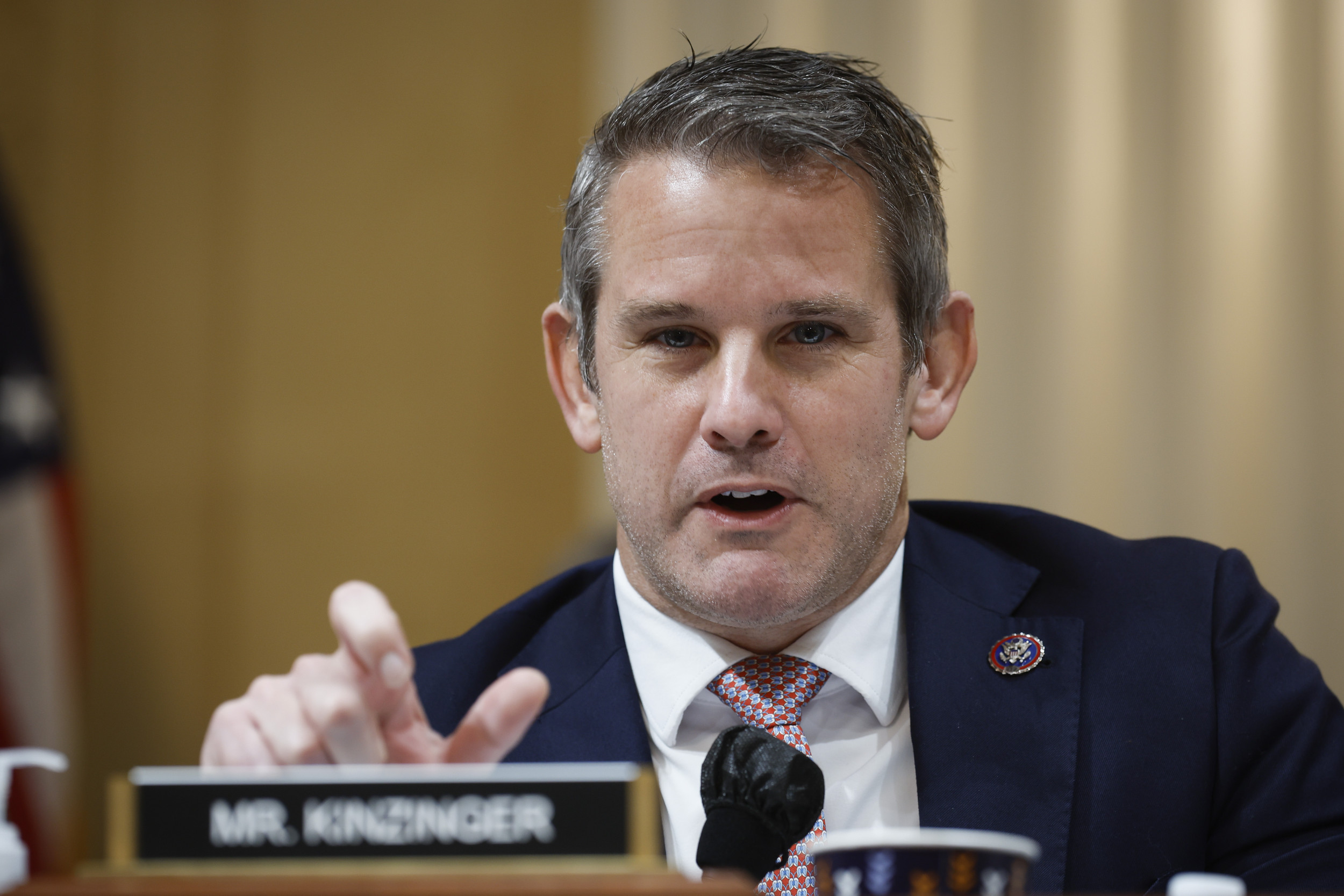
Following the announcement that Representative Jim Jordan, an Ohio Republican, was chosen on Friday as the new nominee for House speaker, former Representative Adam Kinzinger shared his reaction to it on Friday.

House Republicans met Wednesday in hopes of agreeing on which person to vote for to replace California Representative Kevin McCarthy, who drew conservative revolt after working with Democrats on a short-term spending bill to avert a government shutdown. The House voted to remove McCarthy after Representative Matt Gaetz, a Florida Republican, introduced a motion to vacate. While both House Majority Leader Steve Scalise of Louisiana and Jordan decided to run for speaker, Scalise withdrew from consideration on Thursday, leaving Jordan to be chosen as the new nominee.

In a post to X, formerly Twitter, Kinzinger, an Illinois Republican, shared his reaction on Friday to the news by seemingly condemning the choice of Jordan and wrote, “Good job everyone. This country cannot have Jim Jordan as speaker.”

In addition to his X post, Kinzinger posted a video to his Substack detailing the behind the scenes events leading up to Jordan winning the GOP nomination and giving some insight into why he hopes Jordan is not chosen to be the next House speaker.

“I made the prediction that Jim Jordan was going to be the guy. I hope this isn’t the case, I still hold to that and the reason is because, the people that hold out against Jim Jordan are the moderates, kind of the normal folks so to speak and they are the ones pretty quick to collapse because they just want to go along and get along. I mean I was one of them, so I know what that’s like, where you are just tired of the fight,” Kinzinger said.

The former GOP representative had previously stated his thoughts on Jordan becoming the next House speaker. In a Wednesday interview on CNN‘s Anderson Cooper 360, Kinzinger said, “Jim is going to be now the new litmus test of: Are you a true conservative or not? Steve Scalise won’t be. It’ll be Jim Jordan. And so there will be a slow acquiescence of everybody to Jim Jordan. That’s my prediction.”

He added: “I certainly hope, for the country, I’m wrong. But I’ll also say this: If he becomes speaker, it will be interesting to see how a shut-it-all-down kind of guy actually governs a country.”

The criticism towards Jordan comes after former GOP Representative Liz Cheney of Wyoming warned Republicans that nominating Jordan for the speakership could cost them the majority in the lower chamber.

In a post to X on Friday, Cheney condemned Jordan’s close allyship to former President Donald Trump and his alleged involvement in efforts to keep Trump in power after losing the 2020 election. The Ohio lawmaker was previously found by the January 6 House select committee to be a “significant player,” but is not facing any criminal charges.

“Jim Jordan was involved in Trump’s conspiracy to steal the election and seize power; he urged that Pence refuse to count lawful electoral votes,” wrote Cheney, who served as one of two Republicans on the January 6 select committee alongside Kinzinger. “If Rs nominate Jordan to be Speaker, they will be abandoning the Constitution. They’ll lose the House majority and they’ll deserve to.”

Meanwhile, Trump endorsed Jordan last week in a Truth Social post, writing, “He will be a great Speaker of the House, & has my Complete & Total Endorsement.”

While speaking with CNN congressional correspondent Manu Raju in a hallway of the U.S. Capitol after Jordan’s nomination was announced, McCarthy was seemingly confident that Jordan will become the next speaker. After being asked by Raju if the Ohio representative can continue to run for speaker after only receiving 152 votes on the nominating ballot, while a candidate is required to receive at least 217 votes among the House in its entirety, McCarthy responded by saying he feels Jordan will be able to win over more House members.

“Yeah, but he’ll get there. I don’t see a problem with him not getting there,” McCarthy said.

Despite the nomination, Jordan still faces more criticism as House Minority Leader Hakeem Jeffries, a New York Democrat, told reporters on Friday, “House Republicans have just elected a speaker nominee who in 16 years in Congress hasn’t passed a single bill, because his focus has not been on the American people, his focus has been on peddling lies and conspiracy theories and division.”

Newsweek has reached out to Jordan via email for further comment.

Jim Jordan speaker bid shows GOP in "complete chaos": Ex-Republican staffer

0

After Representative Jim Jordan, an Ohio Republican, was chosen this week as the new nominee for House speaker, Tara Setmayer, a former GOP communications director, voiced concern on Saturday about the current state of the Republican Party, describing it as “complete chaos.”

After Kevin McCarthy, a California Republican, was ousted from the speakership in a historic 216-210 vote on October 3 when Representative Matt Gaetz, a Florida Republican, spearheaded an effort to remove him, House Republicans began voting on a nominee to replace him. Both House Majority Leader Steve Scalise of Louisiana and Jordan decided to run for speaker and on Wednesday, Scalise beat out Jordan in a closed-door ballot to become the nominee. However, Scalise shortly withdrew from consideration on Thursday, leaving Jordan to be chosen as the new nominee on Friday, with 152 votes. A candidate is required to receive at least 217 votes to win the position as speaker.

In an MSNBC interview on The Katie Phang Show, Setmayer voiced her disapproval of Jordan becoming the GOP nominee.

“When I was predicting that it was a worst case scenario, I didn’t want to be right about this because that would mean that the House GOP has turned into complete chaos which, well, unfortunately it has devolved into that,” Setmayer said.

She added: “This is just an example of the absolute desperation of the Republican caucus, that Jim Jordan has been nominated for Speaker, it tells you everything you need to know about the degeneration of the House GOP and the party as a whole.”

Setmayer continued to say that she does not think Jordan will win over the entire conference for the position of speaker as she questioned his ability to run the House of Representatives.

The former Republican staffer said that Jordan’s history is a contributing factor, citing his alleged involvement in efforts to keep former President Donald Trump in power after losing the 2020 election as the Ohio lawmaker was previously found by the January 6 House select committee to be a “significant player,” but is not facing any criminal charges.

“He does nothing but stir the pot, he goes after conspiracy theories and oh by the way he was also heavily involved in the attempt to overturn our government in a violent coup plot alongside Trump…So this guy is supposed to be the one that is now going to bring the House of Representatives together and hold the speaker’s gavel,” Setmayer said.

Newsweek has reached out to Jordan and Setmayer via email for comment.

This comes after other Republicans have also voiced their concern after Jordan’s win for nomination.

Both former GOP Representatives Liz Cheney and Adam Kinzinger shared their disapproval of Jordan, stating that if Jordan becomes speaker, it could cause trouble for the Republican Party.

“I made the prediction that Jim Jordan was going to be the guy. I hope this isn’t the case, I still hold to that and the reason is because, the people that hold out against Jim Jordan are the moderates, kind of the normal folks so to speak and they are the ones pretty quick to collapse because they just want to go along and get along. I mean I was one of them, so I know what that’s like, where you are just tired of the fight,” Kinzinger said in a video on his Substack on Friday.

While Cheney also said on Friday that Jordan’s nomination and his alleged involvement in the January 6, 2021, Capitol riot will lead the Republican Party to lose the House majority.

“Jim Jordan was involved in Trump’s conspiracy to steal the election and seize power; he urged that Pence refuse to count lawful electoral votes,” wrote Cheney, who served as one of two Republicans on the January 6 select committee alongside Kinzinger. “If Rs nominate Jordan to be Speaker, they will be abandoning the Constitution. They’ll lose the House majority and they’ll deserve to.”

However, Jordan has already garnered support from some prominent Republicans, including Georgia Representative Marjorie Taylor Greene as she previously stated she would vote for him instead of Scalise.

“I just voted for Jim Jordan for Speaker on a private ballot in conference, and I will be voting for Jim Jordan on the House floor. I like Steve Scalise, and I like him so much that I want to see him defeat cancer more than sacrifice his health in the most difficult position in Congress. I lost my father to cancer and it’s a very serious battle,” she wrote on X on Wednesday.

Trump, the frontrunner in the 2024 GOP presidential primary, also endorsed the congressman last week.

“He will be a great Speaker of the House, & has my Complete & Total Endorsement,” the former president wrote in a Truth Social post.

Donald Trump wants to ban Palestinian supporters from universities

0

As tensions across U.S college campuses continue to rise amid the ongoing Israel-Hamas conflict, students, staff, and administrators have struggled with how to respond, prompting former President Donald Trump on Saturday to call for a ban against Palestinian supporters from universities.

On October 7, Hamas led the deadliest Palestinian militant attack on Israel in history. Israel subsequently launched its heaviest ever airstrikes on Gaza. As of Saturday at least 1,300 people had been killed in Israel, the Associated Press reported, citing the Israeli military. More than 1,500 people had been killed and more than 6,600 had been injured in Gaza, according to the Gaza Health Ministry.

Since the attack, many college students have taken to social media to voice their thoughts and concerns as both pro-Israel and pro-Palestinian student groups across the country have weighed in with statements. However, those statements were soon met with in-person protests, provoking strong reactions from each side.

In a post shared to Truth Social, Trump’s social media platform, the former president on Saturday criticized universities for how they are handling students’ response to the conflict, alleging the deans of the universities are allowing an “open hatred against Israel” to take place.

“What happened in Israel was barbaric! Now American Universities are allowing or enabling the open hatred against Israel and America! Instead of educating our young Americans, Deans stand idly by while subversive groups are calling for a National Day of Resistance. Not only is this antisemitic, it is also anti-American. Students have begged Deans to throw these subversive groups off campus. We banned Nazis, banned Communists, it is about time that we remove these antisemites from our schools or is the Cancel Culture only used against Conservatives?” Trump wrote.

The former president’s response comes after widespread backlash at Harvard garnered attention as dozens of student groups signed a letter last Saturday from the Harvard Palestine Solidarity Committee (PSC), holding Israel “entirely responsible for all unfolding violence.”

The letter has since faced growing backlash from students, faculty, high-profile alumni, politicians, and even Harvard’s president, leading to several groups retracting their support of the letter.

While statements by student groups supporting Palestinians have prompted outrage and fear among the Jewish community, there have been reports of harassment and assaults of both pro-Israel and pro-Palestinian students, according to Reuters.

Trump, who seemingly refers in his Truth Social post to the 1952 Feinberg Law, which prohibits communists from teaching in public schools, but has since ended in 1967, continues to state banning Palestinian supporters from universities is a way to “remove these antisemites from schools.”

However, according to National Public Radio (NPR) who spoke to Eboo Patel, the founder and president of Interfaith America, an organization that works with nearly 1,000 campuses on interfaith issues, the two important things colleges need to do is to recognize “communities of care and cooperation. People are hurting, and words matter,” Patel said.

“We’re not going to minimize the conflict, we’re simply going to say that we are not going to allow the conflict to prevent us from cooperating on other things,” Patel added. “That’s the genius of American college campuses. That’s what college presidents and athletic directors and faculty and staff and students need to keep their focus on right now.”

Newsweek has reached out to Trump’s spokesperson via email for further comment.

Israel updates Gaza on evacuation deadline

0

Palestinians in northern Gaza are scrambling to head south after Israel extended a deadline for the evacuation of the area.

Israel Defense Forces (IDF) told more than 1 million residents of northern Gaza on Friday to flee south within 24 hours, a deadline that expired at 5 a.m. Saturday. The deadline was updated, with Avichay Adraee, IDF spokesperson for the Arab media, issuing a statement that the IDF would allow the safe passage of Palestinians on approved routes between 10 a.m. and 4 p.m. local time Saturday.

Israel has vowed to destroy Hamas, which controls the strip, after its militants killed more than 1,300 Israelis and seized dozens of hostages on October 7. The Israelis have put Gaza under a total siege and conducted air strikes that have left over 1,900 people dead, Reuters reported. One expert told Newsweek that the conflict could have profound implications for the region for years to come.

Adraee’s statement read, according to a translation: “For your safety, take advantage of the short time to move south—from Beit Hanoun to Khan Yunis [around 20 miles]. If you care about yourself and your loved ones, go south as instructed.

“Rest assured that Hamas leaders have taken care of themselves and are taking cover from strikes in the region,” added the post.

Earlier, Israel’s military had dropped flyers in Gaza that read, “terrorist organizations have begun a war against the State of Israel and Gaza City has become a battlefield.”

The flyers called on residents to “evacuate your homes immediately and head to the areas south of Wadi Gaza.” They said people “must not return to your homes until further notice from the IDF,” adding that “shelters in Gaza City must be evacuated.”

“It is forbidden to approach the security wall and anyone who approaches exposes themselves to death,” the flyers said, according to a translation from the Arabic.

By Saturday morning, tens of thousands of Palestinians were estimated to have headed south from northern Gaza, according to the United Nations, which has warned that a humanitarian crisis is unfolding.

Images from Gaza showed people crammed into cars, taxis, pickup trucks and even donkey-pulled carts, while others walked carrying what they could. The Turkish news agency Anadolu reported that staff at the Al-Awda Hospital in northern Gaza said its medical staff would stay put.

The U.S. State Department informed those in Gaza of the possibility of opening the Rafah crossing into Egypt on Saturday afternoon, CNN reported.

Meanwhile, Jordan’s Minister of Foreign Affairs Ayman Safadi said Israel’s displacement of Palestinians would push the region to the abyss of a wider conflict. He added that the blocking of humanitarian aid to Gaza was a flagrant breach of international law.

Jonathan Schachter, a former adviser to Israeli Prime Minister Benjamin Netanyahu, told Newsweek in emailed comments that he believed “we soon will enter the next phase of the war, which will be more intense, more difficult, more costly and more important for the outcomes.

“The conflict extends beyond Israel and Hamas and will have profound implications for war and peace in the Middle East and beyond for years to come,” said the senior fellow of the Center for Peace and Security in the Middle East at the Hudson Institute, New York.

Schachter added that Iran’s support for Hamas, as well as Hezbollah and Islamic Jihad, meant “this was a war between Iran and its terrorist proxies, on the one hand, and Israel, the United States and their partners and allies, on the other.”

How Netanyahu’s intelligence failure could precipitate his downfall

0

With the U.S. engaged in the delicate balance of expressing unequivocal support for Israel in fighting Hamas militants with minimizing civilian casualties, former President Donald Trump ignored diplomatic niceties by condemning Benjamin Netanyahu.

Trump’s assessment that Netanyahu and Israel were not prepared—although he later rolled the criticism back—echoed that of commentators in Israeli media, both mainstream and social, who hold the prime minister directly responsible for the intelligence failures preceding the attacks by Hamas on October 7.

Netanyahu may have vowed that every member of Hamas is a “dead man”, but there are questions over whether his own premiership can survive the biggest breach of Israeli security since the 1973 Yom Kippur War.

“Netanyahu bears overall blame for this catastrophe,” Yossi Alpher, a former Israel Defense Forces (IDF) intelligence officer and ex-senior official with Israel’s intelligence agency, Mossad, told Newsweek. “He should have resigned on (last) Saturday morning when he realised where his policies had brought us.” Newsweek has contacted Netanyahu’s office for comment by email.

Two days after the Hamas attacks, which Reuters reported has so far claimed at least 1,200 Israeli lives, Alpher published on his website analysis that detailed security failures and the political backdrop leading up to the attacks he said Netanyahu created.

Alpher added that it was notable that before a Knesset [supreme state body] vote on controversial judicial reforms removing the Supreme Court‘s power to cancel government decisions it did not like, known as the “reasonableness bill”, Netanyahu had refused to meet with senior intelligence officers. They were attempting to explain the damage to Israel’s deterrent profile.

Alpher said that the campaign of this Netanyahu government “has sought to radically weaken the judicial branch of government in Israel” and the bill, which sparked nationwide protests, “was the culmination of some of their efforts.”

Netanyahu and his allies said that the measures were reforms needed to rebalance powers between the courts, lawmakers and the government. However, Alpher said figures within the armed services and intelligence community believed it had sent “a message of weakness and Netanyahu is responsible for that.”

Within this context, Alpher added that the ruling Israeli right in Netanyahu’s coalition government covets the territory of the West Bank and rejects a Palestinian state there and a two-state solution.

Hamas disputes the legitimacy of the state of Israel, amounting to a shared rejection of a two-state solution, which has been used by Israeli right-wingers to justify coexistence with Hamas in Gaza without political negotiations, Alpher said.

This all explained some of the public’s loss of confidence in Israel’s political leadership and why the IDF’s deployment as an occupying army in the West Bank amid growing numbers of settlers left it unprepared to act quickly near Gaza as the attack unfolded.

To this end, officials in Israel’s internal security service Shin Bet, as well as IDF intelligence, also “share direct blame for not having given an early warning,” said Alpher. He added that he believes their failures will be clarified after the war.

IDF’s Slow Response

As hundreds of Israelis were killed and dozens taken hostage, there are reports of a slow response by the IDF to the areas by the Gaza Strip that Hamas had overrun. “The IDF chief of staff also shares some blame because the IDF performed so poorly around the Gaza Strip on Saturday morning,” said Alpher.

The element of surprise in Hamas’ attack was helped by Israel mistakenly believing in “economic peace” in which Gazans would refrain from violence if they had full stomachs.

Alpher said that Hamas played into this as Israel allowed increased financial aid to Gaza and agreed to let thousands of day-laborers enter Israel.

The belief was that, if Hamas is going to attack, “it’s going to be as part of a broader Islamist coalition together with Hezbollah and additional Iranian proxies and maybe even Iran in the form of Iranian missiles,” said Alpher.

“Here, intelligence had been warning we have to be on the lookout for signs of a multi-front Islamist attack on Israel,” he added. “What was understood here is that Hamas would not attack alone.”

When asked if the prime minister “took his eye off the ball,” senior Netanyahu adviser Mark Regev told Britain’s Channel 4 News that “obviously mistakes were made” and that claims about the army’s response will be investigated. Regev added that there is “strong support for a national unity government” formed by Netanyahu.

Jonathan Schachter, a former adviser to Netanyahu, said how comparisons have been made with the intelligence failures that led up to the Yom Kippur War in 1973. There was an investigation by the Agranat Commission, once the war had finished. The then-Prime Minister Golda Meir was also blamed for the country being caught by surprise. Although she was cleared of direct responsibility, her government faced infighting, and Meir resigned in 1974.

“I think there’ll be a time to investigate, there’ll be a time for accountability and responsibility—but, right now, the time is to fight,” Schachter told Newsweek.

“There’s agreement, which is reflected in the creation of this expanded emergency government, to have as broad a consensus as possible to fight the war,” said Schachter. He is a senior fellow of the Center for Peace and Security in the Middle East at the Hudson Institute.

“There seems to be understanding across the board that now is not the time to be pointing fingers and assigning blame. Now is the time to take care of the task at hand,” Schachter added.

Israel war maps show latest attacks from Gaza

0

Israeli forces have bombarded the Gaza Strip with unprecedented air strikes as maps show the extent of rocket attacks on Israel from the Hamas militants in Gaza.

Israel has vowed to annihilate Hamas after its fighters stormed through Israeli towns on October 7, killing at least 1,300 people in the worst attack on civilians in the country’s history. Palestinian deaths number around 2,200, according to Reuters.

In its daily update on Friday, the independent Washington-based think tank the Institute for the Study War (ISW) produced maps showing how Hamas had continued its rocket attacks into Israel. However, these came at a lower rate of fire compared to previous days as Hamas sought to conserve its rocket stockpile and prepare for a prolonged war.

On Friday, Hamas had targeted northern, central, and southern Israel. Its military spokesman said that the group had fired 150 rockets at Ashkelon, 30 miles south of Tel Aviv; 50 rockets at Sderot, just over half a mile from the Gaza Strip at its nearest point; and also bombed the international Ben Gurion Airport in central Israel. Newsweek has been as yet unable to verify these figures independently.

One ISW map outlined how Hamas’ military wing Al-Qassam Brigades said it had fired an Ayyash 250 rocket more than 120 miles into Israeli territory towards its northern border with Lebanon. The graphic also showed explosions near the cities of Beersheba, Ramla and Tel Aviv. Another graphic from ISW showed how Lebanese Hezbollah said it had attacked four Israeli positions in northern Israel.

The map also depicted clashes between Palestinian militants and Israeli security forces across the West Bank. The ISW said this was “consistent with Hamas’ call for escalation.” There were 32 recorded instances of small armed combat between locals and Israeli security forces or Israeli settlers on Friday, the think tank added.

It comes as the IDF said on Friday that 6,000 rockets have been launched from Gaza. The ISW has said that Hamas and the Palestinian Islamic Jihad (PIJ) have used up around a third of their rocket arsenal since the start of the war.

Meanwhile, Palestinians in the north of the Hamas-controlled Gaza Strip have been told by Israel Defense Forces (IDF) to head south, amid anticipation of an invasion by Israel’s armed forces. Hamas has urged Palestinians to ignore the warning.

IDF spokesperson Avichay Adraee said that Palestinians will have two safe routes to move south; one along the coast, and the other down the centre of the Gaza Strip.

There are growing international concerns of a humanitarian disaster there. The enclave is under siege, and shortages of fuel, vehicles, food and electricity have made it difficult for Palestinians to heed the Israeli order.

Is Egypt’s border with Gaza open? What we know, what we don’t

0

U.S. citizens in Gaza should make their way to the border post linking the south of the Palestinian enclave with Egypt, the U.S. State Department has told Newsweek, amid uncertainty about the status of the Rafah crossing, which has been closed for days.

There is growing condemnation at Israel’s order to residents in the north of Gaza to head south, as the death toll mounts following the attack by Hamas on southern Israel and the subsequent Israeli bombardments of the enclave.

The Israel Defense Forces (IDF) have dropped flyers telling people in Gaza to evacuate their homes ahead of an anticipated invasion. It follows the Israeli pledge to destroy Hamas, which controls the strip to the west of Israel.

Egyptian officials said the southern Rafah crossing would open later on Saturday for the first time in days to allow foreigners out, according to the Associated Press. The news agency cited an unnamed official who said Israel and Palestinian militant groups had agreed to facilitate the departures.

The U.S. State Department said it was “working to secure the safe exit of U.S. citizens from Gaza,” adding that it had told American citizens with whom it was in contact, “if they assess it to be safe, they may wish to move closer to the Rafah border crossing.”

“There may be very little notice if the crossing opens, and it may only open for a limited time,” a State Department spokesperson told Newsweek in a statement on Saturday.

“We will continue to be in touch with private U.S. citizens to determine what assistance we may be able to provide,” the statement added, without specifying whether non-Americans would also be able to leave via the crossing.

However, Arabic language news outlet Asharq said there were reports that Egypt was refusing the passage to U.S. citizens through the Rafah crossing, unless an agreement included the entry of aid into the Gaza Strip.

“Holders of American citizenship received letters indicating that their transportation arrangements and their departure from Gaza through the crossing had been cancelled,” Asharq journalist Mohamed Shohood posted on X (formerly Twitter)

Meanwhile, Palestinian content creator Mohamed Aborjelaa, who has been at the crossing all day, told the BBC that around 500 people holding foreign passports have been trying to get out, with no success. “The border crossing itself isn’t safe; there’s bombing and there’s no shelter,” Aborjelaa told the news outlet.

There has been uncertainty about whether the crossing could be accessible for Palestinians. Egyptian authorities erected temporary blast walls on Egypt’s side of the crossing, fearing a mass exodus of Palestinians, and Egyptian security sources said that Cairo would not accept an influx of Palestinian refugees.

The Egyptian Foreign Ministry had issued a statement on Friday that called for Gaza residents to ignore the Israeli warning to leave their homes and head south. It said this would expose more than 1 million people “to the dangers of remaining in the bare outdoors, with no shelter, facing grave and harsh humanitarian and security conditions.”

Newsweek has contacted the Egyptian Foreign Ministry via email for comment.