
Friday, May 8, 2026
Home Blog Page 29

China’s tourism data paints bleak picture for its economy

0

The Chinese economy remains in the doldrums despite a relative uptick in domestic travel during the eight-day Golden Week holiday.

Experts were closely watching Golden Week this year to get the pulse of the Chinese economy, which failed to surprise observers as domestic travel witnessed slight improvement from pre-pandemic levels.

China’s spending during the Golden Week missed the government’s estimated target published before the holiday began.

Over 826 million Chinese tourists made domestic trips, marking an increase of 71.3 percent and generating over $103.95 billion, according to the Ministry of Culture and Tourism data.

The data reveals that revenue generated missed the target the Ministry of Culture and Tourism set as the tourism data only etched slightly above the 2019 levels at 4.1 percent.

The government had estimated 896 million trips this year and revenue of 782.5 billion yuan ($107 billion), which failed to materialize during the Golden Week.

The tourism-related activities were restricted to the domestic market, unlike in the recent past when Chinese tourists flocked to foreign destinations during the 8-day holiday.

The Chinese state media has presented a relatively positive picture of revenue generated from domestic travel, but more careful analysis paints a bleak picture.

Most Chinese state media outlets have skipped mentioning international travel by citizens, which has been seen as a major topic of discussion in the pre-pandemic era.

This Statista chart shows the quarterly real GDP growth of China (compared to the previous quarter seasonally adjusted).

In 2016, Chinese tourists spent more in the U.K. on shopping than all other international destinations, based on the data compiled from Alipay transactions.

The somewhat positive domestic travel data, though, masks the structural slowdown being witnessed as the troubles posed by the domestic real estate market haven’t gone away.

The Golden Week has traditionally been when real estate sales witness an uptick as home buyers rush to close deals. But this year, despite expectations of recovery, new home sales were down by 20 percent in 35 cities as measured by floor space, according to state media outlet Securities Times.

Between January and August, commercial property sales were down by 7.1 percent year-on-year, according to data published by the National Bureau of Statistics (NBS). The investment into new real estate development was down by 8.8 percent year-on-year, according to NBS.

Earlier, the NBS had reported a slight improvement in the purchasing managers’ index from 50.2 in September to 49.7 in August. However, the PMI data may need to write a positive trend over the next few quarters to hint at a healthy shape of the economy.

Chinese state media isn’t hiding the weak real estate demand, which continues to drive down economic activity.

“The August survey showed that residents’ willingness to buy houses and market confidence has weakened, despite the continued relaxation of policies,” reported Chinese state-owned business outlet Yicai, citing the UBS China Housing Survey.

China has so far given no assurance to the stock market as the shock from the rut created by default of some real estate companies continues to bear down.

On Thursday, Bloomberg News reported that Beijing was considering setting up a state-backed stabilization fund to induce confidence in China’s $9.5 trillion stock market. China’s financial regulator, the China Securities Regulatory Commission, submitted the proposal to China’s top leadership to set up a stabilization fund.

Beijing’s strategy to salvage the Chinese real estate market from falling off the cliff has been a “muddling through strategy.” Investment in real estate and infrastructure was the primary growth strategy for the Chinese economy over the last two decades.

Critics believe a stimulus-like package or similar measures to revive the economy could also lead to speculative trades on the Chinese stock market.

“In a worst-case scenario, the intervention could trigger speculative trades. So it’s not really a good timing for such a vehicle,” Shen Meng, a director for Beijing-based investment bank Chanson & Co, told Bloomberg.

Experts have highlighted that Beijing has so far bet on increasing domestic consumption as a way to kick-start the economy’s engine.

“According to the Politburo, the solution lies in restoring confidence, promoting domestic demand, stimulating innovation, speeding up construction of a modern industrial system, increasing ‘high quality’ growth, and focusing on emerging industries such as electric cars,” wrote Bert Hofman, Honorary Senior Fellow on Chinese Economy, Center for China Analysis, Asia Society Policy Institute.

Hofman laid out a series of painful reforms that Chinese politicians may have to undergo to return to the days of high-growth gross domestic product—which appears allusive at the moment. Hofman highlighted reforms to the financial sector and the pension system to boost the confidence of the domestic audience in a quest to shore up spending.

“None of these reforms would be easy, and each one would negatively impact the interests of various groups, some of which have managed to block serious reform,” Hofman added.


Why Russia’s push to capture Avdiivka "fortress" is unlikely to succeed

0

In the early morning of October 10, Russian forces unleashed an extended artillery barrage on Avdiivka, a Ukrainian fortress town less than 10 miles north of Russian-occupied Donetsk.

By late Tuesday afternoon, Russian armored vehicles and infantry were reported to be advancing into the villages south of the settlement.

Yet by all indications, the Russian offensive is unlikely to succeed in capturing Avdiivka from Ukrainian troops, who have been reinforcing the fortress-like area ever since driving out the Russian-backed separatists who briefly occupied it during the spring and summer of 2014.

While Russia’s invasion of February 24, 2022, saw significant swathes of territory change hands in the Ukrainian north, south, and east, the frontlines around Avdiivka have remained largely static—even as intense fighting has reduced the local population from over 30,000 before the full-scale war to under 2,000 today, according to Ukraine.

The as-yet unsuccessful push to encircle the tiny village has proven to be one of Russia’s costliest offensives to date, with Putin’s forces suffering colossal casualties, including dozens of destroyed tanks and armored vehicles, according to Ukraine’s reports and open-source intelligence analysis.

Rather than representing an attempt at territorial conquest, however, Russia’s push in the Avdiivka direction may have a different goal in mind.

In its October 11 report, the Institute for the Study of War think tank characterized the Russian assault as a “fixing action” intended to prevent Ukrainian units from “redeploying to other areas of the front.”

At a moment when Kyiv’s counteroffensive efforts in the direction of the southern city of Melitopol appear to have stalled, and with the autumn muddy season set to arrive with the next major rainfall, any action that prevents potential Ukrainian reinforcements from redeploying to the south may well work in Russia’s overall favor, despite the heavy losses its forces are reportedly incurring in the operation.

For Kyiv, hope remains that Ukrainian troops may yet succeed in fighting their way through to Tokmak before the ground becomes impassable; or that winter cold opens up new lanes of assault across the Dnieper River north of what used to be the Kakhovka dam; or that Ukrainian artillery and drone strikes will prevent Russian engineers from laying yet another layer of minefields in front of its defensive positions in the south.

But the fighting around Avdiivka may well be buying Russia the time it needs to reinforce the large swathes of territory it still occupies. Russia does not need to capture Avdiivka in order for its localized offensive to prove a success.

The former number two military in the world may not be able to capture a decimated coal-mining town, but in its effort to extend the war for as long as possible, Moscow only needs to ensure that its hold on Tokmak remains firm.

Jim Jordan’s speaker dreams hanging by a thread

0

Ohio congressman Jim Jordan‘s hopes of gaining enough votes to become House speaker after the GOP’s nominated candidate Steve Scalise dropped out of the process already appear doomed.

On Thursday night, House Majority Leader Scalise pulled out of the race to become the new House speaker after it became apparent that he would not garner enough support from his own party to get the 217 overall votes needed for election.

Scalise beat Jordan to become the Republican nomination to replace Kevin McCarthy as House speaker in a 113-99 secret ballot at the GOP Conference on Wednesday.

Following behind-closed-doors meetings, a number of GOP lawmakers said they will not be supporting Scalise for the House speaker despite getting the nomination. However, Jordan, who was endorsed for the position by former President Donald Trump, is also unlikely to get the party fully behind him, with a number of House Republicans saying that they will not back the MAGA congressman if he gets back in the race.

The lack of any clear Republican candidate for House speaker means the current chaos surrounding the voting process has no end in sight, leaving the lower chamber essentially in limbo. Due to the GOP’s narrow 221-212 majority in the House of Representatives, any Republican vying for the House speaker role would need the support of almost all Republican lawmakers in order to achieve the 217 votes required in a full House ballot to be elected speaker.

Following Scalise dropping out of the running, some House Republicans are already saying they will not back Jordan if he puts himself forward again. The chairman of the House Freedom Caucus was already likely to struggle to get the support of more moderate Republicans.

Jordan’s office has been contacted for comment via email.

Rep. Ann Wagner of Missouri replied “HELL NO” in a text message when asked by NBC News if she will now be supporting Jordan for House Speaker.

Rep. Austin Scott of Georgia confirmed in Thursday’s GOP conference meeting that he would not support Jordan.

Florida congressman Carlos Gimenez said he has not changed his mind about wanting McCarthy to return as House speaker. “It didn’t change my mind about how I’m going to vote,” Gimenez told reporters when about not switching his allegiance to Scalise or Jordan. “But it was good and constructive. I think there’s differences of opinion.”

California Rep. Mike Garcia is one of those who said they would support Jordan for House speaker, but admitted the Ohio congressman has a “math problem” with regards to getting enough votes.

“The problem is I think there’s enough people who see what’s happened in the last 48 hours to not support him that we’re going to have the same problem with Jordan that we had with Scalise,” Garcia said.

When asked by NBC if there are five “Never Jordan” votes—the number of votes any candidate cannot afford to lose on the Republican side if all Democrats back House Minority Leader Hakeem Jeffries as expected—New York Rep. Nicole Malliotakis replied: “There’s probably five ‘Never Everybodys’—that’s the problem.”

Jordan himself had urged the GOP to get behind Scalise after he won the nomination for the House speaker role. Jordan said he has not made a decision as to whether he will put himself forward as a candidate again.

“When I decided to run before, I waited until the next day after Kevin [McCarthy] made his decision. I thought that was appropriate. I will do the same thing right now. I’ll wait,” Jordan told reporters on Thursday night.

One potential route out of the current deadlock is granting Speaker Pro Tem Patrick McHenry, who was elected by McCarthy as a temporary replacement until the House Speaker position is filled, expanded powers to move legislation and allow the lower chamber to govern.

Rep. María Elvira Salazar wrote in a letter signed by members of the moderate Republican Governance Group that the GOP should “walk and chew gum” by allowing McHenry to “reopen business” while they seek a permanent solution.

McHenry could yet try to get the GOP to support his becoming House speaker permanently. The North Carolina congressman told reporters it is “up to the will of the conference” when asked if he would run for speaker.

Ohio newspaper mocks Jim Jordan in scathing cartoon series

0

An Ohio newspaper published a series of scathing cartoons featuring Representative Jim Jordan as House Republicans‘ efforts to name a new speaker continue.

Last week, GOP Representative Kevin McCarthy became the first House speaker in U.S. history to be ousted from his position after Representative Matt Gaetz filed a motion to vacate. The disruption has thrown the U.S. House into disarray as the Republicans scramble to find a new speaker, an effort that’s proving just as difficult as it was the last time, when it took 15 rounds of voting to elect McCarthy.

Jordan, who represents Ohio’s 4th District, was among the Republicans interested in the job. He received a glowing endorsement from Donald Trump, but a secret ballot at the Wednesday GOP Conference nominated Scalise instead. Jordan then urged his fellow representatives to elect Scalise, but the latter pulled out of the race Thursday night when it became clear he wouldn’t garner enough support among Republicans to secure the position. It is not clear if Jordan will seek the position again.

After Scalise exited the race, The Columbus Dispatch, the Buckeye State’s second-largest newspaper, published on Friday a cartoon series featuring Jordan. The cartoons were published alongside a report from the paper’s opinion and community engagement editor, Amelia Robinson.

“Editorial cartoonists have captured [Jordan’s] career in politics from before accusations arose that he was very aware former OSU wrestling team doctor Richard Strauss was abusing student athletes to his nasty dust ups with Fulton County District Attorney Fani Willis,” Robinson wrote. “Here are 10 more cartoons about U.S. Rep. Jim Jordan of Ohio in no particular order.”

The cartoons showed Jordan in a variety of situations, such as being squashed by an OSU wrestler and crashing cymbals together and voicing his desire to be part of the January 6 congressional hearings as another figure in the cartoon issues him a subpoena. Various cartoons featuring him with Willis, whose 2020 election investigation in Georgia led to an indictment against Trump, and others.

Newsweek reached out to Jordan’s office by email for comment.

The cartoon series was published a week after the Dispatch published a strong rebuke of Jordan in a letter to the editor headlined “Electing Jim Jordan speaker would be a catastrophe for America.”

“With Trump’s endorsement, I am assuming Rep. Jim Jordan, R-Ohio, will win,” reader Randal Morrison of Columbus wrote in the letter. “That is a catastrophe for America. There is no worse human being to have a leadership position than Jim Jordan. Terrible for policy—Ukraine, the economy, the planet, and justice for those not like him.”

However, Jordan’s likelihood of winning the speakership is low, given that several Republicans have voiced their disapproval of his candidacy as speaker. The Republicans have a razor-thin 221-212 majority in the House, meaning that a speaker candidate must garner nearly total GOP support to secure the position.

Republicans who have spoken out against Jordan becoming House speaker include Representatives Austin Scott, Ann Wagner and Carlos Gimenez. Jordan has secured support from others, including Gaetz.

Should Hamas be prosecuted for war crimes by the international court?

0

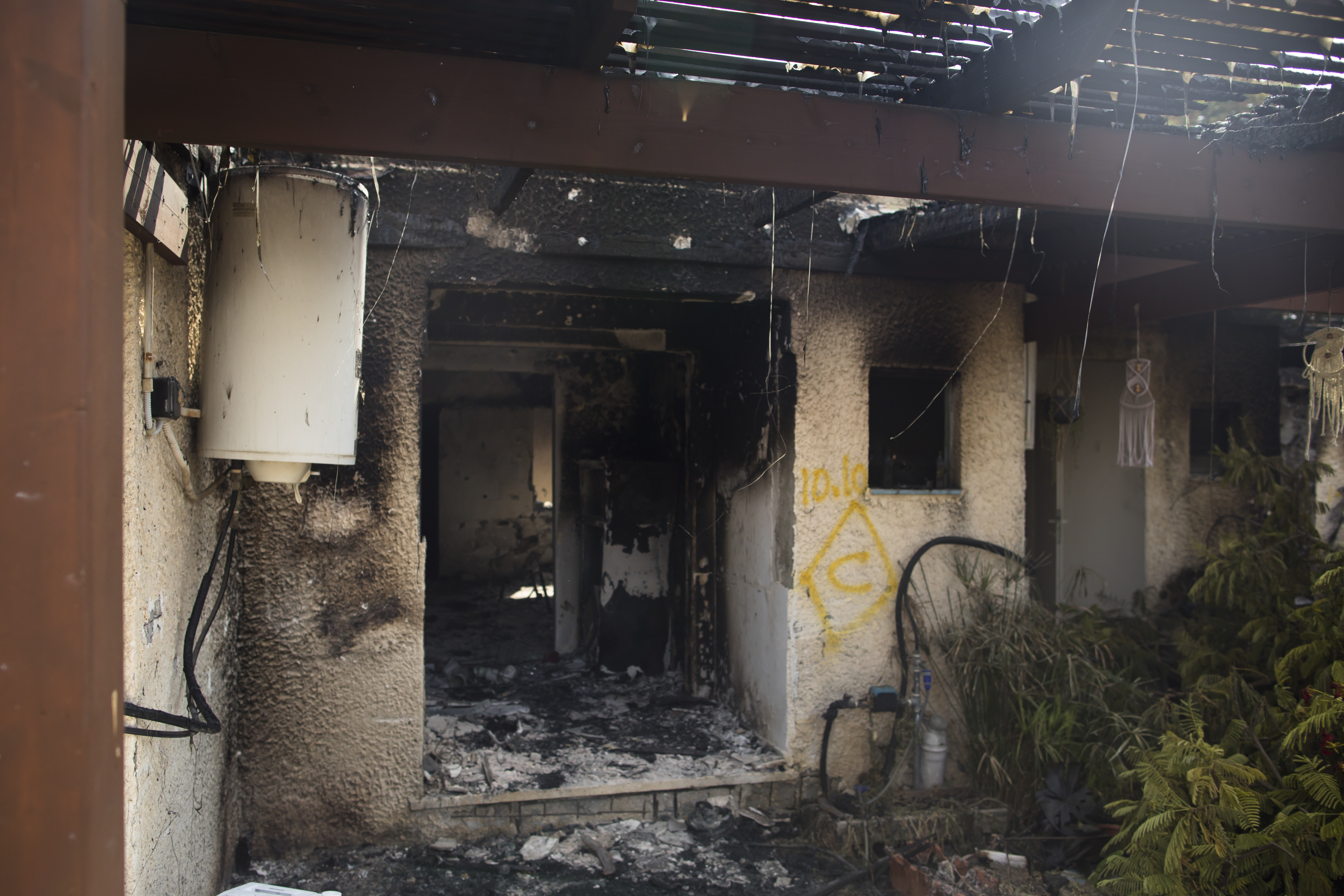
October 7, 2023, was the bloodiest day in Israeli history. As the world now knows, in the early hours that morning, during a Jewish holiday, more than a thousand Hamas terrorists invaded Israel from Gaza, aiming to massacre as many people as possible. By the end of the day, they had murdered over 1,000 Israelis, wounded thousands more and taken about 150 men, women and children as hostages, all with unspeakable savagery.

One of the world’s deadliest terrorist attacks ever, the Hamas assault was also the largest slaughter of Jews since the end of the Holocaust. President Joe Biden, like many world leaders, denounced Hamas’ acts as “pure, unadulterated evil,” but the international response cannot be limited to words alone.

The massacre by Hamas presents the International Criminal Court with a golden opportunity to restore its own flagging reputation by promptly indicting the Palestinian officials and terrorists responsible for the horrific crimes of October 7. The ICC was originally established to prosecute the worst war crimes and crimes against humanity, but two decades of ineffectiveness, professional lapses, political bias and misplaced priorities have frittered away the Court’s goodwill with the public. This is a chance for the Court to switch to the right side of the fight for justice.

As President Biden said, Hamas’ assault is a “violation of every code of human morality.” Among the crimes committed by Hamas terrorists, for which Hamas leadership also bears legal responsibility, are: intentionally directing attacks against the civilian population, intentionally directing attacks against vehicles involved in humanitarian assistance (ambulances), murder and willful killing, forcible transfer and deportation, unlawful confinement and imprisonment, torture, rape, ethnic persecution, enforced disappearance, inhumane acts and other willful acts causing great suffering, taking of hostages, mutilation, outrages upon personal dignity and degrading treatment, use of civilian shields and acts of genocide. All these are crimes listed in the Rome Statute—the ICC’s founding treaty. The crimes are grievous and on a massive scale, and it is evident that no justice is to be had in any Palestinian court. It is precisely horrors like this that the ICC was created to prosecute.

The unprecedented orgy of violence and barbarism against civilians, graphically recorded and celebrated by Hamas, provides ample video, forensic and testimonial evidence for prosecution, as do the proud claims of responsibility by its leadership. Hamas’ own videos—distributed on social media and even utilizing the social media accounts of the victims—document terrorists hunting down and executing children, young partygoers, middle-aged homemakers and elderly Holocaust survivors. Others show terrorists parading corpses and beaten and raped hostages through cheering crowds in Gaza while chanting for the blood of Jews.

Bloodied and mutilated bodies of soldiers and civilians have been found at the crime scenes, many with signs of gruesome torture. Some had been handcuffed and incinerated. Others were beheaded.

Survivors’ accounts, together with videos, document parents and siblings being forced at gunpoint to watch the murder of their children, and vice versa. In one case, a teenage boy, shielded by the bodies of his murdered parents, survived being shot to give detailed testimony by phone to his anxious grandfather in the United States as the murderers continued their killing spree. Together, the documentary, forensic and testimonial evidence of Hamas’ crimes is overwhelming and more than adequate for conviction.

To be sure, there’s room for serious doubt about ICC jurisdiction over Palestinian crimes. There is no Palestinian state and no sovereign Palestinian territory, apparently placing the crimes outside the Court’s territorial jurisdiction. However, in a joint effort with the ICC Prosecutor to produce legal charges against Israelis, Palestinian officials purported to join the Rome Statute in 2015, and in a 2021 ruling, the ICC and its Prosecutor claimed for themselves jurisdiction over the “situation in Palestine.” The Palestinians and the Court have thus neutralized any excuse for inaction on Palestinian terrorism. Although the 2021 ruling has been justly criticized, the Court can hardly turn around now and deny jurisdiction in order to avoid prosecuting Palestinian crimes.

Hamas will certainly try to blunt calls for justice by pointing a finger at Israel. Hamas organs such as the Gaza Health Ministry claim that Israel targets civilians even though Israel’s ethical code and built-in legal review—which requires army lawyers to approve all targeting decisions—makes that a practical impossibility. Hamas allies have likewise claimed that international law forbids Israel’s use of legitimate methods of warfare, such as siege. But these charges against the Jewish state make a mockery of international law, which affords invaded countries like Israel every right to defend themselves, even at the cost of mass collateral enemy civilian casualties, so long as the targets are legitimate. The comparison of Israeli and Hamas actions is morally obscene: Israel’s military emulates legal practices that have been used by NATO forces elsewhere; Hamas’ depraved bacchanal of beheading, rape and carnage, by contrast, is legally indefensible and can be compared only to acts of the world’s worst war criminals in recent decades.

The Court has shown itself capable of acting speedily when necessary. In March, the ICC issued lightning-quick arrest warrants against Russian President Vladimir Putin and mid-level Russian officials for crimes committed in Ukraine including the kidnapping of Ukrainian civilians. It is true that the ICC had a head start on the Russia warrants, because its Prosecutor had already begun a preliminary investigation on different accusations related to the 2014 Crimea invasion. However, the same is true for potential warrants against Palestinian terrorists, as the ICC opened its preliminary investigation on “the situation in Palestine” in January 2015. Should it decide to, the ICC can issue arrest warrants for senior and mid-level Hamas officials within days, or weeks at most.

Saturday’s attacks represent a level of barbarity shocking even for Middle East terrorism and modern total warfare. Unless its leaders and terrorists face serious punishment, terrorist organizations around the world will be emboldened to emulate Hamas’ campaign of massacre, rape, hostage taking and brutality. The ICC has been granted a unique chance to redeem itself and restore its credibility as a genuine institution of international justice. Should it fail to rise to the occasion, the ICC will have proved again that its detractors are correct that it is a politicized, biased and ineffective entity.

Avi Bell is a professor of law at Bar Ilan University and the University of San Diego. Adv. Avraham Russell Shalev is a lawyer and a researcher at the Kohelet Policy Forum.

The views expressed in this article are the writers’ own.

Gaza evacuation map reveals difficulties in relocating 1.1 million people

0

The Israel Defense Forces (IDF) has given residents of northern Gaza 24 hours to evacuate further south in a sign that it is preparing for a large-scale offensive on Gaza City after last weekend’s surprise attacks by Hamas militants.

Stéphane Dujarric, a United Nations spokesperson, confirmed to the Associated Press that it had received a notification from the Israeli government that it was calling on 1.1 million civilians to leave their homes—a move he described as “impossible” in the timescale without “devastating humanitarian consequences.”

Newsweek reached out to the IDF via email for comment on Friday.

Aid organizations have already warned of a worsening crisis in the region after Israeli Defense Minister Yoav Gallant ordered a “complete siege” of Gaza, including the cutting off of water, food and energy supplies.

Several have now said the mass movement was not feasible under the current circumstances, which have seen the Israeli Air Force launch intensive air strikes on targets in the Palestinian exclave after last weekend’s attacks.

Around 1,500 Hamas and Islamic Jihad militants staged armed assaults on Israel on Saturday, including the killing of civilians. Israel subsequently launched its heaviest-ever airstrikes on Gaza. As of Friday, at least 1,300 people had been killed in Israel and 1,530 people killed in Gaza, according to the AP.

Some 423,000 people are thought to have been displaced by the air strikes, the U.N. said on Thursday. The IDF has been warning civilians in areas about to be hit to leave and has said Hamas houses military targets within civilian populations.

On Friday morning, the IDF confirmed it had told residents in Gaza City to leave their homes and head south of the Gaza River, describing it as “for your own safety and the safety of your families.”

“You will be able to return to Gaza City only when another announcement permitting it is made,” the IDF said in a statement. “Hamas terrorists are hiding in Gaza City inside tunnels underneath houses and inside buildings populated with innocent Gazan civilians.”

However, Hamas, which has de facto ruled the exclave since 2006, reportedly told civilians to defy the order, accusing Israel of “trying to spread false propaganda to sow confusion among the residents of Gaza.”

A map of the regions of Gaza, based on U.N. population figures from September, shows that around 749,000 live in or around Gaza City, while a further 444,000 are based in North Gaza—a combined total of 1.2 million. While hundreds of thousands have already been displaced, the evacuation order is calling around half of Gaza’s population to shift southwards in one day.

As one of the most densely-populated places in the world, there are already more than an estimated 1 million people in Gaza’s southern regions, posing questions of how those fleeing the north will be housed until they can return.

U.N. aid workers have been told to leave northern Gaza for Rafah, a city further south. Nebal Farsakh, a spokesperson for the Palestinian Red Crescent in Gaza City, told the AP that there were patients in hospitals who could not be moved.

On Thursday, the World Health Organization said there had been a “complete blockade” of humanitarian aid entering Gaza and called for a humanitarian corridor to be opened.

“Hospitals in Gaza are at a breaking point,” Tedros Ghebreyesus, the agency’s director general, wrote on X, formerly Twitter, on Friday. “Without immediate entry of aid, essential health care services will come to a halt.”

But Egypt, with whom Gaza shares its southern border near Rafah, has resisted calls to allow Palestinian refugees passage into the Sinai Peninsula. President Abdel Fattah el-Sisi said on Thursday that Palestinians must “remain on their land,” according to The New York Times.

Melanie Ward, the chief executive of Medical Aid for Palestinians, told The Guardian that the air strikes on Gaza and the Israeli fuel blockade had made the evacuation of so many people impossible at such short notice.

“Even if they wanted to go, how are they supposed to move?” Ward said. “The roads have been bombed and destroyed. The bombing is continuing. Fuel has been blocked or is under siege so vehicles do not have fuel. Where are they supposed to go and how are they supposed to move? What about elderly people and the disabled?”

‘Dehumanization, lack of empathy for Palestinians is alarming, dangerous’

0

The scale and brutality of Hamas’s grisly attack on Israel last Saturday, in which at least 1,300 Israeli men, women, and children were brutally murdered, has understandably triggered a massive outpouring of sympathy and solidarity with Israel from around the world, particularly in the United States, Europe and other western nations.

Meanwhile, Palestinians in Gaza are also dying in disturbingly large numbers. In response to the mass terror attack, Israel launched a massive aerial bombardment of Gaza, the most devastating the besieged enclave has ever seen. Already, 1,799 Palestinians have been killed, including 583 children, and 6,000 injured. Entire neighborhoods have been leveled, leaving over 423,000 internally displaced.

And yet, there has been no similar outpouring of sympathy for Palestinians. In fact, the U.S. and European powers have resisted formal calls for a ceasefire or even expressions of concern for Palestinian civilians, effectively giving Israel a greenlight to conduct its military operation as it sees fit. Even Israel’s decision to cut all water, food, fuel and medical supplies to Gaza—considered a grave war crime under international law and something western officials have elsewhere decried as “acts of pure terror”—elicited no protests from western governments and even occasional defenses.

Even public displays of sympathy or solidarity with Palestinian victims are considered beyond the pale, widely condemned by elected U.S. officials as “cold-hearted” or even pro-terrorist. In the zero-sum environment of U.S. politics, only Israeli victims are worthy of being acknowledged.

The message is clear—the lives, suffering and humanity of Palestinians are less worthy than the lives, suffering and humanity of Israelis. This basic inability of U.S. and other western officials to express empathy with Palestinians or acknowledge their suffering is both alarming and dangerous given what Israel is capable of and already carrying out on the ground.

President Biden in particular, whose sincere and heartfelt solidarity with Israelis has been palpable, has been conspicuous in his inability to express any sort of empathy toward Palestinians—something even George W. Bush managed to do during the worst days of the Second Intifada. More alarming still is the dehumanizing and even genocidal rhetoric from Republican leaders to “level the place” or referring to Palestinians “savages” that “have to be eradicated.” The facts that the attacks occurred in the context of the deep structural violence of a suffocating 16-year-old blockade and 56 years of Israeli military occupation, and all the indignities and deprivations they entail, are dismissed as irrelevant at best or moral equivocation at worst.

Indeed, we are told that there is no “moral equivalence” when it comes to the killing of innocents and the basic right to self-defense. While this is certainly true in principle, determinations of what is or is not considered “moral” are usually based less on the actions of the parties than on their identities. Thus, in Biden’s words, “terrorists…purposefully target civilians,” while democracies like the U.S. and Israel “uphold the laws of war.” In other words, Israelis, in contrast to Palestinians, are incapable of committing atrocities by virtue of who they are—an idea that is both ahistorical and fundamentally racist. Moreover, self-defense is not unlimited—as we know from Israel’s own record during this and previous conflicts, including indiscriminate bombings, reckless disregard for civilians, the use of prohibited weapons and other war crimes.

The current environment is especially ripe for atrocities given the unprecedented intensity of Israel’s ongoing assault on Gaza and the inflammatory rhetoric of an Israeli political and military leadership motivated by a combination of trauma, humiliation and a stated desire for “vengeance.” When the Israeli defense minister refers to two million Palestinians in Gaza as “human animals,” anything and everything becomes possible. Likewise, threats by Israel’s leaders to turn Gaza into a “deserted island” or that “Gaza will be city of tents,” should be taken seriously, particularly when Israel has both the means and the motive to deliver.

The lack of outrage over the recent Israeli order for the entire population of northern Gaza, more than a million people, to evacuate south of the strip, which many view as a step toward mass expulsion and a prelude to deliver on the promise to “flatten” Gaza, affirms the status of Palestinians as a “lesser than” set of humans.

American and European officials who see themselves as champions of liberal and egalitarian values will no doubt chafe at the suggestion that they place greater value on some lives over others. But how else are we to explain U.S. and EU indifference to Israel’s use of starvation as a weapon, or their ability to countenance the violent deaths of 500 children under the anonymized banner of “collateral damage”? Or to a 16-year blockade that, according to the United Nations, has already made Gaza “unlivable”? Or the ease with which inflammatory—and false—claims of decapitated babies and mass rapes were uncritically spread by U.S. and western media and officials, including the president himself.

Compassion and empathy are not zero-sum commodities, however. It is possible to grieve and honor the hundreds of Israeli women, children and men killed or injured in last Saturday’s brutal attack without simultaneously devaluing the lives, suffering and basic humanity of Palestinians. In fact, any effective response to the current crisis would demand that we do so.

Khaled Elgindy is the director of the Middle East Institute’s Program on Palestine and Palestinian-Israeli Affairs and an adjunct professor in Arab Studies at Georgetown University.

The views expressed in this article are the writer’s own.

What’s next for Congress after Scalise drops from Speaker race?

0

The House remains far from choosing its next Speaker to replace ousted Congressman Kevin McCarthy after the leading heir apparent, Republican Majority Leader Steve Scalise, dropped from the race last night despite a majority of GOP lawmakers backing him on Wednesday.

“Our conference still has to come together and it’s not there,” the Louisiana Republican said on Thursday. “There are still some people that have their own agendas. And I was very clear—we have to have everybody put their agendas on the side and focus on what this country needs.”

While Scalise stressed that America needs a Speaker—Congress cannot pass legislation and act on priorities like funding the government and aiding Israel and Ukraine until one is chosen—he said that House Republicans face “schisms that have to get resolved.”

The conservative holdouts who refused to back Scalise didn’t appear to have a problem with the man himself. Rather, their issues appear rooted in opposition to Congressional norms and leadership as a whole. Scalise, who serves as Republican Majority Leader, has been a member of the party’s upper ranks since 2013.

Part of the terms McCarthy agreed to in his quest to become Speaker included commitments to provide rank-and-file members with greater influence. His ousting came after he worked with Democrats to avert a government shutdown that some members of the hard right opposed.

While Scalise may be more popular with some conservatives than McCarthy, Brian Brox, a professor with the Department of Political Science at Tulane University, said Scalise is similar to McCarthy in that he would be inclined to work with Democrats when necessary.

“I don’t think that the far right necessarily distrust Scalise as a person, but they do have a lot of distrust about the way that the House is going to operate,” Brox told Newsweek. “I haven’t heard anything from Scalise in the last week or two that suggests he’s going to drastically shift more in the very Conservative’s favor.”

One person whom the hard right seems more optimistic about is Scalise’s original challenger for the speakership, Congressman Jim Jordan of Ohio, who lost to Scalise in a 113-99 vote. Jordan, founding chair of the conservative Freedom Caucus, is a strong ally of Donald Trump and a popular voice in conservative media.

Republican Congressman Chip Roy of Texas, policy chair of the Freedom Caucus, expressed support for Jordan Thursday on the conservative Glenn Beck podcast, saying he’s “not of the swamp,” the term used to generally describe malpractice in Washington.

Despite support from Conservatives, however, moderate lawmakers may be reticent to support Jordan, who Punchbowl News reports is already making calls regarding a speakership bid. According to the outlet, at least five GOP lawmakers have come out against a Jordan speakership. This would appear to leave Jordan one vote shy of the 217 votes needed to become Speaker, assuming all lawmakers are present and voting “yes” or “no.”

If Jordan cannot win the votes, it’s possible other members of leadership could make a run, like House Majority Whip Tom Emmer of Minnesota or House Republican Conference Chair Elise Stefanik of New York, but they could face opposition similar to Scalise and McCarthy.

In the meantime, Republican Congressman Patrick McHenry of North Carolina will continue to fill the role of Speaker pro tempore until a new leader is selected. While that role is largely ceremonial and focussed on overseeing the vote for a new Speaker, Sarah Binder, a senior fellow in Governance Studies at The Brookings Institution, said McHenry could be granted additional powers.

If Republicans cannot decide on a new Speaker and Democrats do not offer the votes needed to support a consensus candidate who’d consider the interests of both parties, the House could vote to grant McHenry additional powers to ensure the lower chamber functions while Republicans decide their next leader.

“I don’t see any procedural or parliamentary limitation to McHenry, or those around him, encouraging him to get the House back into session,” Binder told Newsweek. “If someone were to challenge him on the floor, then it could essentially come to a vote of the whole House, and then the whole House would decide, does the Speaker pro tem have these powers that he’s exerting.”

Biden announces new childcare plan: Who qualifies?

0

The Biden administration said on Thursday that it will grant more than $13 million to higher educational institutions across the country to assist with campus childcare programs for parents enrolled in classes.

The nearly three dozen schools that will receive support include Jacksonville State University in the southern state of Alabama, the University of Massachusetts Amherst, Atlanta Metropolitan State College in Georgia and University of Delaware.

One in five students in the U.S. are parents and 42 percent of student parents tend to go to community colleges, part of the reason some of the childcare funding announced will go to several community colleges.

“I am a big believer in campus child care programs because I’ve seen how they break down barriers to upskilling and attaining postsecondary education for parents with young children—bringing the American Dream within reach for families across America,” education secretary Miguel Cardona said in a statement.

Childcare has emerged as a costly expense for households with Americans now forced to spend a third of their income on such services, research shows. The Biden administration had introduced childcare benefits through its COVID-era stimulus plan the American Rescue Plan, but that ended in September and could lead to the closure of thousands of daycare centers.

The sector also has struggled to recruit enough workers partly due to low pay, according to the U.S. Department of Labor, contributing to the emergence of “childcare deserts” where parents simply have no access to such help.

Better pay for childcare workers

The funding made available Thursday will ask institutions to show how they plan to pay higher wages for childcare workers who typically tend to earn about $13 an hour, the Department of Labor says.

The education department said that it also gave priority to institutions that planned to improve care for low-income parents and will raise pay for early childhood teachers.

Research shows that the bulk of childcare often falls to women, forcing them to pause their careers to the detriment of the economy.

A recent study from Oxford Economics showed that more women working could help the U.S. economy avoid a recession. The biggest obstacle to more women staying in their jobs compared to men and pursuing ambitious career goals is having to take on family responsibilities, such as caring for their children, the study said.

Data shows childcare prices hit families’ wallets to the tune of thousands of dollars. Other studies show that in some cities in America, it can cost more than $500 a week for the service.

“Higher childcare prices are especially detrimental to maternal employment as mothers’ employment drops in areas with more expensive child care, even in places where women’s wages are higher,” the labor department has said.

George Conway outlines plan to topple Donald Trump

0

George Conway, a former Republican lawyer, has suggested that the way for the Democrats to stop Donald Trump from regaining the keys to the White House is to “make him crazy” by waging a “psychological war” against the Republican frontrunner for the party’s presidential nomination.

Speaking at a summit about stopping the former president from successfully seeking a second term hosted by The New Republic, the attorney-turned-anti-Trump activist argued riling the at-times reactionary politician could make him go off-message and potentially even break a gagging order in relation to a New York fraud case he is embroiled in.

“I disagree with some of the critiques that you hear, I think predominantly from the left, about ‘You don’t give him oxygen; you don’t give him airtime,'” he told the progressive magazine. “No. You give him more. Show everybody the crazy.”

The estranged husband of former Trump adviser Kellyanne Conway has long been a vocal critic of the former president since 2018, and recently described him as a “sociopathic criminal” whose supporters have “addicted themselves to [his] lies.”

Newsweek approached the Trump campaign via email for comment on Thursday.

Speaking on Wednesday, Conway suggested Democrats could run TV ads in the areas Trump travels to on subjects that were likely to hit a raw nerve with the former president.

“He knows he’s not that smart, he knows he’s not that rich, he knows that he’s not that good,” the lawyer and Never Trump activist reportedly claimed. “And so, if you go and attack him for the things he knows he is not deep down, it makes him crazy.”

In particular, Conway noted Trump’s ongoing legal troubles as a potential source of attack ad material, given the former president was issued a gagging order by Judge Arthur Engoron, prohibiting him from commenting publicly about court staff involved in the fraud case brought against Trump, his associates and some of his businesses by New York Attorney General Letitia James over allegations he overvalued his assets to secure loans and business deals after he criticized an attorney on social media.

Trump has also been warned about his public statements by a judge in the federal criminal case against him regarding allegations of election interference and has been ordered by another judge in Manhattan against publishing evidence on social media in relation to a case alleging he falsified business records while making hush money payments to adult film star Stormy Daniels.

In all the cases, Trump has pleaded not guilty and denies any wrongdoing.

“The more he gets attacked, the more he will talk about things he shouldn’t be talking about,” Conway told The New Republic. “I think you could even get him thrown into jail by running the right ad.”