Saturday, May 9, 2026
Home Blog Page 48

Israel’s Iron Dome threatened by precision-guided munitions

0

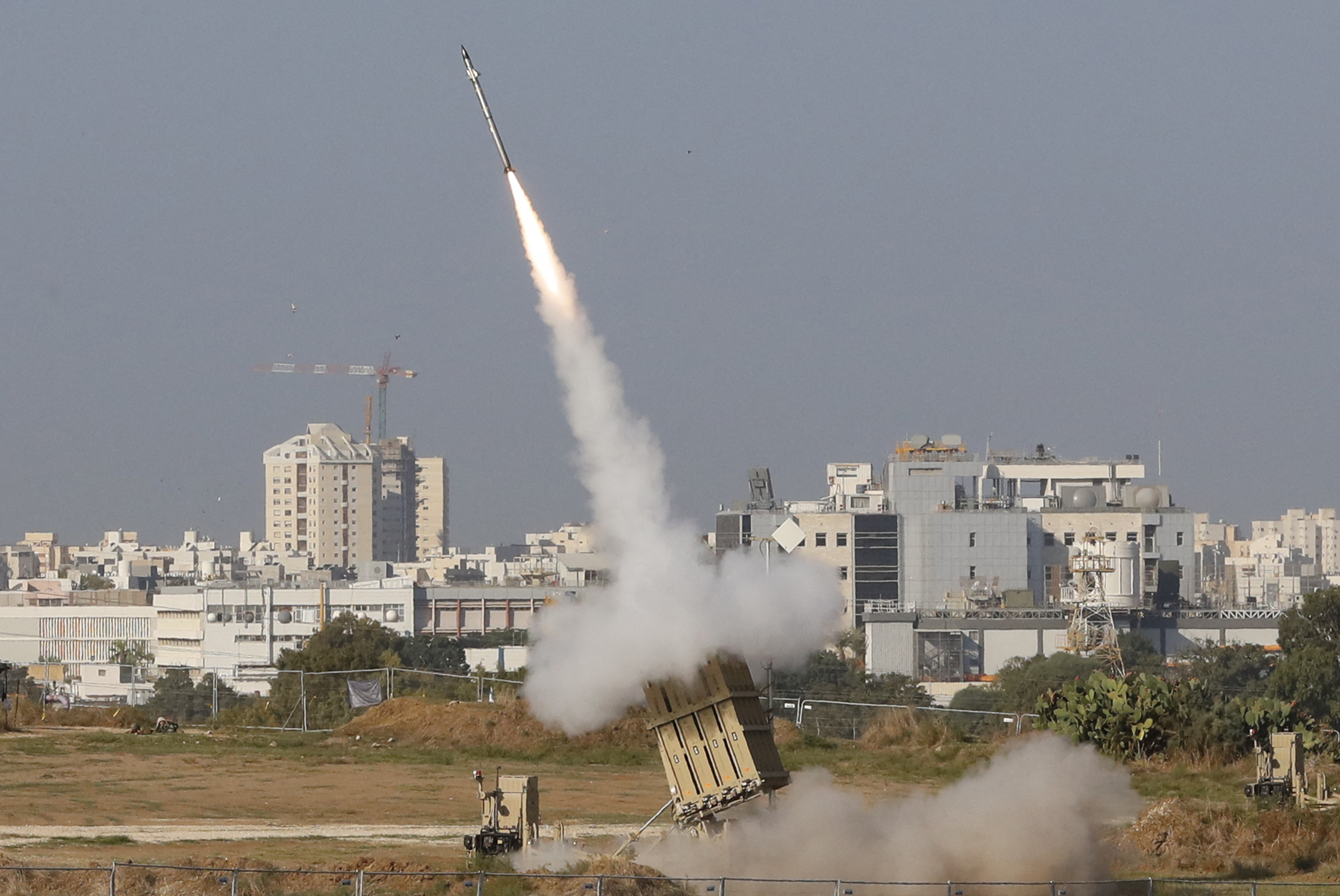
Israel’s Iron Dome could be susceptible to precision-guided munitions launched by its enemies based on how the defense system was designed, arms experts told Newsweek.

On Saturday, Hamas, an armed wing of the Palestinian Islamic political party, fired rockets from Gaza, which it controls to Israel’s southwest, leading to the reported deaths of 700 Israeli citizens and 400 deaths in Gaza, according to the Associated Press. It has been described as the deadliest attack on Israeli soil in decades.

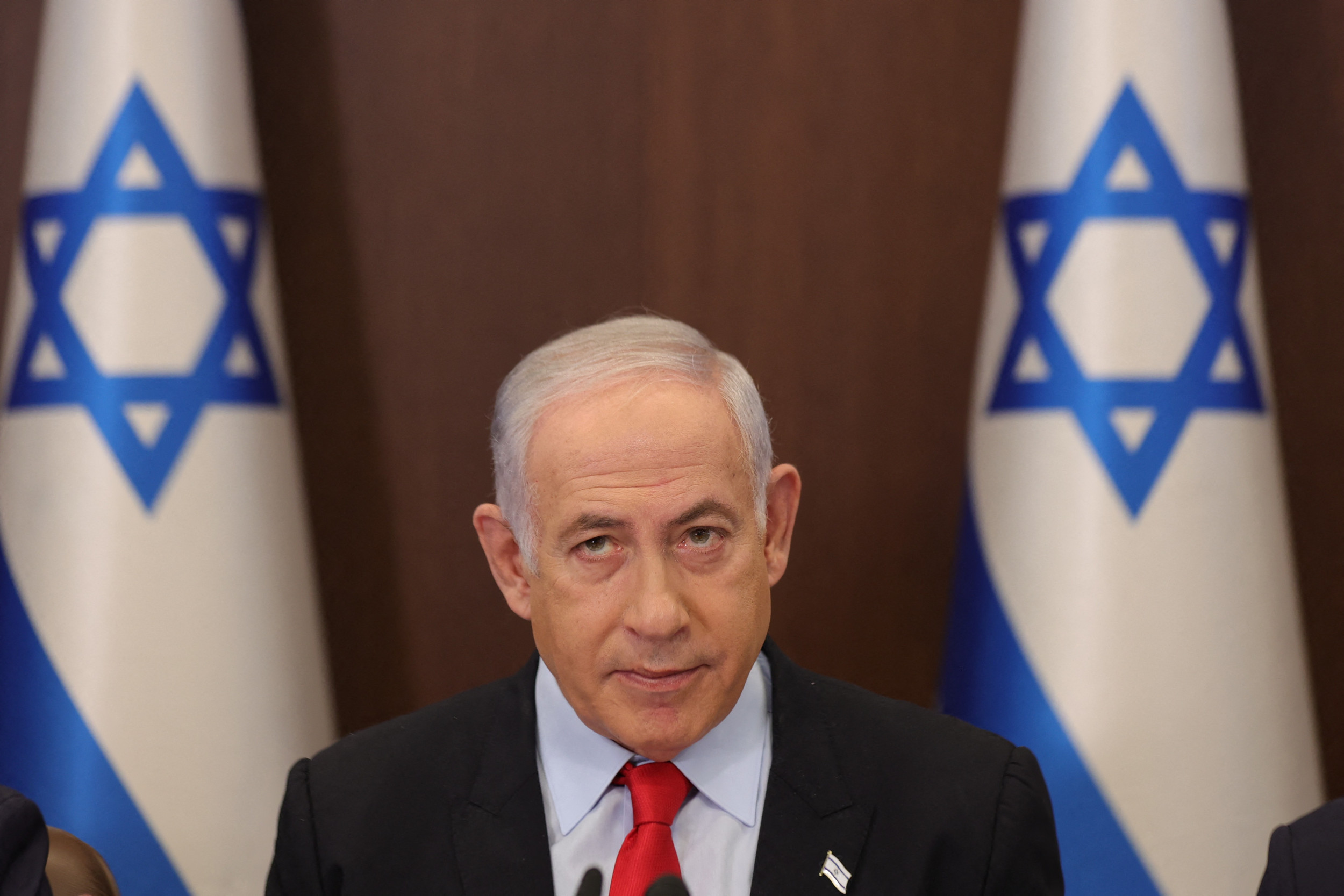
Israeli Prime Minister Benjamin Netanyahu called the attack a new war, and there since has been speculation about precision-guided munitions being accumulated and used in the future by Hezbollah, the Lebanese Shiite Muslim political party with an armed wing of the same name, because of Israel’s inability to potentially deter such attacks.

“The Iron Dome was designed to defend against the proximate threat to Israel in the last 20 years or so, which is Hamas firing rockets from Gaza and other places on to Israeli territory,” John Erath, the senior policy director at the Center for Arms Control and Non-Proliferation, told Newsweek via phone. “So, it’s designed to work against ballistic things.

“Guided munitions, by definition, are not ballistic. It’s not what the Iron Dome is optimized to stop.”

The all-weather Iron Dome air defense system was first used in March 2011. Developed by Rafael Advanced Defense Systems and Israel Aerospace Industries, it was designed to identify and destroy short-range missiles and artillery shells fired from roughly 2.5 to 43 miles away and directed at Israeli territory by Hamas and Hezbollah.

It is composed of a launcher, interceptors, a ground-based radar detection system and a control system. Estimated to possess an 85 percent to 90 percent success rate that includes defending against simultaneous attacks, the system essentially locates a rocket in flight. A rocket is fired by the Iron Dome in defense, usually intercepting the missile at a high altitude and preventing any type of casualties or major calamities.

Erath said that while the Iron Dome has shown positive results to defend against drones, for example, it remains unclear what kind of munitions Hezbollah would hypothetically be using to target Israel. Hezbollah gets its systems from Iran.

“Iranian weapons are knockoffs, mostly of Chinese designs, which some of them are knockoffs of Russian design,” Erath said. “It’s a knockoff of a knockoff, so it’s probably not that good.

“But I’m speculating wildly because the Iron Dome was initially designed to react to short-range threats, different kinds of weaponry.”

The question of continued escalation could be determined by Hezbollah’s intent, he added.

“If Hezbollah shoots anything at them, the Israelis will shoot back,” Erath said. “That’s happened before, that’s a given. The thing to watch is what Hezbollah would do with guided munitions. As the name suggests, guided munitions are designed to hit specific targets. They’re what you would use to strike a military outpost or base or some kind of target. They’re not like what Hamas has typically used to fire in Israeli cities, which is a weapon of terror.

“So, if Hezbollah is acting in support of a military ally, in a military sense, then it would be using these things to target military targets in Israel. If they’re firing them indiscriminately at Israeli cities, that’s not what these things are designed for. They’re being used as weapons of terror and that’s basically a war crime.”

And if such munitions are used in that regard, he said Israel would probably react militarily by targeting the munition launchers and launch sites in return.

“If they’re being used as weapons of terror against civilian population centers, that’s going to probably lead to a stronger response—and it should,” he said.

Bill Hartung, senior research fellow at the Quincy Institute, a think tank in Washington, D.C., told Newsweek via email that it remains unknown if precision-guided munitions could damage or disable the Iron Dome.

CNN reported on Sunday that Israel had already requested precision-guided bombs and additional interceptors for the Iron Dome from the U.S., citing sources that included an Israeli military official and a U.S. defense official.

After the U.S. contributed about $1.6 billion toward the Iron Dome and Israel’s defense between 2011 and 2021, Congress approved the allocation of more money in 2022 after concerns by Republican Senator Rand Paul held up the legislation for months.

Hartung agreed with Erath that such aggression would likely provoke a major Israeli military response targeted at Lebanon, “with air strikes at a minimum.”

“There might be limits on such a counterattack given the allocation of substantial Israeli personnel and weaponry towards Gaza, but I think that would depend on how long any counterattack on Lebanon was sustained,” Hartung said.

Newsweek reached out to the Pentagon via email for comment.

Hamas fighters wiped out by Israel in border attack, video shows

0

A video appearing to show Hamas militants being targeted by the Israel Defense Forces has been posted online as the outburst of violence in the Middle East enters its third day.

In the first part of the video, which may be upsetting for some readers, several indistinct figures are visible, in the process of walking across an unspecified open area. What looks to be an air strike engulfs them. Subsequent footage captures what appear to be air strikes on other individuals, vehicles and buildings.

While the video was posted by the Israel Defense Forces on YouTube, Newsweek could not independently verify where, nor when, the footage was captured. Official videos, videos from those caught up in the fighting, and propaganda videos have proliferated during the conflict, fueling concerns about misinformation spreading across social media. Israeli authorities have been contacted for comment via email.

On Saturday, Palestinian movement Hamas launched its most deadly attacks on Israel in years, firing rockets from Gaza as its fighters waged a land, air and sea assault. Israel then carried out strikes on Gaza, which is controlled by Hamas, declaring that it was now “at war.”

Israel’s security services have been heavily criticized for failing to anticipate the assault, dealing a blow to the Israeli military’s reputation for effectiveness.

During the conflict, numerous videos purporting to show the actions of Hamas and Israel have been shared on social media. Several of these have already been shown to be fake or misleading. One video, posted on X, formerly Twitter, was titled “BREAKING: Israeli Air Force is striking terror targets in Gaza.” However, a fact check by Reuters showed that the footage was actually from May 2023.

Another video on X was titled “Breaking: Israeli Defence forces are now evacuating Air Bases near Gaza as thousands of #Hamas #terrorists flood into Israel. The situation is deteriorating rapidly.” Reuters found that the footage, which shows two jets being transported by truck, was from September.

Such claims have intensified concerns over how the conflict is being portrayed online as rhetoric from both sides and their supporters escalates.

“We are embarking on a long and difficult war,” Israel’s Prime Minister, Benjamin Netanyahu, said in a statement on Sunday.

Hamas spokesperson Khaled Qadomi told Al Jazeera that the movement wanted the “international community to stop atrocities in Gaza, against Palestinian people, our holy sites like Al-Aqsa [mosque in Jerusalem].”

All these things are the reason behind starting this battle,” he said.

“This isn’t about Al-Aqsa, this is about Hamas planning and executing, so far, unfortunately, it appears quite well, a pre-planned attack into Israel,” IDF spokesperson and reservist, Lt. Col. Jonathan Conricus, said on Saturday.

At least 700 people have reportedly been killed in Israel and more than 400 in Gaza, with thousands more wounded, the Associated Press said.

In an updated video address early on Monday, Conricus described the situation in Israel as “dire,” adding there was fighting ongoing in southern Israel as Israeli forces worked on finding Hamas fighters who had crossed over the border.

“We assess that there were approximately 1,000 terrorists who participated in yesterday’s invasion of Israel,” he said. Around 700 Israeli military personnel and civilians have been killed, and more than 2,100 have been wounded, Conricus said. “Unfortunately, there is a high number of critically wounded people who may not make it,” he added.

“This could be a 9/11 and a Pearl Harbor wrapped into one,” he then said. “We have amassed around 100,000 reserve troops who are currently in southern Israel,” he added, saying Israel was working to make sure Hamas could not govern the Gaza Strip to the west of Israel.

Another IDF spokesperson said at 8:30 a.m. local time on Monday that the Israeli military had carried out four waves of air strikes in the Gaza Strip in the previous 20 hours, attacking more than 800 targets.

“Between 50-60 fighter planes participated in each attack wave,” the Israeli military said.

Fighting was continuing in the southern Israeli city of Sderot and at several checkpoints, Hamas representatives said on Monday.

Conricus said on Monday that “many, many Israelis” were being held hostage in Gaza, but that the Israeli military could not yet confirm a number.

A senior Hamas official said the movement had captured more than 100 people who were now in Gaza, Al Jazeera reported on Monday.

Israel air force "dropped 2,000 weapons, 1,000 tons of bombs" on Gaza

0

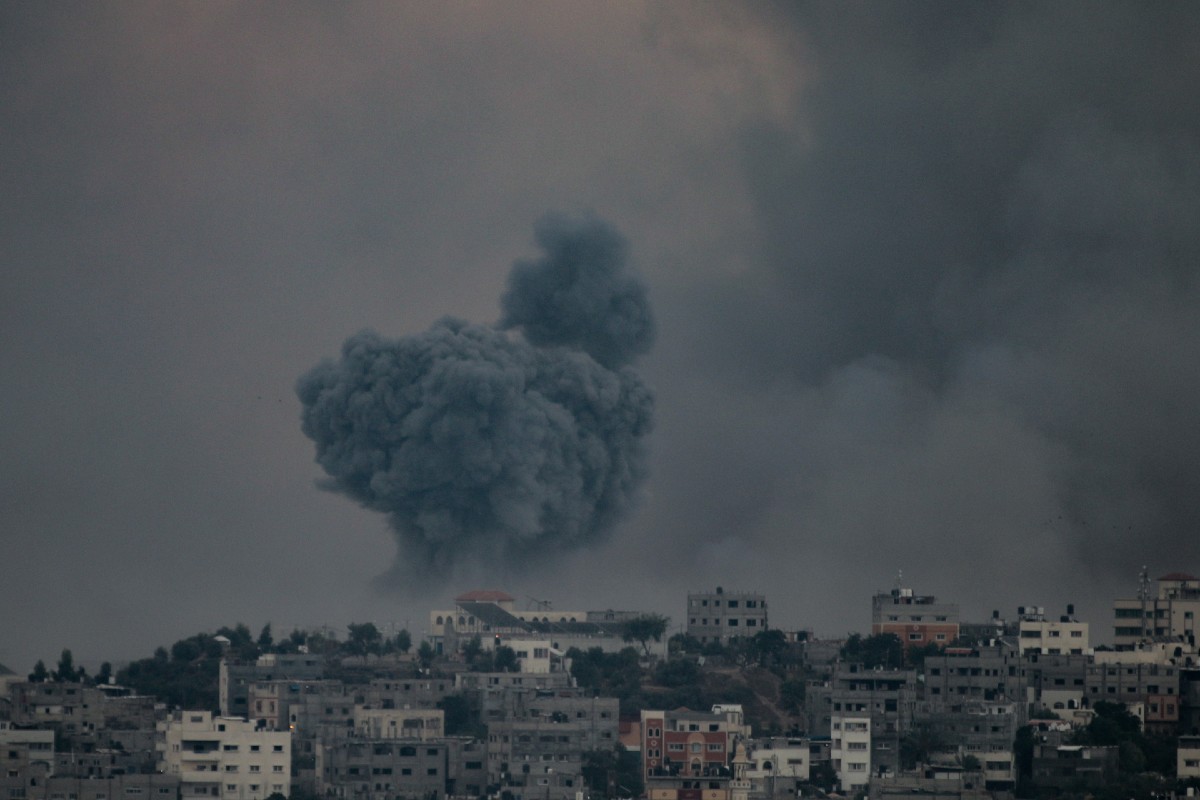
Israel’s military has dropped 2,000 unspecified weapons and more than 1,000 tons of bombs on the Hamas-controlled Gaza Strip west of Israel since Saturday, the Israel Defense Forces said on Monday, as the violence enters its third day.

“In total, since the beginning of the war, Air Force aircraft have dropped about 2,000 weapons and more than 1,000 tons of bombs have been dropped on Gaza,” IDF spokesperson Rear Admiral Daniel Hagari said at 8:30 a.m. local time.

Early on Saturday, Hamas militants launched a large-scale land, air and sea attack on Israel, marking the most serious escalation of hostilities in the region for years in what the group termed “Operation Al-Aqsa Flood.”

Israel then carried out waves of air strikes under its “Operation Iron Swords,” targeting Gaza.

“Hamas has started a brutal and evil war,” Israeli Prime Minister Benjamin Netanyahu said on Sunday. “We will be victorious in this war despite an unbearable price.”

At least 700 people have reportedly been killed in Israel and more than 400 in Gaza, with thousands more wounded, according to the Associated Press. Israel’s military has said it is still working to regain control of some settlements targeted by Hamas.

“There are two last pockets of fighting,” IDF international spokesperson Lt. Col. Richard Hecht told Britain’s Sky News on Monday. “We have more or less stabilized control in all communities around Gaza.”

Hamas representatives said on Monday morning that they had launched rocket attacks on a number of checkpoints and several Israeli cities, including Tel Aviv and the southern city of Sderot.

Israel had carried out four waves of air strikes on the Gaza strip in the previous 20 hours, Hagari said, with up to 60 fighter jets involved in each attack wave.

The first wave involved dropping “hundreds of tons of munitions” on the city of Beit Hanoun, on the north-eastern edge of the Gaza Strip close to the Erez checkpoint, the Israeli military said. The second attack, carried out several hours later, involved 100 tons of munitions being dropped throughout Gaza City, the spokesperson said.

A third wave of attacks took place around 1 a.m. on Monday morning, targeting 20 military structures, Hagari said, before a final wave of strikes zoned in on more than 500 targets across Gaza.

“In total, with the opening of the third day of the war, the Israeli Air Force destroyed approximately 1,200 targets in the Gaza Strip, along its length and breadth,” the Israeli military added. “At any given moment, there are dozens of aircraft over the Gaza Strip.”

A single Israeli F-15 tactical fighter jet can carry up to 10 tons of bombs in a single sortie, military expert David Hambling told Newsweek.

“But of course what really matters is where those bombs are landing and how good the intelligence is that’s guiding them,” he said.

“Tens of thousands” of IDF soldiers “continue to cleanse the area surrounding Gaza” of Hamas militants, Hagari said on Monday. The fighters are “going from door to door, searching the gardens and extensive searches,” he said.

Israel’s defense minister Yoav Gallant said on Monday that “no electricity, no food, no fuel” would reach Gaza after Israel ordered a “complete siege.”

Lindsey Graham threatens Iran with war

0

Republican Senator Lindsey Graham is threatening U.S. strikes on Iran after the Islamist militant group Hamas attacked Israel.

Hamas, which is funded and armed by Iran, sprung a surprise attack on Israel Saturday, with the Israeli military later launching its own attacks. Almost 1,600 people had been killed on both sides as of Monday afternoon, including at least nine Americans, according to the Associated Press.

Thousands more have been wounded, while over 100 people including an unknown number of Americans were taken hostage by Hamas militants. Hamas spokesman Abu Obeida reportedly pledged to kill one Israeli hostage in response to each instance of Israel attacking civilian targets in Gaza “without prior warning.”

During a Fox News interview on Monday, Graham argued that “the only way” to keep the volatile situation from escalating was for the U.S. to become directly involved by launching attacks on Iran due to its links to Hamas.

The South Carolina Republican claimed that Iran “planned” the attack on Israel and suggested that holding the Islamic Republic “accountable” would involve retaliatory strikes on Iranian oil refineries in response to each U.S. or Israeli hostage killed by Hamas.

“For every Israeli or American hostage executed by Hamas, we should take down an Iranian oil refinery,” Graham said. “The only way you’re gonna keep this war from escalating is to hold Iran accountable.”

“I am confident this was planned and funded by the Iranians,” he added. “Hamas is a bunch of animals who deserve to be treated like animals … If I was Israel, I would go in on the ground. There is no truce to be had here. I would dismantle Hamas.”

Graham went on to say that the current conflict was “the best opportunity Israel has to destroy Hamas,” urging war be brought to the “backyard” of Ayatollah Ali Khamenei, the supreme leader of Iran.

“Take it to the Iranians,” Graham said. “If Hamas kills one American or Israeli hostage, we’re going to blow up your oil refineries and put you out of business. It is now time to take the war to the Ayatollah’s backyard.”

Newsweek reached out for comment to the White House and the Interests Section of Iran in the United States at the Embassy of Pakistan in Washington, D.C., via email on Monday.

Graham said that the conflict represented an opportunity for the U.S. to “reset the world” by telling Iran “if you escalate any more attacks coming from Iran, we’re coming after you,” while continuing to help Ukraine defeat invading Russian forces.

Additionally, the GOP senator demanded that President Joe Biden show support for Israel by illuminating the White House with the image of an Israeli flag on Monday night, pointing out that the president “did it for Pride Month.”

On Monday morning, Hamas reportedly claimed that four of its hostages had already been killed by Israeli airstrikes on Gaza.

Benjamin Netanyahu blamed by top Israel newspaper in scathing attack

0

Benjamin Netanyahu “bears responsibility” for the deadliest raid into Israeli territory in 50 years, newspaper Haaretz has said.

The left-leaning publication blamed intelligence failures and the Israeli prime minister’s policy towards Palestinians for the attack by Hamas militants from the Gaza Strip that has so far killed hundreds of Israelis.

Israel has reported 900 soldiers and civilians killed, and Palestinian authorities have reported about 700 deaths in Gaza and the West Bank, the Associated Press said.

As the consequences of the deadliest raid into Israeli territory since Egypt and Syria’s attacks in the 1973 Yom Kippur War continue to unravel, the editorial board of Israel’s third-biggest newspaper said that the conflict “is the clear responsibility of one person: Benjamin Netanyahu.”

The op-ed said that the prime minister had “completely failed to identify the dangers he was consciously leading Israel into” when he established a government of “annexation and dispossession” and by appointing Bezalel Smotrich and Itamar Ben-Gvir to key positions.

Smotrich, a right-wing politician appointed minister of finance in 2022, has caused controversy by expanding Israeli settlements in the West Bank and opposing Palestinian statehood. Ben-Gvir is the security minister, who has faced charges of hate speech against Arabs.

The paper said that Netanyahu’s foreign policy “openly ignored the existence and rights of Palestinians” and expected the Israeli prime minister to “certainly try to evade his responsibility and cast the blame on the heads of the army, Military Intelligence and the Shin Bet security service.

“However, the military and intelligence failure does not absolve Netanyahu of his overall responsibility for the crisis as he is the ultimate arbiter of Israeli foreign and security affairs.”

The piece said that Netanyahu, who has faced repeated criticism from Haaretz during his time in office, had shaped the policy of the government led by Naftali Bennett and Yair Lapid, which aimed “to crush the Palestinian national movement in both its wings, in Gaza and the West Bank.”

The newspaper said that after winning in the last election, his “fully-right government” had taken steps to to annex the West Bank and to carry out ethnic cleansing in parts of the Oslo-defined Area C, including the Hebron Hills and the Jordan Valley.”

The piece criticized Netanyahu for a “massive expansion” of settlements and increasing the Jewish presence on Temple Mount near the Al Aqsa Mosque, as well as a peace deal with Saudi Arabia “in which the Palestinians get nothing.”

“Signs of an outbreak of hostilities began in the West Bank, where Palestinians started feeling the heavier hand of the Israeli occupier,” Haaretz said. “Hamas exploited the opportunity in order to launch its surprise attack.”

The newspaper said Netanyahu’s indictment in three corruption cases left him unable to look after state affairs and was behind his establishment of a “horrific coalition” and the “the enfeeblement of top army and intelligence officers.”

“The price was paid by the victims of the invasion in the Western Negev,” it said.

Newsweek has contacted Netanyahu’s office by email for comment.

Update, 10/10/23, 4:30 a.m. ET: This article was updated with latest casualty figures and additional background information.

Israel war map shows areas fought for by Hamas

0

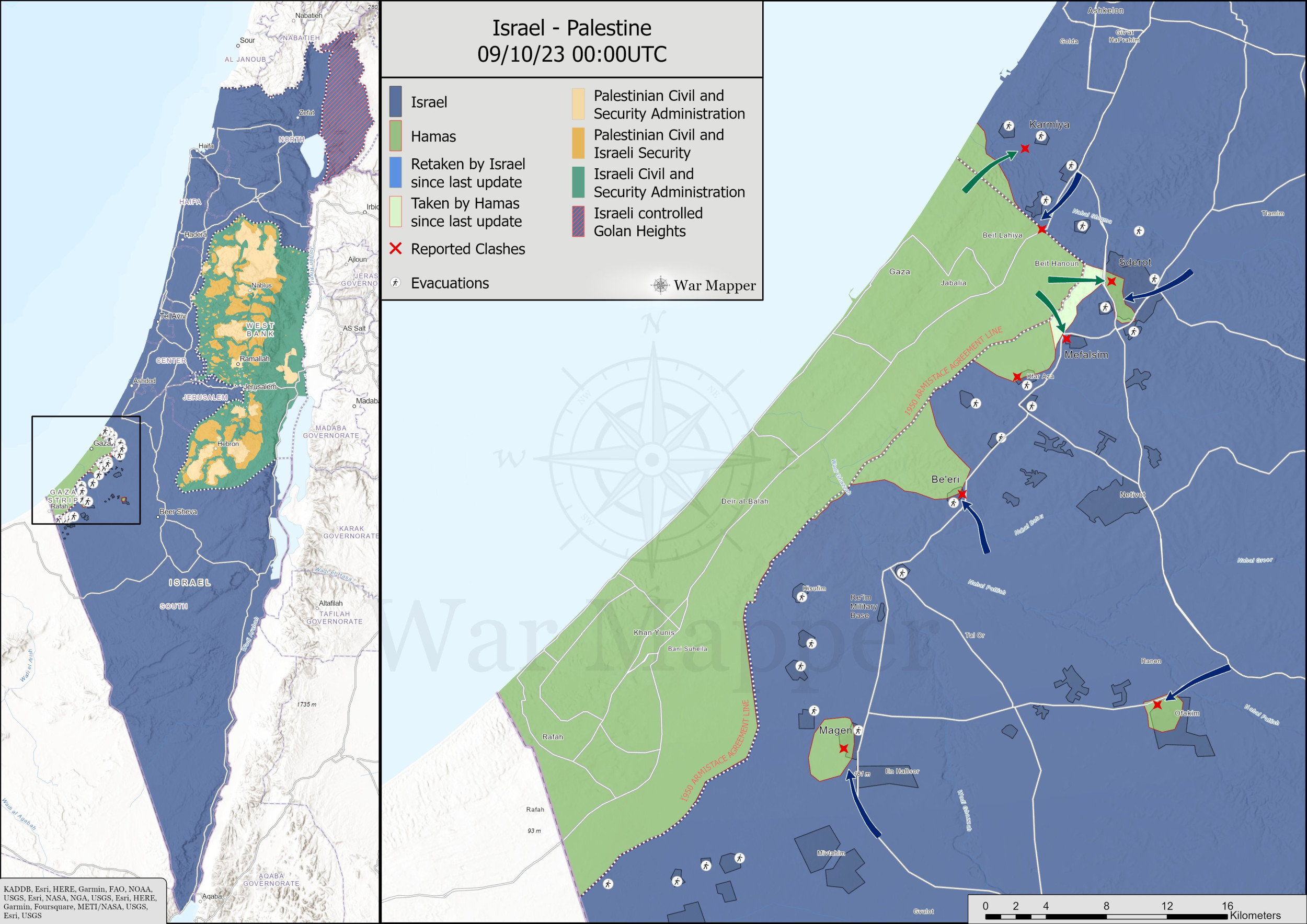
Israel’s military has said it is in control of all the settlements surrounding Gaza as a map released on Monday has shown the area of clashes between its troops and Hamas militants.

Meanwhile, an Israeli lawmaker has told Newsweek that the surprise attack by Hamas on Saturday in southern Israel would be followed by “the end of independent Palestinian rule” in Gaza.

Hamas militants deployed missiles, bulldozers, hand gliders and motorbikes in a surprise attack launched Saturday, the worst breach of Israel’s defenses since Egypt and Syria’s attacks in the 1973 Yom Kippur War.

Israel Defense Forces (IDF) spokesman Daniel Hagari said on Monday “we are in control of the settlements surrounding Gaza, it is possible that there are still terrorists in the area.”

Earlier, Israel’s military had said fighting was taking place in “seven or eight” places inside Israeli territory. A graphic by War Mapper showed the locations of the clashes in Mefalsim, and in Sderot after renewed Hamas attacks in that area. War Mapper is a social media account that tracks the state of the conflict, primarily in Ukraine.

Other clashes marked on the map were in Kfar Aza, Be’eri, Magen, and Otakim, as well as near Karmiya.

At least 700 people have been killed in Israel and over 400 have been killed in Gaza, according to the Associated Press. Hamas is also believed to have taken dozens of Israeli hostages.

Hanoch Milwidsky, a member of Israel’s parliament, the Knesset, from the Likud party, told Newsweek that the Hamas attack “was calculated and directed towards civilians.”

“This unheard-of cruelty has not been seen before,” he said, adding that with its attack, Hamas “has finally proven beyond a shadow of a doubt that they do not have a place among civil society.

“It is clear that the State of Israel can no longer tolerate a Palestinian entity in the Gaza Strip. I have no doubt that the attack today will symbolize the end of the independent Palestinian rule in Gaza.”

Israel Defense Minister Yoav Gallant has ordered a complete siege of the Gaza Strip. There will be no electricity, no food, no fuel, and “everything is closed,” he said.

As Israel calls up 300,000 reservists, questions remain about severe intelligence and security failures, with one newspaper, Haaretz, blaming Prime Minister Benjamin Netanyahu for the conflict.

Danny Yatom, ex-chief of the Mossad spy agency and politician from Israel’s opposition Labor party told the BBC radio program Today that Israel’s security tactics had “collapsed totally.”

Unnamed Israeli intelligence sources told Reuters that Hamas had “used an unprecedented intelligence tactic to mislead Israel” by giving the impression it was not willing to fight, “while preparing for this massive operation.”

Iran calls Palestinian attack "biggest failure" ever for Israel

0

As Israel continues to contend with a stunning assault led by the Palestinian Islamist group Hamas, Iran’s representatives in the United States lauded the resolve of the ongoing attacks in comments shared with Newsweek.

U.S. officials have so far said there was no indication of the Islamic Republic’s involvement in the most comprehensive attack to hit Israel since the Yom Kippur War fought against a coalition of Arab states nearly exactly half a century ago. Israel readily identified its archfoe’s relation to the attack, and Iranian officials openly expressed their praise of the surprise land, sea and air strike, while distancing themselves from any actual involvement in the devastating operation.

“The success of this operation was the fact that it was a surprise, which makes it the biggest failure of the Israeli regime’s security organizations during the life of this usurping regime,” the Iranian Mission to the United Nations told Newsweek.

“They find it very difficult to accept that in the intelligence community, it is being narrated that they were defeated by a Palestinian group,” the Mission added. “They are attempting to justify their failure and attribute it to Iran’s intelligence power and operational planning.”

With at least 700 Israelis killed, hundreds more wounded and a yet undisclosed number of hostages taken, Israel remains at war on several fronts in what Hamas named operation “Al-Aqsa Flood” after the sacred Muslim site at the contested Temple Mount in Jerusalem. The Israel Defense Forces (IDF) have launched operation “Swords of Iron” to strike at the heart of Hamas and allied organizations, such as Islamic Jihad, based in the effectively blockaded Gaza Strip, though Israel continues to battle Hamas militants within its own territory.

Gaza-based health officials put the Palestinian death toll at at least 493.

“The story is that we’re still fighting,” IDF Lieutenant Colonel Richard Hecht told a press briefing early Monday, Israeli time. “There are between seven-eight open places around Gaza we still have warriors fighting terrorists.”

But a quick victory was not anticipated. Hecht acknowledged that “it’s taking more time than expected to get things back into a sort of defensive security posture of people coming and defending their communities.”

“We thought this morning we’d be in a better place of focusing right now on what we’re doing and making sure Hamas pays a heavy price,” Hecht said. “Our military defends and is taking care of our lost ones and it’s going to get worse, but we’ll overcome it.”

Both the U.S. and Israel consider Hamas to be a terrorist organization. Iran views the group as legitimate manifestation of Palestinian resistance. While Hamas was born out of the ultraconservative Sunni Muslim Brotherhood, revolutionary Shiite Muslim Iran has increasingly backed the Palestinian group.

Citing senior members of Hamas and the powerful Iran-backed Lebanese militant group Hezbollah, based north of the contested border with Israel, The Wall Street Journal reported on Sunday that Iranian security officials helped to plan the operation against Israel.

Responding to Newsweek‘s question about Tehran’s role in the attack, Hecht stated that “the Iranians are involved.”

But Hecht asserted that “that’s not the story right now.” He said that “we’re fighting against Hamas, we’re making sure our northern border—which in a way is also an Iranian front—is also secured.”

Tensions remain high between Israel and Lebanon as well as with Syria, where Iran has supported the government against both rebels and jihadi groups in a civil war still raging after more than 12 years. Hezbollah has also expressed its support for the operation and says it’s in active communication with the Palestinian militant leadership.

Hezbollah fired a volley of rockets into Israel on Sunday, and the IDF launched artillery into Lebanon.

“Existential threat, we’re not there yet,” Hecht said. “Gaza, we’re still fighting, we’re going to turn it at some point. Lebanon, ramping up the force…if it expands into a sort of multidimensional arena, let’s see where this goes.”

Newsweek has reached out to Hezbollah for comment.

Speaking to CNN on Sunday, U.S. Secretary of State Antony Blinken said: “We have not yet seen evidence that Iran directed or was behind this particular attack, but there is certainly a long relationship.”

The top U.S. diplomat denied that there was any connection between the $6 billion in frozen Iranian assets recently made available to Tehran by Washington as part of a prisoner exchange that marked a rare sign of diplomacy between the two countries made possible through the Arab state of Qatar.

Hamas too has made no mention of Iranian involvement. But the group has lashed out at the IDF’s bombing of the Gaza Strip.

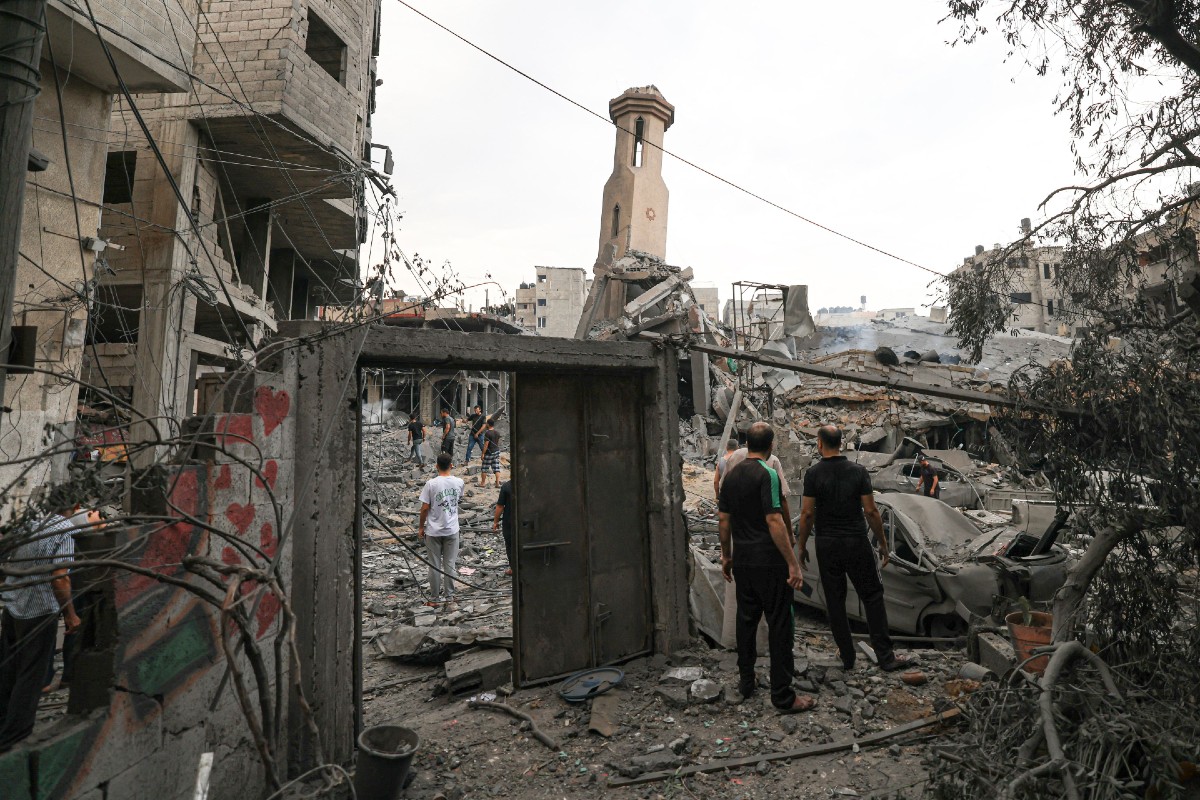
In comments shared with Newsweek by a Hamas spokesperson, political operative Izzat al-Rishiq “slammed the destruction of Palestinian homes, which housed women and children, as well as mosques, and schools in Gaza by the Israeli occupation as war crimes.”

Rishiq also “pointed out the U.S. supports the Israeli occupation’s brutality by sending stockpiles of weapons and ammunition after the occupation forces fired tons of explosives on the heads of defenseless citizens across the Gaza Strip.”

He “called on the international community and the free peoples of the world to condemn these gruesome massacres committed by the Zionist occupation.”

"Godfather of AI" just issued an ominous warning for the future of humanity

0

Artificial intelligence (AI) systems could someday surpass humans to become the most intelligent species on Earth, according to Geoffrey Hinton, the computer scientist known as the “Godfather of AI.”

Hinton worked at Google for several years but announced this spring that he was leaving so he could speak openly about the potential benefits and risks of AI. He discussed both during a recent interview with Scott Pelley of CBS News’ 60 Minutes.

Hinton told Pelley AI could offer “huge benefits” when it comes to health care and drug development. But there are also several AI-related risks that concern Hinton. He first identified the jobs that could disappear in these industries if AI systems are able to take on these complex tasks.

Hinton also warned of the potential for “fake news” to spread through AI, and for AI to create new biases in law enforcement procedures and employment processes. There’s also a “serious worry” that AI systems could create and implement their own computer codes, Hinton said, which in theory means they could update themselves.

Much is still unknown about AI’s potential. But people around the world are already testing out popular systems like OpenAI’s ChatGPT, which recently unveiled new features that enable the tool to respond to visual and audio data that users upload directly to the tool. Users have deployed it to solve equations, decipher traffic signs and identify films based on single screenshots, among other things.

The manner and speed at which these tools respond to data suggest they may learn more efficiently or thoroughly than humans do. The most advanced chatbots currently operating have about one connection for every 100 a human’s brain has, but the chatbots appear to know “far more than you do,” Hinton said in the interview.

Hinton contrasted AI development with other advancements in technology, which he said benefited from the ability to fail early on without serious repercussions. But with AI, “we can’t afford to get it wrong with these things,” he said. When Pelley asked for clarification, Hinton said this was because the systems “might take over,” later adding this is not a guarantee but “a possibility” that could be avoided if humans find a way to prevent AI systems from wanting to do so.

It’s unclear how much time it’ll take for these larger AI questions to be answered, but Hinton estimated that ChatGPT in particular “may well be able to reason better than us” before the end of this decade. Military use of AI also has a more specific timeline, with retired U.S. General Mark Milley recently telling 60 Minutes that 20 percent or more of “sophisticated” militaries could become robotic in “maybe 15 years or so.” The U.S. Department of Defense currently requires all military decisions to involve a human, he added.

The use of AI systems by armed forces is a concerning one for many. Earlier this year, the International Committee of the Red Cross (ICRC) issued a plea for world leaders to create a new set of international rules for automated weapons systems. These systems pose risks both to civilians on the ground and to the troops that deploy them, the committee said.

Newsweek reached out to the International Committee of the Red Cross for comment on Monday through the committee’s online submission form.

Hinton isn’t alone in raising concerns about AI development. Earlier this year, several tech leaders signed an open letter calling for a temporary halt to some advanced AI development efforts, which the letter said could “pose profound risks to society and humanity.”

“Powerful AI systems should be developed only once we are confident that their effects will be positive and their risks will be manageable,” the letter said.

A couple of months after the letter was published, OpenAI CEO Sam Altman advocated for AI regulation while testifying before the U.S. Congress. Though Altman said AI is “improving people’s lives,” his prepared remarks before testifying said the company “can’t anticipate every beneficial use, potential abuse, or failure of the technology.”

“OpenAI believes that regulation of AI is essential, and we’re eager to help policymakers as they determine how to facilitate regulation that balances incentivizing safety while ensuring that people are able to access the technology’s benefits,” Altman said.

Fact check: Did Donald Trump criticize the "evil doings of Israel"?

0

Donald Trump has often been outspoken about Israel, revealing his Israeli-Palestinian peace plan in 2020.

The former president, speaking shortly after attacks by Hamas on Saturday, said that “Israel has every right to defend itself with overwhelming force.”

However, in a video that has resurfaced on social media in the past few days, Trump appeared to make anti-Israel comments, suggesting it had “hypnotized the world.”

The Claim

A TikTok posted on October 8, 2023, and since viewed more than 186,000 times, showed Donald Trump saying: “Israel has hypnotized the world, may Allah awaken the people and help them to see the evil doings of Israel and the United States.” Booing can be heard in the background.

The video included the caption “Trump Is with Palestinians” followed by what appeared to be pro-Palestinian content.

The Facts

The TikTok of Trump has been misleadingly edited to make it appear that Trump is criticizing Israel.

The clip used footage from a 2019 rally in the state of Minnesota. Trump said Democratic Rep. Ilhan Omar wrote the quote featured in the TikTok clip.

Trump is nearly correct. Omar tweeted that message in 2012 before she became a congresswoman, sent in response to the military offensive in Gaza that year.

The since-deleted tweet said: “Israel has hypnotized the world, may Allah awaken the people and help them see the evil doings of Israel. #Gaza #Palestine #Israel”

Her original tweet, however, did not include the reference to the United States that Trump included.

Omar would later express regret about the wording of her social media post.

Asked about the social post by CNN in January 2019, Omar responded that “those unfortunate words were the only words I could think about expressing at that moment.”

She later said that “hypnotize” and the “ugly sentiment it holds was offensive,” after hearing from Jewish groups.

Six days after the CNN interview, she posted: “It’s now apparent to me that I spent lots of energy putting my 2012 tweet in context and little energy is disavowing the anti-semitic trope I unknowingly used, which is unfortunate and offensive.

“With that said, it is important to distinguish between criticizing a military action by a government and attacking a particular people of faith.

“I will not shy away of criticism of any government when I see injustice—whether it be Saudi Arabia, Somalia, even our own government!

“As a survivor of war, the acts of war justified or not will always be acts of evil to me.”

Responding to the weekend’s attacks by Hamas and Israel’s response, Rep. Omar said on X, formerly Twitter, on Saturday: “I condemn the horrific acts we are seeing unfold today in Israel against children, women, the elderly, and the unarmed people who are being slaughtered and taken hostage by Hamas. Such senseless violence will only repeat the back and forth cycle we’ve seen, which we cannot allow to continue. We need to call for deescalation and ceasefire.”

“I will keep advocating for peace and justice throughout the Middle East,” she added.

On Sunday, she called for prayers for residents of Gaza.

“Reminder, Gaza doesn’t have shelters or an iron dome and to please pray for them,” she wrote. “May peace prevail in the region and move us towards a moral awakening to care about the human suffering we are seeing. Palestinians are human beings who have been in besieged and are deserving of protection from the international community,”

Newsweek has contacted a representative for Omar via email for comment.

Crucially, Donald Trump was quoting Omar, not making the comment himself.

Reuters reports that 1,100 people have died since fighting began over the weekend. On Sunday Israel attacked the Palestinian enclave of Gaza, killing hundreds, following attacks by Hamas that killed 700 Israelis.

The Ruling

Misleading Material.

The clip of Donald Trump was edited and missed crucial context. He was quoting Minnesota Democratic congresswoman Ilham Omar, who made the comment in 2012. Omar later expressed regret for the words she used.

FACT CHECK BY Newsweek’s Fact Check team

Misleading Material: The claim is based on media that has been altered from its original form—such as an edited video or image—and is now misleading, misrepresentative, or deceptive, either intentionally or unintentionally. Read more about our ratings.

How to talk to your children about climate change

0

Whether they learned about the greenhouse gas effect at school, saw a dire post about global warming on social media or experienced a weather-related disaster firsthand, chances are good that your kids are aware of and worried about the dangers of climate change—possibly, very worried.

The anxiety, these days, starts young. Last year, a poll of 1,000 children between the ages of 7 and 12 by an eco-grocer found that 71 percent were worried about climate change. And those feelings only deepen with age: A 2021 survey of 10,000 teenagers and young adults in 10 countries published in the medical journal The Lancet found that 84 percent were worried about climate change, with more than half of the respondents saying it made them feel sad, anxious, helpless and angry.

What can adults do to help? Parents are often unsure if they should talk about climate change with their offspring and risk adding to their child’s distress or instead downplay the subject. “Since climate change is a topic that can bring up anxiety, helplessness or guilt in adults and especially in caregivers, a natural urge is to avoid it,” says Sarah Schwartz, a professor of psychology at Suffolk University whose research looks at the impact of climate anxiety in youth. “But that can leave kids feeling isolated in their concerns or feeling like the topic is too scary even for the grown-ups in their lives.”

The better path is to engage with your child in an age-appropriate way that helps validate how they’re feeling, gives you the opportunity to answer questions and correct misinformation and, most importantly, opens the door to an ongoing conversation. Here’s how experts suggest you go about it.

Raise the Subject Organically

You know that impulse to avoid a subject that could give both you and your child anxiety? Ignore it. The most important thing a parent or trusted adult can do to help kids manage their feelings about climate change and ensure they get good information is to broach the topic. A natural time to bring up climate change for the first time, says Leslie Davenport, a climate psychology educator and author of two books on helping children manage climate anxiety, is when there’s a related event—say, it’s too hot for your kids to go outside or there’s been a climate-change-related natural disaster that is being talked about on the news, such as this summer’s wildfires in Hawaii or giant baseball-sized hailstorms in Minnesota.

“If [an event related to climate change] is disrupting what they want, or the rhythm of things, they want to know why,” Davenport says. As climate events increase, these opportunities will become more frequent. And if a climate event has impacted your child directly, it’s going to be even more important to speak directly about climate change.

You can use positive events as a springboard for discussion, too—if your child’s school has an Earth Day program, for instance, or the teacher is doing climate-related activities and projects in the classroom. “Ask them what they are learning,” Davenport suggests. “Ask them what they think and feel and what they want to know more about. Help them connect the dots.”

The point isn’t to have an in-depth conversation about climate change right off the bat, but instead to show your child that you’re always available to talk.

Keep the Talk Age-Appropriate

How you bring up climate change depends on the age of your child. Maria Ojala, a researcher from Örebro University in Sweden, says that until children are 10, the best approach is to focus on the immediate environment and not bring up global or systemic problems. “This can be hard to grasp for children who have not developed abstract thinking yet.”

For school-aged kids, you can expect that they’ll be asking more questions about climate change. As more states pass legislation requiring climate science to be taught in all grade levels—New Jersey became the first state to do so in 2020, followed by Connecticut in 2022—Davenport says that parents can expect to get specific questions about things like carbon emissions, trapped greenhouse gases and extreme weather. While you may not know the answer to some of these scientific questions, you can partner with your child in discovering the answer by watching YouTube videos together or searching for information online as a team.

For children older than 12, expect that your teenager may know more about climate change than you do, so approach the topic as a conversation, not a lecture.

Let Your Child Take the Lead

It’s the parent’s job to initiate the discussion, says Davenport, but it’s the child’s job to direct where the conversation goes. Once you introduce the subject, she advises, “It’s a lot of listening. What are their questions? What are their concerns? You don’t just do this big science download.”

Depending on your child’s age and temperament, those first attempts at a climate change conversation may be met with 20 questions or, at the other end of the reaction spectrum, a shrug and a change of subject.

Kottie Christie-Blick, an education consultant who works with schools and teachers to create climate-change curriculums, emphasizes the importance of asking children what they’ve learned and where they’ve learned it. She says, “We don’t exactly know how children are taking in what they’re hearing.”

Having an open conversation and showing an interest in your child’s questions also gives you an opportunity to correct misinformation. Christie-Blick recalls speaking with a young girl who was devastated to learn about sea-level rise, because the child thought it meant all of North America might flood overnight.

Focus on Feelings, Then Facts

In her research, Ojala has spoken with hundreds of young people between the ages of 10 and 18, and she says there is evidence that what helps most is simple: validate their feelings. She says it’s important to help young people put words to their emotions. For example, they may be feeling distressed but not be able to verbalize what they’re feeling or why.

For a child younger than 10, it’s important to help them name their feelings (“Sounds like you’re feeling pretty sad”), then validate the emotion (“It is sad that so many animals are losing their homes”), then remind them that there are adults are handling the situation (“There’s a lot of people working to save the homes of animals”).

For a child older than 10, you might respond similarly in tone but with less reassurance and more help integrating the overwhelming reality of climate change: “I’m hearing that you’re feeling distressed and overwhelmed learning about wildfires. I feel overwhelmed about wildfires and wildfire smoke, too.”

What not to do: Don’t be a cheerleader, offering empty platitudes. Resist the instinct, Davenport says, to tell your child not to worry, that everything will be fine or that adults will figure it out because that reaction can come across as invalidating to their level of distress and the realities of what we’re facing. She says, “It comes from good intentions but it’s bypassing.”

As teenagers learn about climate change and how this might impact their futures, they often ask why their parents’ generation hasn’t done more to reduce emissions. Some parents may feel an impulse to defend themselves, but Davenport emphasizes the importance of making space for your children to express their anger, their outrage, their fear and their sadness.

“Young people are scared, sad and angry,” says Schwartz. “For many, concerns about climate change are influencing daily functioning, how they think about their future and important decisions related to education, career and family.”

Christie-Blick says that even if the sentiment comes from a place of encouragement or hope, avoid telling your child that their generation is going to have to fix it. She says, “It’s so cruel to say to a child: ‘You kids need to lead the way.'” Instead, help them re-focus on the actions that individuals, scientists, governmental authorities and world organizations are taking to tackle climate change and other environmental challenges.

Provide the Right Resources

To further your child’s understanding of climate change, you can get a helping hand from reputable, engaging educational material on the subject. For instance, Climate Kids, a website run by NASA, offers games, activities and videos targeted to kids ages 8 and up. Local zoos and aquariums often have programming that deals with climate change and can also be a fun way of catching your child’s interest.

Breena Bard, an award-winning graphic novelist, says an engaging story can help children process complex topics. “Comics, specifically, have a way of engaging their imagination so they aren’t just taking in information.” Bard’s most recent graphic novel, Wildfire, is written for youth and follows a middle-school-aged girl who lost her home in a wildfire and turns her anger into climate action. Davenport’s All the Feelings Under the Sun is a workbook designed to help older kids and young teens both learn basic facts about climate change and process any feelings that might arise. For children under 10, Davenport suggests The Lorax, a Dr Seuss tale (also made into a 2012 movie with Zac Efron and Danny DeVito) chronicling the plight of the environment through a 12-year-old boy’s search for a character who “speaks for the trees;” and We Are Water Protectors, a lushly illustrated Caldecott Medal-winning story of a young Indigenous girl’s efforts to prevent a black snake from destroying her people’s waters and the Earth.

Part of providing the right resources is also being mindful to avoid the wrong ones. Constant exposure to news about climate disasters can be overwhelming to a child who is just learning about climate change. Because of the way algorithms are constructed, social media can promote a kind of “gloom-and-doom” climate content that isn’t always supported by science. Depending on the age of your child, it may be impossible to limit access to this kind of content, making it even more important to initiate calm, informed discussions at home.

Lead by Example

Kids emulate their parents. If you are comfortable talking about the feelings and facts of climate change, they will be, too. If they see you thinking critically about potential solutions and action to tackle environmental challenges, they will develop their own muscles of problem-solving and critical thinking. If they see you actively making choices to lower your family’s emissions—flying less, eating less meat and buying an EV are three of the most impactful things you can do —they will start to naturally understand the link between climate change and lifestyle choices.

And while you don’t want to process your feelings in front of your child, being able to name your emotions will help your child be able to name theirs.

Most importantly, kids need to see that their parents can tolerate hearing their child’s negative feelings and can provide a safe space for their kids to feel anxious, without being dismissed or placated. Above all, you want your child to know that their worry is normal and not something that isolates them from others but instead connects them to others. As Ojala says, “Worry about climate change is a rather rational emotion in the face of a very dangerous threat.”