Friday, May 8, 2026
Home Blog Page 63

RFK Jr. reveals ambitious plan to cut mortgages by $1,000 a month

0

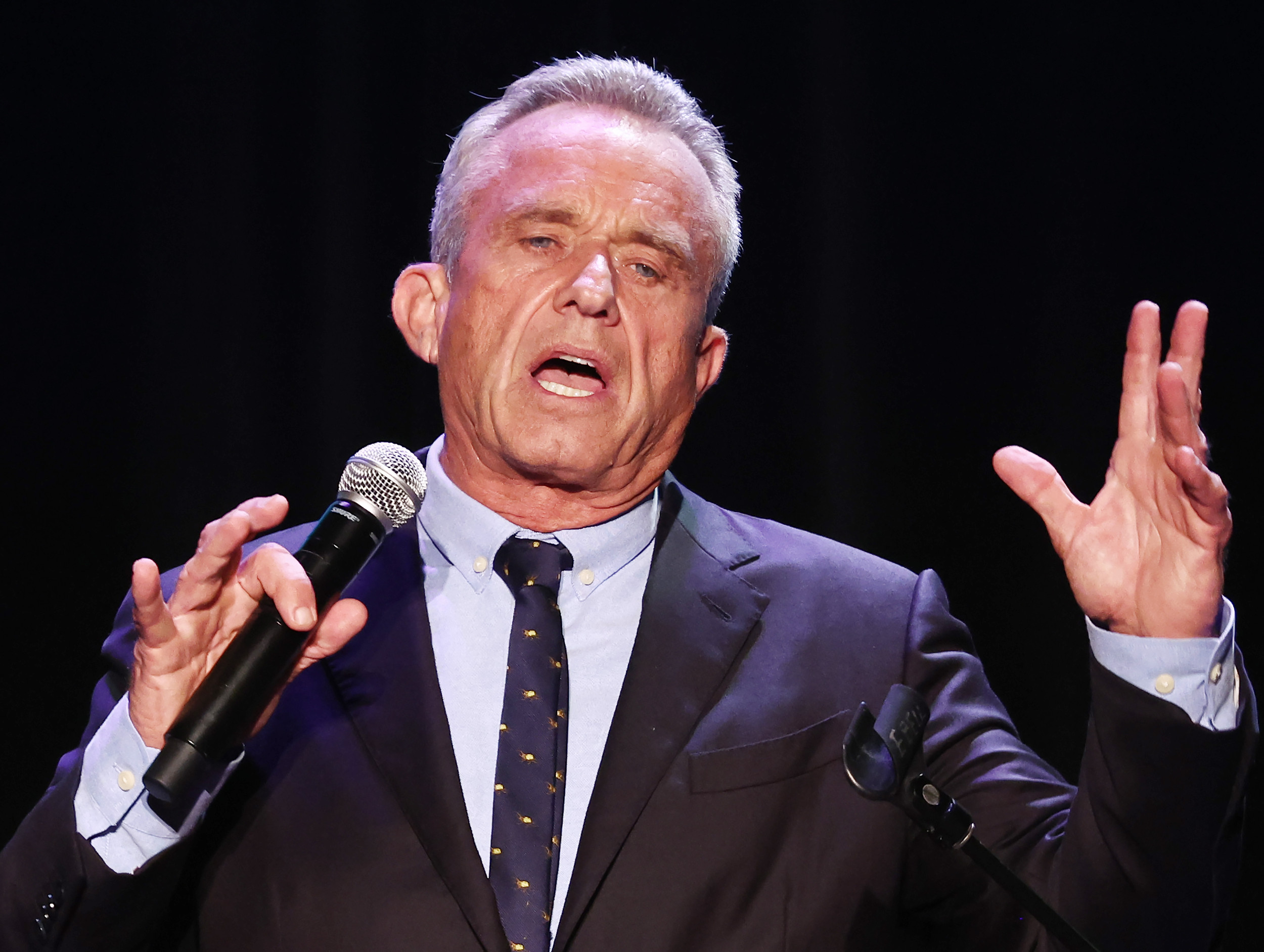
Robert F. Kennedy Jr., who’s running in the Democratic primary alongside President Joe Biden but is currently trailing behind him by a huge margin, has announced his plan to cut mortgage rates by $1,000 a month.

“I have a plan that will lock home loans at 3 percent interest for first-time homebuyers, lowering your mortgage payments by $1,000 a month—and it won’t cost the government a cent,” he wrote on X, formerly known as Twitter, on Thursday. “Check it out,” he added.

In a clip shared with the social media post, RFK Jr.—as he’s widely known—talks of housing as “probably the most important issue in terms of building wealth in poor communities.”

“If you have a house, you can get a loan and you can build a business. If you don’t have a house, you have no access to capital,” he said. RFK Jr. then mentions how the average cost of homes in the U.S. has skyrocketed in recent years, an issue that he blamed on inflation, the money spent “on wars” and on the health emergency linked to the COVID-19 pandemic, and corporations acquiring residential properties.

In fact, house prices ballooned because of a surge in demand during the pandemic, when the market boomed amidst relatively low mortgage rates and limited inventory. This jump in price led to a crisis of affordability which reached a peak last summer, when demand finally started to slide down as many aspiring homebuyers found themselves squeezed out of the market entirely by high prices and suddenly rising mortgage rates.

According to the latest data by the Federal Home Loan Mortgage Corporation, better known as Freddie Mac, the U.S. 30-year fixed-rate mortgage rate—the most popular among American borrowers—surged to 7.49 percent on Thursday, up from 7.31 percent last week and 6.66 percent last year.

The solution to the problem of affordability in the housing market, for RFK Jr., is lowering mortgage rates. And the way he’ll do that is by “making a mortgage available to Americans at 3 percent interest,” he said.

“I’m going to do that without raising the debt,” he added. “And the way I’m going to do it, if you have a rich uncle who will cosign your mortgage, you can get a very cheap mortgage because the bank is basing interest rates on his credit score rather than yours.”

“I’m going to give everybody a rich uncle. I’m going to say, Uncle Sam is going to cosign this new class of mortgages and guarantee them at 3 percent. That will lower the cost of mortgages by a thousand dollars a month.”

The way RFK Jr. is going to fund these mortgages? By selling “tax-free bonds on the open market,” according to the presidential candidate.

He specified that these mortgages will only be available to first-time homebuyers who live and work in the communities where they want to buy a home.

According to the latest data available on FiveThirtyEight, dated October 1, RFK Jr. has 16.4 percent of the Democratic vote against Biden’s 61.2 percent.

Trump’s reported House speaker nod throws cold water on him taking the seat

0

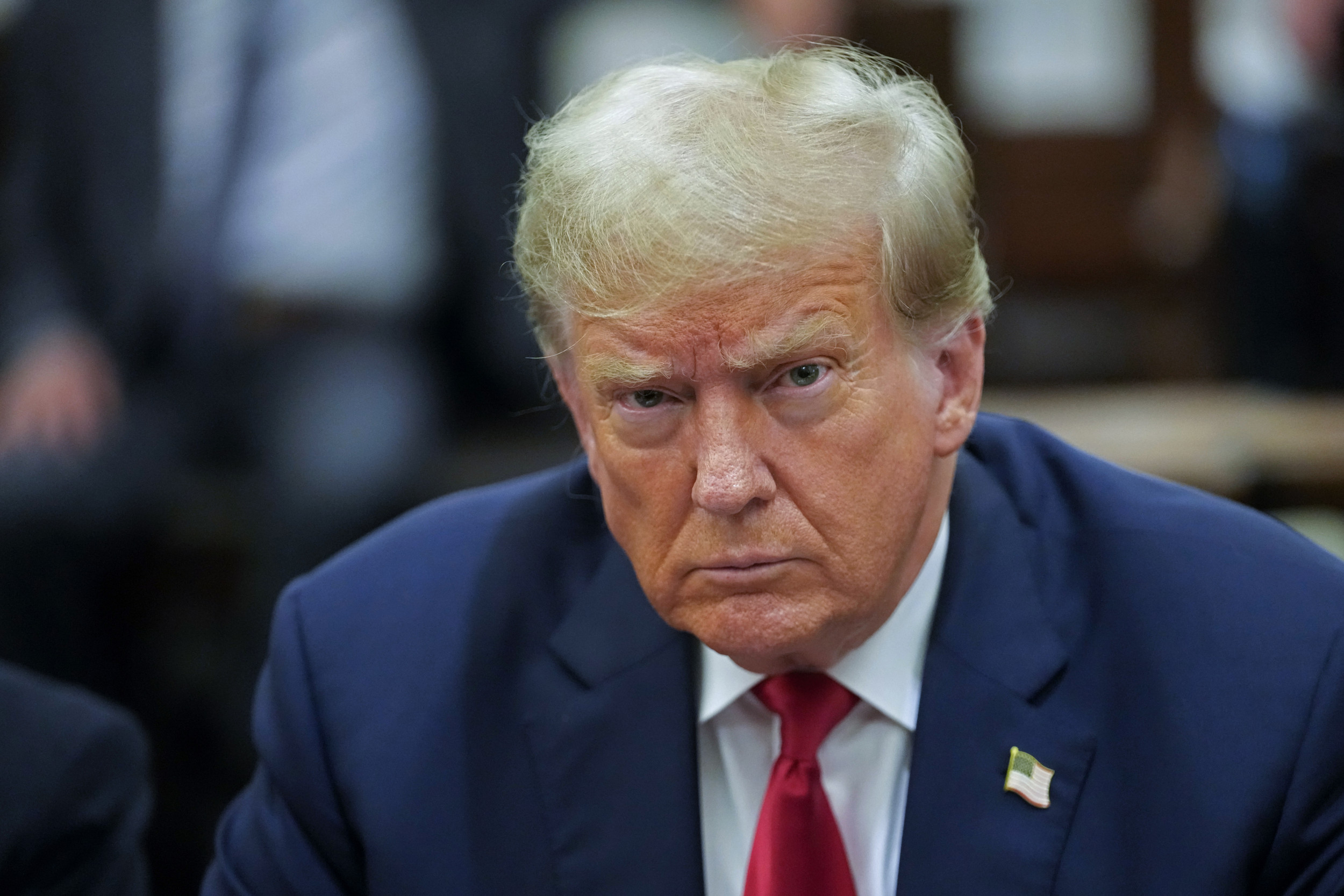
Former President Donald Trump has dashed MAGA hopes of him becoming speaker of the House by purportedly endorsing a close GOP ally to lead the chamber instead.

Trump plans to back Congressman Jim Jordan of Ohio’s bid for speaker, Representative Troy Nehls of Texas said in a Thursday night post to X, formerly Twitter. Nehls announced earlier this week that he was planning to nominate Trump for speaker as his “first order of business” when the chamber reconvened following the removal of California Representative Kevin McCarthy from the role.

Nehls and Jordan were among the majority of Republicans who voted against Representative Matt Gaetz‘s successful effort to remove McCarthy from speakership. Seven Republicans joined Gaetz and all Democrats in attendance to oust the former speaker in a 216-210 vote on Tuesday. Nehls on Thursday night urged Republicans to back Jordan for the job with Trump’s backing.

“Just had a great conversation with President Trump about the Speaker’s race,” wrote Nehls. “He is endorsing Jim Jordan, and I believe Congress should listen to the leader of our party. I fully support Jim Jordan for Speaker of the House.”

Neither Trump nor Jordan had directly addressed the purported endorsement at the time of publication. Newsweek reached out for comment to Trump’s office via email on Thursday night.

Jordan wrote that it was “time for our Republican conference to come together” when announcing his bid for speaker in a letter posted to X on Wednesday morning. A number of hard-right Trump loyalists, including Gaetz, immediately rallied behind the prospect of Jordan’s speakership.

House Majority Leader Steve Scalise has also announced a bid for speaker, while Congressman Kevin Hern has said that he is “entertaining” the idea. Trump suggested that he would be willing to temporarily take on the role hours before his apparent endorsement of Jordan.

Trump told Fox News Digital that he would be willing to “do it if necessary” but only “for a short period of time for the party, until they come to a conclusion.” News that Trump might be willing to become speaker inspired a wave of excitement in MAGA world, including among some of his supporters in Congress.

“If Trump becomes Speaker of the House, the House chamber will be like a Trump rally everyday!!” Representative Marjorie Taylor Greene wrote on X. “It would be the House of MAGA!!!”

Congresswoman Lauren Boebert, also a Trump loyalist, announced her endorsement of Jordan shortly after news of Trump’s purported backing emerged.

“I’m proud to endorse my friend, @Jim_Jordan, for Speaker of the House!” Boebert wrote in a post to X. “Jim is a trusted conservative who I believe will unify our conference, pass individual appropriations bills, secure our borders, put an end to Ukraine funding, and hold the corrupt Biden administration accountable.”

“I’m also certain his leadership will help us expand our House majority in 2024 so we can be ready to help implement President Trump’s Agenda 47 on day one,” she added. “There’s a lot of work ahead – let’s get to it!”

Trump critic and former GOP Congresswoman Liz Cheney warned that Jordan’s ascension to speaker could effectively end the Republican Party in a speech at the University of Minnesota on Wednesday, asserting that “there would no longer be any possible way to argue that a group of elected Republicans could be counted on to defend the Constitution.”

Kevin McCarthy pours cold water on resignation rumors

0

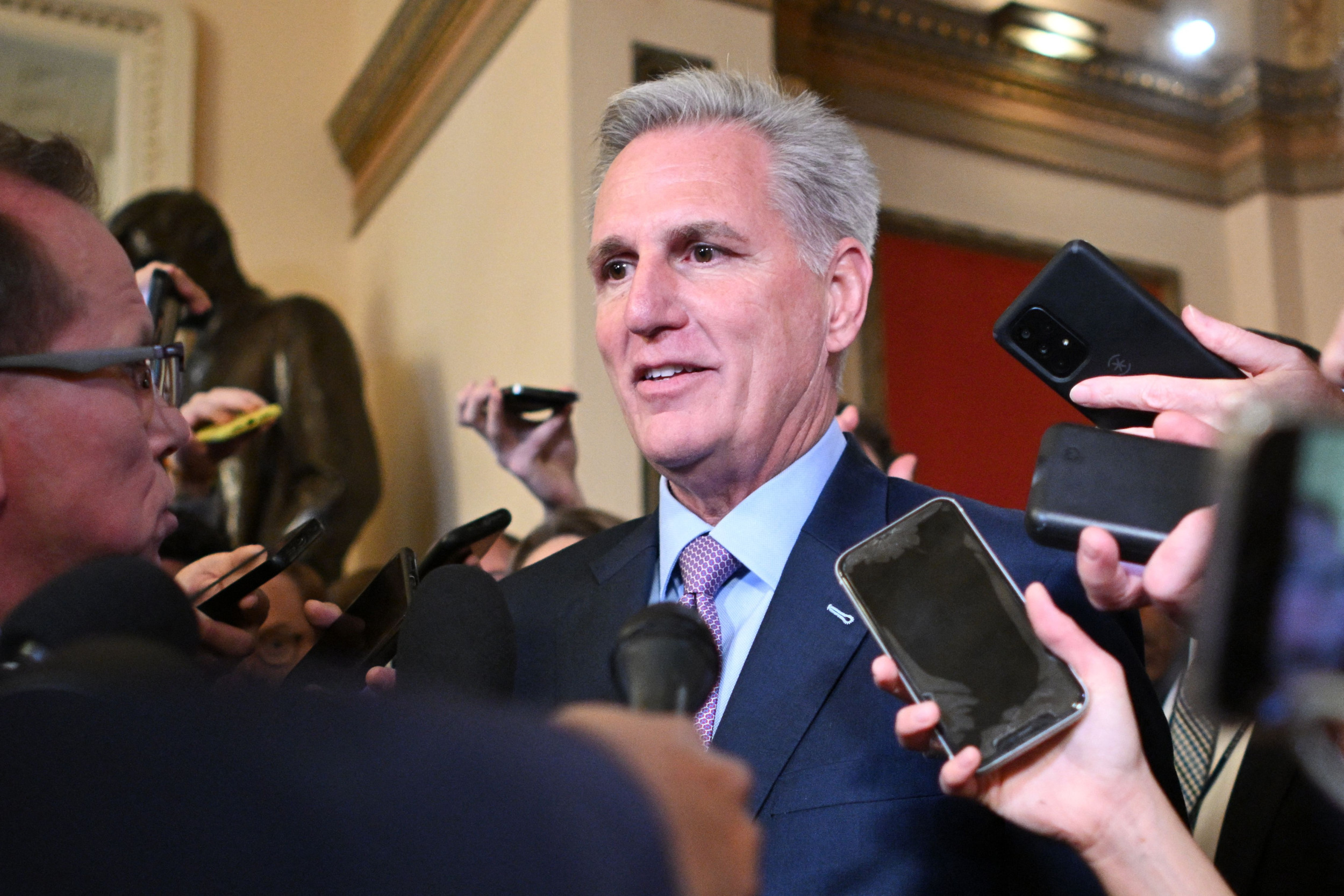
A spokesperson for Congressman Kevin McCarthy has confirmed with Newsweek that the former speaker is not resigning.

Rumors swirled on Friday after reports that the California Republican was considering ending his term early before coming up for reelection in November 2024, according to sources close to the matter who spoke with Politico and CNN. McCarthy was booted from the speaker’s chair in a historic House vote on Tuesday.

When reached by Newsweek, however, McCarthy spokesperson Brittany Martinez said via email, “McCarthy is not resigning.”

KGET News reporter Eytan Wallace also reported on X, formerly Twitter, that McCarthy confirmed he intends to seek reelection following his current term.

McCarthy has already said that he will not attempt to run for speaker again, and it remains unclear who the GOP will push forward to take the seat. Some lawmakers have touted selecting former President Donald Trump as an interim speaker if a consensus cannot be reached once voting starts next week, but the former president issued his support for Ohio Representative Jim Jordan on Friday.

“I have been asked to speak as a unifier because I have so many friends in Congress,” Trump told Fox News Digital on Thursday. “If they don’t get the vote, they have asked me if I would consider taking the speakership until they get somebody longer term, because I am running for president.”

Some Republican senators worry that McCarthy’s ousting could hurtle the House into chaos while Congress approaches its November 17 deadline to pass a bipartisan spending bill to keep the federal government open. As one of his last acts as speaker, McCarthy pushed through a last-minute bipartisan stopgap measure with the help of House Democrats last weekend. That bill, however, was one of the final straws that led to Representative Matt Gaetz filing a motion to vacate the speakership Monday.

“I think it opens the door to chaos,” Republican Senator Mitt Romney of Utah previously told Newsweek. “On the other hand, the Speaker pro tem is a very capable person, we’ll see whether the House is able to work or not.”

North Carolina Representative Patrick McHenry will fill the role as speaker pro tempore. The House will begin voting for the next speaker Wednesday.

With a divided GOP majority, there is a path for Democrats to push through their choice for House speaker, Minority Leader Hakeem Jeffries, if they garner enough bipartisan support. The New York Democrat wrote in a Washington Post op-ed Friday inviting “more traditional Republicans” to join a “bipartisan governing coalition” to avoid tumult in the lower chamber, which Jeffries blamed on far-right Republicans.

“At this point, we simply need Republican partners willing to break with MAGA extremism, reform the highly partisan House rules that were adopted at the beginning of this Congress and join us in finding common ground for the people,” read the op-ed.

A number of House Republicans, however, have blamed Democrats for supporting the measure to oust McCarthy.

Update: 10/06/23, 5:37 p.m.: This article has been updated with additional information and context.

Aileen Cannon is "anchored" to Trump amid latest court decision: Analyst

0

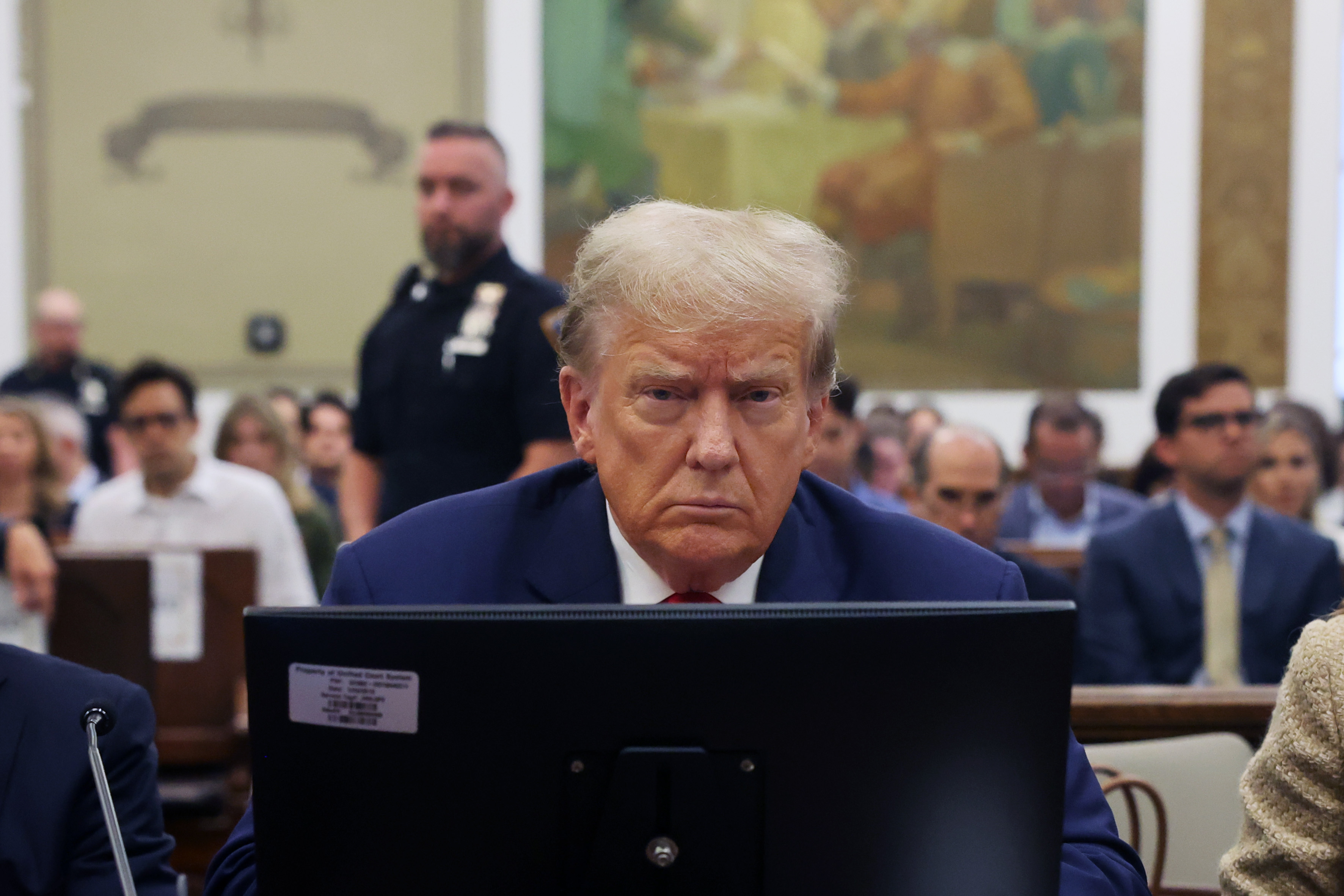
The judge overseeing former President Donald Trump‘s classified-documents case in Florida has placed a temporary pause on all litigation involving materials attached to Trump’s indictment while she debates postponing the trial altogether.

U.S. District Judge Aileen Cannon, a Trump appointee, filed a paperless order Friday after the former president’s defense team requested that his trial be postponed until after the 2024 presidential election. The case is scheduled for trial on May 20.

Trump is facing 40 felony charges in the case, including 32 counts of willful retention of national defense information, in the Department of Justice (DOJ) investigation of the classified materials discovered at his Mar-a-Lago residence in August 2022. He has pleaded not guilty to all charges.

Cannon’s order deals with a series of pre-trial deadlines set for October, intended to review how the classified materials at the center of the case are to be handled by Trump and his attorneys. Under the Classified Information Procedures Act (CIPA), Special Counsel Jack Smith requested that hearings be set to go over which sensitive materials could be used and made public during trial.

Cannon has already faced a slew of criticism over doubts of her impartiality while presiding over the former president’s prosecution. An appeals court scolded her in September over her handling of a request from Trump to block the DOJ from using the documents recovered at Mar-a-Lago to advance its investigation, and legal experts previously told Newsweek that the judge was not experienced enough to handle such a major case.

Reacting to Cannon’s order Friday, Harvard Law professor emeritus Laurence Tribe wrote on X, formerly Twitter, that the latest move showed Cannon’s bias toward Trump.

“I was among those who once called her a ‘loose Cannon,'” Tribe wrote. “That was wrong. She’s firmly anchored—to one thing and one thing only: Donald Trump’s interest in escaping accountability until after the election. It’s a complete disgrace.”

Former federal prosecutor Joyce Vance seemed to agree with Tribe’s sentiment, writing in a post to X that “delays can sometimes be necessary to accommodate issues involving classified discovery, but this seems over much.”

“This is a judge who is happy to see the case move slowly,” Vance added.

Brandon Van Grack, former lawyer for the DOJ, added that the delay is “not a good sign for those who want a trial in May.”

“We haven’t even reached the point in CIPA where the court has truly difficult decisions to make,” Van Grack wrote on X.

In a motion filed Wednesday, Trump’s attorneys claimed that there have been delays in obtaining access to classified records cited in Smith’s indictment, making it impossible for the defense team to be prepared in time for trial on the current schedule.

Federal prosecutors admitted in a court filing last week that there had been “a slightly longer than anticipated timeframe” in the case, and stated their support for a short extension in the case. However, Smith’s office adamantly opposed a delay to the entire pre-trial schedule.

When contacted via email by Newsweek on Friday night, Chris Kise, Trump’s lead attorney in the case, said he had no comment regarding Cannon’s order.

Trump "not fit for the job," gives foreign leaders reason to worry: Bolton

0

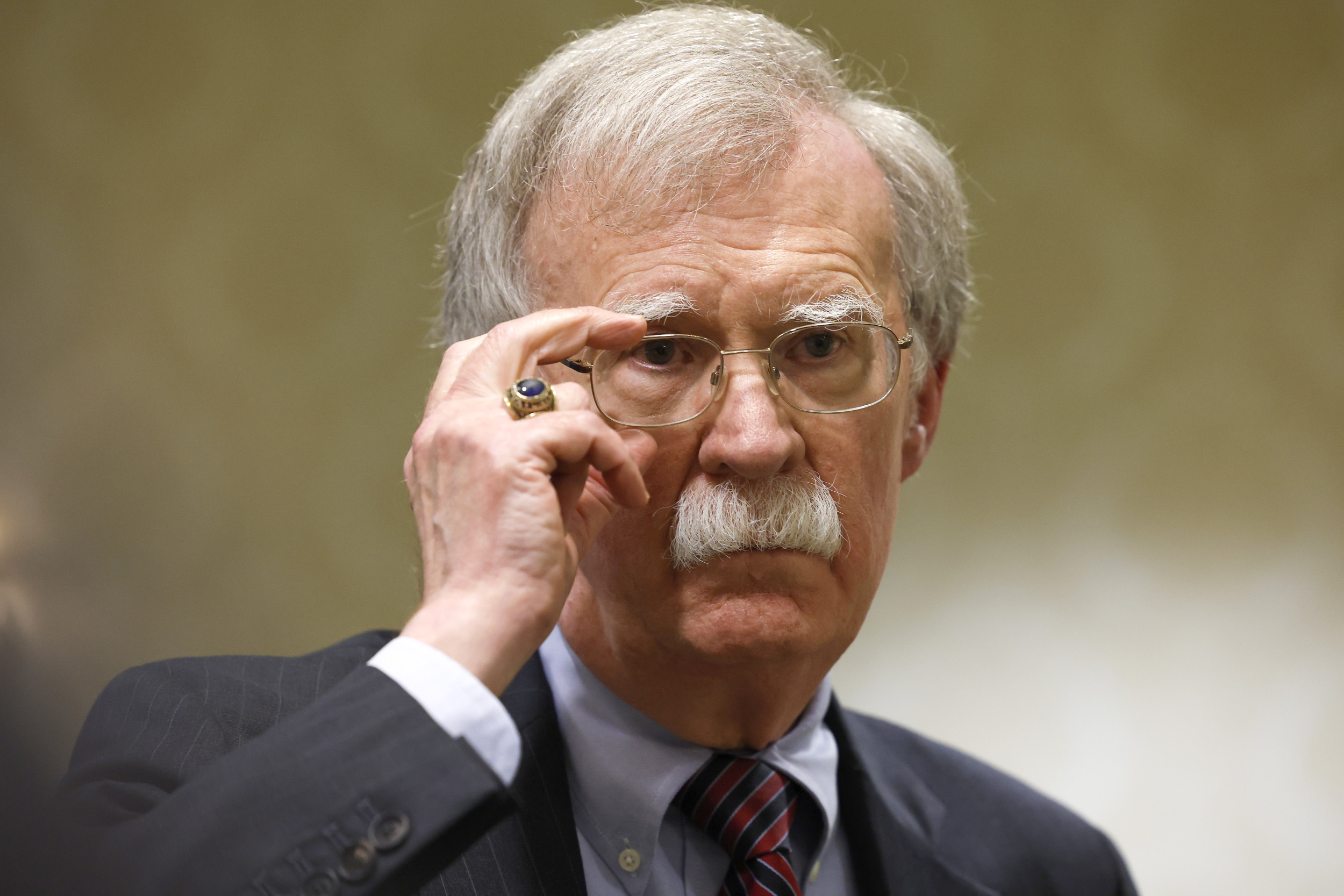
Reports alleging that ex-President Donald Trump shared U.S. nuclear submarine secrets with an Australian billionaire came as no surprise to former National Security Adviser John Bolton, who told CNN that Trump has “no filter between his brain and his mouth” and that “he’s not fit for the job” of president.

Bolton was reacting to news that surfaced Thursday, in which sources alleged that Trump shared classified information regarding the American nuclear fleet with Anthony Pratt, CEO of the U.S.-based packaging company Pratt Industries. According to the account, first revealed by ABC News, Trump discussed the sensitive information with Pratt during a conversation at the former president’s Mar-a-Lago estate in April 2021.

The report could play a key role in the Department of Justice (DOJ) criminal case against Trump, in which he’s accused of mishandling classified documents after leaving the White House. The former president has pleaded not guilty to the 40 federal felony charges.

While speaking to CNN’s Wolf Blitzer on Friday, Bolton said that the report from ABC News “unfortunately” sounds like something Trump would do, adding that the former president has “no filter between his brain and his mouth.”

“I think that’s a big part of the problem here, but it displays itself in a lot of different ways,” added Bolton—who served as Trump’s third of four national security advisers— from April 2018 to September 2019. Trump pushed Bolton out due to philosophical differences.

The former intelligence official pointed to the “famous story” of Trump sharing a sensitive photograph of an Iranian failed missile launch to his Twitter account in August 2019. Bolton said that at the time, the photo could have given “forensics experts and our enemies real evidence” about the U.S. photographic capabilities.

“I think it is something for foreign leaders to worry about,” Bolton continued. “They may trust president’s advisers, they may trust others they deal with on a regular basis, but they’d always have to worry that information that got to Trump might slip out in an unguarded moment.”

Bolton added during his appearance on CNN that, if true, Trump’s conversation with Pratt could “be very serious,” and said that it sets a bad example for others working in national security if the former president is able to “get away” with sharing secrets.

“I think the core argument Republicans in particular ought to be making about Trump is that he’s not fit for the job,” Bolton continued when asked by Blitzer if Trump’s opponents in the 2024 election should “make the case” that he poses a national security threat.

“He doesn’t understand the full nature of his responsibilities in the national security area,” Bolton said. “He didn’t know much about the government when he was inaugurated in 2017, he learned very little since then.”

“And I think it’s a real problem when you have somebody who’s more interested in talking about himself, his own self-aggrandizement, seeing everything through the prism of whether it benefits Donald Trump. These are the attributes of somebody who shouldn’t sit in the Oval Office,” Bolton added.

Former intelligence officials have also expressed their concerns regarding reports of Trump allegedly sharing nuclear fleet information. James Clapper, director of national intelligence under the administration of former President Barack Obama, previously told CNN that the accusations against Trump were “unfortunately another in a long litany of violations of our national security by a failure to properly protect such sensitive information.”

“If this involved sea-launch ballistic missiles and the subs that carry them, this is a part of our national strategic arsenal, which gets to the very essence of survival of the nation,” Clapper added. “So it’s hard to overstate—if this is true—how serious this is by affirming knowledge of these submarines with foreigners.”

It’s not known what information Trump allegedly shared with Pratt, although ABC News reported that Pratt “described Trump’s remarks” to at least 45 other people after their conversation. Sources familiar with the matter also told ABC News that Pratt has been interviewed at least twice by the DOJ as part of its investigation of Trump.

Bolton has previously spoken out against his former boss in light of the classified- documents investigation. In August, the former security adviser told CNN that Trump had a “constant fixation on trying to hold on to documents” while in the Oval Office.

In a Truth Social post Friday afternoon, Trump dismissed reports regarding his and Pratt’s conversation as “false and ridiculous,” blaming it on “corrupt prosecutors trying to interfere with the Presidential Election of 2024.”

“The ridiculous story put out today about me talking to a Mar-a-Lago member about U.S. Submarines, is false and ridiculous, other than the fact that I will often state that we make the best Submarines and Military Equipment anywhere in the World—A pretty well known fact!” Trump wrote.

“With that being said, I will always promote the Greatness of America—and its Military Equipment. The alternative would be for Allies, and others, to buy from Russia, China, or elsewhere. I like creating jobs in America, which was one of my most successful achievements as President!” he added.

Newsweek has sent a request for comment to Trump’s press team regarding ABC News’ report, which has not been returned.

Trump has been the overwhelming front-runner ahead of the 2024 GOP presidential primary election. After skipping the first two debates, the former president shares a 40-plus-point lead over his Republican rivals, according to recent polling by ABC News/Washington Post and FiveThirtyEight.

Update 10/06/23, 10:52 p.m. ET: This story has been updated with additional information and background.

Is Biden "too soft" on China?

0

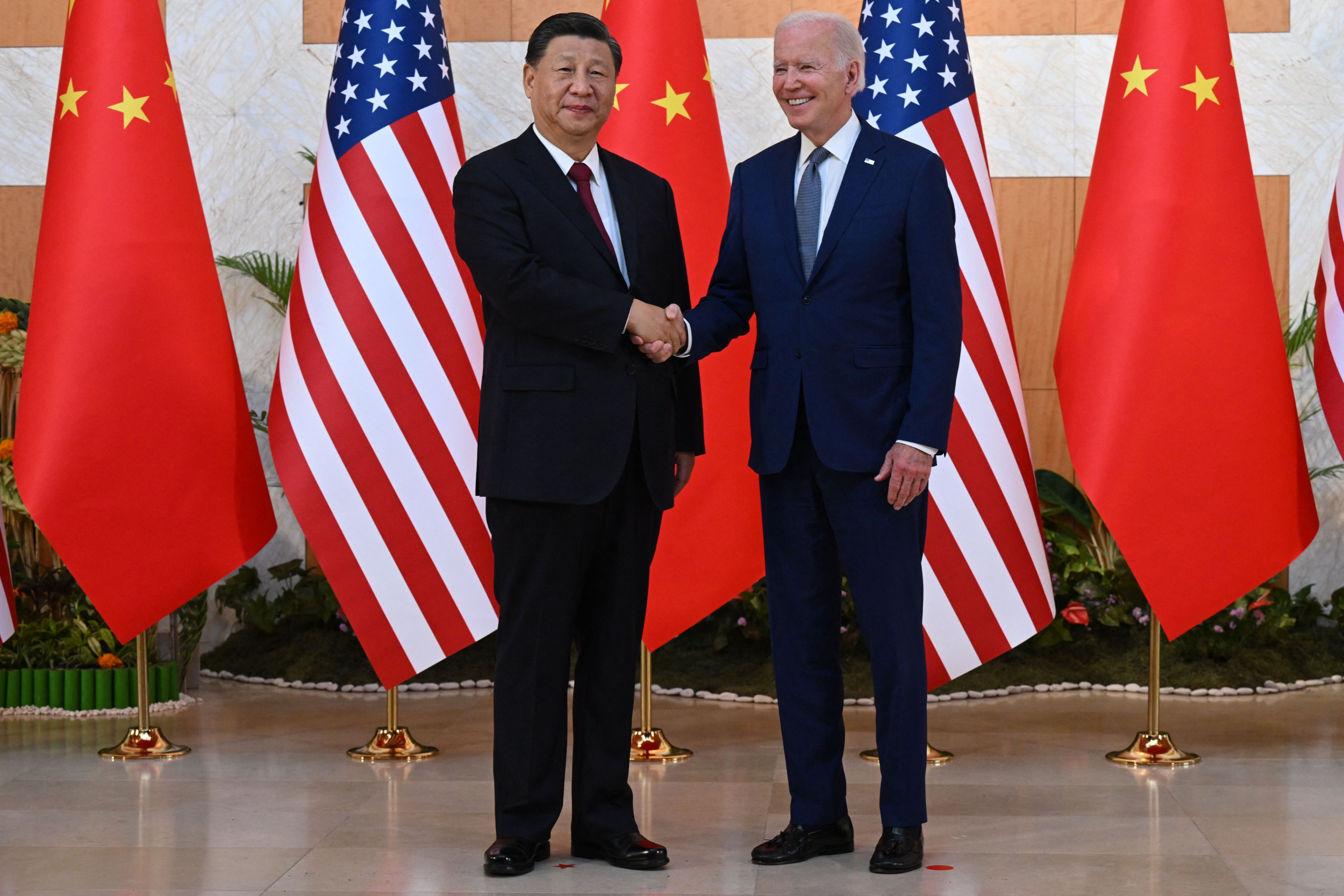
Momentum is building towards a summit between Joe Biden and Xi Jinping with the American president’s track record on Beijing already an issue on the 2024 election campaign trail.

Last Thursday, Daniel Kritenbrink, the top U.S. State Department official for Asia, met China’s Vice Foreign Minister for Asia, Sun Weidong, in Washington in the latest exchange of top officials between the world’s two biggest economies. This month, Chinese Foreign Minister Wang Yi is expected to visit Washington for further discussions.

Although there is no confirmation from either side, these powwows could be a prelude to a meeting between the heads of state at the Asia-Pacific Economic Cooperation summit in San Francisco in November, coming at the end of a rocky year.

So far in 2023, the U.S. has shot down an alleged Chinese spy balloon, Biden has called XI a dictator, and Washington has continued to spar with Beijing over access to cutting-edge technology and faced off over Xi’s territorial claims over Taiwan.

Even if Biden has talked tough on China, former President Donald Trump painted Biden as being soft on Beijing last week at a rally in Detroit, saying that if re-elected, the incumbent would let vehicle production to shift from Michigan to China.

This suggests Trump may point to his foreign policy bona fides on China when he was in the White House where he launched a trade war in 2018, slapping tariffs on $50 billion of Chinese made goods as well as adding duties to more items after Beijing retaliated.

Other contenders for the 2024 Republican Party nomination have followed suit on the rhetoric toward Beijing.

Vivek Ramaswamy has called for a ban on Chinese investment. Nikki Haley, the former South Carolina governor and U.S. ambassador to the United Nations, said if she won, she would take a hardline approach to China, which she views as an “enemy.”

It raises questions over whether Biden has been stern enough on China, or whether such an approach is even necessary.

“U.S. policymakers focused on China need to think bigger and move faster,” said Jonathan D.T. Ward, the author of The Decisive Decade: American Grand Strategy for Triumph Over China.

Ward told Newsweek that the Biden administration had succeeded in rallying allies around a technology-focused strategy and maintaining Trump-era tariffs that spurred American businesses to rethink supply chain risk in China. There was also a focus across U.S. government agencies on China “as our primary geostrategic competitor.”

“However, the United States has barely begun to address the scale of the challenge and time is of the essence,” Ward said.

The U.S. adherence to the One China policy, which acknowledges one Chinese government with formal ties with Beijing rather than Taiwan, teeters alongside Washington’s strong ties with the self-governed island which are enshrined under the Taiwan Relations Act.

Meanwhile, Beijing has been increasing its swagger in the South China Sea, stepping up its deployment of warships near Taiwan ahead of the island’s presidential election in January. China’s Ministry of Natural Resources angered regional neighbors by publishing a map that shows disputed territory as being within China’s borders, including all of Taiwan, and islands, reefs and maritime zones contested by half a dozen countries.

But Washington is looking to counter this push by Beijing in the Asia-Pacific region. Last month, it was reported that the U.S. military wants to develop a port in the Philippines’ Batanes islands which would give it increased direct access to strategic islands facing Taiwan.

“The rhetoric from Biden has been tough and sometimes maybe even reckless and excessive, but the actual movement of hard military assets to Asia has been less than one would expect,” Carl Delfeld, author of Power Rivals: America and China’s Superpower Struggle, told Newsweek. “In other words, the rhetoric is not matched by action on the ground.”

South China Sea

Last month, China’s military condemned as “public hyping” the transit of American and Canadian warships USS Ralph Johnson and HMCS Ottawa through the Taiwan Strait in the second such joint mission since June.

“Our goal is a favorable balance of power to deter China from moving on Taiwan,” said Delfeld. “I think both Republicans and the Democrats would be smart to frame the issue with China as freedom of navigation and put that more front and centre.”

John Lee, a senior fellow at the Hudson Institute, told Newsweek that it was significant that the U.S. was seeking basing rights in the Philippines and that there was greater defense co-operation with Japan and Australia.

“In strategic and defense issues, there has been continuation and acceleration under Biden,” Lee said. “In this sense, one can say that Trump initiated the change in the approach and rhetoric towards China and Biden has leveraged off that,” he said. “It is a rare instance of general continuity from Republican to Democratic policy.”

Trump’s trade war

When he entered the White House, Biden reversed a number of the Trump administration’s policies but left tariffs in place on $350 billion of Chinese goods imposed by his predecessor.

However, in September, U.S. Commerce Secretary Gina Raimondo said there was unlikely to be any revisions to tariffs on China imposed during the Trump era until a review is completed by the U.S. Trade Representative’s Office.

“Compared with the Trump administration, the Biden administration’s China policy is not tougher or softer, but smarter,” Zhiqun Zhu, a political science professor at Bucknell University in Lewisburg, Pennsylvania, told Newsweek.

Zhu said that the Biden administration defends the interests of the U.S. and its allies to push back Beijing’s assertiveness “while avoiding confrontation or a new cold war with China.”

“It is harder for China to counter U.S. policies now,” he said. “Rhetorically, the Biden administration seems to be saying less and less now about China to avoid publicly offending China or further raising tensions between the two countries.”

Zhu also noted the Biden administration’s move to strengthen alliances with South Korea, Japan, and the Philippines through weapons sales and military aid.

“It has beefed up Taiwan’s defense, and it has toughened up the tech war with China,” he said.

This tech war has dovetailed with the trade war, driven by concerns that China was using unfair means such as intellectual property (IP) theft and state power to achieve its goal of attaining supremacy in core technologies like AI, semiconductors and 5G, driven by by the 10-year blueprint called Made in China 2025.

But Ward told Newsweek that Biden and his administration show “worrying signs of a return to the old, failed U.S. strategy of economic engagement with China, which transformed Communist China into an economic superpower.”

“A genuine U.S. grand strategy that goes beyond a technology focus and addresses the Chinese Communist Party’s own comprehensive economic, military, diplomatic, and ideological strategies, has yet to be articulated,” he said.

This is how Ukraine war could end, according to Putin’s exiled foe

0

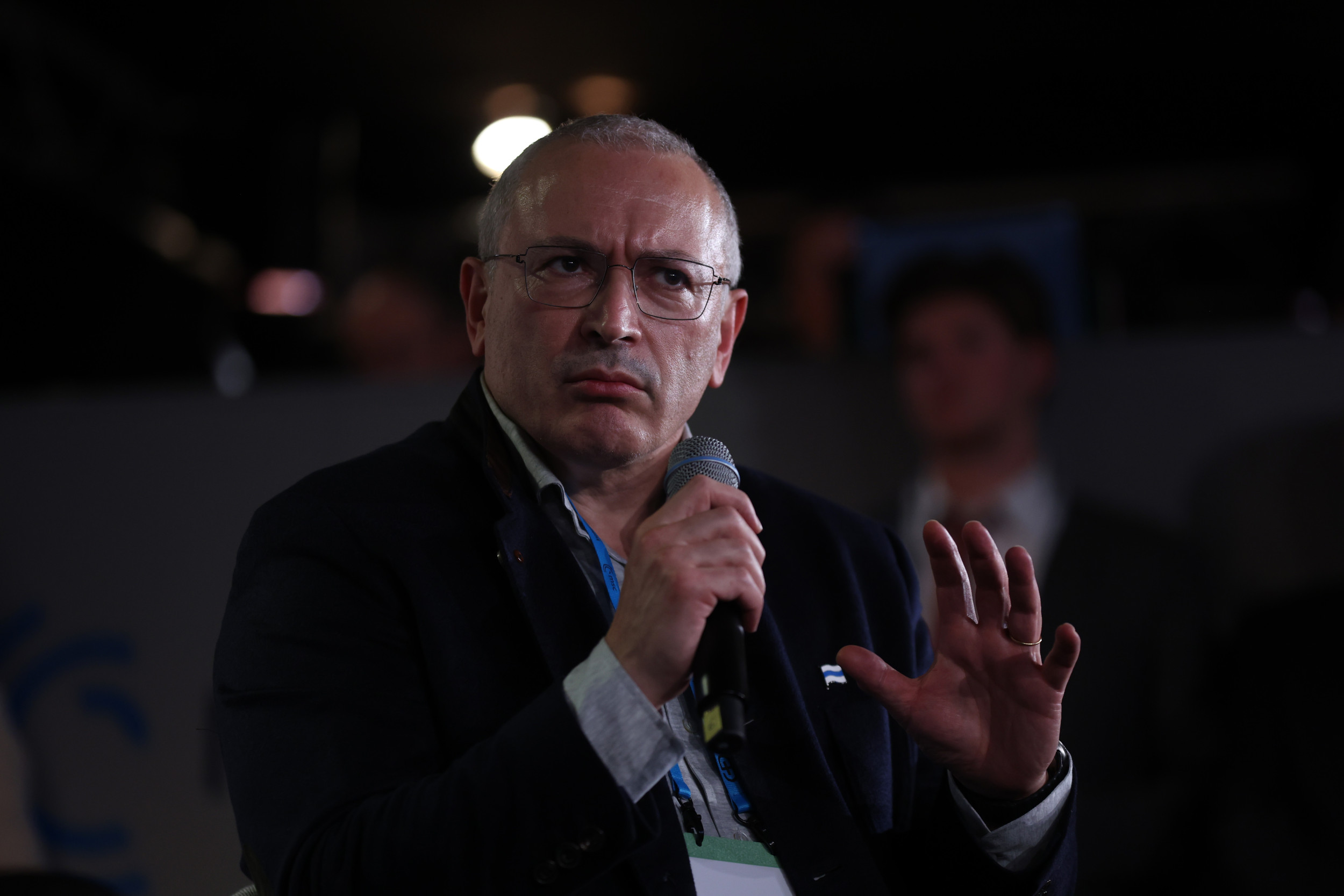
The war in Ukraine will not end until President Vladimir Putin leaves power, the prominent Russian opposition figure Mikhail Khodorkovsky has told Newsweek.

Once Russia’s richest man when he headed the energy company Yukos, Khodorkovsky was jailed for a decade on what were considered politically motivated charges after he criticized corruption, He was pardoned by Putin in 2013.

His book How to Slay a Dragon, released later this month in the U.S., describes how a revolution is required to usher in democracy and break the cycle of Russia’s history of autocracy.

Khodorkovsky said that the conflict in Ukraine does not present an advantage to the Russian opposition now because, despite high troop losses and retreats, Russian society is not seeing the war as something weakening Putin’s regime.

“Of course, theoretically if Putin loses Crimea, then that would undermine his authority,” he said from his London headquarters where his Open Russia Foundation works to develop civic society in his homeland.

He believed that any negotiations between Moscow and Kyiv to end the war would play into Putin’s hands. “Let’s assume they agree, ‘we stop where we are’. Will Russia live better as a result? No because the sanctions won’t go away, the Russian economy will not get better.

“You have to do something with the territories that have been occupied, but if there is no longer any war, you can’t have that as an excuse, so what is the result? Putin will have to start a new war in a short period of time.”

Khodorkovsky said that if the war is ended through talks, Ukraine would be unlikely to get the same military supplies from the West it gets now, while the chance of membership of NATO and the protection that entails remains remote.

The Kremlin has predicted that Western military support for Kyiv will wane as the war grinds on, with the U.S. Congress omitting Ukrainian funding from the stopgap spending bill to avoid a federal government shutdown.

“In one year’s time when the war resumes, Ukraine will be weakened and Putin will have accumulated arms,” he said, explaining how the Russian president’s ouster is a condition for the conflict to end once and for all.

“In the West there are people who sincerely want Ukraine to win and others who are afraid of that. The result is a counterbalance force,” Khodorkovsky said, “It is not possible to preserve Putin and stop the war.”

“One could think about the ways that Putin should lose but he must definitely leave.”

Why the US will help African police take on gangs in a Caribbean nation

0

As a multinational security mission led by Kenya prepares to deploy to Haiti, the United States will aid in the provision of funding, training and equipment to support international police combat rising gang violence and instability in the Caribbean nation.

“The United States stands ready to support a Multinational Security Support (MSS) mission in Haiti by working with Congress to provide $100 million in funding and up to $100 million in enabling in-kind support,” a U.S. State Department spokesperson told Newsweek. “The U.S. government is working with the international community to provide equipment, training, and assistance to meet mission requirements, subject to vetting and oversight.”

The remarks came days after the United Nations Security Council was able to secure a rare resolution to approve the Multinational Security Support mission in response to pleas from Haitian Prime Minister Ariel Henry, whose nation has been consumed in a deepening spiral of security and economic challenges.

“The U.S. government remains deeply concerned by the widespread gang violence in Haiti,” the State Department spokesperson said, “and we believe the MSS mission is necessary to address this issue and improve security and long-term stability in the country.”

But the mission is set to face serious challenges, and it has already begun to raise concerns, both within Haiti and abroad.

In Kenya, opposition lawmakers have demanded that the deployment first be ratified by parliament before it is approved, raising concerns for both the safety of the personnel being sent to Haiti as well as national security priorities at home. The East African nation has dealt with its own share of non-state actor violence, including brazen attacks by Islamist groups such as the Al-Qaeda-affiliated Al-Shabab, based in neighboring Somalia.

As for Haiti, which prides itself as home to the world’s only successful slave rebellion that expelled French colonists at the dawn of the 18th century, any foreign intervention is often met with suspicion.

A Troubled Legacy of Foreign Intervention

“Generally speaking, Haitians have never seen foreign interventions, of any kind, as an honorable thing,” Fritznel D. Octave, a veteran Haitian journalist who recently authored a book on the country’s history from its 1804 revolution to current challenges, told Newsweek.

“Most Haitians consider foreign police or military presence on national soil as an insult to the heroes of independence who shed blood, sweat, and tears to give them that land, more importantly their liberty, freedom, natural rights, and self-determination,” he added. “Additionally, the legacy of foreign interventions is considered as a heady burden on the country.”

And while the upcoming deployment is not a U.N. action, the international body also has also cultivated a difficult legacy in Haiti in recent years.

The last foreign mission to be deployed to the country, the U.N. Stabilization Mission in Haiti (MINUSTAH), was widely accused of inadvertently causing a deadly cholera outbreak that killed nearly 10,000 people nationwide. The peacekeepers departed Haiti in 2017 and were followed by the scaled-down U.N. Mission for Justice Support in Haiti (MINUJUSTH), which itself ended in 2019 and was replaced with the current U.N. Integrated Office in Haiti (BINUH).

A U.N. spokesperson told Newsweek that “the UN, including its special political mission in Haiti (BINUH) will fully support the new Multinational Security Support mission” and that “what that support will look like in detail will depend in part on what the MSS defines as its needs.”

“This should take shape in the coming days and weeks,” the U.N. spokesperson added.

Octave said that “many Haitians are against such a decision because they strongly fear that history will repeat itself” when it comes to the past experience with the initial U.N. deployment.

Still, he argued that MINUSTAH did manage to bring some sense of stability when it arrived in 2004 in the chaotic wake of President Jean-Bertrand Aristide’s ousting at the hands of a rebel paramilitary group, his second ousting in just under 25 years.

The upcoming mission, Octave asserted, could also “quickly help Haitian authorities regain control from gangs, re-establish order, security, and calm throughout the country” while at the same time helping national police to “provide a safe and secured climate for Haiti to be able to conduct elections for the renewal of the democratic institutions.”

He warned, however, that “foreign presence often creates a sense of dependence without much support in terms of professional training, materials, and equipment to the national police.” He also argued that the absence of U.S. personnel may actually undermine the mission as “Haitians traditionally do not cultivate a great deal of respect for foreign forces other than U.S. military or police forces.”

The United States Under Scrutiny

Washington too has a complex history of intervention in Haiti.

In 1915, after just over a century of Haitian independence from France, the U.S. invaded and occupied the country for two decades under the stated mission of restoring economic and political stability. The U.S. military again intervened in 1994, this time after securing U.N. Security Council support, to defeat a military coup that overthrew Aristide three years earlier.

Washington has also been accused of covert meddling in Haitian politics over the past 30 years. These include allegations that it supported the rebellion to overthrow Aristide the second time around in 2004 and that it even had a hand in the 2021 assassination of President Jovenel Moïse, whose assailants, apparently working with a Florida-based investment agency owned by a Haitian-born businessman, identified themselves as personnel of the U.S. Drug Enforcement Administration.

The DEA and other U.S. government bodies have vehemently denied any connection to the ousting or killing of any Haitian leaders.

U.S. officials have, however, acknowledged the existence of the rampant smuggling of weapons from the U.S. to Haiti. This influx has fueled the rise of well-armed gangs now in control of parts of the capital and expanding elsewhere in the country.

“What we’re seeing right now in Haiti is a manifestation of failed U.S. policy,” Johanna Leblanc, a partner at the Washington, D.C.-based Adomi Advisory Group, told Newsweek.

On top of the lasting impact of U.S. military interventions, Leblanc, who has previously advised both U.S. lawmakers and Haitian government officials on foreign policy, traced a history of how Washington’s economic policies have affected Haiti, from trade measures that devastated the country’s rice industry in the 1990s to ongoing systemic issues with foreign aid that rarely benefitted the long-term interests of the Haitian people.

As such, she said the current international effort to aid Haiti has to adopt “a holistic approach for it to work.”

“We can’t just focus on insecurity,” Leblanc said, “but it needs to need be combined with economic opportunities in the country so that people can go back to work and then we can restore some kind of normalcy in the country.”

Battling “Gangsterization”

Factors both domestic and external have played key roles in fomenting the conditions under which Haitians are currently suffering.

The U.N. has acknowledged the need for more comprehensive solutions.

“The greatest concern at the moment is that without support to Haiti from the international community, gang violence and instability will continue to deteriorate,” the U.N. spokesperson said. “At the same time, as the Security Council states in its resolution, there is a need for broader efforts beyond the work of the MSS mission to sustainably address the root causes of gang violence.”

“This violence emanates from political, institutional, and socio-economic instability,” they added. “That’s why the Council reiterated its call to the international community, including international financial institutions, to enhance support for long-term economic, social and institutional development in Haiti even after its stability is restored.”

Octave also spoke to the depth of Haiti’s underlying issues that would need to be addressed to effect substantive change.

“Haiti’s current economic and security plight are deeply rooted into a long legacy of unresolved socio-political, cultural, and economic conflicts among Haitians,” Octave said. “These internal conflicts have resulted from the will of a tiny minority of the elites to oppose any form of progressive change in favor of the large majority of Haitians.”

“In that context, and amid a permanent state of power struggles,” he added, “foreign actors have exploited the situation by influencing generations of bad leaders to implement policies that have made Haiti weaker but benefited the minority and foreign interests alike.”

This has led to what he called “the gangsterization of Haiti,” which he said “is the symptom of a disease: the permanent fight among factions of stakeholders for control over the destiny of the impoverished and damned majority.”

A Lack of Will

Leblanc as well pointed to the role of “oligarchs and political elites” in Haiti who are “working with the gangs on the ground” to commit atrocities with relative impunity in the face of an embattled police force.

“We did not have to get to where we are in Haiti if there was a political will on the part of the Haitian government and international partners, as well as the existing government and even previously under President Moïse,” she said. “We’ve seen the insecurity has just been getting worse and worse and worse over time, but it could have been stopped.”

She asserted that Washington had to crack down on both the flow of weapons to Haiti as well as the access by gangs to financial markets abroad. She also called on lawmakers to show the same kind of attention to the Haitian people they have shown to support Ukraine in its efforts to resist Russia amid the ongoing conflict in Eastern Europe.

“At the end of the day, the people of Haiti are incredibly resilient, but I think they are tired,” Leblanc said. “It’s really time for the world to stand by the people of Haiti and really focus on trade and investments.”

“Obviously, the security issue has to be addressed,” she added, “but it is imperative that the U.S. Congress put out legislation that will bring about economic stability in the country, just like we have done incredibly well at supporting the people of Ukraine during this war with Russia.”

Newsweek reached out to the Haitian Embassy to the United States, the Haitian Foreign Ministry, the Kenyan Embassy to the United States, the Kenyan Foreign Ministry, and the Kenyan Defense Ministry for comment.

Ancient town among dozens of hidden structures found in Amazon rainforest

0

Researchers have discovered two dozen ancient constructions hidden beneath the canopy in the Amazon rainforest basin.

The constructions are earthworks built in the pre-Columbian era—meaning prior to the period of European colonization. They represent the remnants of a variety of sites and structures built by ancient Indigenous peoples.

The previously unknown earthworks include the remains of an ancient town, fortified villages; defensive and ceremonial structures; as well as rectangular and circular features known as geoglyphs; among other constructions, according to a study published in the journal Science.

Indigenous societies are known to have lived in the Amazon region for at least 12,000 years, creating earthwork structures and domesticated landscapes that have had long-lasting effects on the forest.

However, the scale of these societies’ influence on the forest remains poorly understood. Primarily, this is due to the fact that finding evidence of them is very challenging given the density of the forest canopy and the remoteness of many archaeological sites.

In the latest study, however, a large international team of researchers used LiDAR (light detection and ranging) technology to survey more than 2,000 square miles of the Amazon basin, which enabled them to identify 24 previously unknown earthworks.

LiDAR essentially allows scientists to see through the forest canopy and create detailed 3D models of the surface elements, including any unknown structures that lie below.

“Our study suggests that the Amazon rainforest may not be as pristine as many believe, as when we seek a better understanding of the extent of pre-Columbian human occupation throughout it, we are surprised by a significant number of sites still unknown to the science community,” Vinicius Peripato, a doctoral student in Remote Sensing at Brazilian National Institute for Space Research (INPE) and co-lead author of the study, said in a press release.

“From the 3D models of the surface, it is possible to digitally remove all vegetation and initiate a precise and detailed investigation of the terrain beneath the forest.”

The scientists then modeled the occurrence of other ancient earthworks across the Amazon, predicting that anywhere between roughly 10,000 and 24,000 are waiting to be discovered in the region.

The latest findings shed new light on the influence of pre-Columbian societies in the Amazon region.

“Some time ago, ecologists viewed the Amazon as the vast untouched forest, but now, combining other types of pre-Columbian remains, we can see how many areas that currently sustain dense forest have already been subjected to extensive engineering works and the cultivation and domestication of plants by pre-Columbian societies,” Carolina Levis from the Federal University of Santa Catarina in Brazil said in the press release.

“These people mastered sophisticated techniques for land and plant management, which in some cases, are still present in the knowledge and practices of present-day communities that can inspire new ways to coexist with the forest without the need for its destruction.”

The LiDAR survey data collected for the study only covered 0.08 percent of the total area of Amazonia, but the researchers wanted to better understand where and how many undocumented pre-Columbian sites there might be in the region.

In order to do this, the scientists combined the data from their relatively small survey with knowledge from previously identified sites to create a predictive model that could estimate the occurrence of pre-Columbian structures.

This model indicated that between 10,272 and 23,648 large-scale pre-Columbian structures remain to be discovered, particularly in southwestern Amazonia.

Furthermore, the researchers found an association between the predicted locations of earthworks and the abundance of dozens of domesticated tree species. This suggests that active pre-Columbian Indigenous forest management practices have long shaped the ecology of modern forests across Amazonia.

“Amazonian forests clearly merit protection not only for their ecological and environmental value but also for their high archaeological, social, and biocultural value, which can teach modern society how to sustainably manage its natural resources,” the authors wrote in the study.

Refunds demanded after men overrun women’s job fair

0

Thousands of women and nonbinary individuals are requesting refunds following an expensive tech conference overrun by cisgender men who allegedly engaged in “sexual harassment, physical altercations and inappropriate behavior,” according to an online petition.

This year’s Grace Hopper Celebration, described as the largest gathering of women and nonbinary technologists in the world, took place in late September in Orlando, Florida. The event is intended for those who have been traditionally underserved in the tech community, offering a career expo and opportunities to meet one-on-one with companies and employers.

The event was quickly met with a backlash, however, after numerous attendees brought to light their indignation about the number of men who attended and seemingly used the conference not to boost minorities in the field but to propel their careers. That included skipping various sessions dedicated to female empowerment, for example, and instead handing out résumés.

Agnes Lu, a member of the tech industry who is working on her second master’s degree at Northeastern University in Boston, paid the student fee of $649 to attend the conference for the first time.

She told Newsweek she was among the first of the attendees to publicly chastise event organizer AnitaB.org, writing in a LinkedIn post that she was “deeply disappointed” by the experience. The post was “liked” hundreds of times and shared by dozens.

“I had been eagerly anticipating this event ever since I transitioned into computer science, viewing it as a valuable opportunity to connect with fellow female engineers and offer support within the male-dominated tech industry,” Lu wrote. “However, since my flight to Orlando yesterday, I’ve noticed a significant number of male participants at the event.

She went on: “GHC (2023), named after [a] pioneering female programmer [Grace Hopper], promotes itself as an event for women and nonbinary individuals in the technology field. Despite this, there is a noticeable presence of men at the event. It is disheartening that women continue to invest a considerable amount of money to attend an event that seems to fall short of its commitment to providing opportunities for women.”

The post drew the attention of AnitaB, a nonprofit dedicated to supporting women and nonbinary workers in technology. It responded with an apology and a “public call for cis men to stop taking advantage of the opportunities” meant for women and nonbinary individuals.

AnitaB officials also addressed attendees multiple times at the conference, saying it was aware of the complaints and the large number of male attendees, compared with past years.

But the apologies fell flat for many.

“I had to unwillingly pay $1,299 to register for this event because so many men took away the limited $649 academic spots,” wrote Varsha Ravi Varma, a database coordinator at Indiana University, on Lu’s LinkedIn post.

“How is it fair that this is a conference focusing on women and non-binary in tech and yet there are no known limitations for other genders. I pay $1,299 to just compete with men who paid half of that although it isn’t even meant for them. It makes no sense.”

Newsweek has reached out for comment to AnitaB multiple times via email but has not heard back.

Lu told Newsweek that the event seemed extremely “disorganized” and that multiple-time attendees told her it felt different from past years.

“People told me that there were much more men at the conference than in past years…that this year had been much crazier than before,” she said.

In light of the complaints, she started a Change.org petition that had been signed by over 1,200 people as of Friday afternoon. Part of the petition’s request is for ticket refunds.

Lu and others also want a broader explanation for why the event took place the way that it did. That includes transparency in advertising, since women and nonbinary attendees bought tickets with the expectation that they would be in a particular environment predominantly composed of such underrepresented groups.

While the general presence of men was not frowned upon, the petition states that the “overwhelming presence compromises the intended atmosphere.”

Lu said the event could have been more pragmatic if the men in attendance who primarily focused on job searching had instead “engaged meaningfully with the community.” Otherwise, she said, “it dilutes both its significance and effectiveness.”

Tanya Goette, associate dean of the College of Business and Technology at Georgia College & State University, has attended the event every year since 2016. This year, she was one of four faculty members who accompanied 25 students.

Goette told Newsweek that there were noticeably more men than usual in the career expo area and that they appeared to be mostly international students. The name tags she saw had universities rather than companies on them.

While she did not see men committing any kind of harassment or engaging in rude behavior, she said her booth was far from the event’s epicenter and she is aware of complaints made by other attendees.

“I sincerely believe that AnitaB/GHC knows there was an issue,” Goette said. “As this had never occurred in the past, I am sure it was surprising to them too. I do not know what they will do to fix it.”

She added: “In the past, the atmosphere of the conference was very uplifting and inclusive. This year the atmosphere did not have that same feeling.”

However, Goette is not seeking her $649 back because she feels the organizer was not responsible for the problems. Instead, she thinks chaos ensued because of those who attended strictly for job opportunities.

“Based on potential discrimination issues, I am glad it is them [AnitaB] and not me who needs to figure out a fix,” she said. “I believe AnitaB/GHC needs to be transparent with what they decide to do next year so people know before purchasing a registration what type of event and career expo to expect.”

Lu said she has not heard anything from AnitaB regarding her petition and refund requests.

She said she probably will not attend next year’s event in Philadelphia, not only because of the way the event was run this year but because it didn’t help her job search. She said the number of attendees, compounded with unhelpful recruiters, does not justify the cost.

“The reason for the petition and spreading it…is to have more people know that it wasn’t as good as they advertised it,” Lu said. “My true intention is just to let people know” how the event unfolded.