Friday, May 8, 2026
Home Blog Page 64

Forester John Ouko is helping to bring back Kenya’s "music tree"

0

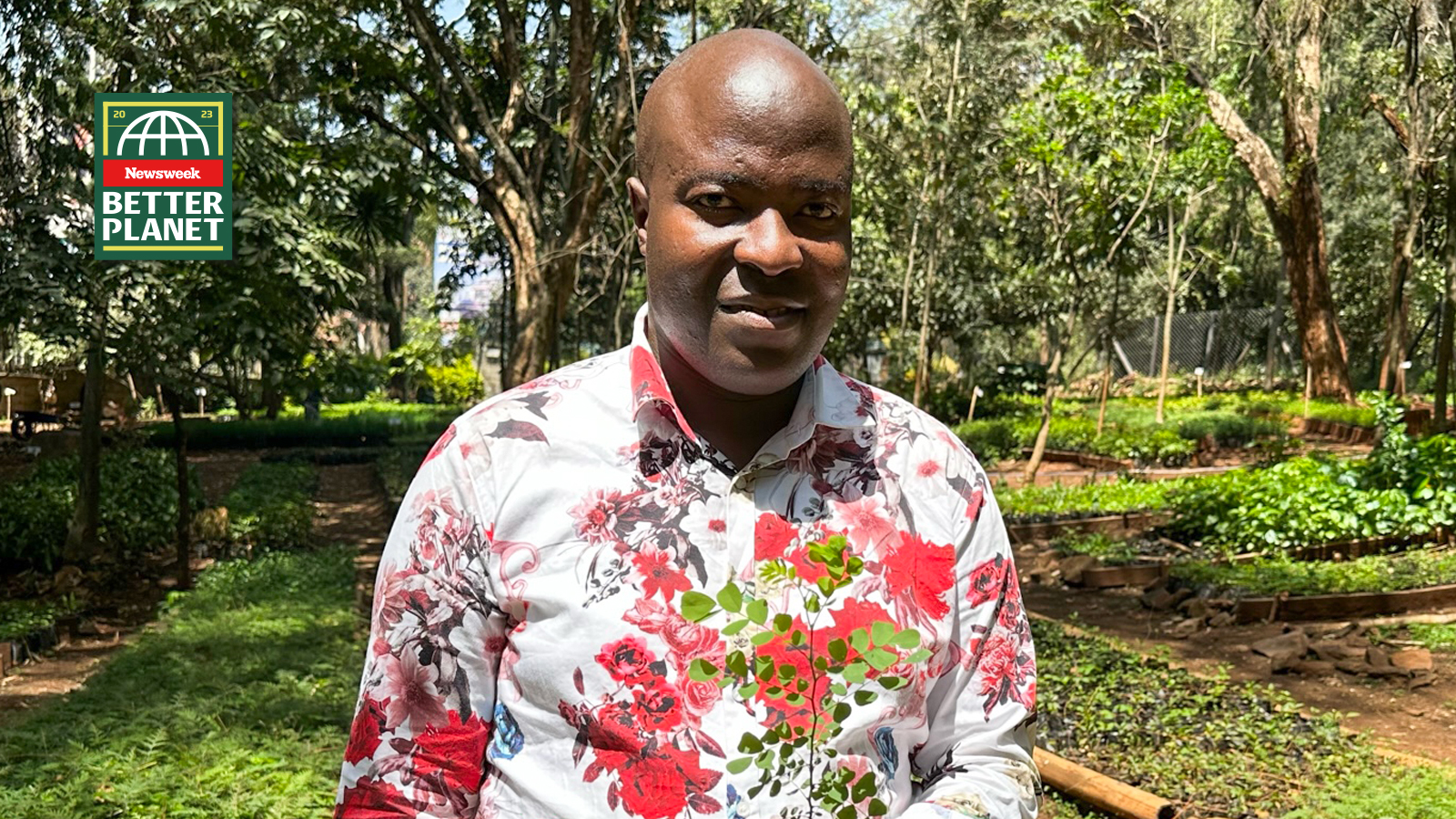
When John Ouko walks the green, leafy paths of the Nairobi Arboretum, he sees thousands of tiny signs of hope for a tree that had been cut to the point that Kenyans feared they might lose it—the Mpingo tree.

“It appeared it was going extinct” in parts of Kenya, Ouko told Newsweek over a recent Zoom call. Ouko, who is 36, has been with the Kenya Forest Service for a decade, the past three years with the arboretum.

Over-harvesting has depleted the Mpingo in many parts of its native range, and the International Union for the Conservation of Nature has categorized the species as near-threatened. The arboretum Ouko directs is working to turn that around by growing row upon row of Mpingo seedlings.

“As we speak, we have about 17,000,” he said.

The arboretum will tend to the seedlings for about eight months before sending them out to surrounding villages for replanting. The Mpingo seedlings are part of a larger project to increase Kenya’s depleted forests, protecting soil and water resources and drawing down CO2 from the atmosphere.

Kenya has expanded forest cover since launching a reforestation initiative in 2019, and the government set an ambitious new goal last year to increase the country’s forest cover from a little more than 10 percent today to 30 percent by 2050. Ouko said the Mpingo, which is also known as African blackwood or the Grenadilla, has an important role to play.

“The Mpingo tree is an indigenous tree which needs to be protected for heritage,” he said, adding that it is also particularly well adapted to harsh growing conditions. “This is a tree which normally grows more than any other tree in dry land.”

The Mpingo has another characteristic that connects it to people around the world, though many of them might not know it. The tree’s dark, dense heartwood is the preferred material for making many musical instruments, including clarinets, oboes, piccolos, piano keys and parts of violins. That earns the Mpingo yet another moniker: the Music Tree.

Ouko said musicians are now coming to the aid of the tree as well.

“They will come and entertain students,” he said, “to show them that even the instruments they use are made of this wood.”

Ian Tyson is a professional clarinetist in New York and one of the musicians who has gotten involved in the work to preserve and restore the tree. He is the executive director of a nonprofit group called the Daraja Music Initiative. “Daraja” is a Swahili word for bridge, Tyson explained.

“We are bridging conservation and music education, tying music to the Mpingo trees,” he told Newsweek.

The Daraja Music Initiative works mostly in Tanzania, where it provides music classes in some local schools and takes students on field trips to see the trees and help to plant them.

“The Mpingo is the national tree of Tanzania, so most of our students, they know of this tree,” Tyson said. “But they don’t always know the amazing qualities of the tree and that it goes to make these instruments played all over the world.”

Tyson said that until recently few woodwind players seemed to know where the wood used to make their instruments came from. But like many consumers, he said, musicians are showing increased interest in how and where their goods are produced, as well as whether workers are fairly treated and materials are sustainably sourced.

Music also allows the volunteers in his group to connect with young people in Tanzania, despite the language and cultural barriers.

“Music is just universal. Their eyes light up when we learn a new tune and we were able just to communicate a little bit more,” Tyson said. “There is this kind of spiritual aspect of it, because I think music is such a key component to all of our lives.”

In Nairobi, Ouko gets to see the many ways that trees enhance people’s lives. The Nairobi Arboretum dates to 1907 and Ouko said it is now home to about 350 species that form a popular refuge for people to escape the city’s noise.

“People from Nairobi come and enjoy seeing the trees, they enjoy the silence here,” he said.

He grew up in the small city of Homa Bay, near the shores of Lake Victoria in western Kenya, where he said his father inspired him to go into forestry. Now he encourages his children to plant, conserve and look after trees.

“If it is a matter of planting trees, let everyone get involved and they should preach this gospel everywhere,” Ouko said.

Some mass tree-planting efforts could be doing more harm than good: study

0

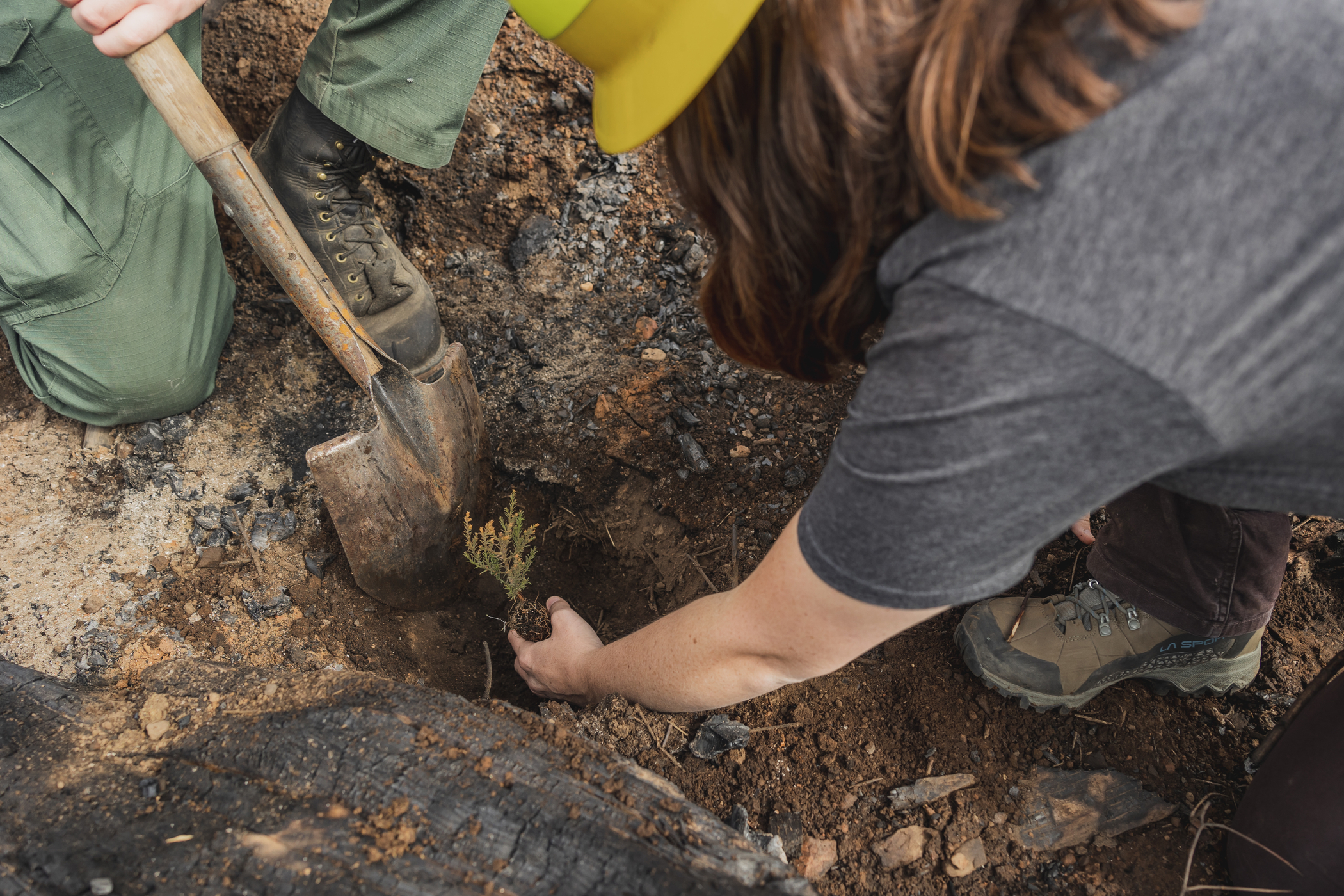
New studies raise issues that complicate the ambitious goals to use mass tree-planting to fight climate change. The researchers warn that in some cases, carbon-offset tree plantations could reduce biodiversity, doing more harm than good for the environment.

Trees take in CO2 and store it in their woody mass and the soil, making them a natural solution for reducing greenhouse gases in the atmosphere. Globally, it is estimated that forests absorb enough CO2 each year to make up for one-and-a-half times the greenhouse gases that the United States emits annually. That kind of carbon drawdown capacity motivated large-scale tree planting efforts such as the global Trillion Tree campaign, launched in 2006. Sophisticated carbon credit markets have also been developed, which allow polluting companies to pay for tree planting in order to offset their emissions.

But trees that die, burn or are cut can release that CO2 back into the atmosphere, and trees planted in large stands of only a few species do not function the way that naturally diverse forest ecosystems do.

A study of tree planting in the tropics published Tuesday, in the monthly journal Trends in Ecology and Evolution, argues that these carbon-offset plantations can come at the expense of biodiversity and other important services that forests provide. The study’s authors also warn that an emphasis on carbon reduction alone can lead to poor environmental decisions.

“It is crucial to shift from the narrow focus on carbon and adopt a more holistic perspective if we aim to effectively conserve and restore natural ecosystems and combat climate change,” the study’s lead author, Jesús Aguirre-Gutiérrez, an ecologist and senior researcher at the University of Oxford’s Environmental Change Institute, told Newsweek via email.

The scale of tree planting necessary to offset global greenhouse gas emissions would require vast areas of land, the authors write, often leading tree planters to displace other ecosystems. Afforestation, or planting trees in places they didn’t previously grow, can replace tropical grasslands that also provide carbon sequestration and other important services, such as regulating water flow and enriching soil, the authors contend. Grasslands support biodiversity as well, and many species adapted for those environments suffer when grass is replaced by trees.

For example, in Brazil’s Cerrado savannah, increasing tree cover by 40 percent reduced the diversity of plants and ants by about 30 percent.

“Planting trees is great as far as they are planted in areas where they belong,” Aguirre-Gutiérrez said.

The study finds that tree plantations using only a few species can also reduce stream flow, deplete groundwater, contribute to more intense wildfires and acidify soils. Aguirre-Gutiérrez said that biodiversity and other forest functions are not as easily quantified—and thus monetized—as carbon reduction, leading to imbalanced priorities in forestry.

Meanwhile, another study, published Monday in the monthly journal Nature Geoscience, provides the first map of yearly changes in global forest biomass over the past decade, revealing that temperate zone and northern, or boreal, forests have become the world’s main carbon sinks, drawing down more carbon than tropical forests have.

Younger, faster-growing trees typically absorb more carbon than mature ones, and northern and temperate forests have comparatively more areas of younger growth.

Lead author Jean-Pierre Wigneron, of France’s National Research Institute for Agriculture, Food and Environment, said tropical forests hold an immense amount of carbon, especially in older trees. But many of the world’s tropical forests are now so degraded by deforestation, fire and drought that they are nearly carbon neutral or, in some cases, sources of CO2 emissions.

“With tropical forests, the main takeaway is not to plant more trees, necessarily, but to protect the ones that are there,” Wigneron told Newsweek, adding that corporate money directed to tree plantations would be better spent on conservation. “If they really want to protect the planet, they should first take care of protecting forests instead of replanting.”

Cutting Remarks

The new research comes as tree-planting climate campaigns have come under high-profile criticism. Microsoft founder and clean energy philanthropist Bill Gates took a jab at forest climate solutions at a September 19 Climate Week event in New York City, sponsored by the New York Times.

“I don’t plant trees,” Gates said, lumping tree-planting in with what he called less-proven approaches to reducing emissions.

When event moderator David Gelles said that some proponents claim that planting enough trees could resolve climate change, Gates called that “complete nonsense.”

Jad Daley said he finds that kind of criticism frustrating. Daley is President and CEO of American Forests, a nonprofit conservation group that has been promoting forestry for more than a century. American Forests is also a partner in the Trillion Trees campaign, which is promoted and funded by billionaire Salesforce founder Marc Benioff.

Daley told Newsweek that what should be an important and nuanced discussion about forests and climate change has instead fallen into a “false, all-or-nothing narrative” that ignores the clear benefits of planting more trees.

“No one is saying that a trillion trees or any other amount of forest could solve climate change. We never said they could do it alone,” Daley said. “With that said, trees and forests are an absolutely essential part of the climate change solution.”

Daley pointed to the 2022 report from the Intergovernmental Panel on Climate Change, which includes forestry solutions to help meet emissions reductions targets. The IPCC’s summary for policymakers concludes that most pathways to limit dangerous warming will require “some combination of reforestation, afforestation, and reducing deforestation.”

In the U.S., EPA data shows that forests in the U.S. absorb nearly 16 percent of the greenhouse gas emissions that Americans produce each year, and Daley said responsible forestry practices could boost that carbon-emission offset to more than 20 percent of net U.S. emissions.

American Forests worked with the Nature Conservancy over the past three years to map out nearly 150 million acres in the U.S. where tree cover could be appropriately increased.

Daley agreed with the emphasis that the researchers behind this week’s new studies place on balancing biodiversity with carbon-removal goals. But he said he’s concerned that without proper context, the new studies could be misinterpreted in ways that undercut forest climate solutions.

For example, Daley fears that the findings that show some tropical forests no longer remove as much CO2 from the atmosphere could erode public support for forestry work in those areas.

“It’s actually a reason to work more in those places,” he said. “The question that we want to ask is, what forestry actions could help those forests get back to being a larger net sink of carbon?”

Growing Solutions

The studies out this week provide important guidance and new information to help foresters and government leaders better manage their woods for both climate solutions and broader environmental goals.

The new remote sensing data and mapping provided by Wigneron and his colleagues at France’s National Research Institute will give many nations their first accurate accounting of the carbon cycle in their forests.

“Most of the countries don’t know if they are carbon sinks or carbon sources,” Wigneron said. “It could help them to understand better where they could put efforts.”

The work by Aguirre-Gutiérrez and his co-authors presents a framework for certification of carbon-offset projects that could ensure that other ecosystem functions are not negatively impacted.

“Current and new policy should not promote ecosystem degradation via tree plantations with a narrow view on carbon capture,” the study’s authors concluded.

In the push for natural climate solutions, Aguirre-Gutiérrez and other scientists are urging, let’s not lose sight of the forest for the trees.

Now Is The Time To Rescue American Autoworkers

0

Seventy years ago, the CEO of General Motors could say that “what’s good for General Motors is good for America.” The auto industry was booming, building upon its wartime expansion as the “arsenal of democracy.” Workers shared in the industry’s prosperity. A job in the American auto industry delivered an income that could comfortably support a family, and autoworkers found peace of mind in working toward a secure retirement.

But the same cannot be said today. The U.S. auto industry has fallen victim to offshoring and stagnating productivity. While some sectors—particularly tech and finance—have done well, wages in other industries have stagnated. And it’s become nearly impossible to raise a middle-class family on a single income.

Now, American autoworkers face a new existential threat. They have been sentenced to death—by electrification.

Through federal mandates and tax subsidies, President Biden seeks to transform the auto industry to fit his Left-wing climate agenda. His administration’s premature transition to electric vehicles will cost taxpayers over $100 billion in subsidies for cars most people don’t want to buy. While progressives congratulate themselves on EVs being the cars of the future, car buyers don’t agree. For most brands, EVs are a loss leader, and EVs sit on auto lots about three times longer than traditional combustion cars.

Washington elites, beholden to special interests and radical environmental activists, downplay the destructive costs an all-EV auto industry would bring. But they cannot escape the truth: With so much of the mining and components manufacturing done in China, the Biden administration’s EV mandates have driven up the cost of American cars all while enriching the workers of China.

Have we learned nothing over the last generation? There is no way to build middle-class American prosperity by offshoring our industrial might to a strategic rival. The Biden administration’s forced transition to electric vehicles could destroy nearly half a million jobs over the next decade.

We’ve already seen the job-killing effects of their misguided EV agenda in Northeast Ohio. Up the road from the once-iconic Lordstown Assembly Complex, where 15,000 union workers once assembled millions of cars, now stands a battery plant that employs a fraction of the workers at a fraction of the wages. Many of the components and minerals those cars rely on were produced in China, not the broader American economy. And earlier this summer, we saw the much-heralded electric vehicle company Lordstown Motors file for bankruptcy. During my campaign last year, Democrats assured me that Lordstown Motors would be an example of the prosperity delivered by Biden’s Green New Deal. Now it’s a monument to industrial failure.

The Biden administration would rather shutter every combustion engine facility in Ohio than admit their EV pipedream is crushing our auto industry. Autoworkers in Cleveland, Defiance, Sharonville, Anna, Lima, Toledo and across the Midwest will be left in the breach—casualties of the far Left’s religious zeal for electric vehicles.

To all the autoworkers in Ohio and across the nation: It does not have to be this way.

I will do all that I can in the Senate to protect their jobs and secure a better future for the auto industry. That is why I introduced the Drive American Act to end the EV madness and provide a much-needed boost to American auto jobs. The bill eliminates over $100 billion of Joe Biden‘s EV subsidies and replaces them with a new credit for gas-powered vehicles produced and assembled in high-wage facilities within the United States. Jeeps built at the historic Toledo Assembly Complex will qualify for my new credit, but only if Stellantis gives the plant’s union workers a generous raise.

Today, I will join striking UAW workers on the picket line in Toledo and stand with them in their fight for higher wages and long-term survival. My message to the UAW leadership is simple: I will fight for American jobs and higher wages for American auto workers.

But I need your help. Every time Biden policy drives an auto job overseas, it destroys the bargaining power of the UAW and hastens the day when allegedly American companies tell American workers: “We don’t need you. We make plenty of cars in China.”

Ohioans have too much to lose. Our state builds more internal combustion engines than any other in our union. Now is the time to reject Joe Biden’s disastrous obsession with electric vehicles and rescue the American auto industry.

J.D. Vance is the Republican Senator from Ohio.

The views expressed in this article are the writer’s own.

Chaos for the Sake of Chaos Is Not Good Governance

0

In early January, as then-future and now-former House Speaker Kevin McCarthy (R-Calif.) was in the midst of the political fight of his life, this column excoriated him as an “empty suit and a quintessential Swamp creature … whose main lodestar is cutting deals and expending political capital in order to boost his own political fortunes.” This column supported the House conservatives who extracted massive concessions from McCarthy over the course of the 15 agonizing ballots he needed to secure the speakership in January. And this column condemned those veteran commentators who supported McCarthy from the very first ballot, oblivious to the virtuous fight Rep. Chip Roy (R-Tex.) and others were leading on behalf of good governance.

All of that is to say that I carry zero water whatsoever for Kevin McCarthy.

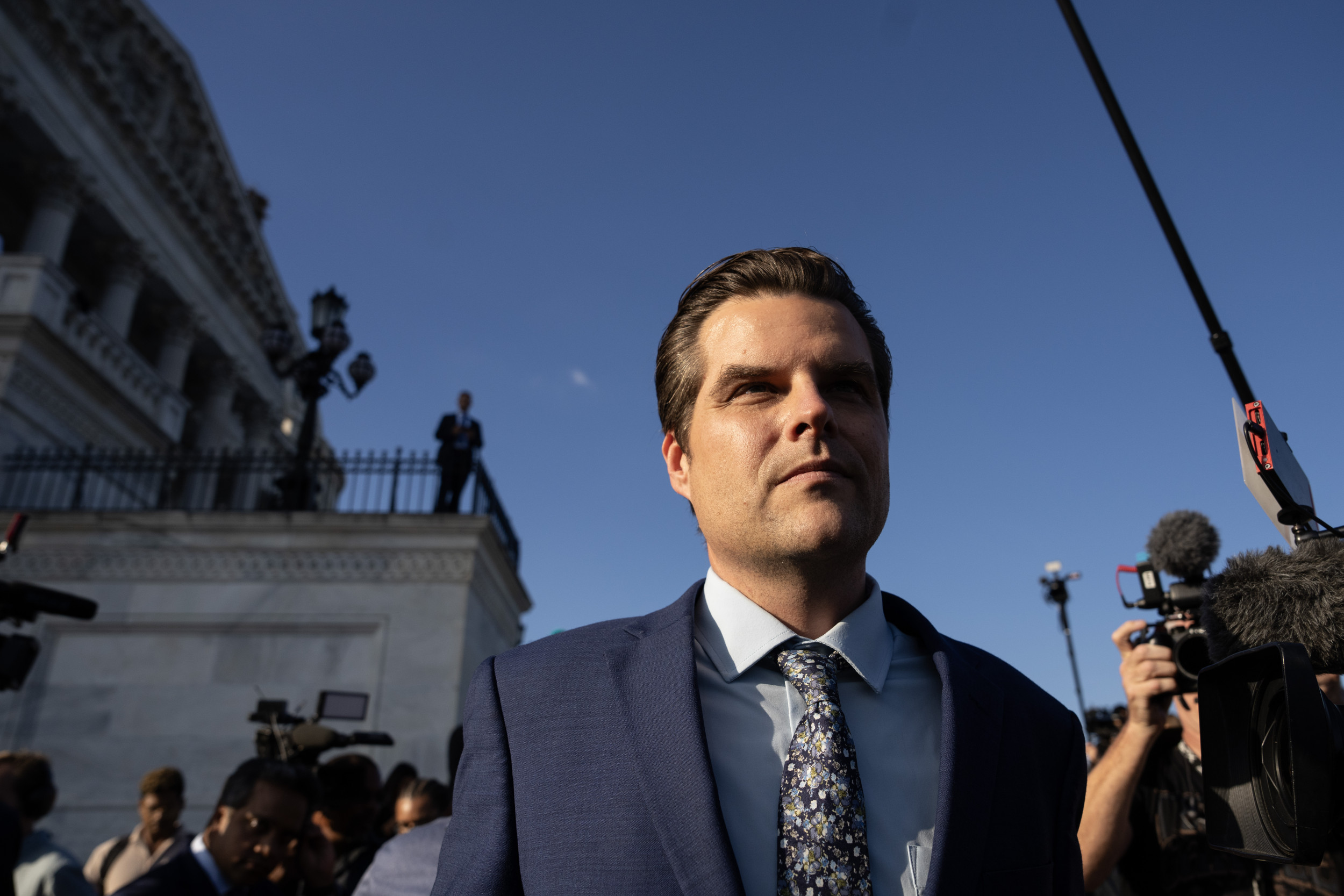
But I am frankly baffled by his unceremonious dethroning this week at the hands of the grandstanding Rep. Matt Gaetz (R-Fla.), who successfully mutinied McCarthy along with seven fellow Republicans and every single Democrat present in the lower chamber. At some point during the era of Donald Trump, Republicans seem to have forgotten a lesson as old as Edmund Burke’s seminal Reflections on the Revolution in France: Effecting change or fomenting chaos is highly imprudent absent some noble or important goal in mind.

But what was the noble and important goal here? What was so important for Gaetz that he engineered McCarthy’s historic coup despite the obviously hypocritical nature of it—namely, that he (and others) blasted McCarthy for his working with Democrats on September 30 to pass a last-minute continuing resolution to fund the government, but Gaetz himself enticed the entire present Democratic caucus to help him toss McCarthy overboard?

As of this writing, that goal remains elusive. Gaetz claims to want reductions to top-level government spending, an end of U.S. taxpayer funding for the war in Ukraine, and much stronger security measures for our outrageously porous southern border. I agree on all fronts. And over the course of September, leading House Freedom Caucus members such as Roy successfully persuaded McCarthy to begin appropriations negotiations with the Senate with a proposed 8% cut to top-level government spending, as well as the very cuts to Ukraine funding that Gaetz claims to want. But Gaetz then helped scuttle those nascent negotiations before they even began. The result is no spending cuts and a likely continued funding of the Ukraine boondoggle. Talk about a self-own.

Or was it?

After he formally filed his fateful motion to vacate the speaker’s chair, Gaetz said of House Majority Leader Steve Scalise (R-La.), who is now in the running to replace McCarthy: “I think very highly of Steve Scalise. I would vote for Steve Scalise.” This concession seems to give away Gaetz’s real game. Scalise has been a part of House Republican leadership since 2014; he is just as much a part of the Republican establishment on Capitol Hill as is McCarthy. Indeed, Scalise even disagrees with Gaetz’s purported hard-line stance on continued funding of Ukraine. This therefore bears all the markings of a deeply personal grudge for Gaetz, which he has now acted out on a national stage. Perhaps Gaetz simply sought retribution for McCarthy’s failure to quash the House Ethics Committee’s ongoing investigation of Gaetz, which pertains to allegations of sexual misconduct, illicit drug use, and other improprieties—or perhaps he simply sought to fundraise on a national level in advance of an expected 2026 run for governor of Florida. Perhaps—likely, in fact—it is both.

If it really was Gaetz’s purely personal pique and a shameless opportunity for fundraising that motivated McCarthy’s defenestration, then that is sophomoric and reckless behavior. True, a good outcome could still emerge from this—the House could still elect as speaker either Rep. Jim Jordan (R-Ohio) or Rep. Kevin Hern (R-Okla.), each of whom would be a substantial substantive upgrade over McCarthy. But it is tough to envision either of those outcomes while the leading mutineer has himself publicly conceded his contentment with establishment favorite Scalise.

Perhaps the most important aspect of this saga, in the midst of a bitter Republican presidential primary and in the lead-up to next fall’s general election against a senile and catastrophically unpopular octogenarian incumbent, is the political fallout. Most independent voters will (not necessarily incorrectly) see this as Republicans airing their dirty laundry and fomenting chaos at a time when the median American continues to suffer from skyrocketing crime, an unprecedented illegal immigration invasion, and the horrific inflation and other carnage of so-called “Bidenomics.” This (likely) pointless Capitol Hill drama represents the exact opposite of good governance—the antithesis of statesmanship.

Maybe former Louisiana Gov. Bobby Jindal had it right when he called on the GOP to “stop being the stupid party.”

Josh Hammer is Newsweek senior editor-at-large, host of “The Josh Hammer Show,” a syndicated columnist, and a research fellow with the Edmund Burke Foundation. Subscribe here for “The Josh Hammer Report,” a Newsweek newsletter. X: @josh_hammer.

The views expressed in this article are the writer’s own.

COPYRIGHT 2023 CREATORS.COM

We Need the Monroe Doctrine

0

During the past 20-plus years, the United States has involved itself in wars in the Middle East, in Africa, and now in Europe with the Ukraine War. In 2001, George Bush Jr.’s administration brought to life the War on Terror with the “Bush Doctrine.” He propagated conflict abroad, molded our foreign policy into one of aggression, and normalized war in the minds of the American public.

Donald Trump, for all his flaws, did not involve us in any new wars, and many advocates for peaceful foreign policy were optimistic that aggressive militarism was on the decline when President Joe Biden pulled American troops out of Afghanistan. Those hopes dissipated, quickly, though, when the Biden administration sent American money overseas to Ukraine and when Senator Mitch McConnell (R-Ky.) vowed to keep us involved in the Ukraine War.

The United States desperately needs to mind its own business internationally, which is why we need a return to the Monroe Doctrine now, more than ever.

In 1823, amid the backdrop of Napoleon Bonaparte’s conquest, European countries began to look at Central and South American, hungry to re-establish dominance over their former colonies. In response, President James Monroe issued the “Monroe Doctrine,” with the following three main points—”separate spheres of influence for the Americas and Europe, non-colonization, and non-intervention.”

The Monroe Doctrine was designed to signify a clear break between the New World and the autocratic realm of Europe, but its message of non-interventionism is the most poignant and timely today.

The Doctrine stated, “In the wars of European powers, in matters relating to themselves, we have never taken part, nor does it comport our policy to do so. It is only when our rights are invaded, or seriously menaced that we resent our injuries, or make preparations for our defense.”

Our country’s foreign policy no longer bears any resemblance to the Monroe Doctrine or its admonitions of temperance and restraint. The United States has 750 military bases in 80 countries (that we know of) around the world. Our military is actively participating in wars in Yemen, Somalia, and Syria, in addition to pumping billions of dollars into the war in Ukraine. Regime change, entangling alliances, and wars for empire are dangerous practices and should be abandoned by the United States government. We should return to the Monroe Doctrine if we want the United States to remain a successful country.

Empires fall when they over expand to enforce large territories. The United States defense budget is $ 2.04 trillion. This bloated budget is a point of contention in American politics, especially when so many people feel the pains of inflation and the rising cost of groceries and gasoline. In response to the United States’ militaristic foreign policy, other countries have banded together to form the BRICS currency agreement, a plan to shift away from using the U.S. dollar as their common currency for trade and investment. Hostility is bad for business.

Having war guarantees and entangling alliances puts a military obligation on the domestic population. In the mid to late 1960s, thousands of Americans rallied in D.C. to protest the military draft and our failed war in Vietnam. There has been no military draft for decades, but we still feel the pain of strained relations with other countries via embargoes, bad PR, and travel restrictions. Let’s also not forget the thousands of disabled veterans in the United States, or the high veteran suicide rate.

Whoever our next president is, he or she has a wonderful opportunity to turn the tide and embrace peaceful foreign policy. America can set an example for nations abroad. We can curtail our meddling and military spending, withdraw from entangling alliances (like NATO), and encourage European countries to fund their own national defense instead of relying on the American military.

In 1863, President Abraham Lincoln’s Secretary of State William Seward declined an invitation to join Napoleon in a protest of the Russian Tsar. Seward said he was defending “our policy of non-intervention.” American could make history again by offering a hand in diplomacy and firmly declining further invitations into long, drawn out, unwinnable wars.

Angela McArdle is chair of the Libertarian National Committee.

The views expressed in this article are the writer’s own.

Originalism Keeps Judges in Check and the People in Charge

0

What do judges do? Justice Clarence Thomas has explained it this way: “We interpret and apply written law to the facts of particular cases.” Sounds simple enough. But while everyone can read what our laws say, the question is how much power judges should have over what they mean.

America’s Founders were well aware of this. They wanted to minimize what Alexander Hamilton called “arbitrary discretion” by judges, designing a system in which judges must interpret the Constitution and statutes by determining what their authors meant by what they wrote. Today, this approach is called originalism.

Three features of the Founders’ design support this conclusion. First, America is a republic where, Hamilton famously explained, “the people govern.” The Constitution is the primary way that the people set rules for government, which includes the judiciary. Back in 1795, the Supreme Court asserted that the Constitution “is fixed and certain; it contains the permanent will of the people, and…can be revoked or altered only by the authority that made it.” That authority is the American people.

“Altering” the Constitution obviously includes changing what it says, but that would be a hollow exercise unless the American people also determined what its words mean. In a 1937 opinion, Justice George Sutherland wrote that judges changing the meaning of the Constitution really amounts to “amendment under the guise of interpretation.” Judges do not have authority to amend the Constitution.

Second, as Marbury v. Madison explains, the Founders wrote the Constitution down so that its rules for government “may not be mistaken or forgotten”—rules intended, the Court said, to govern courts as well as legislatures. Needless to say, the Constitution cannot control judges if judges can control what the Constitution means.

Third, in schools that still teach civics, students learn that the government has three branches that do different things. The legislative branch makes the law, the executive branch enforces it, and the judicial branch interprets it. Interpreting and making the Constitution or statutes, therefore, must be different.

Another reason originalism is the appropriate method for interpreting the Constitution and statutes is that the Founders, who designed our system of government, said so.

In his 1796 farewell address, President George Washington wrote that changes to the Constitution should take place “by an amendment in the way which the Constitution designates” rather than through “usurpation.” James Madison insisted that the guide for “expounding” the Constitution should be “the sense in which the Constitution was accepted and ratified by the nation.” And Thomas Jefferson argued that “on every question of construction,” we must “carry ourselves back to the time when the Constitution was adopted, recollect the spirit manifested in the debates, and instead of trying what meaning may be squeezed out of the text, or invented against it, conform to the probable one in which it was passed.” This instruction flows directly from the system of government these Founders designed.

In his book, A Republic, If You Can Keep It, Justice Neil Gorsuch writes that “originalism is a theory focused on process, not on substance.” In other words, judges should interpret the Constitution and statutes by their original public meaning and apply it impartially no matter which party wins or what political interests might be furthered. Gorsuch points to several decisions in which, as an appellate court judge, his application of originalist principles led to liberal results. The point is, if the political ends justify the judicial means, if judges can simply look for whatever interpretation will produce the results they want, judges control the law.

When judges abandon what the Constitution and statutes actually mean—that is, what “the authority that made [them]” meant—then judges, and not the law, determine the outcome of cases. The Constitution becomes, in Thomas Jefferson’s words, “a mere thing of wax in the hands of the judiciary, which they may twist and shape into any form they please.” If the judiciary controls the Constitution, the people do not, and it ends up expressing the judges’ will rather than theirs.

In chapter six of Lewis Carroll’s Through the Looking-Glass, Humpty Dumpty says to Alice: “When I use a word…it means just what I choose it to mean—neither more nor less.” Alice asks “whether you can make words mean so many different things.” Humpty replies that the question is “which is to be master—that’s all.”

The people can be their own masters, governing themselves, only if they, and not judges, control what the Constitution and statutes both say and mean.

Thomas Jipping is a Senior Legal Fellow in the Meese Center for Legal and Judicial Studies at The Heritage Foundation.

The views expressed in this article are the writer’s own.

Alfa Romeo takes another shot at America, gears up to launch third SUV

0

Alfa Romeo made news last October when declared itself profitable and secure for the next decade. Since then, its efforts in North America have been focused on the new hybrid Tonale SUV and in April it also celebrated the 100th anniversary of the high-performance, four-leaf-clover adorned Quadrifoglio variants.

But the phone really didn’t start ringing until August when the company announced the rebirth of the custom-built 33 Stradale, which it called “a genuine manifesto of the Italian brand’s capabilities.” It’s been a busy year for the company which is still finding its footing since its return to the United States.

“The number of inbounds I’m getting now on the 33 is just blowing my mind. It’s funny when you’re selling something that’s exclusive and you just have a couple of early images of it and a digital video. It builds excitement,” Larry Dominique, Senior Vice President and head of the Alfa Romeo brand in North America told Newsweek.

“This just gives you a sense of what we can do as a brand. So that’s what’s exciting in the post reveal. The response to it has been very heartwarming for everybody in the team.”

Alfa Romeo is looking for another fresh start in this part of the world after it made its first return in 2006. The plans, announced by then CEO Sergio Marchionne, began with 2008’s Alfa Romeo 8C Competizione limited-edition supercar. It wasn’t until six years later that Alfa added another low-volume specialty car called the 4C coupe. It was followed by Giulia sedan, advertised at the 2017 Super Bowl, and then the Stelvio SUV.

Sales were never groundbreaking, averaging about 18,000 from 2017 to 2021 but only landed at about 12,000 in North America last year. This year it looks to be down further. But the hype is growing, not just about its limited-edition, high-design 33, but for the rest of its modernized products like the Tonale hybrid SUV.

“It’s about design. The best possible thing that we can design both from a beauty point of view, a simplicity point of view, a performance point of view. It’s showcasing to sort of the agility of a brand, and that we’re able to do things outside of our normal process. And I wouldn’t say every brand has that level of flexibility,” said Dominique.

Alfa Romeo lived on two and a half cars (the two-seat 4C, Giulia and Stelvio) for many years. Dominique landed at the brand in 2021 and took over the North American operations. It now has Tonale for three vehicles in three high volume segments. Dominique also said the brand has five new vehicles coming in the next six years in high-volume premium segments. That includes a three-row SUV designed specifically for the U.S. market, engineers from the company told Newsweek.

“Despite solid and attractive products, Alfa Romeo continues facing challenges connecting with consumers amidst well-established luxury competitors in the U.S. market. The brand sold almost 24,000 units in 2018 in the U.S., but by 2022, sales slipped to under 13,000 units,” Paul Waatti, manager of industry analysis at AutoPacific told Newsweek.

“Tonale is pivotal in establishing brand relevance in the U.S. and global markets. It aims to attract Millennials with luxury performance as a compelling alternative to German rivals’ entry-level products. The 33 Stradale serves as a halo product and a marketing tool to generate excitement around the brand and invite new interest into showrooms. There is clear momentum building behind the brand, but it needs a continued influx of captivating products to flourish,” said Waatti.

And North America is one of Alfa Romeo’s two main markets, along with Europe. It sells vehicles elsewhere including China and Latin America, but it is the only premium global brand for Stellantis. Maserati is considered the global luxury brand.

“North America is probably about half the size, or a little under half of what Europe sells. But they’re also a year ahead of us with Tonale. They launched Tonale in mid ’22. We just launched it now. So North America is probably about 30 percent of the global business and growing from that standpoint,” said Dominique.

Its North American strategy has understandably changed over the past decade. The original plan was to grow the brand here with multiple vehicles in the 2010s. But then the investment slowed down before the Stellantis merger.

“When I came in 2021 I had a couple of key objectives. Get us profitable, build on quality and customer satisfaction, build stability around the brand and then plan for the future. In the first two and a half years we raised average transaction price around 26 percent,” Dominque said.

It also went from second to last in the J.D. Power Sales Satisfaction Index to number one. It went from last in the J.D. Power Customer Satisfaction Index to second quartile in just a year and a half. It also came in number one on initial quality in the premium segment.

“And the reason that’s important is because if you don’t meet those core criteria, you can’t get on consideration list regardless of your awareness. We wanted to build those fundamentals and now with Tonale coming to market and now our pivot to electrification with the next Stelvio and Giulia we’re really moving the brand forward. We’re stable, we’re profitable, we’re delivering quality. So now it’s about getting that growth in the portfolio,” said Dominique.

Scientists unlock secret of Earth’s core: "We just found the Holy Grail"

0

Physicists have come closer to solving one of the biggest mysteries in geophysics: how the Earth powers its magnetic field.

The team, from the University of Texas at Austin and collaborators at Sichuan and Nanjing Universities in China, believe that their discovery provides a fundamental physical mechanism to help explain the surprisingly “soft” physical properties of the Earth’s dense inner core.

Roughly 1,800 miles beneath the Earth’s crust lies a ball-shaped core made largely of the metals iron and nickel. The core is super-hot, ranging from about 8,000 to 10,800 degrees Fahrenheit, and is made up of two parts: the liquid outer core, and the dense, solid inner core.

Movement of iron atoms in this core is known to power the Earth’s magnetic field, which is thought to play an important role in making the planet habitable. Not only is it responsible for setting up compass directions, but it also acts of a shield around the planet, deflecting powerful radiation from solar storms.

The Earth’s magnetic field is mostly generated in the liquid outer core by its sea of swirling metal, but the role of the solid inner core in this so-called geodynamo has so far remained a mystery.

“Earth’s core is under such extreme pressures of ~ 3.5 Mbar (3.5 millions of atmospheric pressure), so one would think that iron atoms are so confined to their positions and there’s not much wiggle room for them to move,” one of the leading authors on the study, Jung-Fu Lin, a professor at the University of Texas Jackson School of Geosciences, told Newsweek. “What we found was totally against this traditional view.”

By recreating a miniature model of the Earth’s inner core in the lab, the team was able to predict the properties and motion of these iron atoms. And what the scientists found was very unusual: rather than staying stationary in their solid lattice, the atoms were moving, fast.

“I was like ‘Wow. We just found the answer to the Holy Grail in geophysics,'” Lin said.

“The iron atoms were wiggling their ways so fast that they moved to other positions in a split second.”

This movement—known in physics as collective motion—is akin to guests at a dinner party swapping seats. The overall structure of the table stays the same, despite this internal movement.

“[This collective motion] is due to the fact that iron atoms are at conditions very close to melting so much as that they look like a solid but behave more like a liquid,” Lin said. “Indeed, it happens in many metals near melting and is a relatively well-understood physical phenomenon in condensed-matter physics. But it is not known to occur in the deep planetary interiors. We collaborated with physicists on this project, and they were like they knew this coming.”

To confirm their models, the team also compared its results with seismic-wave studies of the Earth’s inner core. “We also conducted laboratory shock-wave experiments to measure the velocities of iron atoms at extreme pressure and temperature where collective motion is predicted to occur,” Lin said. “All these further confirm the prediction for the occurrence of collective motion in the iron heart of the planet.”

The team’s results, published in the journal PNAS on October 2, go some way to explain the mysteriously “soft” properties of the Earth’s inner core, as well as offering potential insights into the generation of heat at the planet’s center. The study also augments our understanding of the processes that power the generation of the Earth’s magnetic field, and potentially the inner workings of other planets inside and outside of our solar system.

“The discovery implies that the same physics in collective motion also occurs in other planetary interiors such as Mars and exoplanetary interiors,” Lin said. “Exoplanets are subject to even extreme pressure and temperature conditions so one would need to extend the research conditions to see if this happens. This will help us understand planetary systems in general.”

Great white sharks are moving to more American beaches

0

Great white sharks off the U.S. West Coast are being driven northwards by warming seas, threatening local ecosystems as they move.

Climate change-driven temperature increases in the waters off California have caused juvenile white sharks to be found much further north than usual. Normally they are only found as far north as South California, but they have been found in increasing numbers in Monterey Bay in Central California.

“We documented the sudden occurrence of much smaller sharks than had ever been seen here before,” marine ecologist Salvador Jorgensen of California State University Monterey Bay, told AFP this week. “As ocean temperatures have been warming through a series of El Ninos, and heat waves, many species have been shifting their range further north, further towards what were historically cooler areas.”

Great white sharks, known to scientists as white sharks, are one of the largest species of shark in the world, growing up to 20 feet long and weighing up to 5,000 pounds.

They are warm-blooded, meaning that juvenile sharks are more sensitive to colder water, preferring to mature in milder temperatures off the coast. As warmer waters creep northwards due to climate change, so do the sharks.

“All animals have a thermal range within which they can survive but also a temperature at which they perform best (e.g. temperature at which the muscles operate optimally),” Yannis P. Papastamatiou, an associate professor at Florida International University’s Predator Ecology and Conservation lab, told Newsweek. “One of the consequences of a changing climate is that it gets warmer further north, so areas that were not habitable to the animal now are. White sharks are endothermic (warm-bodied) but still have optimal temperatures and endothermy is less well-developed in juvenile animals. So far, the northerly expansion has been seen in juvenile white sharks.”

These northward-moving juvenile sharks will therefore be swimming off the coast of beaches that are usually shark-free, which may lead to greater human-shark interaction. However, the degree to which the sharks will impact on people is unclear.

“The impacts on humans will very much depend on where they are moving and how quickly,” Culum Brown, a professor of fish biology at Macquarie University, told Newsweek. “Will the new distribution overlap with major cities? Human-shark interactions require both sides of the equation: More people in the water and more sharks in the water = more bites.”

Additionally, the increased shark numbers are likely to be mostly juveniles, which are much less likely to attack humans.

Shark bites on humans, while very rare, will be a function of the number of sharks, so if you increase the adult white shark population then you may predict a change in the number of bites on humans,” Papastamatiou said. “However, as far as I can tell, the increase in white shark numbers in northern California is for juvenile white sharks.

“Juveniles are very rarely implicated in bites on humans as their diet consists of fish, although they may attack small mammals like otters. So, I wouldnt necessarily worry yet as the juveniles now inhabiting the northerly locations may be too small to really risk biting humans. You should still be very cautious around them though (juvenile white sharks are still at least 5-6ft long!).”

The juveniles are affecting local ecosystems, however, as their increased numbers have led to more attacks on sea otters.

“An over-abundance of juvenile white shark around their more northern aggregations may cause some of the juveniles to opportunistically hunt in novel habitat and for less typical prey,” Jane Williamson, an associate professor in marine fisheries ecology at Macquarie University, told Newsweek. “Otters are in abundance in these sites so it’s logical that white shark may increase predation rates on these species.”

This has knock-on effects across the whole food web of the coast ecosystem, as the otters forage for sea urchins. If there are fewer otters, then the urchins will go unchecked and overgraze the kelp forests of the coast, eliminating a crucial habitat used for shelter and food by a huge number of species.

“It’s difficult to understand what the longer-term impacts on these ecosystems will be at this stage,” Williamson said. “Long-term monitoring such as tagging of both sharks and their prey is required to tease apart potential consequences.”

Do you have an animal or nature story to share with Newsweek? Do you have a question about great white sharks? Let us know via science@newsweek.com.

Before and after satellite pictures show Mississippi River disappearing

0

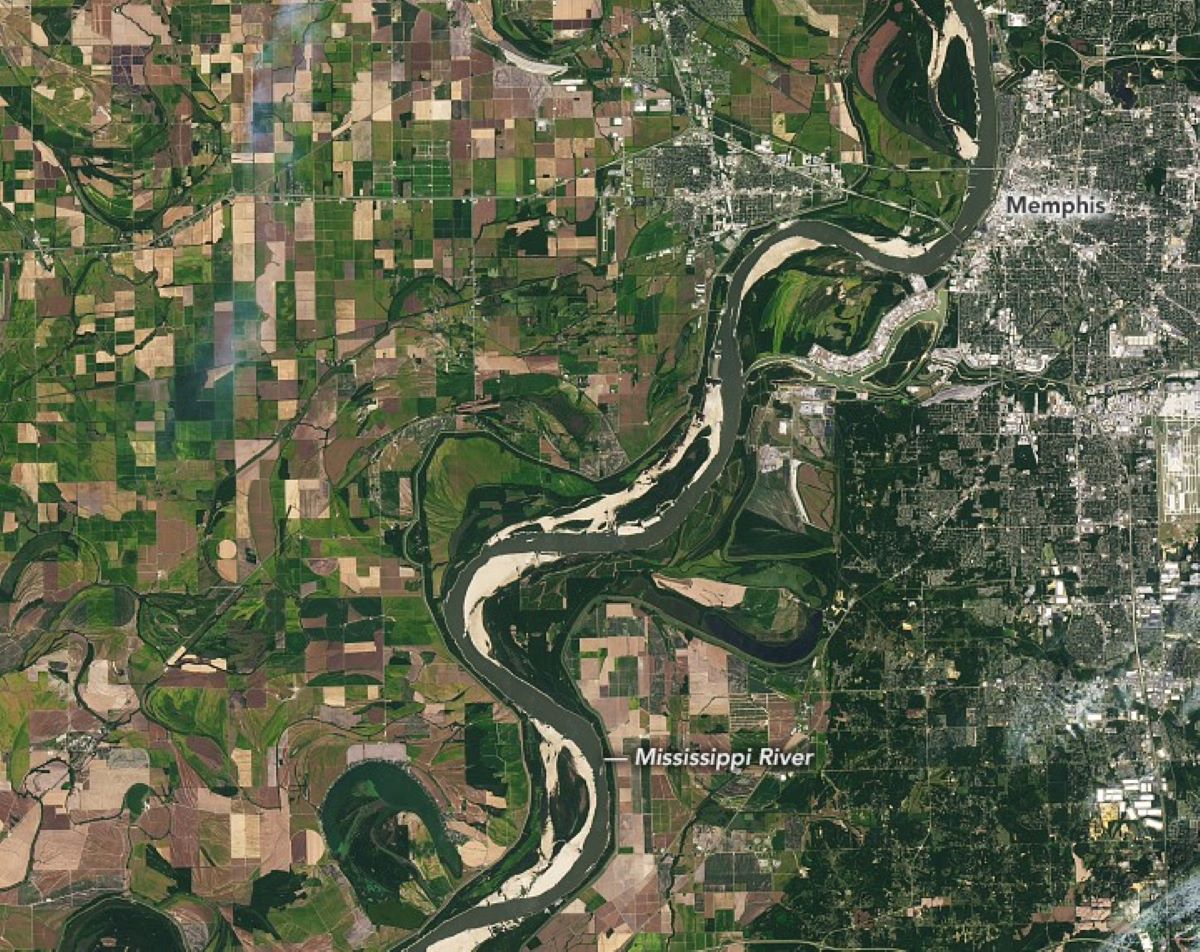
Before and after satellite images show shocking changes in the Mississippi River as it disappears amid high temperatures and drought.

The images posted by the NASA Earth Observatory show an area of the river near Memphis, Tennessee, from above, on September 10, 2021, compared with the same view on September 16, 2023.

In the 2023 image, the river appears significantly smaller and thinner in water flow. The river’s bottom is far more exposed than the picture captured in 2021. The Mississippi River has been drying up due to prolonged drought and high temperatures during the summer and autumn of 2023.

The water levels dropped so low last month that it limited barge shipments downriver, halting supplies of drinking water for areas of Louisiana.

The Mississippi River is the second largest river in the United States, behind the Missouri River. It provides drinking water to around 20 million people, but as water levels continue to decline, that essential source could be at risk.

In fact, the river’s water levels are some of the lowest seen in a decade. At the moment, water levels are particularly low in Memphis, Tennessee.

On September 26, the river gauge level was at -10.26 feet, close to the record low level, -10.81 feet, which was recorded in October 2022, the NASA Earth Observatory reported.

In New Madrid, Missouri, the water gauge level was recorded at -5 feet in early September. This is near the minimum possible operating level. While it is expected that the river’s flow fluctuates, it has never seen such low levels before.

These levels are some of the lowest seen since records by the National Weather Service began in 1954.

“Around 1/3 of rainfall in the U.S. ends up in the Mississippi River, and with decreased rainfall in the Midwest, there is less water entering the river to begin with,” Alexander Loucopoulos, partner at Sciens Water and chair of the Mississippi River Cities and Towns Initiative (MRCTI)’s Corporate Advisory Board, previously told Newsweek.

A healthy Mississippi River is crucial to Americans. The river provides drinking water to around 20 million people, which is around 16 percent of the U.S. population.

“It’s also a primary mode of transportation, carrying around 500 million tons of cargo every year,” Loucopoulos said. “The Mississippi River Basin is home to 57 percent of U.S. farmland, producing 60 percent of U.S. grains and 54 percent of U.S. soybeans. This interconnected network, spanning much farther than just the Mississippi River Basin, will be affected by this drought.”

A particularly hot summer is being blamed for the drastic change in the river’s flow this year. Global temperatures this summer rose to 2.1 degrees Fahrenheit. Louisiana and Mississippi, in particular, had the hottest August ever recorded.

As climate change worsens, the rivers and lakes of the U.S. have been drying up. This is due to evaporation amid higher temperatures, paired with an overconsumption of water and unpredictable weather patterns.

Do you have a tip on a science story that Newsweek should be covering? Do you have a question about the Mississippi River? Let us know via science@newsweek.com.